Evolution Of Sports Eye Safety Gear: 4 Key Innovations
Discover how protective eyewear transformed from basic shields to advanced gear, revolutionizing athlete safety across sports over decades.
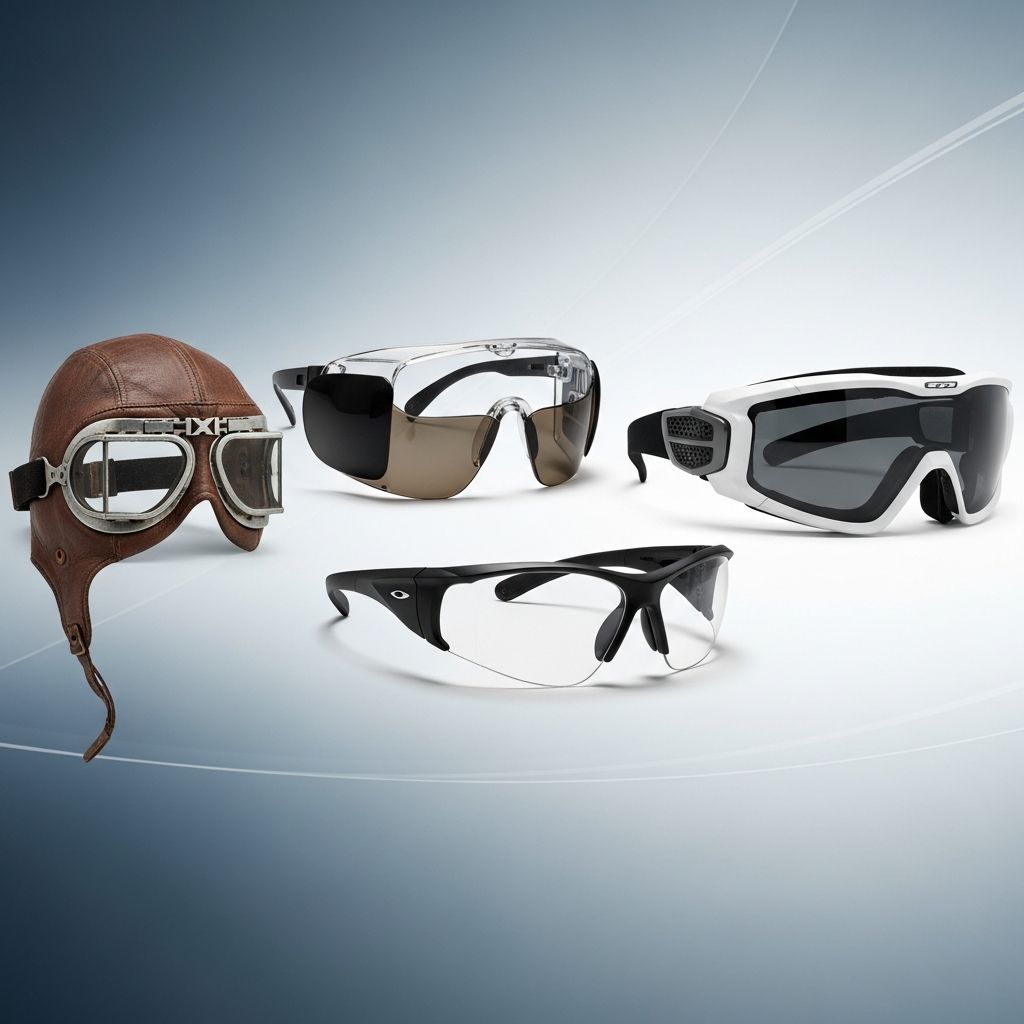
Protective eyewear in sports has progressed dramatically, shifting from minimal safeguards to sophisticated equipment that prevents severe injuries and boosts performance. This advancement stems from historical necessities, technological breakthroughs, and regulatory mandates across various athletic disciplines.
Ancient Foundations of Vision Safeguards
Early civilizations recognized the vulnerability of eyes during physical contests. Around 1200 BC, Egyptians crafted the first documented face masks for fencing, using basic materials to shield against strikes. These primitive barriers marked the initial step toward organized eye defense in combative activities.
In medieval Europe, combatants adapted leather and metal coverings to protect facial areas, including eyes, during jousts and duels. Though not sport-specific, these designs influenced later athletic gear by demonstrating the feasibility of impact-resistant coverings.
19th-Century Shifts in Athletic Protection
As organized sports emerged in the 1800s, eye risks became evident. Baseball players, for instance, operated with scant gear—merely caps against sun glare, leaving them exposed to high-speed balls. Shooters employed simple metal-framed spectacles with flat glass panes to block debris and residue, offering rudimentary defense but prone to shattering.
Hockey and football saw similar oversights, with participants relying on natural reflexes amid fast pucks and tackles. This era underscored a critical gap: sports demanded tailored eye shields beyond everyday spectacles.
20th-Century Military-Driven Innovations
World Wars accelerated eyewear evolution. During World War I and II, soldiers required robust goggles against debris, chemicals, and blasts, leading to durable, wraparound models. These military specs transitioned to civilian sports post-war, introducing polycarbonate—a shatterproof plastic superior to glass.
Aviator sunglasses, developed in the 1930s for pilots, gained traction in the 1940s. Featuring teardrop lenses, they blocked intense sunlight and UV rays at high altitudes, later adopted by baseball outfielders tracking balls in glare. By the 1950s, Columbia Resin 39 (CR-39) emerged as a lighter alternative, though still fracture-prone until polycarbonate dominated in the 1990s.
Sport-Specific Milestones in Eye Defense
Baseball’s Gradual Adoption
Baseball lagged in protection until the mid-20th century. Early sunglasses in the 1900s merely cut glare; by the 1950s-1960s, sports-specific versions with polarized lenses appeared. Face guards on helmets proliferated in the 1990s, especially for youth, while pros like modern stars popularized visors. Key features now include wraparound frames and interchangeable lenses for variable light.
Hockey’s Compulsory Masks
Hockey pioneered mandates after gruesome injuries. Face masks debuted in the 1940s-1950s as helmet bars, evolving to multi-bar setups by the 1960s-1970s. The NHL required them for new players in 1979 following severe cases, slashing facial and eye traumas. Visors became standard for rookies in 2013-14, blending visibility with safety.
Football’s Visor Revolution
Football integrated eye shields in the 1980s-1990s. Polycarbonate visors clipped to face masks, guarding against impacts, UV, and debris while reducing glare. Modern helmets seamlessly incorporate them, prioritizing secure fit during collisions.
Racquet Sports and Shooting Advances
Squash led racquet sports by enforcing eyewear standards via ASTM protocols, dramatically cutting ocular injuries. Shooters progressed from 19th-century frames to post-WWII polycarbonate with anti-fog and ballistic ratings.
Material and Design Breakthroughs
Key innovations reshaped sports eyewear:
- Polycarbonate Lenses: Invented in the 1990s, these withstand high-velocity impacts, becoming the industry benchmark.
- Wraparound Styles: Ensure peripheral coverage and stability during motion.
- Polarized and Interchangeable Lenses: Optimize vision in diverse conditions.
- Anti-Fog Coatings and UV Filters: Prevent fogging and long-term damage.
Related Stories



These elements combine protection with performance enhancement.
| Sport | Key Innovation | Timeline | Impact |
|---|---|---|---|
| Baseball | Helmet Face Guards | 1990s | Reduced batter eye injuries |
| Hockey | Mandatory Masks | 1979 | Dropped facial traumas significantly |
| Football | Polycarbonate Visors | 1980s | Blocked debris and UV |
| Squash | ASTM Eyewear | 1980s | Lowered ocular incidents |
| Shooting | Ballistic Lenses | Post-WWII | Enhanced debris resistance |
Regulatory Standards and Their Role
Standardization arrived late but decisively. OSHA adopted ANSI Z87.1 in 1968, updated to 2015 and 2020 versions, mandating impact resistance for safety glasses. Sports bodies followed: NHL’s mask rule, squash’s ASTM enforcement. These ensure gear meets rigorous drop, projectile, and high-mass tests.
Today, ANSI Z87.1-2020 certifies frames and lenses like polycarbonate for comprehensive validation.
Modern Trends and Future Directions
Contemporary eyewear merges tech: smart lenses adjust tint automatically, augmented reality overlays aid aiming, and bio-based materials promote sustainability. Full-face shields dominate youth and amateur levels, while pros favor lightweight visors.
Awareness campaigns by leagues educate on risks—over 30,000 U.S. sports eye injuries yearly, many preventable. Parents and coaches stress benefits like sharper focus alongside safety.
Frequently Asked Questions
What materials are best for sports eye protection?
Polycarbonate leads for its shatterproof nature and ANSI compliance.
When did mandatory eye gear start in major sports?
Hockey in 1979 (NHL), squash in the 1980s with ASTM.
Do sunglasses suffice for sports?
No—opt for impact-rated models with side shields.
How have wars influenced sports eyewear?
WWII goggles introduced durable designs adopted postwar.
Are there standards for youth sports?
Yes, full cages in hockey and guards in baseball prioritize young athletes.
Benefits Beyond Injury Prevention
Protective gear enhances play: polarized lenses cut glare for better tracking, UV blocks prevent cataracts, anti-fog maintains clarity. Athletes report confidence gains, vital in split-second decisions.
Injury stats affirm efficacy—squash rules halved eye traumas; hockey masks curbed pro cases.
References
- Historic moments in sports eye protection — BlueCut Glasses. 2023. https://bluecutglasses.com/blogs/articles/historic-moments-in-sports-eye-protection
- The Evolution of Shooting Safety Eyewear: A History — Eclipse Optics. 2023. https://eclipse23.com/blogs/precision-vision-shooting-glasses/the-evolution-of-shooting-safety-eyewear-a-history
- Sport-related ocular trauma in Vancouver, British Columbia — BCMJ. 2019-05-15. https://bcmj.org/articles/sport-related-ocular-trauma-vancouver-british-columbia-not-usual-suspects
- The Evolution of Eye Protection: Unveiling Its Historical Journey — CAGlasses. 2023. https://www.caglasses.com/blog/the-evolution-of-eye-protection-unveiling-its-historical-journey
- The History of Eye Protection and How It Has Evolved — Stoggles. 2023. https://stoggles.com/blogs/the-public-eye/history-of-eye-protection
- The History of Sunglasses from Protection to Fashion Statement — MCR Safety. 2023. https://www.mcrsafety.com/sunglasses/
Similar Articles








Read full bio of Sneha Tete