Excipients In Medicines: Roles, Risks, And Safety Guide
Discover the vital role of inactive ingredients in ensuring medicines are safe, effective, and patient-friendly.
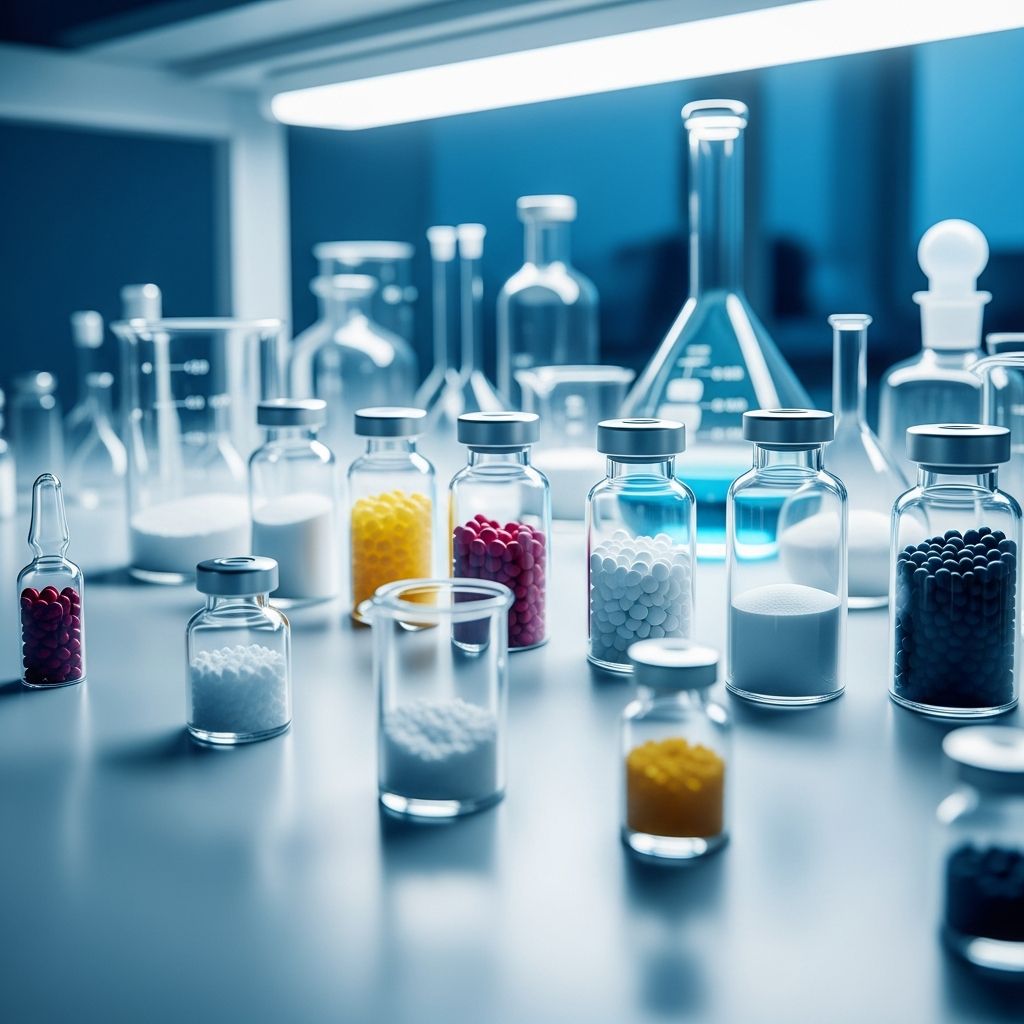
Excipients, often called inactive ingredients, form the backbone of modern pharmaceuticals. These substances, distinct from the active pharmaceutical ingredient (API), perform critical tasks that make medicines practical, stable, and usable. Without them, delivering precise doses of therapeutic agents would be challenging or impossible. This article delves into their roles, categories, regulatory oversight, and considerations for patient safety.
What Are Excipients and Why Do They Matter?
Excipients are all non-active components intentionally added to a drug formulation. Derived from the Latin ‘excipere’ meaning ‘to take out or receive,’ they support the API by improving manufacturability, stability, bioavailability, and patient acceptability. Virtually every marketed medicine contains excipients, often in greater quantities than the active ingredient itself.
They enable drugs to be processed into tablets, capsules, liquids, or injectables with desired properties like controlled release or enhanced solubility. For instance, excipients can modify viscosity, prevent aggregation during storage, or aid powder flow in production. Their selection hinges on the drug’s delivery route, dosage form, and compatibility with the API.
- Key benefits: Facilitate absorption, protect against degradation, improve taste/texture, and ensure uniform dosing.
- Challenges: Not always inert; some may influence pharmacokinetics or cause reactions in vulnerable populations.
Core Functions of Excipients in Drug Products
Excipients multitask throughout a medicine’s lifecycle—from manufacturing to administration. They aid processing, enhance product integrity, and optimize delivery.
| Function | Description | Examples |
|---|---|---|
| Disintegrants | Promote tablet breakdown in fluids for faster API release and absorption. | Starch, crospovidone, croscarmellose sodium, sodium starch glycolate. |
| Lubricants/Glidants | Improve flow and prevent sticking during compression; common in tablets/capsules. | Magnesium stearate, stearic acid, talc, silica. |
| Fillers/Diluents | Add bulk to achieve target dose volume, especially for potent APIs. | Microcrystalline cellulose, lactose, mannitol. |
| Binders | Hold powder particles together to form cohesive tablets. | Polyvinylpyrrolidone, hydroxypropyl methylcellulose. |
| Coatings | Protect from moisture/light, mask taste, or control release. | Polymers like hypromellose. |
Polymeric excipients enable controlled release, extending therapeutic effects. Preservatives, sweeteners, and colorants boost safety, palatability, and identification.
Types of Excipients by Chemical Nature and Origin
Excipients vary from simple natural compounds to synthetic polymers. Traditionally sourced from corn, sugar, or minerals, modern ones are complex for advanced delivery systems.
- Organic chemicals: Sugars (lactose), celluloses for filling/binding.
- Inorganics: Calcium phosphates as diluents.
- Semi-synthetics: Modified starches like sodium starch glycolate.
- Synthetics: Polyethylene glycol (solubilizers), cyclodextrins.
All must meet pharmacopeial standards (e.g., USP-NF, Ph. Eur., JP) and GMP for purity. Variations in production, like drying methods for microcrystalline cellulose, affect performance such as water uptake.
Related Stories



Safety Profile: Not Always Inactive
Once deemed inert, excipients are now recognized as potential influencers of drug performance and safety. They undergo rigorous evaluation but can cause issues, especially in infants, elderly, or those with allergies/intolerances.
The EMA mandates labeling excipients with known effects (e.g., aspartame in phenylketonuria patients) in SmPCs and PILs. High doses reveal toxicity in animals, though human therapeutic levels are safe. Adverse reactions, though rare, underscore checking formulations.
High-risk groups: Neonates (renal immaturity affects excipient clearance), metabolic disorder patients (e.g., avoiding certain sweeteners), allergy sufferers.
Regulatory Standards and Quality Control
Global bodies like the FDA, EMA, and pharmacopeias enforce excipient safety and quality. They must be pharma-grade, free of impurities, and assessed for decomposition products.
- Monographs specify tests for identity, purity, and functionality.
- GMP ensures consistent manufacturing.
- Excipient-controlled trials isolate API effects.
In solid oral forms—dominant due to stability/convenience—excipients like fillers dominate by volume but face pricing pressures.
Patient Considerations and Excipient Avoidance
Patients with sensitivities benefit from excipient-free or minimal formulations. Benefits include fewer reactions, better adherence, and diet compatibility (e.g., PKU avoiding phenylalanine sources).
However, complete removal isn’t always feasible; it could compromise stability or economics. Strategies: Choose ‘clean label’ products, consult pharmacists, or use compounding.
Innovations in Excipient Technology
Advancing delivery systems demand novel excipients for targeted release, nanotechnology, or biologics. Multifunctional ones reduce formulation complexity. Sustainability pushes bio-based alternatives.
Challenges persist: Ensuring equivalence across suppliers, as ‘same’ monograph specs may differ in performance.
Frequently Asked Questions (FAQs)
What percentage of a medicine is typically excipients?
Often more than the active ingredient, especially in low-dose drugs.
Are excipients safe for children?
Generally yes, but neonates may metabolize them poorly; check labels.
Can excipients cause allergies?
Yes, e.g., lactose intolerance or propylene glycol sensitivity.
How do I find excipient info for my medicine?
Review PILs, SmPCs, or databases like EMA/FDA sites.
Why can’t medicines be made without excipients?
They enable processing, stability, and efficacy; removal often impractical.
Excipients are indispensable for effective pharmacotherapy. Understanding them empowers informed choices, minimizing risks while maximizing benefits.
References
- Excipient – Wikipedia — Wikipedia. 2023-10-01. https://en.wikipedia.org/wiki/Excipient
- Definition of Pharmaceutical Excipients — Pharma Excipients. 2023-01-15. https://www.pharmaexcipients.com/pharmaceutical-excipients-some-definition/
- Understanding excipients in medicines — NHS Specialist Pharmacy Service. 2024-05-20. https://www.sps.nhs.uk/articles/understanding-excipients-in-medicines/
- What are excipients doing in medicinal products? — PubMed (Current Medical Research and Opinion). 2009-07-01. https://pubmed.ncbi.nlm.nih.gov/19567843/
- Tablet and Capsule Excipients — University of Maryland School of Pharmacy. 2023-11-10. https://www.pharmacy.umaryland.edu/facilities/applied-pharmaceutics-lab-aphl/capabilities/tablet-and-capsule-excipients/
- Excipients in pharmaceutical products — Metabolic Support UK. 2024-02-14. https://metabolicsupportuk.org/news-and-events/policy-hub/position-statements/excipients-in-pharmaceutical-products/
- The central role of excipients in drug formulation — European Pharmaceutical Review. 2018-06-12. https://www.europeanpharmaceuticalreview.com/article/18434/the-central-role-of-excipients-in-drug-formulation-2/
Similar Articles








Read full bio of medha deb