Excision of Skin Lesions: Complete Guide
Learn about skin lesion excision: procedures, preparation, aftercare, and scar management.
Excision of Skin Lesions: A Comprehensive Guide
Excision biopsy refers to the complete removal of a skin lesion by cutting it out entirely, often including a margin of surrounding healthy tissue. This procedure is one of the most common and effective methods for managing skin lesions, particularly those suspected of being cancerous or those causing cosmetic or symptomatic concerns. Understanding the indications, technique, aftercare, and expected outcomes can help patients make informed decisions about their dermatological care.
Why Skin Lesions Require Excision
A primary reason to excise a skin lesion is to remove skin cancer, including basal cell carcinoma, squamous cell carcinoma, and melanoma. However, excision may be recommended for several other reasons beyond malignancy:
- Cosmetic concerns or disfigurement
- Symptomatic lesions causing discomfort, itching, or bleeding
- Benign lesions that are enlarging or changing in appearance
- Lesions that are functionally problematic or interfering with daily activities
- Diagnostic uncertainty requiring histopathological examination
Your dermatologist will explain why the skin lesion needs excision and detail the procedure involved. Informed consent is essential, and you may need to sign a consent form indicating that you understand and agree to the surgical procedure.
Pre-Procedure Preparation and Consultation
Proper preparation before skin lesion excision is crucial for ensuring a safe procedure and optimal outcomes. During your consultation, inform your doctor about:
- Current medications, particularly aspirin, clopidogrel, dabigatran, and warfarin, which can increase bleeding risk
- Any allergies or adverse reactions to medications or materials
- Existing medical conditions that might affect healing or anesthesia
- Presence of a pacemaker or implanted defibrillator
- Over-the-counter supplements or herbal remedies, as many can lead to abnormal bleeding
Your dermatologist will assess the lesion, determine the appropriate surgical technique, and discuss expected scarring and recovery. This conversation helps establish realistic expectations regarding the final appearance of the surgical site.
Understanding Scarring in Skin Lesion Excision
It is impossible to fully excise a skin lesion without creating some degree of scarring. Careful surgical technique, however, can minimize scarring by taking skin surface tension lines into account. The goal is to orient the incision in a direction where the resulting scar will be less noticeable and blend better with natural skin features.
Surgeons typically follow skin relaxation tension lines (also called Langer’s lines) or orient excisions parallel to existing wrinkles and creases. On the face, dynamic lines can be identified by asking patients to smile, frown, or shut their eyes tightly, allowing the surgeon to place incisions in naturally occurring creases where scars heal more inconspicuously.
The Elliptical Excision Technique
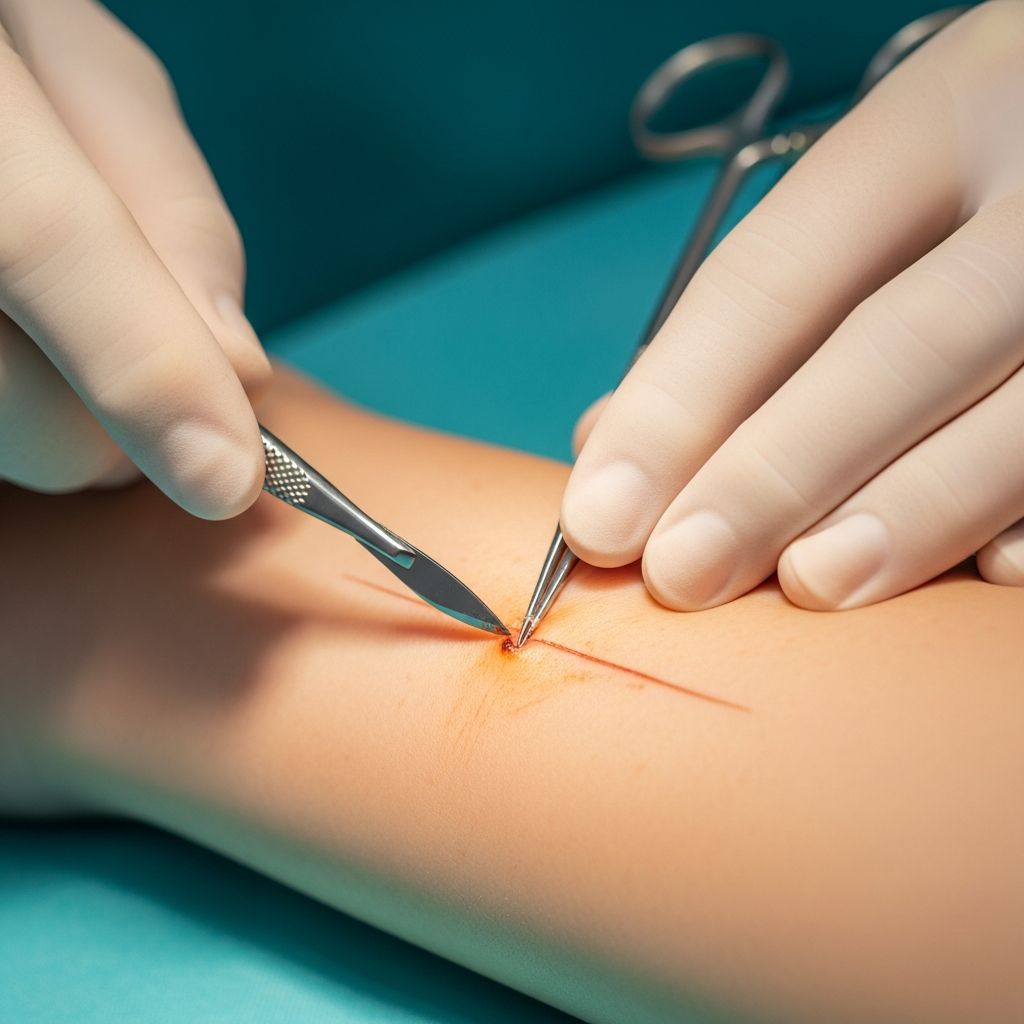
The most common type of excision is an elliptical excision. This technique involves removing the lesion along with surrounding normal skin in an elliptical (oval) shape. The ellipse is carefully designed so that the resulting scar runs parallel with existing skin creases, typically providing a wound under less tension and orientating the scar in a direction less noticeable to the eye.
The ellipse should be two to three times as long as it is wide, creating an elongated shape that follows natural skin tension lines. This geometry reduces wound tension and promotes better healing with a thinner, less conspicuous scar.
Related Stories



The Excision Procedure: Step-by-Step
Marking and Anesthesia
The area to be excised is first marked with a surgical marker to outline the planned ellipse. A local anesthetic injection is then administered to rapidly numb the area of skin involved and maintain numbness throughout the procedure. The anesthetic typically contains lidocaine (usually 2% concentration) with adrenaline (epinephrine) to constrict blood vessels and reduce bleeding.
Tissue Removal
The dermatologist carefully cuts around and under the lesion with a scalpel and sharp scissors, removing an appropriate margin of normal surrounding tissue. This margin is particularly important in malignant lesions:
- Basal cell and squamous cell carcinomas should be removed with a 3-4 mm margin, as these tumors are often larger than clinically evident
- Suspected melanomas should be excised with a 2-3 mm margin initially, with narrow margins recommended for melanocytic lesions
The surgeon dissects down to the mid-subcutaneous tissue to ensure complete removal of the lesion.
Specimen Processing
The excised lesion is placed in formalin and prepared for transport to the pathology laboratory. A pathologist will process and examine the specimen under a microscope, providing your doctor with a detailed report within a few days. This histopathological examination confirms whether the lesion was benign or malignant and whether adequate margins were achieved.
Wound Closure
The edges of the elliptical wound are sewn together using primary closure, creating a thin suture line. There may be two layers of sutures: an absorbable layer underneath and a surface layer that requires removal in 4-14 days. In some cases, special skin glue may be used to join the edges together instead of sutures.
A sterile dressing is applied, and detailed instructions are provided regarding wound care and when to schedule suture removal.
Post-Procedure Wound Care and Recovery
Immediate Aftercare
Your wound may feel tender for 1-2 hours after the excision when the local anesthetic wears off. During the initial recovery period:
- Leave the dressing in place for 48 hours or as advised by your dermatologist
- Avoid strenuous exertion and stretching of the surgical area until stitches are removed and for some time afterwards
- Keep the wound dry for 48 hours
Managing Bleeding
If bleeding occurs after the procedure, press on the wound firmly with a clean folded towel without removing the existing dressing or inspecting it for 20 minutes. If bleeding persists after this period, seek medical attention promptly.
Cleaning and Monitoring
After 48 hours, you can gently wash and dry the wound. A small amount of pinkness and tenderness around the wound edges is normal. However, if the wound becomes increasingly red or painful, consult your dermatologist promptly, as this could indicate infection requiring antibiotic treatment.
Scar Development and Management
The scar will initially be red and raised but usually reduces in color and size over several months. Factors affecting scar appearance include:
- Patient age and skin type
- Location of the lesion on the body
- Size of the excision
- Tension on the wound during healing
- Orientation of the incision relative to skin tension lines
- Post-operative care and sun protection
Protecting the scar from sun exposure during the first year following excision can help minimize discoloration and improve overall appearance. Many patients find that scars become less noticeable with time as they mature and fade.
Alternative Excision Techniques
Shave Excision
Lesions that are entirely above the skin surface can be shaved off as a tangential excision using a No. 10 scalpel blade or flexible DermaBlade. Light cautery or other hemostasis methods are used, and the wound is left to heal by secondary intention, meaning the body heals it naturally without sutures.
Punch Biopsy
Punch biopsy is suitable for suspected squamous cell and basal cell carcinomas but is inappropriate for suspicious melanocytic lesions, as sampling could miss melanoma. The procedure involves using a cylindrical punch tool to remove a core of tissue that is then submitted for histological examination.
Mohs Micrographic Surgery
Mohs surgery is an advanced technique performed under local anesthesia where the majority of the lesion is first removed using a curette, followed by precise removal of a 2-3 millimeter layer around the margins and under the base of the tumor. The lesion is carefully oriented, divided, color-coded, and mapped to ensure complete excision with high accuracy. This technique is particularly valuable for skin cancers in cosmetically sensitive areas or those with ill-defined borders.
Frequently Asked Questions
Q: Will my skin lesion excision leave a permanent scar?
A: Yes, excision will result in a permanent scar, but careful surgical technique can minimize its visibility. The scar typically becomes less noticeable over months to years as it matures and fades. Proper orientation of the incision along natural skin creases helps make the scar less conspicuous.
Q: How long does it take to receive pathology results?
A: Pathology results typically arrive within a few days after the procedure. The laboratory processes the specimen, examines it under a microscope, and provides your dermatologist with a detailed report confirming whether the lesion was benign or malignant and whether adequate margins were achieved.
Q: When should sutures be removed?
A: Suture removal typically occurs 4-14 days after the procedure, depending on the size and location of the lesion. Your dermatologist will provide specific timing recommendations during your post-operative consultation.
Q: What medications should I avoid before excision?
A: Inform your doctor about all medications, particularly blood thinners such as aspirin, clopidogrel, dabigatran, and warfarin, as these increase bleeding risk. Additionally, disclose any over-the-counter supplements or herbal remedies, as many can affect bleeding and wound healing.
Q: Can I shower or bathe after the procedure?
A: Keep the wound dry for the first 48 hours. After this period, you can gently wash and dry the wound. Avoid soaking or submerging the wound until sutures are removed.
Q: What activities should I avoid during recovery?
A: Avoid strenuous exertion and stretching of the surgical area until stitches are removed and for some time afterwards. This prevents wound tension and reduces complications that could compromise healing and scar appearance.
Conclusion
Excision of skin lesions is a well-established, effective procedure for removing skin cancers and problematic benign lesions. Understanding the surgical technique, proper pre-procedure preparation, and comprehensive post-operative care are essential for achieving optimal outcomes with minimal scarring. Close communication with your dermatologist throughout the process ensures that your specific needs are addressed and that you receive appropriate guidance for successful healing and the best possible cosmetic result.
References
- Excision biopsy of skin lesions — DermNet. 2024. https://dermnetnz.org/topics/excision-of-skin-lesions
- Surgical procedures – Common skin lesions — DermNet. 2024. https://dermnetnz.org/cme/lesions/surgical-procedures
- Skin biopsy — DermNet. 2024. https://dermnetnz.org/topics/skin-biopsy
- Introduction to skin surgery — DermNet. 2024. https://dermnetnz.org/cme/lesions/introduction-to-skin-surgery
- Basal Cell Carcinoma: Symptoms, Causes, and Treatment — DermNet. 2024. https://dermnetnz.org/topics/basal-cell-carcinoma
Similar Articles








Read full bio of medha deb