Exercise Stress Echocardiogram: Purpose and Procedure
Comprehensive guide to exercise stress echocardiograms for diagnosing heart disease and monitoring cardiac health.
Exercise Stress Echocardiogram: Purpose and Procedure Details
An exercise stress echocardiogram is an ultrasound examination of your heart performed before and immediately after exercise. This diagnostic test produces moving images that demonstrate how effectively your heart functions when subjected to physical stress. Healthcare providers use this examination to diagnose or monitor various heart conditions and ensure patients receive appropriate treatment based on their cardiac status.
Also known as stress echo or echo stress test, this cardiac imaging procedure assesses your heart’s function when it is beating rapidly. The stress is naturally created by exercising on a treadmill or stationary bicycle, making it a safe and non-invasive way to evaluate cardiac performance under demanding conditions.
What is an Exercise Stress Echocardiogram?
An exercise stress echocardiogram combines two fundamental diagnostic approaches: echocardiography and stress testing. Echocardiography uses an ultrasound transducer to send out sound waves that bounce or echo off solid tissues but move through softer tissues. The transducer then captures these echoes and converts them into moving images of the heart.
The stress component involves physical exercise that gradually increases in intensity. By observing how your heart responds during this increased workload, healthcare providers can identify abnormalities that may not be visible when your heart is at rest. For example, if you have a blocked coronary artery, the muscle tissue that receives blood from that artery may not function well under stress. By comparing echocardiogram images under stress with those at rest, your provider can clearly see this change in muscle function.
Primary Uses and Indications
Healthcare providers use exercise stress echocardiograms most often to diagnose coronary artery disease, a condition that occurs when blood vessels carrying blood to your heart muscle become blocked. However, stress echo can help diagnose or monitor the status of other conditions, including:
- Valvular heart disease
- Cardiomyopathy
- Arrhythmias
- Left ventricular dysfunction
- Myocardial ischemia
You may receive this test if you have symptoms of heart disease, especially if they worsen with activity. Common symptoms that warrant testing include chest pain, shortness of breath, palpitations, and unusual fatigue during physical exertion.
Who Should Undergo Exercise Stress Echocardiography?
Beyond those with active symptoms, other individuals who might benefit from an exercise stress echocardiogram include those with a family history of heart disease, individuals with multiple cardiovascular risk factors, patients recovering from heart attacks, and those with known heart conditions requiring monitoring. Your healthcare provider may also recommend this test if the results of an initial stress test are unclear, as stress echocardiography provides more detailed information about blood flow through the heart’s chambers and the effects of exercise.
When the Test May Not Be Appropriate
A stress echo might be unsafe if you have certain heart conditions. Healthcare providers will evaluate your medical history and current cardiac status before recommending this test. Contraindications may include acute heart failure, severe aortic stenosis, uncontrolled arrhythmias, or recent myocardial infarction. Your healthcare provider will determine if this test is suitable for your individual situation.
Preparation Guidelines
Proper preparation is essential for accurate test results. Your provider will give you specific instructions on how to prepare, as substances such as caffeine, certain medications, food, and nicotine can interfere with the test results. In general, you should:
Related Stories



- Avoid caffeine for 24 hours before the test
- Discontinue certain medications as directed by your healthcare provider
- Avoid heavy meals immediately before the procedure
- Refrain from nicotine use for several hours prior to testing
- Wear comfortable, loose-fitting clothing
- Bring a list of current medications
- Arrange for transportation home after the procedure
The Exercise Stress Echocardiogram Procedure
Understanding what to expect during the procedure can help reduce anxiety and ensure you are mentally prepared. The test typically follows a structured process designed to safely assess your heart’s response to increasing physical demands.
Pre-Exercise Phase
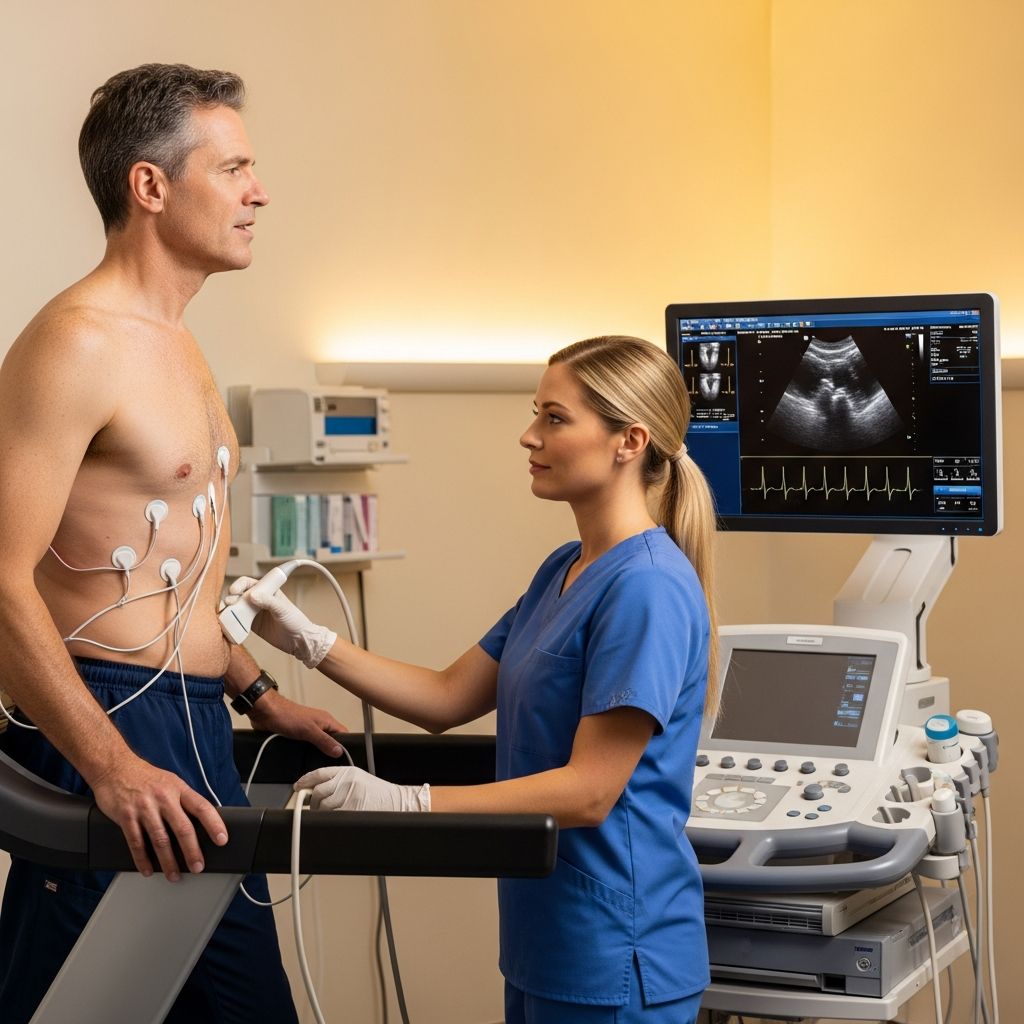
Before beginning the exercise portion, a cardiac sonographer will prepare you for monitoring. Small, sticky patches called electrodes are placed on your chest and are connected to an EKG monitor to follow your heart’s electrical activity. Your resting heart rate and blood pressure will be measured and recorded. A resting echocardiogram will be performed to establish baseline images of your heart at rest. This initial assessment provides comparison data for later stress images.
Exercise Phase
After the resting echocardiogram, you will begin exercising on a treadmill or stationary bike. The intensity of the exercise gradually increases throughout the test. While exercising, technicians will monitor you closely and ask you how you are feeling. They will also take your blood pressure regularly at intervals. The exercise will continue after you have reached a heart rate goal that depends on your resting rate, but you can stop at any point if you feel you cannot continue.
If technicians observe any problem with your heart during the test, they will stop the procedure even if you feel you can continue. The exercise portion of the test typically takes fewer than approximately 15 minutes, though the entire procedure requires about one hour.
Post-Exercise Phase
When you stop exercising, you will get off the treadmill or bike and lie on your left side on the exam table so the technician can perform another echocardiogram. Because the echo must be performed immediately after exercise, it is done quickly. This means that the picture obtained may not be as detailed as in an ordinary echocardiogram, but it captures the essential information about heart function during stress. Technicians will continue to monitor your heart until your blood pressure and heart rate return to normal levels, which typically takes about 15 minutes. Once your heart rate has recovered, you are free to go home.
Alternative Testing Methods
For individuals who cannot exercise due to physical limitations, medical conditions, or other factors, healthcare providers have developed alternative methods to create stress on the heart. These non-exercise stress tests include dobutamine stress echocardiograms and pharmacological stress testing, which use medications to stimulate the heart’s response similar to exercise without requiring physical exertion.
Safety Profile and Potential Risks
Exercise stress echocardiography is considered a safe procedure with few significant side effects. The main risks are related to your underlying heart condition rather than the test itself. By stressing your heart, you may experience symptoms such as an abnormal heart rate (arrhythmia), chest pain and pressure (angina), or shortness of breath. However, your provider will monitor you closely for signs of distress throughout the procedure and stop the test if necessary to ensure your safety.
Serious complications are rare, particularly when the test is performed in a controlled medical environment with appropriate monitoring and trained personnel present. The diagnostic value of identifying significant cardiac abnormalities typically far outweighs the minimal risks associated with the procedure.
Interpreting Your Results
The results tell you whether your heart is functioning as it should or if you have evidence of heart disease. Your provider will explain the findings and discuss your next steps, which may include additional testing or treatment depending on what the images reveal.
If results are normal, your heart is pumping effectively and there is adequate blood flow to the heart muscle during stress. This typically indicates a lower risk of significant coronary artery disease. If abnormalities are detected, your provider will explain what they mean for your overall health and may recommend additional diagnostic tests such as coronary angiography or further imaging studies to determine the best course of treatment.
Advantages Over Standard Stress Testing
An exercise stress echocardiogram provides more detailed information than a basic stress test that only uses EKG monitoring. While a standard stress test can indicate general cardiac function, stress echocardiography allows your healthcare provider to visualize the actual movement and function of different sections of your heart muscle and observe blood flow through the heart’s chambers. This enhanced visualization enables more precise diagnosis and better assessment of which areas of the heart may be affected by blockages or other abnormalities.
Frequently Asked Questions
Q: How long does an exercise stress echocardiogram take?
A: The entire procedure typically takes about one hour. The actual exercise portion lasts fewer than 15 minutes, with additional time required for preparation, resting echocardiograms, and recovery monitoring.
Q: Can I eat or drink before my stress echocardiogram?
A: Your provider will give specific instructions, but generally you should avoid caffeine for 24 hours before the test and avoid heavy meals immediately before the procedure. Follow all preparation guidelines provided by your healthcare team.
Q: What should I wear during the test?
A: Wear comfortable, loose-fitting clothing and sturdy athletic shoes suitable for walking on a treadmill or pedaling a stationary bike. You will need to change into a hospital gown so electrodes can be placed on your chest.
Q: Is the procedure painful?
A: The procedure itself is not painful. The ultrasound transducer may feel cold when first applied to your skin, and the electrodes may feel slightly sticky. You may experience chest discomfort or shortness of breath during exercise, which is expected and monitored by your healthcare team.
Q: What medications should I stop taking before the test?
A: Certain medications, particularly some heart medications and stimulants, may interfere with test results. Your provider will give you specific instructions about which medications to continue or discontinue before the procedure.
Q: When will I get my results?
A: A cardiologist will review your test images and results. Your healthcare provider will typically discuss results with you shortly after the procedure or within a few days.
Conclusion
An exercise stress echocardiogram is one of many tests healthcare providers use to diagnose and monitor heart-related diseases. It specifically assesses your heart function under stress and can show problems that aren’t visible when your heart is resting. Your provider may recommend an echo stress test if you have symptoms of heart disease, an existing heart condition, or multiple cardiovascular risk factors. This is a safe, relatively quick test that provides important information about your heart health and helps guide clinical decision-making for your ongoing cardiac care.
References
- Stress Echo — Hypertrophic Cardiomyopathy Association. https://www.4hcm.org/diagnostic-tools/stress-echo
- Stress Test: Purpose, Procedure, Risks and Results — Cleveland Clinic. 2024. https://my.clevelandclinic.org/health/diagnostics/16984-exercise-stress-test
- Exercise Stress Echocardiogram: Purpose and Procedure Details — Cleveland Clinic. 2024. https://my.clevelandclinic.org/health/diagnostics/16983-exercise-stress-echocardiogram
- Dobutamine Stress Echocardiogram — Cleveland Clinic. 2024. https://my.clevelandclinic.org/health/diagnostics/16935-dobutamine-stress-echocardiogram
- Echocardiogram: Types & What To Expect — Cleveland Clinic. 2024. https://my.clevelandclinic.org/health/diagnostics/16947-echocardiogram
Similar Articles








Read full bio of medha deb