Exercise Stress Test: Purpose, Procedure, and Results
Complete guide to exercise stress testing: how it works, what to expect, and why your doctor recommends it.
What is an Exercise Stress Test?
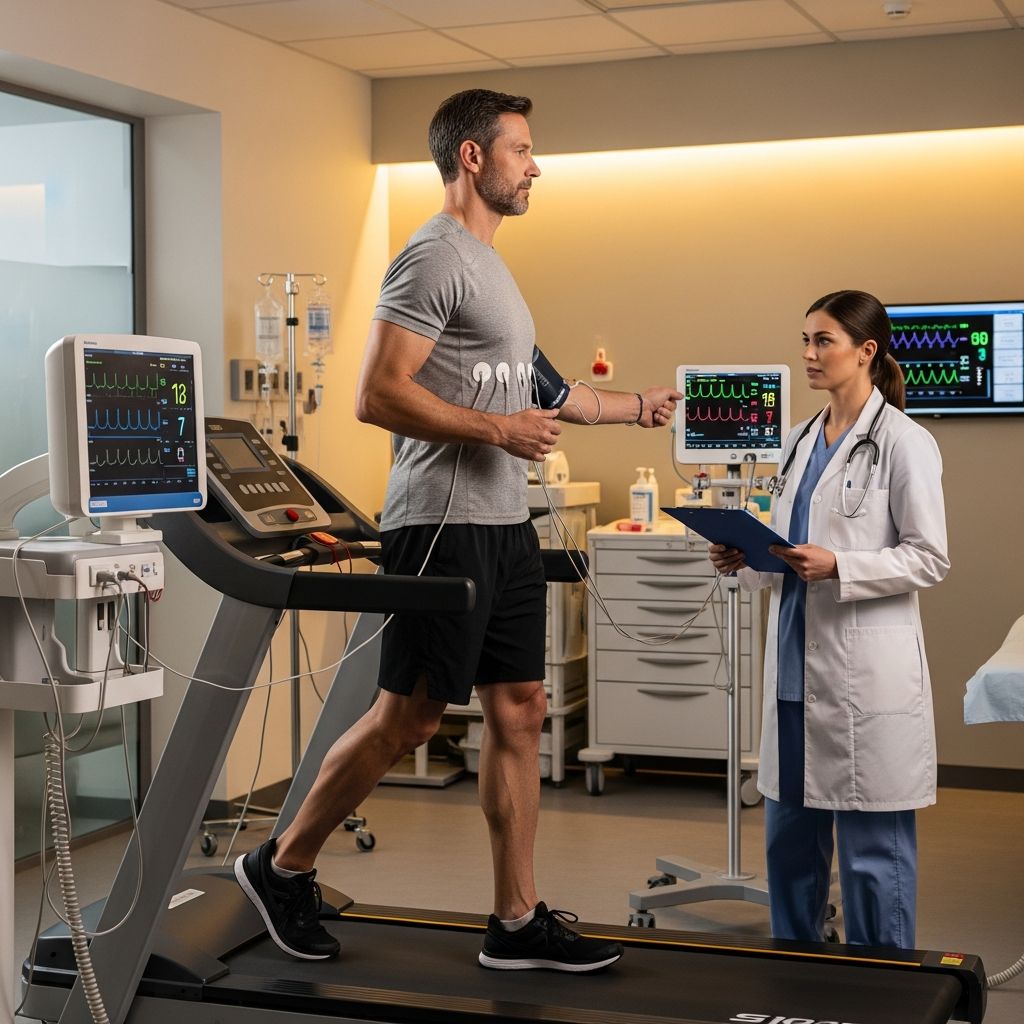
An exercise stress test is a diagnostic procedure that evaluates how your heart responds to physical exertion. During this test, your healthcare provider monitors your heart’s electrical activity, heart rate, blood pressure, and oxygen levels while you exercise on a treadmill or stationary bicycle. The test helps identify whether your heart receives adequate blood flow during increased physical demands, which can reveal underlying heart conditions that might not be apparent when your body is at rest.
The exercise stress test differs from other cardiac evaluations because it specifically assesses your heart’s performance under stress. This dynamic evaluation provides valuable information about your cardiovascular system’s ability to handle the demands of physical activity, making it an essential tool for cardiologists in diagnosing and managing various heart conditions.
Why Your Doctor May Recommend an Exercise Stress Test
Your healthcare provider may recommend an exercise stress test for several important reasons. The test serves multiple diagnostic and monitoring purposes that help guide your cardiovascular care:
- Find problems with your heartbeat, including irregular heart rates and rhythm abnormalities
- Check for the presence of heart disease, particularly coronary artery disease
- Evaluate how well your current treatment plan is working for managing existing heart conditions
- Help develop a safe, personalized exercise plan based on your heart’s capabilities
- Assess chest pain or other symptoms that occur during physical activity
- Evaluate shortness of breath and determine its cardiovascular origins
- Monitor heart function in patients with heart failure or other chronic cardiac conditions
Preparing for Your Exercise Stress Test
Proper preparation is essential for obtaining accurate results and ensuring your safety during the test. Your healthcare provider will provide specific instructions tailored to your medical situation, but general preparation guidelines include:
Medication Considerations
Ask your doctor about your current medications before the test. Some medications may need to be adjusted or temporarily stopped before your exercise stress test. Your healthcare provider will advise you on which medications to take or avoid. If you have diabetes, discuss your medication and meal timing with your doctor, as blood sugar management is important before the procedure.
Food and Drink
Avoid eating for at least four hours before your test. This fasting period helps prevent nausea and discomfort during exercise. You may drink water, but limit your intake to small amounts. Your healthcare team wants to ensure your digestive system isn’t competing with your cardiovascular system for blood flow during the test.
Clothing and Footwear
Wear comfortable, loose-fitting clothes and sturdy walking shoes with good support. Avoid tight clothing that might restrict your movement or make monitoring your vital signs difficult. Do not wear jewelry or bring valuables to your appointment, as you’ll need to move freely during the exercise portion.
Related Stories



Lifestyle Factors
Do not smoke or use any nicotine products for at least two hours before your test. Nicotine can affect your heart rate and blood pressure, potentially compromising test accuracy. Additionally, avoid caffeine before your appointment, as it can influence your heart’s response to exercise.
How the Exercise Stress Test Works
Pre-Test Preparation
When you arrive for your appointment, a lab technician will review your medical history and explain the test procedure in detail. Small, sticky patches called electrodes will be placed on your chest to record your heart’s electrical activity. These electrodes connect to an electrocardiogram (EKG or ECG) machine that continuously monitors your heart’s rhythm throughout the test.
Baseline Measurements
Before exercise begins, your healthcare team will record your baseline vital signs, including your resting heart rate and blood pressure. These measurements serve as comparison points to understand how your heart responds to increasing physical demands. The technician will explain the rating of perceived exertion (RPE) scale, which uses numbers from 1 to 10 to help you communicate how hard you’re working during the test.
The Exercise Component
You’ll begin exercising on either a treadmill or stationary bicycle, starting at a very easy pace. Every minute or so, the technician will gradually increase the difficulty by either increasing the treadmill’s speed and incline or the bicycle’s resistance. This progressive increase in intensity continues until you reach your maximum effort or until the test must be stopped for medical reasons.
Throughout the exercise, you’ll breathe through a facemask or mouthpiece that measures the oxygen and carbon dioxide in your breath. This data, combined with your heart rate and blood pressure readings, provides comprehensive information about your cardiovascular and respiratory system’s efficiency. You may experience typical exercise sensations including increased sweating, leg fatigue, and faster breathing—these are normal responses.
Monitoring and Safety
A technician continuously watches your vital signs on monitors and observes you for any concerning symptoms. A physician supervises the entire test and stands ready to respond to any medical concerns. You can communicate your condition using hand gestures or by pointing to the RPE scale. If you experience unusual symptoms, inform your technician immediately and the test will stop.
Test Duration
Your entire appointment typically lasts about one hour, though the actual exercise portion usually lasts between 7 to 20 minutes, depending on your fitness level and medical condition. Most people cannot exercise at maximum intensity for more than 10 to 15 minutes, which is normal and expected.
Cool-Down Period
After you’ve reached your maximum effort or the test endpoints, you’ll gradually slow down during a cool-down period. This allows your heart rate and blood pressure to return gradually toward baseline levels. The technician will continue monitoring your vital signs during this recovery phase. You’ll sit down, drink water, and rest until your body returns to a stable state. The lab staff will ensure you’re feeling well before you leave.
What to Expect During the Test
Understanding what happens during an exercise stress test can reduce anxiety and help you prepare mentally for the experience. The test is designed to push your cardiovascular system, so you should expect physical sensations similar to a vigorous workout:
- Your heart rate will increase progressively as the test becomes more challenging
- Your blood pressure will rise in response to increased physical demands
- Your breathing will become faster and deeper
- You’ll sweat as your body works harder
- Your legs will feel increasingly tired as you continue exercising
- Your mouth may feel dry from breathing through the mouthpiece
- You may experience mild chest discomfort or pressure, which should be reported immediately
The test will end when you’re too tired to continue safely, when you reach your target heart rate, or when the physician detects changes on the EKG that warrant stopping. Reaching exhaustion is actually the goal—it ensures the test provides meaningful diagnostic information about your heart’s true capacity.
Risks and Safety Considerations
While exercise stress tests are generally safe procedures performed in controlled medical environments, it’s important to understand potential risks. Serious complications are rare, but your healthcare provider will assess whether the test is appropriate for your specific situation.
Possible Risks
- Fainting or dizziness
- Chest pain or pressure
- Heart attack (rare)
- Abnormal heart rhythms
- Severe shortness of breath
Safety Precautions
Before you undergo the test, your healthcare provider will evaluate your medical history to ensure it’s safe for you. The test may not be recommended if you have certain conditions such as uncontrolled high blood pressure, recent heart attack, unstable angina, severe heart valve disease, or uncontrolled heart failure. The testing facility maintains emergency equipment and trained staff prepared to respond immediately to any medical emergency. Lab technicians watch EKG monitors continuously and will stop the test immediately if concerning changes occur.
After Your Exercise Stress Test
Once you’ve completed the cool-down period and your vital signs have stabilized, the technician will remove the electrodes and other monitoring devices. You’ll sit comfortably, continue hydrating with water, and rest for a few minutes. The lab staff will confirm you’re feeling well and stable before clearing you to leave. Most people can return to normal activities immediately after the test, though some may feel tired from the exertion.
You’ll receive instructions about when to resume your normal medications if any were held before the test. Your healthcare provider will schedule a follow-up appointment to discuss your results in detail. During this meeting, your doctor will explain what the findings mean for your cardiovascular health and discuss any recommended next steps, which may include additional testing, lifestyle modifications, or treatment adjustments.
Understanding Your Results
Exercise stress test results provide your healthcare provider with objective data about your heart’s function during physical stress. The results help determine whether your heart receives adequate blood supply during exercise and whether your heart rhythm remains stable under demands. Your doctor will explain whether your results are normal or abnormal and what this means for your specific situation.
If results are normal, this generally indicates your heart is functioning well under stress and can handle physical activity safely. Abnormal results may indicate coronary artery disease, insufficient blood flow to your heart muscle, or heart rhythm problems that require further evaluation or treatment. Your healthcare provider will discuss any findings and recommend appropriate follow-up care tailored to your needs.
Frequently Asked Questions
Q: How long does an exercise stress test take?
A: Your appointment will typically last about one hour total. The actual exercise portion usually lasts between 7 and 20 minutes, depending on your fitness level and heart’s response. The remainder of the time includes preparation, baseline measurements, and cool-down.
Q: Will the test be painful?
A: The test itself is not painful, though you may experience chest discomfort, pressure, or shortness of breath similar to what you might feel during vigorous exercise. Tell your technician immediately if you experience severe pain, as this could indicate a serious problem.
Q: What should I do if I have symptoms during the test?
A: Report any unusual symptoms immediately to your technician. These include severe chest pain, extreme shortness of breath, dizziness, nausea, or irregular heartbeats. The test can be stopped at any time for your safety.
Q: Can I eat before my exercise stress test?
A: No, you should fast for at least four hours before the test. Eating can cause nausea during exercise and may affect test results. You may drink small amounts of water, but discuss fluid intake with your healthcare provider.
Q: What medications should I take before the test?
A: Ask your healthcare provider specifically which medications to take or avoid before your test. Some cardiac medications may need to be held temporarily to obtain accurate results, while others should be continued as normal.
Q: When will I get my results?
A: Your healthcare provider will schedule a follow-up appointment to discuss your results in detail. The timing depends on your provider’s schedule, but typically occurs within days to a couple of weeks after the test.
Conclusion
An exercise stress test is a valuable diagnostic tool that provides your healthcare provider with important information about how your heart responds to physical demands. By understanding the purpose, preparation requirements, procedure details, and what to expect, you can approach the test with confidence. Your active participation and honest communication about your symptoms during the test help ensure accurate results that guide your cardiovascular care. If your doctor has recommended an exercise stress test, discussing any concerns or questions with your healthcare team will help you feel prepared and support the best possible outcomes for your heart health.
References
- Cardiopulmonary Exercise Test (CPET) — Cleveland Clinic. 2025. https://my.clevelandclinic.org/health/diagnostics/17221-metabolic-exercise-stress-test
- Exercise Stress Echocardiogram: Purpose and Procedure Details — Cleveland Clinic. 2025. https://my.clevelandclinic.org/health/diagnostics/16983-exercise-stress-echocardiogram
- What Happens During a Cardiac Stress Test? — Cleveland Clinic, Wael Jaber, MD. 2025. https://my.clevelandclinic.org/podcasts/health-essentials/what-happens-during-a-cardiac-stress-test
- Exercise Stress Test Patient Education Handout — Cleveland Clinic. 2025. https://my.clevelandclinic.org/-/scassets/files/org/heart/patient-education/heart-basics-handouts/ll-exercise-stress-test.pdf
Similar Articles








Read full bio of medha deb