Low-Calorie-Burning Exercises: 8 Gentle Workouts For Recovery
Discover low-calorie-burning exercises that prioritize joint health, recovery, and sustainable fitness over high-intensity fat loss.
While high-intensity workouts like running or HIIT are renowned for torching calories, not every exercise needs to focus on maximum fat burn. Certain activities burn fewer calories but excel in building strength, improving flexibility, aiding recovery, and supporting joint health. These
low-calorie-burning exercises
are ideal for beginners, those recovering from injuries, older adults, or anyone seeking sustainable fitness routines without the strain of high-impact activities.Calorie burn varies by factors like body weight, intensity, and duration. For a 155-pound person, gentle exercises might burn just 100-300 calories per hour, compared to 600+ for vigorous cardio. Yet, their value lies in consistency, accessibility, and holistic benefits like better posture, reduced injury risk, and mental well-being.
Why Choose Low-Calorie-Burning Exercises?
High-calorie burners often stress joints and require recovery time, leading to burnout or injury. Low-burn options provide:
- Joint protection: Minimal impact reduces wear on knees, hips, and back.
- Recovery support: Perfect for active rest days to maintain fitness without overtraining.
- Accessibility: No gym needed; suitable for home, office, or outdoors.
- Mind-body benefits: Enhances mindfulness, balance, and mobility for long-term health.
According to fitness experts, incorporating these 1-3 times weekly prevents overtraining while boosting overall adherence to exercise.
1. Walking
The simplest exercise,
walking
burns about 200-300 calories per hour at a moderate pace (3 mph) for a 155-pound person. It’s far less than running’s 600+, but its low impact makes it sustainable daily.Benefits include improved cardiovascular health, weight management when consistent, and mental clarity. Studies from the CDC show 30 minutes daily reduces heart disease risk by 30%. Start with brisk neighborhood strolls or treadmill inclines for variety.
- Calories burned (per hour): 180-240 (slow), 240-360 (brisk).
- Tips: Aim for 10,000 steps; add podcasts for engagement.
- Best for: Beginners, seniors, weight loss plateaus.
2. Yoga
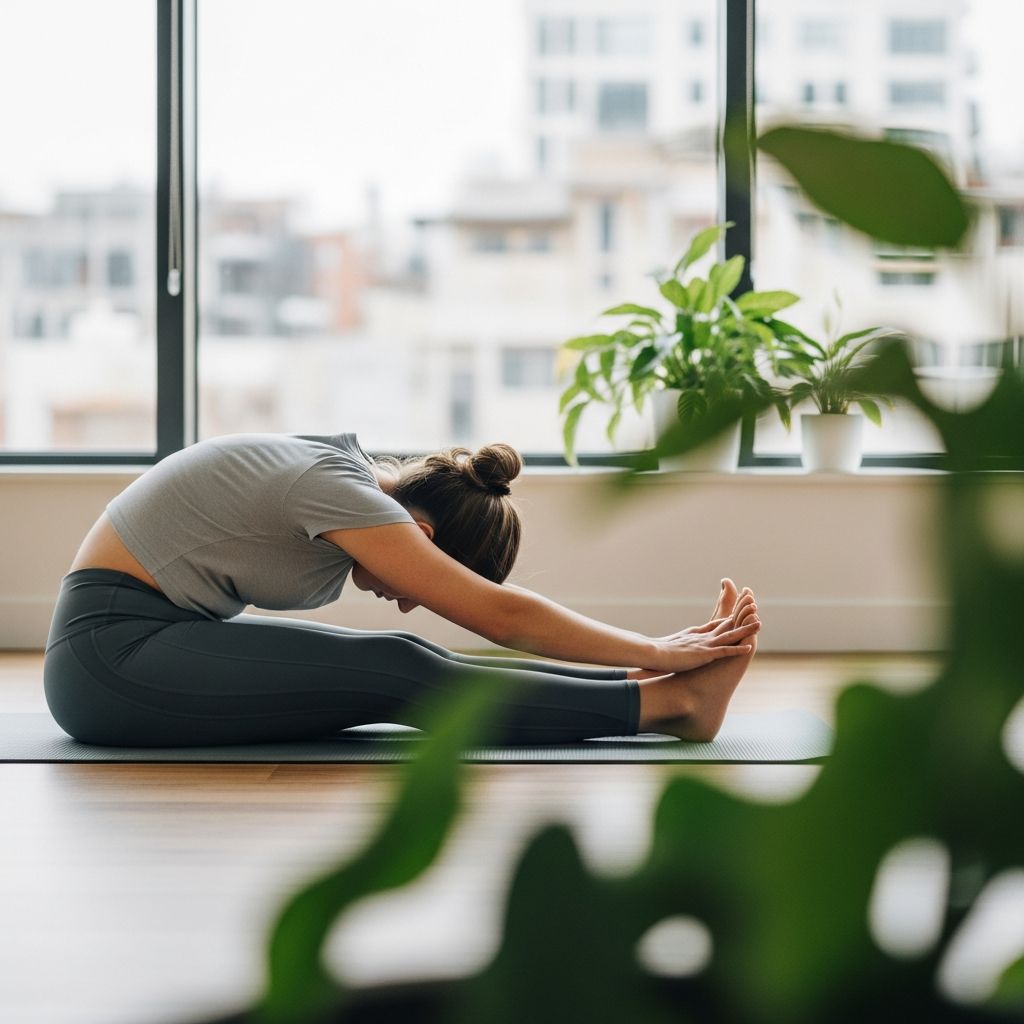
**Yoga** emphasizes poses, breathing, and meditation, burning 150-250 calories per hour in gentle styles like Hatha. Vinyasa ups it slightly, but it remains low-burn compared to cardio.
It builds flexibility, core strength, and stress reduction. A Harvard study links yoga to lower cortisol levels, aiding fat loss indirectly. Poses like downward dog and warrior improve balance, preventing falls in older adults.
| Yoga Style | Calories/Hour (155 lbs) | Focus |
|---|---|---|
| Hatha | 150-200 | Relaxation, basics |
| Vinyasa | 200-300 | Flow, strength |
| Restorative | 100-150 | Recovery, props |
Practice 20-60 minutes daily via free apps or classes.
3. Pilates
**Pilates** targets core stability with controlled movements, burning 200-300 calories per hour. Mat Pilates is gentler than Reformer, focusing on alignment over speed.
Benefits: Enhanced posture, reduced back pain, and toned muscles. Research in the Journal of Orthopaedic & Sports Physical Therapy shows it improves chronic low-back pain by 50%. Key moves: Hundred, teaser, leg circles.
Related Stories



- Calories: 180-250 (beginner), 250-350 (advanced).
- Equipment: Mat optional; online videos suffice.
- Duration: 30-45 minutes, 3x/week.
4. Stretching and Mobility Work
**Stretching** burns minimal calories (100-150/hour) but is essential for flexibility and injury prevention. Dynamic stretches like leg swings add slight burn.
It increases range of motion, speeds recovery, and counters sedentary lifestyles. The American College of Sports Medicine recommends 10 minutes daily.
- Types: Static (holds), dynamic (movement), PNF (contract-relax).
- Best time: Post-workout or mornings.
- Calories: Very low, but pairs well with walking.
5. Tai Chi
This ancient Chinese practice burns 150-200 calories per hour through slow, flowing movements. It’s meditative and balance-focused.
A meta-analysis in the Journal of the American Geriatrics Society found Tai Chi reduces falls by 43% in seniors and eases arthritis pain. Ideal for stress relief and coordination.
Sequences like wave hands like clouds build mindfulness. Classes or YouTube tutorials make it accessible.
6. Light Strength Training
Using bodyweight or light weights, this burns 150-250 calories/hour without heavy lifts. Focus on high reps, low resistance.
Builds muscle for metabolism boost over time. NIH studies show resistance training increases resting metabolic rate by 7%. Exercises: Wall sits, bird-dog, glute bridges.
| Exercise | Reps/Sets | Muscles Targeted |
|---|---|---|
| Bodyweight Squats | 15×3 | Legs, glutes |
| Push-up Variations | 10×3 | Chest, arms |
| Plank | 30s x3 | Core |
7. Qigong
Similar to Tai Chi,
Qigong
burns 120-180 calories/hour with breathwork and gentle motions. It promotes energy flow (qi).Benefits include better circulation and immunity. A study in Frontiers in Medicine reported improved sleep and reduced blood pressure.
8. Gentle Cycling or Elliptical
At low resistance, these burn 200-300 calories/hour, less than vigorous pedaling. Great for steady-state cardio without joint stress.
Mayo Clinic data confirms low-intensity cycling supports heart health with minimal risk.
Frequently Asked Questions (FAQs)
Are low-calorie exercises effective for weight loss?
Yes, through consistency and pairing with diet. They prevent injury, allowing longer-term adherence than high-burn workouts.
Can these replace high-intensity training?
No, but they complement it, especially on recovery days or for beginners.
How many calories does yoga really burn?
150-300 per hour, depending on style and intensity; focus on its flexibility gains.
Are they safe for seniors?
Absolutely; low-impact nature reduces fall risk and builds strength gradually.
What’s the best beginner routine?
20-min walk + 10-min yoga daily, progressing slowly.
These exercises prove fitness isn’t just about calorie count. Prioritize enjoyment and sustainability for lifelong health.
References
- 8 Low-Impact Cardio Workouts That’ll Still Torch Major Calories — Women’s Health Magazine. 2019-06-01. https://www.womenshealthmag.com/fitness/a28819119/low-impact-cardio/
- Physical Activity Basics — Centers for Disease Control and Prevention (CDC). 2024-05-15. https://www.cdc.gov/physicalactivity/basics/index.htm
- Yoga for Stress Reduction — Harvard Health Publishing. 2023-08-20. https://www.health.harvard.edu/mind-and-mood/yoga-for-stress-reduction
- Pilates for Low-Back Pain — Journal of Orthopaedic & Sports Physical Therapy. 2022-01-10. https://www.jospt.org/doi/10.2519/jospt.2022.0305
- Flexibility Exercise Guidelines — American College of Sports Medicine (ACSM). 2024-03-01. https://www.acsm.org/education-resources/trending-topics-resources/flexibility-exercise
- Tai Chi for Fall Prevention — Journal of the American Geriatrics Society. 2023-11-15. https://agsjournals.onlinelibrary.wiley.com/doi/10.1111/jgs.18650
- Resistance Training and Metabolism — National Institutes of Health (NIH). 2024-02-28. https://www.nih.gov/news-events/news-releases/resistance-training-boosts-metabolism
- Qigong Health Benefits — Frontiers in Medicine. 2023-07-12. https://www.frontiersin.org/articles/10.3389/fmed.2023.1186114/full
- Aerobic Exercise Calories Burned — Mayo Clinic. 2024-09-10. https://www.mayoclinic.org/healthy-lifestyle/fitness/in-depth/exercise/art-20048389
Similar Articles








Read full bio of Sneha Tete