Exfoliative Cheilitis: Causes, Diagnosis, And Treatment Guide
Understanding the causes, symptoms, diagnosis, and management of persistent lip peeling in exfoliative cheilitis.
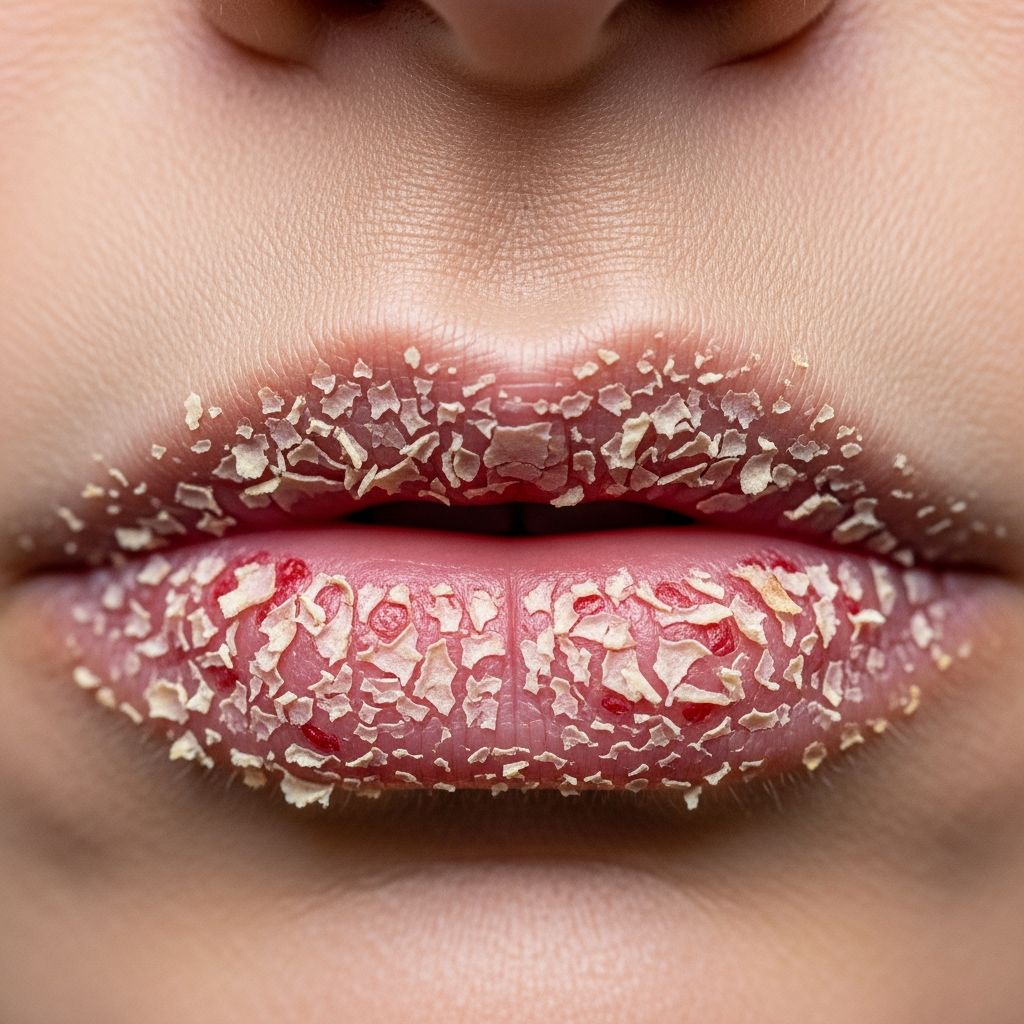
Exfoliative cheilitis is an uncommon chronic inflammatory condition characterized by persistent peeling of the vermilion border of the lips, accompanied by excessive production and desquamation of thick keratin scales. This rare reactive disorder primarily affects the lips, leading to discomfort, aesthetic concerns, and functional issues such as pain during eating, speaking, or smiling. While the exact etiology remains elusive, it often presents in isolation or secondary to psychological factors, habits, or environmental triggers. Diagnosis relies on clinical examination, exclusion of infections or systemic diseases, and histopathology showing nonspecific inflammation. Treatment proves challenging, with many cases resistant to conventional therapies, though emerging options like laser pinhole methods show promise.
What is Exfoliative Cheilitis?
Exfoliative cheilitis manifests as continuous, cyclic peeling of the superficial keratin layers from the lips’ vermilion, resulting in thick, yellowish-white scales that repeatedly shed, exposing a raw, erythematous surface prone to fissuring, crusting, and bleeding. The condition predominantly involves both upper and lower lips symmetrically, though asymmetry can occur. Patients experience dryness, burning sensations, edema, and intermittent oozing, which exacerbate the peeling cycle. Unlike simple chapped lips, this disorder persists for months to years, significantly impacting quality of life due to visible disfigurement and psychological distress. Factitial cheilitis, a subtype driven by self-inflicted behaviors, frequently mimics or evolves into exfoliative cheilitis through repetitive trauma.
Who Gets Exfoliative Cheilitis?
Exfoliative cheilitis most commonly affects young adults, particularly females in their late teens to early thirties, though cases in children and older individuals have been documented. It is rare overall, with limited epidemiological data, but case series suggest a higher prevalence in those with underlying psychological vulnerabilities. Individuals under emotional stress, such as anxiety or depression, are predisposed, as are those with parafunctional habits. No strong genetic predisposition is established, but associations with atopic dermatitis, mouth breathing, or prior lip trauma are noted in some patients.
- Peak incidence: 18–30 years old.
- Gender: Slight female predominance.
- Risk factors: Psychiatric disorders (up to 87% in some series), lip-licking, sun exposure.
Related Conditions
Exfoliative cheilitis must be differentiated from other lip disorders:
- Angular cheilitis: Fissures at mouth corners, often infectious (Candida, bacteria).
- Contact cheilitis: Allergic or irritant reactions to cosmetics, toothpaste.
- Actinic cheilitis: Precancerous from chronic UV exposure, with rough, scaly patches.
- Infective cheilitis: Herpes simplex vesicles or impetigo crusts.
- Glandular cheilitis: Lip swelling from salivary gland hyperplasia.
- Cheilitis granulomatosa (Miescher-Melkersson-Rosenthal): Recurrent swelling with granulomas.
- Lichen planus: Violaceous papules on lips.
- Pemphigus vulgaris: Blisters and erosions.
- Drug-induced cheilitis: From retinoids or isotretinoin.
History
Patients typically report an insidious onset following a trigger like stress, sun exposure, or habit formation. Initial dryness prompts lip-licking, perpetuating a vicious cycle as saliva’s enzymes degrade the lip barrier. Symptoms wax and wane, with flares during anxiety episodes. Duration often exceeds six months, with failed self-treatments like balms worsening irritation. Psychological history reveals anxiety in many, with 87% of cases in one series having psychiatric comorbidities.
Clinical Features
The hallmark is persistent desquamation of keratin scales from the vermilion, forming adherent crusts that peel cyclically, revealing pink, tender mucosa. Lips appear thickened, fissured, and atrophic between peels.
- Dryness and scaling: Continuous, with yellowish plaques.
- Pain and burning: Mild to severe, hindering oral functions.
- Edema: Lip swelling, especially lower lip.
- Fissures and crusting: Prone to secondary infection.
- Aesthetic impact: Embarrassment from visible peeling.
Related Stories



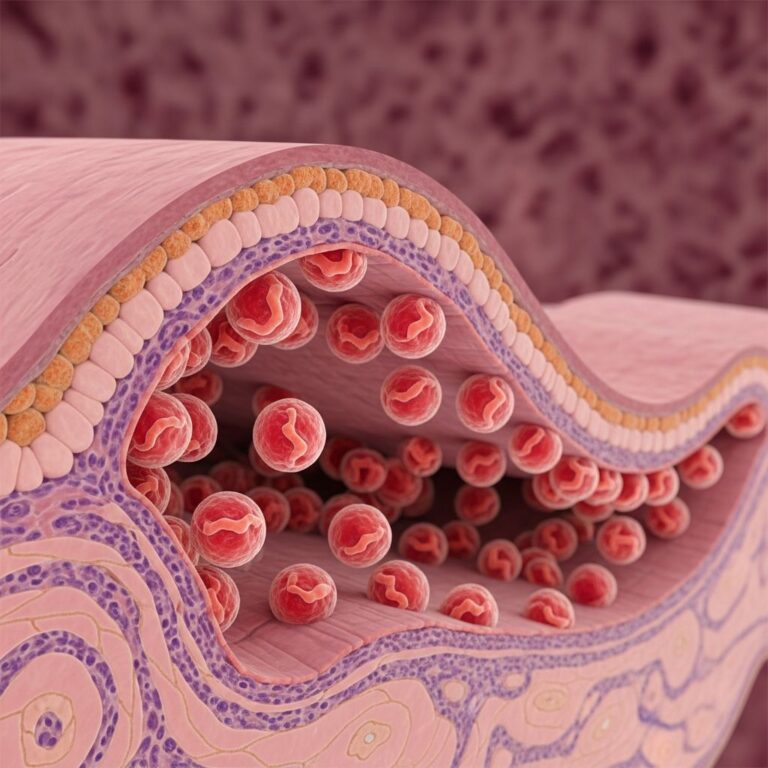
Histology shows hyperkeratosis, acanthosis, chronic inflammation, without specific diagnostic features.
Diagnosis
Primarily clinical, based on history of persistent peeling without identifiable cause. Rule out infections via swabs (negative VDRL, herpes PCR), biopsy for nonspecific chronic inflammation, and patch testing for allergies. Serology excludes syphilis or autoimmune markers. Dermoscopy may reveal scale patterns.
| Differential Diagnosis | Key Distinguisher |
|---|---|
| Angular cheilitis | Corner-only, moist, infectious |
| Actinic cheilitis | UV history, indurated plaques |
| Factitial | Behavioral history |
Treatment
Management is notoriously refractory; address habits and stress first. No universal cure exists.
Conservative Measures
- Habit cessation: Avoid lip-licking, biting; use barriers like petroleum jelly.
- Moisturize: Emollients, avoid irritants.
- Sun protection: SPF lip balm.
Topical Therapies
- Keratolytics: Limited success.
- Steroids: Topical (potent, e.g., clobetasol), tapered; medium-potency for 4 weeks showed remission in cases.
- Tacrolimus: One report of success.
- Antifungals/Antibiotics: If superinfected.
- Calendula: 10% ointment effective in one case.
Systemic
- Antidepressants: For psychological component.
- Corticosteroids: Short courses.
Invasive
- Cryotherapy: Variable.
- Laser: CO2 pinhole method (0.5-1W, 1mm intervals) cleared resistant cases rapidly without scarring.
- Electrocautery: Painful.
Psychotherapy essential; combined topical steroids with counseling yielded complete remission post-stress.
Frequently Asked Questions
Q: Is exfoliative cheilitis contagious?
A: No, it is not infectious; rule out herpes or bacteria.
Q: Can stress cause it?
A: Yes, anxiety triggers habits like lip-licking, common in 87% of psychiatric cases.
Q: How long does it last?
A: Chronic, months to years; treatable but relapsing.
Q: Is laser treatment safe?
A: Pinhole CO2 laser effective with minimal pain/scarring in resistant cases.
Q: Home remedies?
A: Hydrate, avoid licking; consult dermatologist for topicals.
References
- Chronic Exfoliative Cheilitis Successfully Treated by Pinhole Method Using CO2 Laser — Lee et al. 2021-03-15. https://pmc.ncbi.nlm.nih.gov/articles/PMC7992735/
- Challenging of Treating Patients with Exfoliative Cheilitis: Report of Two Cases — Souza et al. 2023-05-20. https://pmc.ncbi.nlm.nih.gov/articles/PMC10198695/
- Exfoliative Cheilitis as a Manifestation of Factitial Cheilitis — Cureus Journal. 2019-12-01. https://www.cureus.com/articles/12133-exfoliative-cheilitis-as-a-manifestation-of-factitial-cheilitis
- Exfoliative Cheilitis — DermNet NZ. 2023-01-01. https://dermnetnz.org/topics/exfoliative-cheilitis
- Chapped Lips (Cheilitis): Causes, Treatment & Prevention — Cleveland Clinic. 2024-06-10. https://my.clevelandclinic.org/health/diseases/22005-chapped-lips
Similar Articles








Read full bio of Sneha Tete