Extracorporeal Membrane Oxygenation (ECMO)
Advanced life support therapy providing temporary heart and lung function for critically ill patients.
What is Extracorporeal Membrane Oxygenation (ECMO)?
Extracorporeal membrane oxygenation, commonly known as ECMO, is an advanced life support technology designed to temporarily assume the functions of the heart and lungs when these vital organs are unable to perform their essential tasks. The term breaks down into three meaningful components: “extracorporeal” meaning outside the body, “membrane” referring to an artificial lung, and “oxygenation” describing the process of delivering oxygen to the bloodstream. ECMO represents a critical intervention for patients experiencing life-threatening cardiac and pulmonary dysfunction when conventional treatment approaches have proven insufficient.
Unlike standard ventilators that only move air in and out of the lungs, ECMO performs the actual gas exchange function by directly adding oxygen to the blood and removing carbon dioxide. This distinction is crucial, as it allows ECMO to provide comprehensive respiratory and circulatory support simultaneously. The system operates as a modified heart-lung bypass machine, similar to the equipment used during open-heart surgery, but with the capability to provide support for extended periods ranging from days to several months.
How ECMO Works
The ECMO system operates through a sophisticated circuit that redirects blood outside the body for processing before returning it to the patient’s circulation. Understanding this process is essential for comprehending how the technology sustains life during organ failure.
The ECMO Circuit Components
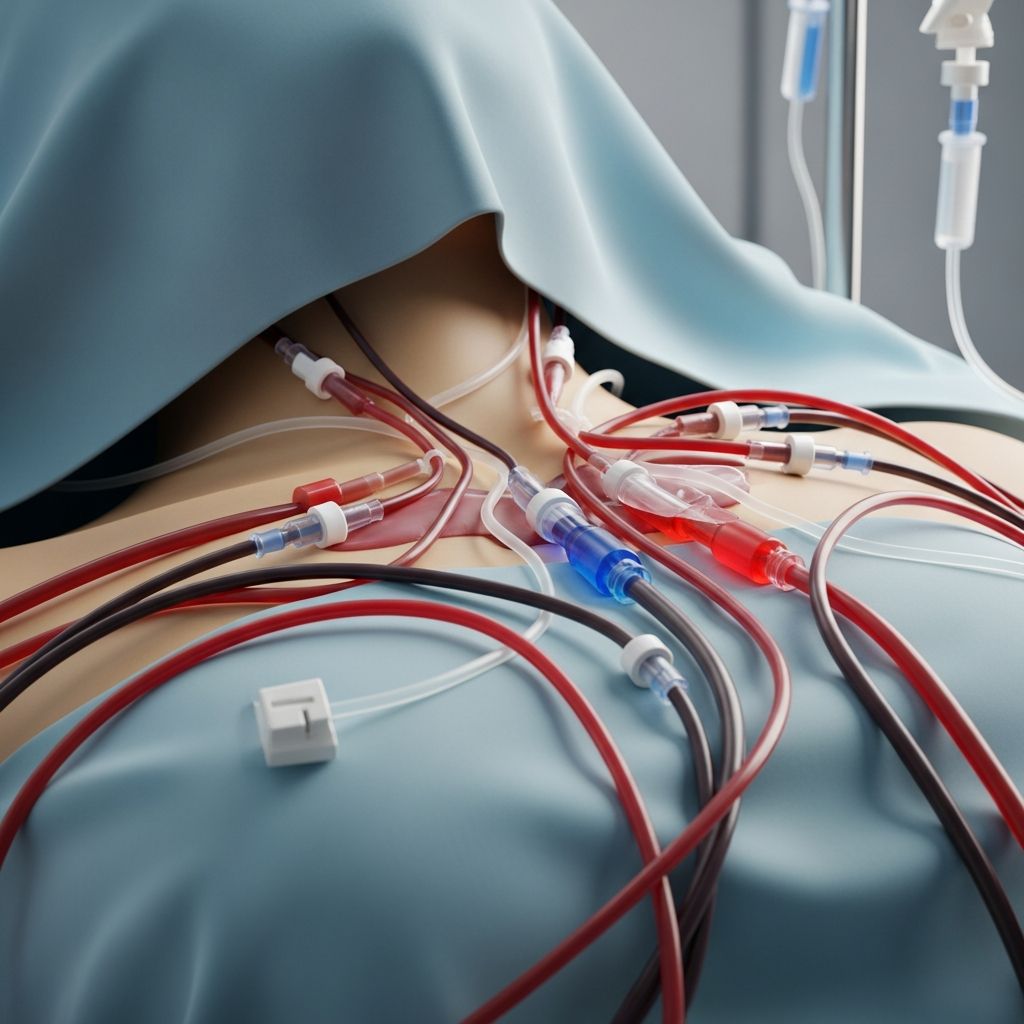
The ECMO circuit consists of several interconnected components working in harmony. A pump serves as an artificial heart, propelling blood through the system with mechanical precision. An oxygenator functions as an artificial lung, performing the critical task of gas exchange. These components are connected through sterile plastic tubing that attaches to the patient’s circulatory system via small tubes called cannulas.
The oxygenator membrane is specifically designed to mimic the function of healthy lung tissue. As blood passes through this membrane, carbon dioxide diffuses out of the blood while oxygen simultaneously diffuses in, essentially recreating the natural gas exchange process that occurs in functioning lungs. The blood is then warmed to normal body temperature before being returned to the patient, ensuring optimal physiological conditions.
Cannula Placement and Access
Healthcare providers establish ECMO access by inserting one or two cannulas, depending on the specific clinical needs and the type of ECMO required. These small tubes are typically placed in the patient’s neck, groin, or chest through large blood vessels. The placement decisions are made by the specialized ECMO team based on the patient’s underlying condition and the specific support required.
A drainage cannula removes deoxygenated blood from the patient’s body, transporting it to the ECMO circuit where gas exchange occurs. Following treatment in the oxygenator, the oxygen-rich blood is returned to the patient through a return cannula. This continuous cycling ensures that the patient receives adequately oxygenated blood throughout the support period, bypassing the damaged or failing heart and lungs.
Types of ECMO Support
ECMO can be configured in different ways depending on whether the patient primarily requires heart support, lung support, or simultaneous support for both organs. The ECMO team determines the most appropriate configuration based on the patient’s specific diagnosis and clinical presentation.
Related Stories



Venoarterial ECMO (VA ECMO)
Venoarterial ECMO provides comprehensive support for both heart and lung function. In this configuration, blood is withdrawn from a vein and returned to an artery, allowing the mechanical pump to assume the heart’s work while the oxygenator manages gas exchange. This type is particularly valuable for patients experiencing cardiogenic shock or combined cardiac and respiratory failure.
Venovenous ECMO (VV ECMO)
Venovenous ECMO primarily supports lung function while the patient’s own heart continues to circulate blood. Blood is drawn from a vein and returned to a vein after oxygenation, making this configuration ideal for patients with severe respiratory failure but relatively intact cardiac function. This approach reduces the risk of complications associated with arterial cannulation.
Conditions Treated with ECMO
ECMO serves as a critical intervention for various life-threatening conditions affecting the heart and lungs. Healthcare providers consider ECMO when conventional treatments have failed and the patient faces imminent organ failure or death.
Common conditions treated with ECMO include acute respiratory distress syndrome (ARDS), severe pneumonia, cardiac arrest, myocardial infarction with cardiogenic shock, heart failure, severe infections including COVID-19, pulmonary embolism, and acute decompensation of chronic respiratory diseases. Additionally, ECMO may be employed during cardiac surgery when patients cannot be wean from cardiopulmonary bypass despite standard measures.
ECMO is also increasingly used in neonatal care for newborns with severe congenital heart defects, persistent pulmonary hypertension, and other life-threatening conditions. The adaptability of ECMO technology makes it suitable for patients across all age groups, from critically ill newborns to elderly patients requiring emergency cardiac or respiratory support.
Eligibility and Patient Selection
Determining ECMO candidacy requires careful evaluation by an experienced multidisciplinary team. Several factors influence the decision to initiate ECMO support, and these considerations balance the potential benefits against the inherent risks of the intervention.
General Candidacy Criteria
Ideal ECMO candidates typically demonstrate reversible or potentially recoverable underlying pathology. Patients must have adequate organ function outside the affected heart and lungs, as ECMO cannot support patients with multiorgan failure. The patient’s overall health status, age, and likelihood of survival form the foundation for candidacy assessment.
Healthcare providers evaluate whether the patient has exhausted conventional treatment options, including maximum medical therapy, mechanical ventilation, and inotropic support. ECMO is considered when these standard interventions have failed to stabilize the patient’s condition.
Relative contraindications may include severe neurological damage, irreversible organ failure outside the heart and lungs, malignancy with poor prognosis, or conditions where the underlying disease is not reversible. However, these contraindications are often relative rather than absolute, and individual circumstances may warrant ECMO consideration despite their presence.
The ECMO Procedure
Initiating ECMO involves a carefully orchestrated procedure performed by experienced medical professionals. Understanding the procedural steps provides insight into how quickly this life-saving intervention can be deployed.
Preparation and Cannulation
Before cannula placement, patients receive appropriate sedation and anesthesia to ensure comfort and prevent movement during the procedure. The ECMO team prepares the cannulation sites using sterile surgical technique. Using ultrasound guidance or direct visualization, physicians insert the cannulas into the appropriate blood vessels.
Once cannulas are successfully positioned, they are connected to the ECMO circuit. The circuit is primed with specific fluids to prevent air bubbles and ensure smooth transition when blood flow begins. Healthcare providers perform final safety checks before activating the ECMO pump and initiating blood circulation through the artificial heart and lung.
Ongoing Management
During ECMO support, the specialized team continuously monitors circuit function, blood parameters, and the patient’s clinical status. Regular blood work assesses oxygen and carbon dioxide levels, electrolytes, coagulation parameters, and organ function. The ECMO pump speed, oxygenator settings, and ventilator parameters are adjusted based on these findings to optimize support and promote healing.
Anticoagulation is essential during ECMO to prevent blood clots within the circuit, necessitating careful monitoring and adjustment of anticoagulant medications. The team must balance the need for anticoagulation against the risk of bleeding complications.
Weaning and Recovery
As the patient’s heart and lung function gradually improve, the ECMO team assesses readiness to reduce support. Weaning involves gradually decreasing the mechanical support while carefully monitoring the patient’s tolerance.
Weaning trials involve temporarily reducing ECMO support to determine whether the patient’s native organs can sustain adequate function independently. If trials are successful, the decision is made to remove the cannulas and discontinue ECMO. If the patient cannot tolerate reduced support, ECMO is resumed until further improvement occurs.
Recovery following ECMO varies considerably depending on the underlying condition, duration of support, and any complications that develop. Some patients recover completely with full return to baseline function, while others may experience residual effects or require ongoing treatment. Rehabilitation and follow-up care are essential components of the recovery process.
Potential Risks and Complications
While ECMO is a life-saving technology, it carries inherent risks that must be carefully weighed against potential benefits. Complications may arise from the procedure itself, the ongoing mechanical support, or underlying patient factors.
Infection represents a significant risk during prolonged ECMO support, particularly at cannulation sites or affecting the circuit itself. Bleeding complications can develop from anticoagulation therapy or from vascular injury related to cannula placement. Thrombotic complications, including clot formation within the circuit, may compromise ECMO function and require intervention.
Neurological complications, including stroke or seizures, can occur during ECMO support. Hemolysis, destruction of red blood cells within the mechanical circuit, may develop with prolonged support. Renal dysfunction and multiorgan failure can develop despite ECMO support if the underlying condition is severe or progressive.
Vascular complications related to cannula placement may include arterial injury, pseudoaneurysm formation, or limb ischemia. Mechanical complications such as pump malfunction, oxygenator failure, or circuit rupture, though uncommon with modern equipment, require immediate intervention.
Success Rates and Outcomes
Outcomes following ECMO vary significantly based on patient selection, underlying diagnosis, and institutional experience. Overall survival rates have improved substantially with advances in technology and increased clinical experience. Published data demonstrates that approximately 50-60% of adult ECMO patients survive to hospital discharge, though outcomes are substantially better for specific conditions with more reversible pathophysiology.
Neonatal ECMO outcomes are notably better, with survival rates exceeding 80% in many institutions for appropriate patient populations. Pediatric outcomes similarly demonstrate high success rates when patients are carefully selected and supported by experienced ECMO teams.
Long-term quality of life following ECMO survival depends on the underlying condition, duration of support, and any complications experienced. Many survivors return to their pre-illness baseline function, particularly when ECMO is used for acute, reversible conditions. However, some patients may experience persistent limitations related to their underlying illness or complications from ECMO support.
Frequently Asked Questions About ECMO
Q: How long can a patient remain on ECMO support?
A: ECMO can provide support for days to several months, depending on the patient’s condition and recovery trajectory. Most patients supported for acute respiratory or cardiac failure require ECMO for 1-4 weeks, though some patients may require extended support.
Q: Is ECMO a permanent solution?
A: No, ECMO is not a cure or permanent solution. It is a temporary bridge support that allows the heart and lungs time to rest and recover while underlying conditions are treated. The goal is always to wean patients from ECMO as their native organs improve.
Q: Can patients be awake during ECMO?
A: Yes, some patients can be awake and alert during ECMO support, particularly those on venovenous ECMO without sedation. However, many patients are sedated during the initial phase of support for comfort and safety.
Q: What is the difference between ECMO and a ventilator?
A: A ventilator moves air in and out of the lungs but does not perform gas exchange. ECMO actually removes carbon dioxide from the blood and adds oxygen to it, providing direct circulatory and respiratory support that a ventilator cannot achieve.
Q: Are there age restrictions for ECMO?
A: ECMO can be used in patients of all ages, from newborns to elderly adults. Age itself is not a contraindication, though overall health status and reversibility of the underlying condition are critical factors in patient selection.
Q: What happens if ECMO fails?
A: If ECMO fails mechanically, experienced teams can quickly identify and address the problem. If the patient’s underlying condition does not improve or worsens despite ECMO support, discussion regarding goals of care and treatment modification may occur in consultation with the patient and family.
References
- Extracorporeal Membrane Oxygenation (ECMO) — ELSO (Extracorporeal Life Support Organization). 2025. https://www.elso.org/extracorporeal-membrane-oxygenation.aspx
- Extracorporeal Membrane Oxygenation in Adults — National Center for Biotechnology Information (NCBI). 2024. https://www.ncbi.nlm.nih.gov/books/NBK576426/
- Extracorporeal Membrane Oxygenation (ECMO) — Mayo Clinic. 2024. https://www.mayoclinic.org/tests-procedures/ecmo/about/pac-20484615
- Extracorporeal Membrane Oxygenation (ECMO) — Yale Medicine. 2024. https://www.yalemedicine.org/conditions/ecmo
- Extracorporeal Membrane Oxygenation (ECMO) — Cleveland Clinic. 2024. https://my.clevelandclinic.org/health/treatments/21722-extracorporeal-membrane-oxygenation-ecmo
- Extracorporeal Membrane Oxygenation: ECMO — Children’s Hospital of Philadelphia. 2024. https://www.chop.edu/treatments/extracorporeal-membrane-oxygenation-ecmo
Similar Articles








Read full bio of medha deb