Separating Eye Care Facts from Popular Misconceptions
Discover which common beliefs about vision are true and which are harmful misconceptions.
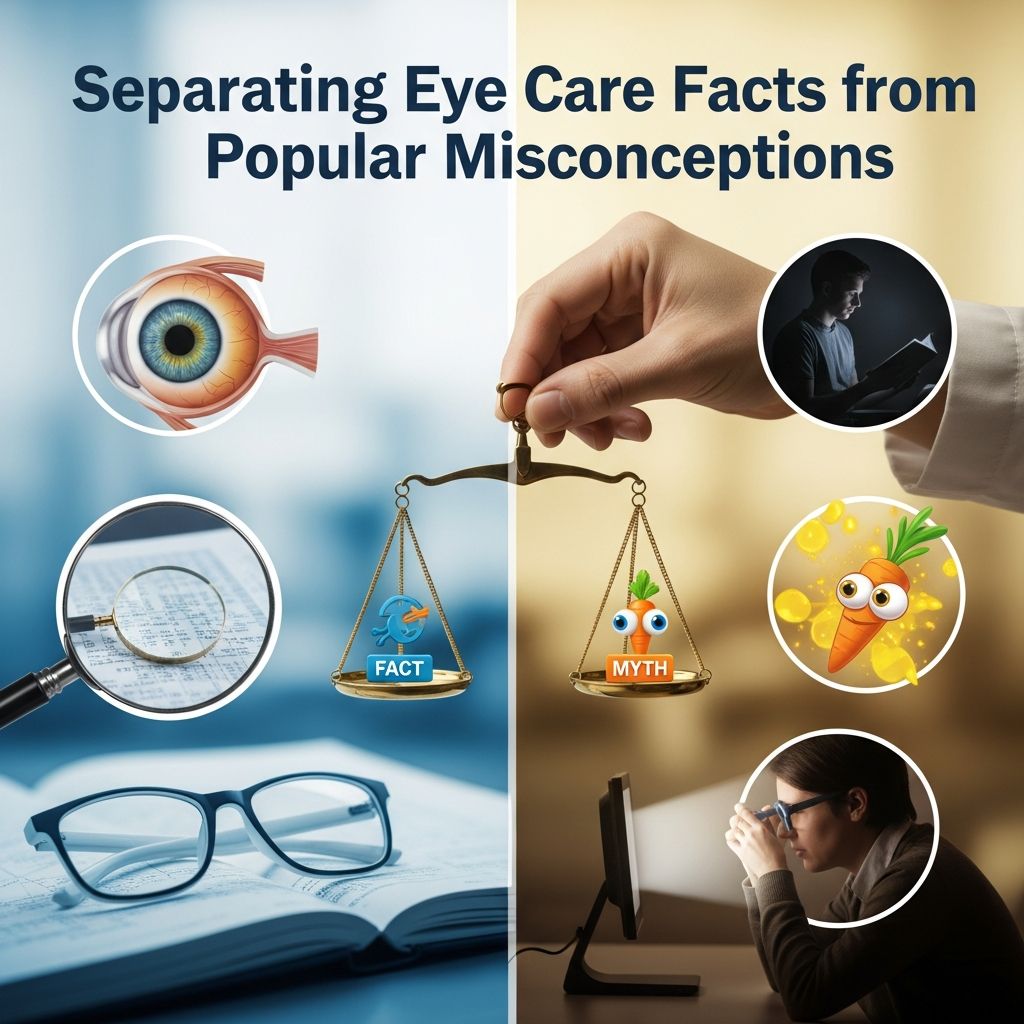
Our eyes are among our most precious sensory organs, yet misconceptions about how they function and what protects them persist throughout society. Many of these beliefs stem from generations of folk wisdom, outdated medical understanding, or simple misinterpretation of how vision works. This comprehensive guide addresses the most pervasive myths surrounding eye health and provides evidence-based explanations to help you make informed decisions about your visual wellbeing.
Understanding Why Eye Myths Persist
Eye-related myths have endured for decades, often passed down through families and perpetuated in casual conversation. Part of their longevity stems from the complexity of vision itself. The eye is a sophisticated organ with multiple interconnected systems, making it easy for oversimplifications to take root. Additionally, many myths contain a kernel of truth that gets exaggerated over time. For instance, while reading in dim light won’t damage your eyes, it may cause temporary discomfort—a distinction that’s often lost in casual retellings.
Another reason these myths persist is the lack of immediate, visible consequences when they’re violated. If you sit close to a television without experiencing instant pain or vision loss, it’s tempting to dismiss warnings as baseless. However, this absence of immediate harm doesn’t necessarily mean an activity is safe for long-term eye health.
Dietary Myths and Nutritional Reality
One of the most enduring myths is that consuming large quantities of carrots will significantly improve eyesight. While carrots do contain vitamin A, a nutrient essential for healthy vision, eating carrots beyond normal dietary amounts won’t enhance your visual acuity or correct refractive errors. Vitamin A is necessary for your eyes to function properly, particularly for night vision, but the relationship is one of sufficiency, not enhancement. Once your body has adequate vitamin A, additional consumption provides no visual advantage.
A balanced diet supporting eye health should include various antioxidants and nutrients found in leafy greens, fish, nuts, and citrus fruits. These foods provide lutein, zeaxanthin, omega-3 fatty acids, and vitamins C and E—compounds that genuinely support long-term ocular health by protecting against age-related macular degeneration and other conditions.
Environmental Exposure Myths
Reading in Low Light Conditions
The assertion that reading in dim light damages your eyes is a pervasive myth that contradicts historical reality. Before the widespread adoption of electric lighting, people routinely read and performed detailed work by candlelight or gaslight without experiencing eye damage as a direct consequence. Reading in low light may cause temporary eye strain, fatigue, or headaches, but it doesn’t create permanent structural damage to your eyes.
This myth likely arose because strained eyes feel uncomfortable, leading people to assume discomfort equals damage. However, eye strain is a temporary condition that resolves with rest. Your eyes are designed to adapt to varying light conditions throughout the day without sustaining injury from brief periods of reduced illumination.
Proximity to Screens and Television
Parents have warned children for generations that sitting too close to television sets will harm their vision or cause permanent damage. This widely repeated admonition lacks scientific support. Children often naturally position themselves close to screens because they become engaged with content and seek an immersive viewing experience, not necessarily because they’re struggling to see clearly.
Related Stories



Extended screen viewing may produce temporary eye fatigue due to reduced blinking and constant focus at a fixed distance, but it doesn’t create nearsightedness, farsightedness, or astigmatism. However, the 20-20-20 rule—looking at something 20 feet away for 20 seconds every 20 minutes—can help reduce digital eye strain during prolonged computer use.
Corrective Lens Misconceptions
Glasses and Eye Deterioration
Perhaps no myth causes more concern among eyeglass wearers than the belief that wearing glasses weakens the eyes or makes them dependent on correction. This misconception has no scientific basis. Eyeglasses function as external optical aids that bend light rays to correct refractive errors, but they don’t alter the physical structure of your eyes or weaken the muscles that control eye movement.
If your vision seems significantly worse when you remove your glasses after wearing them, this isn’t because your eyes have weakened. Rather, you’ve become accustomed to clear, corrected vision. The contrast between corrected and uncorrected sight creates the impression of deterioration, but your eyes’ actual condition remains unchanged. Children with certain conditions like strabismus (crossed eyes) or amblyopia (lazy eye) represent rare exceptions where specific corrective lenses must be worn to prevent permanent vision problems.
Wearing Incorrect Prescriptions
Many people worry that wearing eyeglasses with the wrong prescription or wearing someone else’s glasses will damage their eyes. Incorrect prescriptions can cause temporary discomfort, eye strain, or headaches, but they cannot physically harm your eyes. The worst outcome is typically blurred vision and temporary discomfort—not permanent damage.
Similarly, wearing over-the-counter reading glasses that aren’t precisely matched to your vision won’t harm your eyes, despite concerns about lens quality or precision. These glasses may not provide optimal comfort or clarity, but they won’t cause damage. Age-related presbyopia (difficulty focusing on near objects) occurs naturally as the lens loses flexibility with time, not because of reading glasses quality.
Contact Lenses and Vision Changes
Contact lens users sometimes worry that wearing contacts will ruin their vision or create permanent dependency. Like eyeglasses, contact lenses are corrective tools that don’t alter eye structure or create lasting changes in your vision prescription. The perception of dependency results from the contrast between corrected and uncorrected vision, not from any actual weakening of your eyes.
Visual Phenomena and Anatomical Reality
The Myth of Perfect Central Vision
Many people believe that 20/20 vision represents perfect eyesight and indicates that all aspects of vision are functioning optimally. However, the 20/20 designation refers specifically to central visual acuity under bright, controlled testing conditions. This measurement tells you nothing about peripheral (side) vision, night vision capabilities, or color vision quality.
A person with 20/20 central vision might have weak peripheral vision, poor night vision, or be in the early stages of serious eye diseases like glaucoma or diabetic retinopathy. These conditions can progress silently while central vision remains sharp, potentially leading to vision loss or blindness if left untreated. This distinction underscores why regular comprehensive eye examinations are essential, even for those with excellent central vision.
Eye Crossing and Permanent Damage
The childhood warning that deliberately crossing your eyes might make them stay that way permanently has no basis in anatomical reality. Your eye muscles are designed to move your eyes in multiple directions continuously throughout the day. Looking left, right, up, down, or crossing them intentionally cannot force your eyes into a permanently crossed position.
Actual crossed eyes (strabismus) result from disease, uncorrected refractive errors, muscle weakness, or nerve damage—not from practicing eye movements. Your eye muscles possess sufficient strength and flexibility to return to their normal position after any intentional movement, no matter how exaggerated.
Blind Spots and Visual Processing
Many people assume they see everything within their field of vision, but each eye actually contains a blind spot. Located at the optic disk—where nerve fibers from the retina converge to form the optic nerve—this blind spot exists because this area contains no light-sensitive cells. Fortunately, your brain processes visual information from both eyes simultaneously and fills in the blind spot using cues from the other eye, all without your conscious awareness.
Additionally, while most people think they see images right-side up as they naturally appear, the retina actually projects inverted images to the brain. Your brain’s remarkable processing capability automatically inverts these images, allowing you to perceive the world correctly oriented. This sophisticated neural processing happens instantly and invisibly, demonstrating the brain’s critical role in vision.
Color Vision Misconceptions
The term “color blindness” creates a misleading impression that affected individuals see only in shades of gray, black, and white. In reality, this condition is more accurately termed “color vision deficiency,” and true complete color blindness (monochromacy) is extremely rare. Most people with color vision deficiency can distinguish colors but experience difficulty differentiating between specific color pairs, most commonly reds and greens.
Color vision deficiency occurs when certain cone cells in the retina are missing or malfunction. The severity varies considerably among affected individuals. Many people with color vision deficiency navigate daily life without significant difficulties, though certain occupations requiring precise color discrimination may present challenges.
Age-Related Vision Changes
Inevitable Vision Loss Myth
While presbyopia and cataracts do become more common with age, the notion that vision loss is an inevitable consequence of getting older is misleading. Not everyone develops these conditions, and even when they do, modern treatments can often correct, slow, or halt progression. Regular comprehensive eye examinations allow early detection of age-related conditions when treatment tends to be most effective.
Conditions like glaucoma and macular degeneration do increase in prevalence with age, but their development depends on genetic predisposition, overall health, lifestyle factors, and cumulative environmental exposure. Proactive eye care, including regular screening and management of systemic conditions like diabetes and hypertension, significantly influences visual outcomes throughout aging.
Screening and Preventive Care Myths
Eye Exams Without Symptoms
Some people believe they only need professional eye examinations when experiencing vision problems or discomfort. However, many serious eye diseases progress without noticeable symptoms until significant damage has already occurred. Comprehensive eye exams can detect these silent conditions during early, more treatable stages.
Regular eye examinations serve multiple purposes beyond vision correction: they screen for eye diseases, assess overall ocular health, and can reveal systemic health conditions like diabetes or hypertension that manifest in the eyes. Healthcare providers recommend examination frequency based on age, health status, and risk factors.
Practical Eye Care Guidelines
- Maintain balanced nutrition including antioxidant-rich foods and omega-3 sources
- Practice the 20-20-20 rule during extended screen use to reduce digital eye strain
- Wear UV-protective sunglasses outdoors to shield eyes from harmful radiation
- Schedule comprehensive eye examinations according to professional recommendations
- Manage systemic health conditions that affect vision, particularly diabetes
- Avoid eye injuries through appropriate protective eyewear during hazardous activities
- Don’t delay seeking professional care if experiencing vision changes or eye discomfort
Frequently Asked Questions
Does wearing glasses make your eyes worse?
No. Glasses are optical tools that don’t alter eye structure or weaken eye muscles. If your vision seems worse without glasses after wearing them, this reflects the contrast between corrected and uncorrected vision, not actual eye deterioration.
Can reading in dim light cause permanent eye damage?
No. Reading in low light may cause temporary strain or discomfort but cannot cause permanent structural damage. Historical populations routinely read by candlelight without experiencing lasting eye damage.
Will sitting close to screens damage my vision?
No. Proximity to screens doesn’t create refractive errors. However, extended screen use can cause temporary digital eye strain, which improves with rest and regular focus breaks.
Does 20/20 vision mean my eyes are perfect?
No. The 20/20 measurement only reflects central visual acuity under ideal conditions. You could have 20/20 central vision while having weak peripheral vision, poor night vision, or developing eye disease.
Can eating carrots improve my eyesight?
No. While carrots contain vitamin A, which supports healthy vision, eating excessive carrots won’t improve eyesight or correct refractive errors. Adequate dietary vitamin A is necessary for proper eye function, but excess provides no additional visual benefit.
References
- Debunking Common Eyesight Myths — American Society of Certified Optometric and Ophthalmic Assistants (ASCO). 2020-02-10. https://optometriceducation.org/2020/02/10/debunking-common-eyesight-myths/
- Eye Health: Myths and Facts — Mayo Clinic Health System. https://www.mayoclinichealthsystem.org/hometown-health/speaking-of-health/eye-health-myths-and-facts
- Top Ten Myths About the Eyes and Vision — Katzen Eye Group. https://www.katzeneye.com/cataract/top-ten-myths-eyes-vision/
- 5 Myths About Eye Health, Debunked: Advanced Lasik — Advanced Lasik / Randa Garrana, MD. https://www.randagarranamd.com/blog/5-myths-about-eye-health-debunked
- Eye Doctors Debunk 5 Common Myths — Lighthouse Guild. https://lighthouseguild.org/eye-doctors-debunk-5-common-myths/
Similar Articles








Read full bio of Sneha Tete