Eye Chart Evolution: History, Uses, And Modern Advances
Discover the fascinating journey of eye charts from early experiments to modern vision testing standards that revolutionized eye care worldwide.
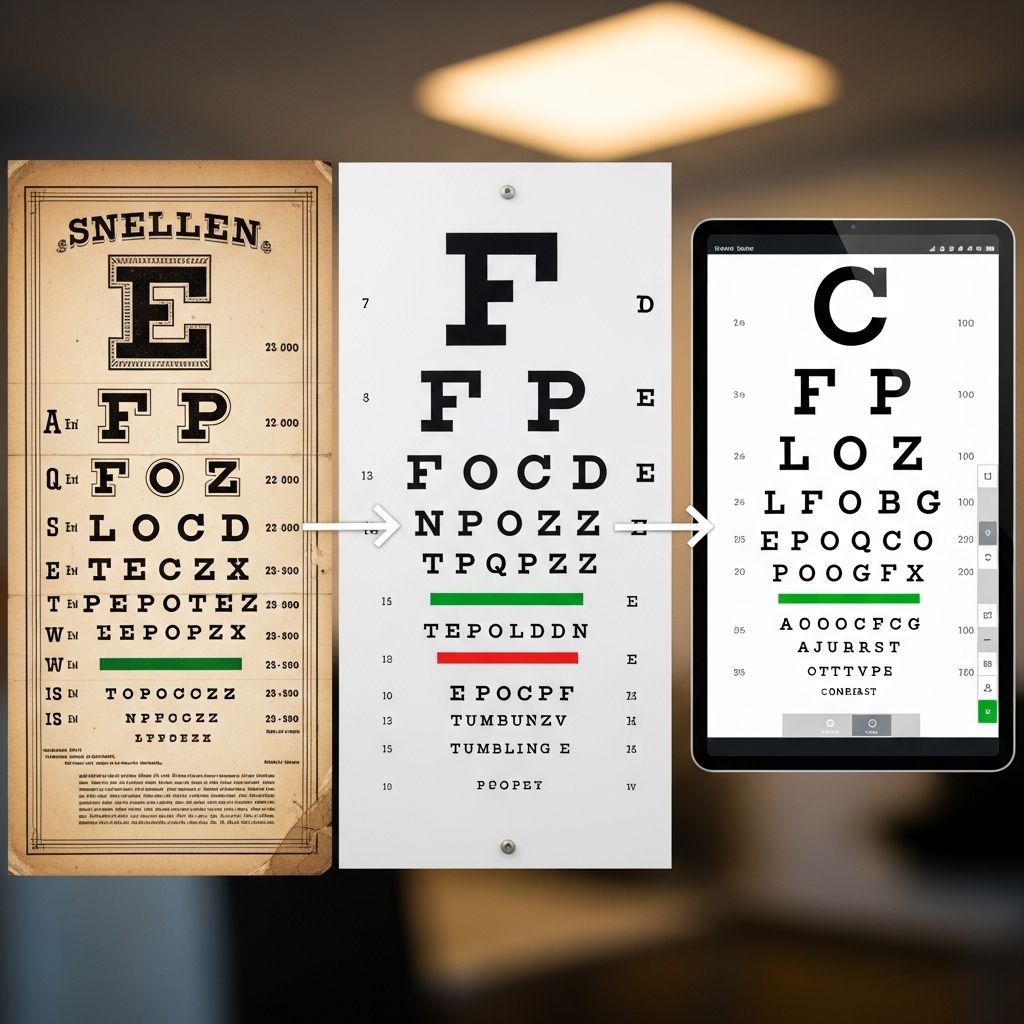
The eye chart stands as a cornerstone of modern ophthalmology, enabling precise measurement of visual acuity—the sharpness and clarity of vision. Developed over centuries, these simple yet ingenious tools have evolved from rudimentary assessments to standardized instruments used worldwide in clinical settings, schools, and public health screenings.
Early Challenges in Vision Assessment
Before formalized eye charts, evaluating eyesight relied on inconsistent methods. Practitioners might ask patients to identify distant objects, thread needles, or read fine print under varying conditions. These subjective tests lacked uniformity, leading to inaccurate prescriptions and suboptimal corrective lenses. The invention of spectacles in the late 13th century marked an early milestone in vision correction, but quantifying visual deficits remained elusive for centuries.
By the 19th century, as ophthalmology emerged as a distinct medical specialty, the need for reliable, reproducible testing became urgent. Industrialization demanded sharp vision for workers, and military needs highlighted population-wide screening requirements. This era saw the first systematic attempts to create vision testing charts.
Pioneering Innovations in the Mid-1800s
The groundwork for modern eye charts was laid in the 1840s. In 1843, German physician Heinrich Kuechler introduced an early design featuring single words per line, with sizes decreasing progressively downward. To counter memorization, he created multiple versions. Despite its ingenuity, the chart gained limited adoption due to skepticism from contemporaries.
A decade later, in 1854, Austrian ophthalmologist Eduard Jaeger advanced the field with a chart tailored for post-cataract surgery evaluation. Jaeger’s tool used paragraphs of text in graduated font sizes, later adapted for detecting refractive errors like myopia and hyperopia. However, variability in typeface across printings undermined its standardization, prompting further refinements.
- Key limitation of Jaeger’s chart: Dependence on printer-specific fonts led to inconsistent results.
- Primary use: Near-vision testing and surgical outcome assessment.
The Birth of the Snellen Chart: A Global Standard
The transformative moment arrived in 1862 when Dutch ophthalmologist Hermann Snellen, at the behest of colleague Franciscus Donders, unveiled his iconic chart. Donders, studying eye accommodation and refraction, required a precise tool for both distance and near vision. Snellen’s innovation introduced optotypes—specially designed letters with proportional strokes, ensuring reproducibility across languages and regions.
Patients stand 20 feet (6 meters internationally) from the chart, reading 11 lines of letters that diminish in size. The top line features the largest optotype, readable by those with normal vision at that distance. Visual acuity is expressed as a fraction: the numerator denotes testing distance (20 feet in the US), and the denominator the distance at which a person with normal vision could read the same line. Thus, 20/20 indicates standard acuity.
| Line Read | Acuity Notation | Interpretation |
|---|---|---|
| Top line | 20/200 | Legal blindness threshold |
| Line 5-6 | 20/20 to 20/25 | Normal vision |
| Bottom line | 20/10 | Superior acuity |
Adaptations for Diverse Populations
Recognizing limitations for non-readers, Snellen developed the ‘Tumbling E’ chart in 1868. This features a capital ‘E’ rotated in four orientations, with patients indicating direction using hand gestures. Ideal for children, illiterate adults, and cross-cultural testing, it remains a staple in pediatric and global health screenings.
Related Stories



That same year, American ophthalmologist John Green enhanced the original Snellen by standardizing spacing, adopting a 25% size reduction per line, and improving legibility. These tweaks addressed crowding effects and ensured geometric progression.
20th-Century Refinements and Alternatives
As vision science advanced, new charts addressed Snellen’s shortcomings, such as uneven letter difficulty and non-logarithmic sizing. In 1959, Louise Sloan identified 10 optotypes (C, D, E, F, H, L, N, O, P, T) with equal recognizability, forming the basis for logMAR charts.
The Bailey-Lovie chart (1976) introduced logarithmic progression (0.1 logMAR steps), five letters per line in a triangular layout, and superior precision for near-vision assessment. It outperforms Snellen in research and low-vision evaluations.
- LogMAR advantages: Equal difficulty across lines; precise for small acuity changes.
- Snellen drawbacks: Variable letter complexity; ‘foot-size’ progression (not logarithmic).
How Eye Charts Function in Practice
Standard protocols ensure accuracy: charts on matte walls, uniform illumination (80-160 cd/m²), and mirrors for space-constrained rooms. Patients read aloud, scoring the lowest clear line. Right and left eyes test separately, with both open for binocularity.
In schools, since 1899 programs, Snellen or equivalents screen millions, referring ~5% for comprehensive exams. Digital projections now replace paper, maintaining calibration.
Modern Standards and Technological Shifts
Contemporary guidelines from bodies like the American Academy of Ophthalmology favor ETDRS (Early Treatment Diabetic Retinopathy Study) charts, using Sloan letters in logMAR format. These provide finer granularity (0.02 logMAR per letter) for clinical trials.
Digital eye charts offer randomization, auto-scoring, and remote testing via apps, enhancing accessibility. Yet, Snellen endures for its simplicity and familiarity.
Global Impact on Public Health
Eye charts democratized vision care, enabling mass screenings during wars and epidemics. They underpin refractive error correction, impacting ~2.3 billion people globally with uncorrected issues. Early detection prevents amblyopia in children and monitors diseases like glaucoma.
Common Misconceptions About Vision Testing
- 20/20 is not ‘perfect’ vision; it denotes standard acuity at 20 feet. Smaller denominators indicate better sight.
- Charts measure acuity, not comprehensive health—field tests, color vision, and dilation are essential.
- Self-tests online approximate but cannot replace professional exams.
Future Directions in Acuity Assessment
AI-driven adaptive testing and VR simulations promise personalized, contactless evaluations. Portable devices aid remote areas, aligning with WHO goals to reduce vision impairment by 50% by 2030.
Frequently Asked Questions (FAQs)
What does 20/20 vision really mean?
It means you see at 20 feet what a normal eye sees at 20 feet. Internationally, it’s 6/6.
Can I use an eye chart at home?
Yes, for rough checks, but consult professionals for prescriptions.
Why do eye doctors use mirrors?
To simulate 20-foot distance in smaller rooms.
Is the Snellen chart outdated?
It’s reliable for screening but logMAR preferred for precision.
How often should vision be tested?
Annually for adults; children per school guidelines.
References
- History of the Eye Chart — Professional Eye Care. 2023. https://proeyecaremk.com/articles/534645-history-of-the-eye-chart
- 20/20 In Hindsight: The Snellen Eye Chart — Eye Associates. 2017-07-26. https://eyeassociatesic.com/2017/07/26/2020-in-hindsight-the-snellen-eye-chart/
- The Eye Chart: An Essential Tool for Vision Testing — University of Utah Optometry. 2024. https://www.uoosd.com/the-eye-chart
- Are Your Eye Charts Up to Date? The Evolution of Eye Charts — School Health. 2023. https://www.schoolhealth.com/blog/are-your-eye-charts-up-to-date-the-evolution-of-eye-charts-over-the-past-150-years/
- Measuring Vision: Snellen Chart in Ophthalmology — Roche. 2023. https://www.roche.com/stories/measuring-vision-snellen-chart-in-ophthalmology
- The Snellen Chart: History and How It’s Used Today — Dean McGee Eye Institute. 2024. https://www.dmei.org/blog/the-snellen-chart-history-and-how-its-used-today/
Similar Articles








Read full bio of medha deb