Eye Colors: Genetics, Inheritance, and What Determines Your Eye Color
Discover the genetic science behind eye color and how multiple genes determine your unique iris shade.
Understanding Eye Color: The Science Behind Your Iris Shade
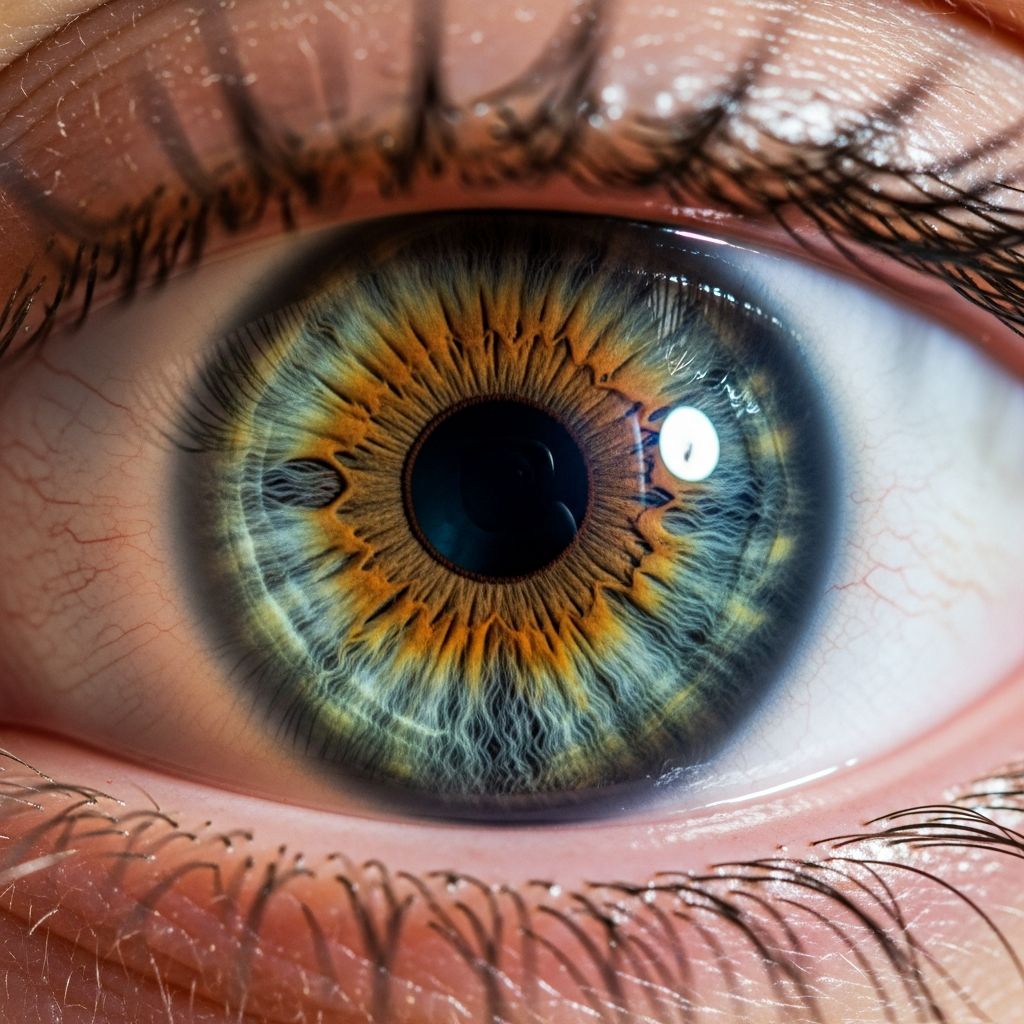
Eye color is one of the most distinctive features of human appearance, yet many people don’t realize just how complex the genetics behind it truly is. For decades, scientists and educators taught that eye color followed a simple pattern: one gene controlled the trait, with brown being dominant and blue being recessive. This simplified model suggested that two blue-eyed parents could never have a brown-eyed child. However, modern genetic research has revealed that this understanding was far too simplistic. Today, we know that eye color is determined by the intricate interplay of multiple genes, making it a fascinating example of polygenic inheritance.
The Genetics of Eye Color: How Multiple Genes Work Together
Eye color inheritance is significantly more complex than previously believed. Rather than being controlled by a single gene, scientists have identified multiple genes that contribute to the determination of eye color. As of recent studies, researchers have associated as many as 16 different genes with human eye color inheritance, though the specific roles and interactions of all these genes are still being studied.
The Primary Genes: OCA2 and HERC2
The two most important genes in eye color determination are OCA2 and HERC2, both located on chromosome 15. The OCA2 gene is particularly significant because it controls nearly three-fourths of the blue-brown color spectrum and is associated with melanin-producing cells that are central to eye color determination. Research has estimated that 74 percent of the variance in human eye color can be explained by just one interval on chromosome 15 that contains the OCA2 gene.
The HERC2 gene functions as a regulatory gene, controlling the expression of OCA2. A specific mutation within HERC2, identified as rs12913832 T/C within intron 86, is particularly important and explains almost all of the association between this gene and blue-brown eye color variation. This single base change serves as a target site for regulatory proteins and acts as part of a highly conserved regulatory element required for OCA2 gene activation.
Secondary Genes Contributing to Eye Color
Beyond OCA2 and HERC2, numerous other genes play supporting roles in determining eye color variation. Genes with reported roles in eye color include ASIP, IRF4, SLC24A4, SLC24A5, SLC45A2, TPCN2, TYR, and TYRP1. The SLC24A4 and TYR genes, for instance, are particularly associated with differences between blue and green eyes. Some of these genes are also involved in skin and hair coloring, explaining why eye color sometimes correlates with complexion and hair shade. The effects of all these genes likely combine with those of OCA2 and HERC2 to produce the continuum of eye colors observed in different populations.
How Melanin Production Determines Eye Color
The fundamental mechanism underlying eye color involves melanin, the same pigment responsible for skin and hair color. Specialized cells called melanocytes, located in the iris, produce melanin. The amount and type of melanin produced in these cells directly determines the final eye color a person displays.
The OCA2 gene produces proteins involved in melanin production and storage. Variations in this gene lead to different amounts of melanin being produced. Higher melanin levels result in darker eye colors, such as brown, while lower levels result in lighter colors like blue or green. When melanin production is significantly reduced due to certain genetic variations, light reflects off the back of the eye differently, creating the blue or green appearance.
Related Stories



Eye Color Inheritance Patterns: Beyond Simple Genetics
The Myth of Simple Dominance
For over a century, the model taught in classrooms portrayed brown eyes as completely dominant over blue eyes. This model suggested that:
– Two blue-eyed parents would always have blue-eyed children- A brown-eyed parent and a blue-eyed parent would likely have a brown-eyed child- Two brown-eyed parents could occasionally have a blue-eyed child, but only if both carried a recessive blue allele
However, modern genetic research has thoroughly debunked this oversimplified model. Studies have shown that the inheritance of eye color is far more complex than originally suspected because multiple genes are involved, each with different inheritance patterns and regulatory mechanisms.
Why Blue-Eyed Parents Can Have Brown-Eyed Children
One of the most striking findings that contradicted the traditional model is that blue-eyed parents can indeed have brown-eyed children, though this remains uncommon. This occurs because while a parent may have blue eyes determined by their primary eye color genes, they can still carry recessive alleles for brown eye color. When both parents carry these hidden brown eye alleles, there is a possibility—albeit rare—that their child will inherit the right combination of alleles to express brown eyes.
Additionally, because multiple genes influence eye color, and these genes can have different inheritance patterns, unexpected combinations can occur. A child might inherit genetic variations that override the typical blue-eye expression seen in their parents.
Predicting Eye Color: Complexity and Accuracy
While a child’s eye color can often be predicted based on the eye colors of parents and other relatives, genetic variations sometimes produce unexpected results. Researchers have made progress in predicting eye color with greater accuracy. A study conducted in Rotterdam found that it was possible to predict eye color with more than 90 percent accuracy for brown and blue eyes using just six single-nucleotide polymorphisms (SNPs). However, predicting green, hazel, and other intermediate colors remains more challenging.
Genetic Variations and Special Eye Colors
Beyond the common brown, blue, and green eye colors, rare variations create unique shades including gray, hazel, and amber eyes. Interestingly, blue eyes with a brown spot, green eyes, and gray eyes are caused by an entirely different part of the genome than the primary blue-brown color spectrum controlled by OCA2 and HERC2.
Recent studies examining eye color variation in hue and saturation values using high-resolution digital photography have identified new genetic loci, bringing the total number of identified genes affecting eye color to at least ten. This research suggests that these genes collectively explain approximately 50 percent of eye color variation, indicating that additional genetic factors and possibly environmental influences remain to be discovered.
Key Genes and Their Functions
| Gene Name | Primary Function | Effect on Eye Color |
|---|---|---|
| OCA2 | Melanin production and storage | Associated with melanin-producing cells; central importance to eye color determination |
| HERC2 | Regulatory control of OCA2 | Affects OCA2 function; specific mutation strongly linked to blue eyes |
| SLC24A4 | Melanin transport | Associated with differences between blue and green eyes |
| TYR | Melanin synthesis | Associated with differences between blue and green eyes |
| ASIP, IRF4, SLC24A5, SLC45A2, TPCN2, TYRP1 | Various melanin-related functions | Play supporting roles in determining eye color variation |
Common Misconceptions About Eye Color Inheritance
Myth: Blue Eyes Are Always Recessive
While blue eyes are generally associated with recessive traits in the traditional model, the actual genetics are more nuanced. The earlier belief that blue eye color is a simple recessive trait has been shown to be incorrect. Multiple genes and complex regulatory mechanisms determine whether blue eyes are expressed, making it impossible to classify eye color inheritance into simple dominant-recessive categories.
Myth: Eye Color Can Be Predicted Solely by Parental Eye Color
Many people believe that if both parents have brown eyes, all their children will have brown eyes, or that if both parents have blue eyes, all their children will have blue eyes. While parental eye color does influence the likelihood of specific eye colors in offspring, it is not the sole determining factor. Genetic variations and the combination of multiple genes mean that unexpected eye colors can appear in children.
Myth: One Parent’s Eye Color Dominates
Another common misconception is that a child’s eye color is primarily determined by one parent. In reality, both parents contribute multiple genes, and the expression of eye color depends on complex interactions among all these inherited genes.
Research and Genetic Testing
Modern genetic research continues to advance our understanding of eye color determination. Scientists use genome-wide association studies (GWAS) and other molecular techniques to identify single-nucleotide polymorphisms (SNPs)—small variations in DNA sequences—that influence eye color. These research efforts have expanded our knowledge from the simple one-gene model to understanding how at least 16 different genes contribute to eye color variation across human populations.
While genetic testing for eye color is not routinely performed for clinical purposes, the genetic markers identified in research have applications in forensics, ancestry analysis, and population genetics studies.
Frequently Asked Questions About Eye Color
Q: Can two brown-eyed parents have a blue-eyed child?
A: Yes, this is possible if both parents carry recessive alleles for blue eyes. However, since brown eye color is generally dominant, this outcome is relatively uncommon. The likelihood depends on the specific genetic variations each parent carries.
Q: Can two blue-eyed parents have a brown-eyed child?
A: While rare, this is possible. Even though blue eyes are typically associated with recessive alleles for the primary eye color genes, other genes and complex regulatory mechanisms can occasionally result in brown eye expression in offspring.
Q: At what age is eye color fully determined?
A: Eye color is genetically determined at conception, but the final eye color may not be fully visible immediately after birth. Many infants are born with blue or gray eyes because melanin production and deposition take time. A child’s permanent eye color typically becomes apparent within the first few months to years of life as melanin accumulates in the iris.
Q: Why do some people have different colored eyes?
A: Heterochromia, the condition where a person has two different eye colors, can result from genetic variations, differences in melanin production between eyes, or certain medical conditions. It demonstrates how variable eye color genetics can be.
Q: Is eye color inherited from one parent more than the other?
A: No single parent determines eye color. Both parents contribute multiple genes that influence the final eye color. The combination of all these inherited genes determines the result, which is why siblings can have different eye colors even with the same parents.
Q: Can eye color change over time?
A: In adults, eye color is typically permanent. However, certain medical conditions, medications, or injuries can potentially alter eye color. Additionally, eye color may appear to change slightly depending on lighting conditions or surrounding colors due to optical effects.
References
- Is eye color determined by genetics? — National Library of Medicine, MedlinePlus. Accessed 2025. https://medlineplus.gov/genetics/understanding/traits/eyecolor/
- Genetics of human iris colour and patterns — National Center for Biotechnology Information, PubMed. 2009. https://pubmed.ncbi.nlm.nih.gov/19619260/
- The Genetics of Eye Color — HudsonAlpha Institute for Biotechnology. Accessed 2025. https://www.hudsonalpha.org/the-genetics-of-eye-color/
- What colour are your eyes? Teaching the genetics of eye colour — Nature, Eye Journal. 2021. https://www.nature.com/articles/s41433-021-01749-x
- Understanding the Basics of Eye Color Inheritance — Cryobank America. Accessed 2025. https://cryobankamerica.com/genetic-traits-which-parent-holds-the-key/
Similar Articles








Read full bio of medha deb