Eye Freckles: Link to Macular Degeneration, Cataracts
Discover what eye freckles mean for your vision health, their potential links to macular degeneration, cataracts, and how to protect your eyes.
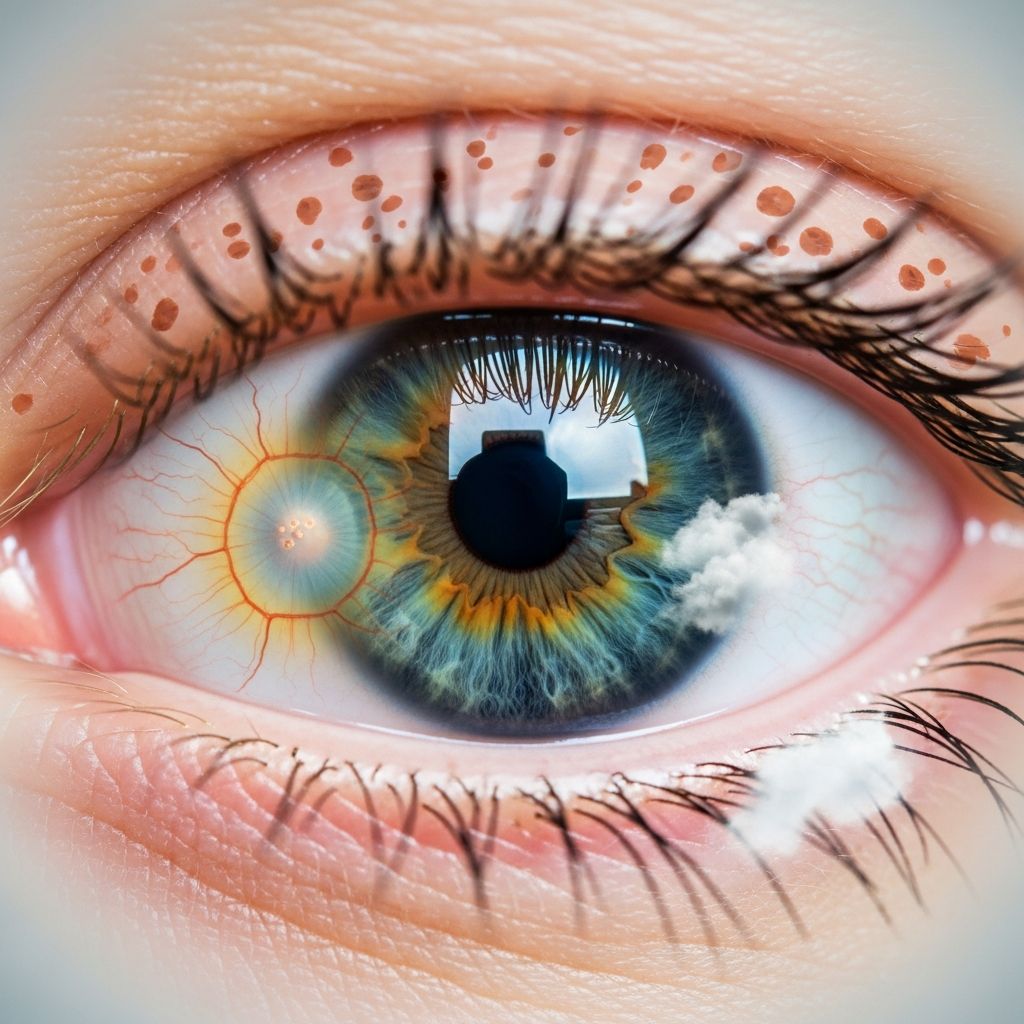
Eye freckles, medically known as
choroidal nevi
, are benign pigmented spots on the choroid layer of the eye, often discovered during routine eye exams. While typically harmless like skin freckles, certain characteristics can signal risks for vision-threatening conditions such asage-related macular degeneration (AMD)
orcataracts
. Understanding these spots is crucial for early detection and prevention of severe eye diseases.What Are Eye Freckles?
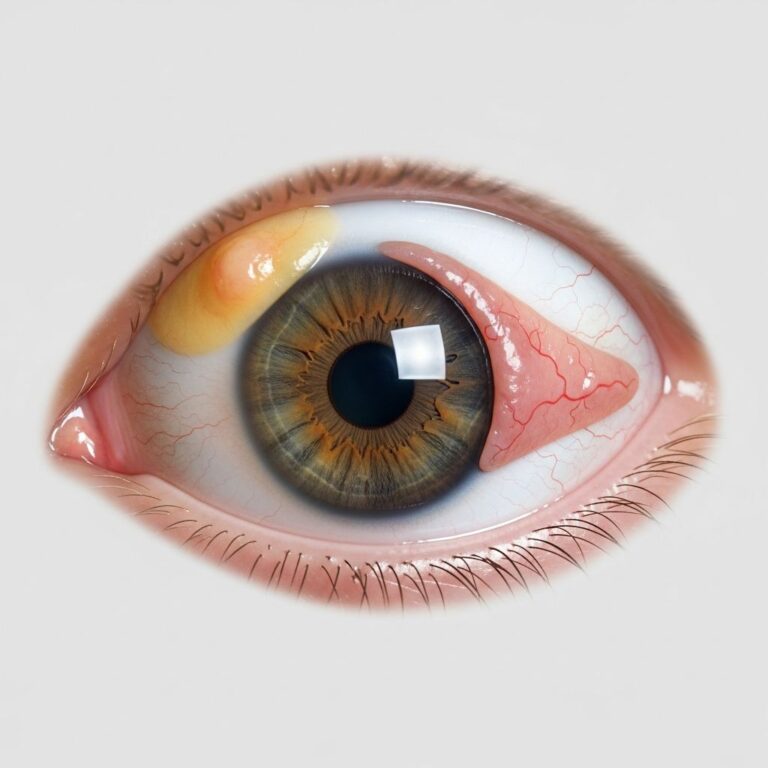
Eye freckles appear as flat, brownish spots on the sclera (white part) or within the eye’s uvea, specifically the choroid. They form from an accumulation of melanin-producing cells (melanocytes) and are present in about 10% of the population. Unlike skin freckles triggered by sun exposure, eye freckles are usually congenital or develop early in life.
These freckles are generally asymptomatic and do not affect vision. However, their location near critical structures like the retina raises concerns about potential transformation into malignant choroidal melanoma, though this is rare (1 in 5,000 to 10,000 cases). Regular monitoring is key, as size, thickness, and fluid presence can indicate progression.
- Common locations: Near the optic nerve or macula.
- Size: Typically smaller than 5mm in diameter.
- Appearance: Drusen (yellow deposits) or orange pigment may overlay them.
Symptoms of Eye Freckles
Most individuals with eye freckles experience no symptoms, making incidental discovery during dilated eye exams common. When symptoms occur, they may include:
- Subtle vision blurring if the freckle overlies the macula.
- Flashes of light or floaters if growth irritates the retina.
- Metamorphopsia (wavy distortion of straight lines).
These overlap with early signs of macular degeneration, prompting urgent evaluation. If an eye freckle grows or leaks fluid, it could compress retinal layers, mimicking wet AMD symptoms.
Causes and Risk Factors
The exact cause of choroidal nevi remains unclear, but genetic predisposition and UV exposure play roles. Fair-skinned individuals and those with multiple skin nevi are at higher risk.
| Risk Factor | Description | Prevalence Impact |
|---|---|---|
| Age | Increases after 50 | High |
| UV Exposure | Prolonged sun without protection | Moderate |
| Genetics | Family history of nevi or melanoma | High |
| Smoking | Doubles oxidative stress on retina | Moderate |
Shared risk factors with AMD and cataracts—such as smoking and sun exposure—suggest eye freckles may indicate broader ocular vulnerability.
Eye Freckles and Macular Degeneration
**Age-related macular degeneration (AMD)** is the leading cause of central vision loss in people over 50, affecting the macula’s photoreceptors. Dry AMD involves drusen buildup, while wet AMD features abnormal blood vessel growth.
Eye freckles near the macula can exacerbate AMD risk by causing localized inflammation or mechanical stress. Studies show nevi with overlying drusen resemble early dry AMD, complicating diagnosis. Fluid from growing nevi mimics wet AMD leakage, potentially accelerating degeneration.
Related Stories



- Dry AMD symptoms: Gradual central blur, distorted lines.
- Wet AMD symptoms: Sudden vision loss, central scotoma.
- Link to nevi: 20-30% of suspicious nevi show AMD-like changes on OCT imaging.
Unlike AMD’s irreversible damage to the retina, nevi are stable but require differentiation via imaging.
Eye Freckles and Cataracts
**Cataracts** cloud the eye’s lens, causing hazy vision, glare, and color fading. They affect over 24 million Americans aged 40+, per CDC data.
While not directly causative, large eye freckles or associated inflammation can indirectly contribute to cataract formation by altering lens metabolism. Shared risk factors like UV exposure and smoking heighten dual occurrence. Symptoms overlap: both cause blurry vision and light sensitivity, but cataracts uniformly haze peripheral vision, while nevi/AMD spare it.
Cataract surgery remains viable even with nevi, but pre-op assessment rules out active growth.
Diagnosis: How Eye Doctors Check for Risks
Comprehensive dilated exams detect eye freckles and comorbidities. Key tools include:
- OCT (Optical Coherence Tomography): Measures thickness (>2mm risky), detects subretinal fluid.
- Fundus Photography: Documents size, pigment changes.
- Ultrasound: Assesses acoustic hollowness indicating malignancy.
- Amsler Grid: Self-test for macular distortion.
For AMD/cataracts: Slit-lamp biomicroscopy and visual acuity tests differentiate. Early diagnosis via annual exams prevents progression.
Treatment Options
For Benign Eye Freckles
Observation with 6-12 month follow-ups. No intervention unless symptomatic.
For Suspicious Nevi (Rare Malignancy Risk)
- Plaque brachytherapy or proton beam therapy.
- Enucleation in advanced cases.
AMD Management
Dry: AREDS2 supplements (vitamins C/E, zinc, lutein). Wet: Anti-VEGF injections (e.g., aflibercept), photodynamic therapy.
Cataract Treatment
Surgical lens replacement—outpatient, 95% success rate restoring vision.
Lifestyle: Quit smoking, UV-protective eyewear, antioxidant-rich diet (leafy greens, fish).
Prevention and Lifestyle Tips
Proactive steps reduce risks across conditions:
- Wear UV400 sunglasses and wide-brim hats.
- Eat omega-3s, vitamins A/C/E, zinc.
- Avoid smoking—cuts AMD risk by 45%.
- Annual eye exams post-40.
- Control diabetes/hypertension.
These measures not only monitor freckles but slow AMD/cataract onset.
Frequently Asked Questions (FAQs)
Are eye freckles cancerous?
Most are benign; <1% become melanoma. Risk factors: thickness >2mm, fluid, symptoms. Monitor closely.
Can eye freckles cause blindness?
Rarely alone, but linked complications like untreated wet AMD can impair central vision.
Do cataracts and macular degeneration occur together?
Yes, commonly in older adults. Surgery for cataracts may improve AMD symptoms but doesn’t treat it.
How often should I get eye exams if I have eye freckles?
Every 6-12 months, or sooner if vision changes.
Can diet prevent these conditions?
Nutrient-rich diets (e.g., Mediterranean) reduce AMD progression by 25% per AREDS studies.
References
- Macular Degeneration vs. Cataracts: What’s the Difference? — Davie Family Eye Care. 2023-2024. https://www.daviefamilyeyecare.com/blog/macular-degeneration-vs-cataracts-whats-the-difference.html
- The Difference Between Macular Degeneration and Cataracts — Healthline. 2023-05-15. https://www.healthline.com/health/macular-degeneration-vs-cataracts
- Macular Degeneration: Symptoms, Diagnosis & Treatment — Cleveland Clinic. 2024-01-10. https://my.clevelandclinic.org/health/diseases/15246-macular-degeneration
- Vision Loss and Blindness – Overview of Smoking and Eyesight — Centers for Disease Control and Prevention (CDC). 2024-06-20. https://www.cdc.gov/tobacco/campaign/tips/diseases/vision-loss-blindness.html
- When Retinal Conditions Are Mistaken for Cataracts — Retina Eye Center. 2023-11-05. https://www.retinaeyecenter.com/blog/when-retinal-conditions-are-mistaken-for-cataracts
Similar Articles








Read full bio of medha deb