Eye Injury Response in Combat and Disaster Situations
Essential protocols for managing ocular trauma when professional medical care is unavailable
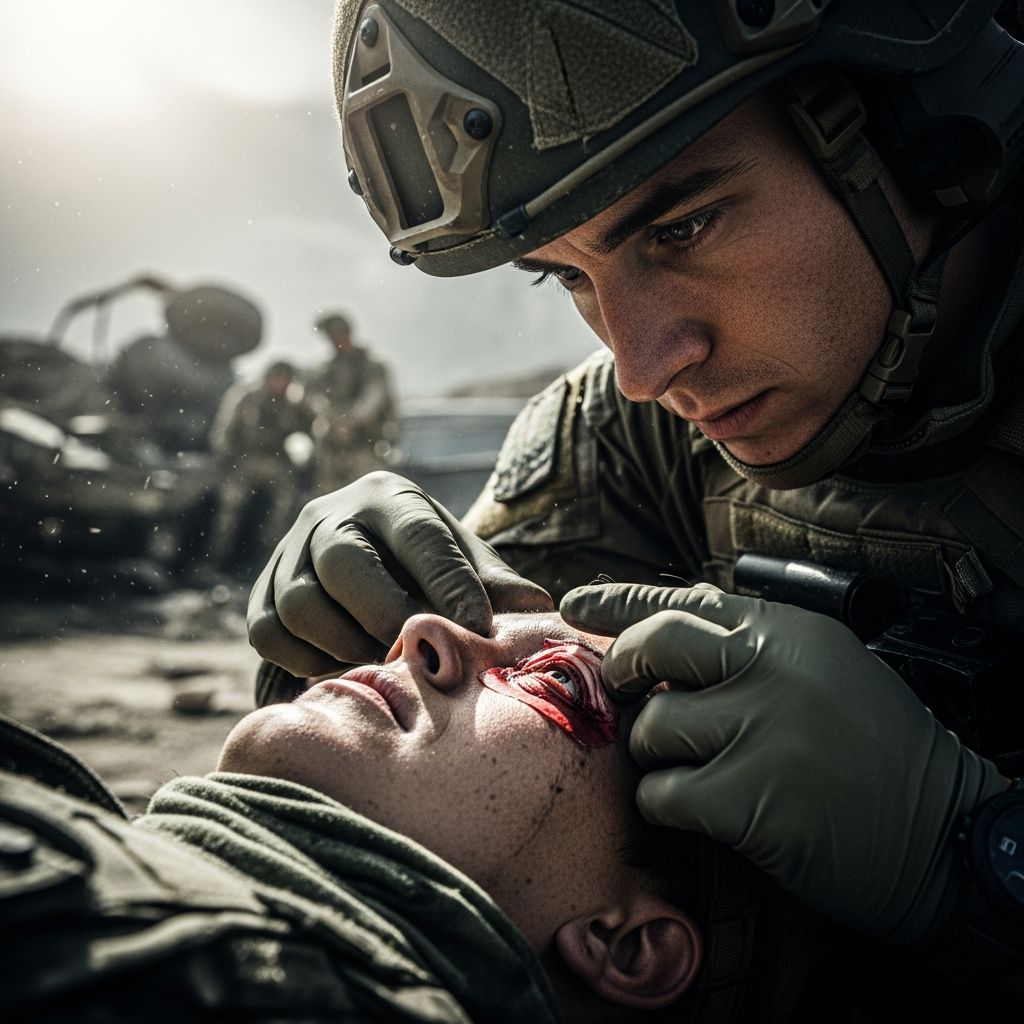
Understanding the Unique Challenges of Ocular Trauma in Crisis Settings
Eye injuries sustained during military operations or large-scale disasters present distinctive challenges that differ significantly from civilian emergency room scenarios. When professional ophthalmologic care may not be immediately available, responders must possess fundamental knowledge about protecting vision and preventing permanent damage. The combination of high-velocity projectiles, explosive blast waves, chemical exposures, and environmental debris creates specific patterns of eye trauma that require rapid, informed decision-making. Understanding the mechanisms of injury and appropriate response protocols can mean the difference between preserving vision and permanent blindness.
The physiological vulnerability of the eye compounds these challenges. Unlike other organs protected by bone and tissue, the eye’s delicate structures—including the cornea, lens, retina, and optic nerve—can suffer irreversible damage within minutes of injury. In austere environments where imaging technology and surgical capability may not exist, prevention of secondary injury becomes paramount. First responders and medical personnel operating in these conditions must prioritize safety assessment, stabilization, and appropriate triage decisions.
Establishing Safety and Performing Initial Assessment
The foundation of effective emergency response in any crisis begins with scene safety. Before rendering aid to eye-injured casualties, responders must first ensure that they themselves are not at ongoing risk from the same hazard that caused the original injury. In blast situations, this means moving to a secure location away from additional explosive devices or secondary threats. During chemical incidents, responders must understand whether vapors or residual contamination remains in the area.
Once safety is established, immediate assessment follows the ABC protocol—Airway, Breathing, and Circulation. Eye injuries rarely represent the most immediately life-threatening condition, and responders must evaluate whether the casualty can maintain their own airway, is breathing adequately, and has a functional circulation. Only after confirming that vital functions are stable should attention focus on ocular trauma.
Assessment for other potentially catastrophic injuries must occur before detailed eye examination. Severe hemorrhage from any source, suspected brain or spinal cord injury with neurologic compromise, and tension pneumothorax all take priority over eye care. Spinal precautions are essential if head trauma accompanied the eye injury, as rough movement or aggressive eye manipulation could exacerbate underlying neurologic damage.
Immediate Protective Measures for Injured Eyes
Once life threats are addressed, protecting the injured eye becomes critical. The goal is to prevent further mechanical trauma, contamination, and desiccation of the ocular surface while awaiting evacuation or definitive care.
Shielding Without Manipulation
A fundamental principle in ocular first aid during crisis situations is avoiding aggressive manipulation of the eye itself. Responders should never attempt to remove objects embedded in the eye, even if they appear superficial. Protruding foreign bodies should be left undisturbed and carefully protected with a rigid shield. This approach prevents additional tissue damage, contamination, and potentially catastrophic complications like expulsion of intraocular contents.
Related Stories



The shield should be constructed from available materials—a paper or foam cup, protective goggles, or improvised rigid barrier—and secured using tape or wrap applied only to the bony rim surrounding the eye socket. The shield must rest entirely on facial bones, never resting on the eyeball itself. This creates a protected chamber around the damaged eye without applying pressure that could worsen internal injury.
Managing Eyelid Coverage
The eyelids provide crucial protection for the delicate ocular surface. When eyelids are severely damaged and cannot fully cover the eyeball, the cornea becomes exposed to environmental contamination and desiccation—conditions that rapidly lead to permanent vision loss. In such cases, responders should keep the eye moist with loosely taped, clean, wet gauze. This maintains hydration of the corneal surface while allowing for visual assessment and potential evacuation decisions.
Managing Specific Injury Types
Chemical Contamination Protocols
Chemical exposures to the eye demand aggressive immediate flushing with large volumes of clean water or saline solution. The goal is dilution and removal of the offending chemical before it causes continued tissue damage. Responders should use copious amounts of flushing fluid—ideally exceeding two liters for suspected chemical burns. The injured person should be encouraged to open their eyes and blink frequently during flushing, though forced eyelid opening should be avoided.
Critically, responders should never attempt to neutralize chemical contamination with other substances. This can generate heat and cause additional injury. Similarly, bandaging or patching the eye after chemical exposure should be avoided, as this can trap residual chemical against the cornea. After thorough flushing, the eye should be protected with a shield and the casualty should be evacuated for urgent specialist evaluation, even if symptoms appear mild initially.
Penetrating and Foreign Body Injuries
When foreign objects penetrate the eye or become lodged in the ocular surface, the principle of non-interference remains absolute. Attempting removal by untrained responders frequently causes additional damage and increases risk of permanent vision loss. Instead, the lodged object should be left in place, the eye should be gently flushed with clean water only if the surrounding area is visibly dirty, and the entire eye should be shielded.
Small debris that sits loosely on the eye surface may be rinsed away with gentle water irrigation, but anything that adheres or penetrates should remain undisturbed. These injuries require evacuation to facilities capable of surgical exploration and removal under controlled conditions.
Blunt Trauma and Closed-Globe Injuries
Blunt impacts from blast waves, projectiles, or debris create injuries where the eye’s external integrity remains intact but internal structures may be severely damaged. The eye may appear relatively normal externally while suffering hyphema (bleeding inside the eye), retinal detachment, or lens dislocation. Responders cannot detect these injuries through external examination.
Management involves gentle application of a cool compress to reduce swelling and pain, avoiding pressure that could increase intraocular pressure. The casualty should be kept at rest with the head elevated to facilitate drainage of any internal bleeding. Even when external appearance seems minor, responders must maintain a high index of suspicion and arrange evacuation for specialist evaluation.
Blast-Related Periocular Injuries
Military blast incidents frequently cause injuries to structures surrounding the eye—including eyelid lacerations, orbital fractures, and compartment syndrome of the orbit. Severe swelling or tension around the eye can compress ocular blood vessels and the optic nerve, potentially causing permanent vision loss if not decompressed. Signs of concerning periocular pressure include a markedly protruding eye that cannot move normally, severe pain unrelieved by simple analgesia, and progressive vision loss.
While responders cannot perform decompression in austere settings, recognizing these danger signs and prioritizing evacuation is essential. The casualty should be positioned with the head elevated and any constrictive dressings should be loosened to prevent further pressure accumulation.
Deciding When Evacuation is Mandatory
Triage and Escalation Criteria
After initial stabilization, responders must determine whether the casualty requires evacuation to a facility with ophthalmologic surgical capability. Certain findings indicate that vision preservation depends on specialist intervention within hours:
- Vision loss that is rapid or progressive—sudden decrease in visual acuity suggests either hemorrhage, retinal detachment, or other progressive pathology
- Severe pain unresponsive to rest and cool compress—may indicate elevated intraocular pressure or corneal abrasion requiring urgent treatment
- Continuous hemorrhage not controlled by gentle pressure—suggests ongoing vascular injury
- Suspected penetrating or perforating injury to the eye—requires surgical evaluation and potential repair
- Suspected intraocular foreign body—necessitates imaging and surgical removal
- Eye tense, swollen, and markedly protruding—suggests orbital compartment syndrome
- Pupil abnormalities or irregularities—may indicate internal damage to iris or ciliary body
- Distorted or sunken eyeball—suggests perforating injury, substantial hemorrhage, or orbital fracture with soft tissue loss
- Eyelids too damaged to protect the eye—corneal scarring and blindness result if protection cannot be maintained
- Loss of eye integrity—the eye is no longer a closed-globe structure
- Orbital bone fractures causing eye displacement—require specialist intervention to restore normal anatomy and prevent permanent vision loss
Delayed Complications Requiring Evacuation
Some eye injuries cause delayed deterioration that becomes apparent over hours or days. Responders in ongoing crisis situations must remain vigilant for development of signs requiring escalation of care. Chemical burns may appear initially mild but cause progressive scarring and vision loss if not treated with topical medications and specialist monitoring. Retinal detachments may begin peripherally and slowly advance toward the central visual axis. Increased intraocular pressure from bleeding or inflammation may develop gradually.
Regular reassessment of eye injuries is therefore essential. If vision changes, pain increases, or any of the mandatory evacuation criteria develop, the casualty should be moved toward definitive care regardless of whether symptoms were initially mild.
Supportive Care and Symptom Management
Positioning and Rest
Casualties with eye injuries should be positioned with the head elevated at approximately 30 degrees. This position facilitates drainage of blood and inflammatory fluid from around the eye and reduces intraocular pressure. It also improves comfort for most patients. Casualties should avoid strenuous activity, bending, or straining, as these increase intraocular pressure and may worsen internal bleeding or increase pain.
Analgesic Considerations
Pain management must be approached carefully. Nonsteroidal anti-inflammatory medications like ibuprofen or aspirin thin the blood and can increase bleeding in and around the eye. These should be avoided in preference for acetaminophen or, in austere military settings, systemic analgesics not in the NSAID class. Topical anesthetics may provide temporary relief but should not be used repeatedly, as chronic use impairs corneal healing and increases risk of severe corneal disease.
Practical Application: Real-World Scenarios
| Scenario | Immediate Response | Evacuation Priority |
|---|---|---|
| Eyelid laceration with intact eyeball | Assess eye integrity. Flush with clean water if dirty. Apply moist gauze. Shield entire area. Control any bleeding with gentle pressure. | Urgent—requires specialist repair to prevent ectropion and lagophthalmos |
| Embedded metal fragment in cornea | Do NOT attempt removal. Shield entire eye with rigid cup. Flush surrounding area with clean water. Minimize eye movement. | Emergent—risk of permanent scarring and vision loss |
| Chemical splash (unknown agent) | Immediately flush with >2 liters clean water for 15+ minutes. Keep eyelids open during flushing. Do not bandage. Position head so fluid drains away from other eye. | Emergent—chemical burns worsen over hours if not treated |
| Blunt impact with mild pain and slight swelling | Apply cool compress 15 minutes. Keep head elevated. Avoid NSAIDs. Reassess vision and pain frequently. | Urgent—may hide internal bleeding or retinal detachment |
| Blast wave injury with severe pain and vision decrease | Shield eye. Elevate head 30°. Apply cool compress. Control any external bleeding. Do not manipulate eye. | Emergent—likely elevated intraocular pressure or retinal pathology |
Frequently Asked Questions About Eye Trauma Management
Q: Should I try to flush out a metal shard stuck in the eye?
A: No. Leave any embedded object untouched and shield the entire eye with a rigid barrier. Attempting removal causes additional damage. Evacuation for surgical removal under controlled conditions is essential.
Q: Is it safe to use eye ointment on an injured eye?
A: In austere settings without specialist evaluation, avoid topical medications unless specifically trained. Applying ointment without knowing the injury type can trap contamination or worsen certain conditions. Focus on gentle irrigation and shielding instead.
Q: How long should I flush a chemical-exposed eye?
A: Minimum 15 minutes with continuous running water or saline. For alkaline chemicals, extend flushing to 20-30 minutes. The goal is complete dilution and removal of chemical. After flushing, arrange immediate evacuation.
Q: Can cold compresses help all eye injuries?
A: Cold compresses benefit blunt trauma with swelling, helping reduce pain and inflammation. However, avoid pressure over penetrating injuries or suspected globe rupture, as compression may worsen the condition. Apply gently and only to intact eyes.
Q: What position is best for an eye-injured casualty during evacuation?
A: Head elevated at 30 degrees reduces intraocular pressure and promotes drainage of blood or inflammatory fluid. This position is generally comfortable and beneficial for all eye injuries.
Conclusion: Prevention and Preparation
Eye injuries in military and disaster contexts demand rapid, informed response and appropriate escalation to specialist care. While advanced ophthalmologic interventions may not be available in the field, understanding fundamental principles of eye protection, appropriate stabilization, and triage criteria enables responders to maximize vision preservation. The focus must remain on preventing secondary injury through careful handling, appropriate use of protective barriers, and timely evacuation when criteria indicate that specialist intervention is required to prevent permanent blindness.
References
- First Aid for Eye Injuries in War and Disaster — Global Medical Knowledge Alliance. https://gmka.org/en/articles/persha-dopomoga-pry-travmi-ochej-v-umovah-vijny/
- First Aid for Eye Injuries — UMM Health, University of Michigan Medical School. https://www.ummhealth.org/health-library/first-aid-for-eyes
- First Aid for Eye Emergencies — Prevent Blindness America. https://preventblindness.org/first-aid-for-eye-emergencies/
- Eye Emergencies: MedlinePlus Medical Encyclopedia — National Library of Medicine. https://medlineplus.gov/ency/article/000054.htm
- First Aid Tips for Eye Injuries — Wills Eye Hospital. https://www.willseye.org/patients-visitors/patient-information/eye-health/first-aid-tips-eye-injuries/
Similar Articles








Read full bio of medha deb