Eyelid Skin Problems: Causes, Symptoms, Treatment Guide
Comprehensive guide to common inflammatory, pigmentary, infectious, and neoplastic eyelid skin conditions.
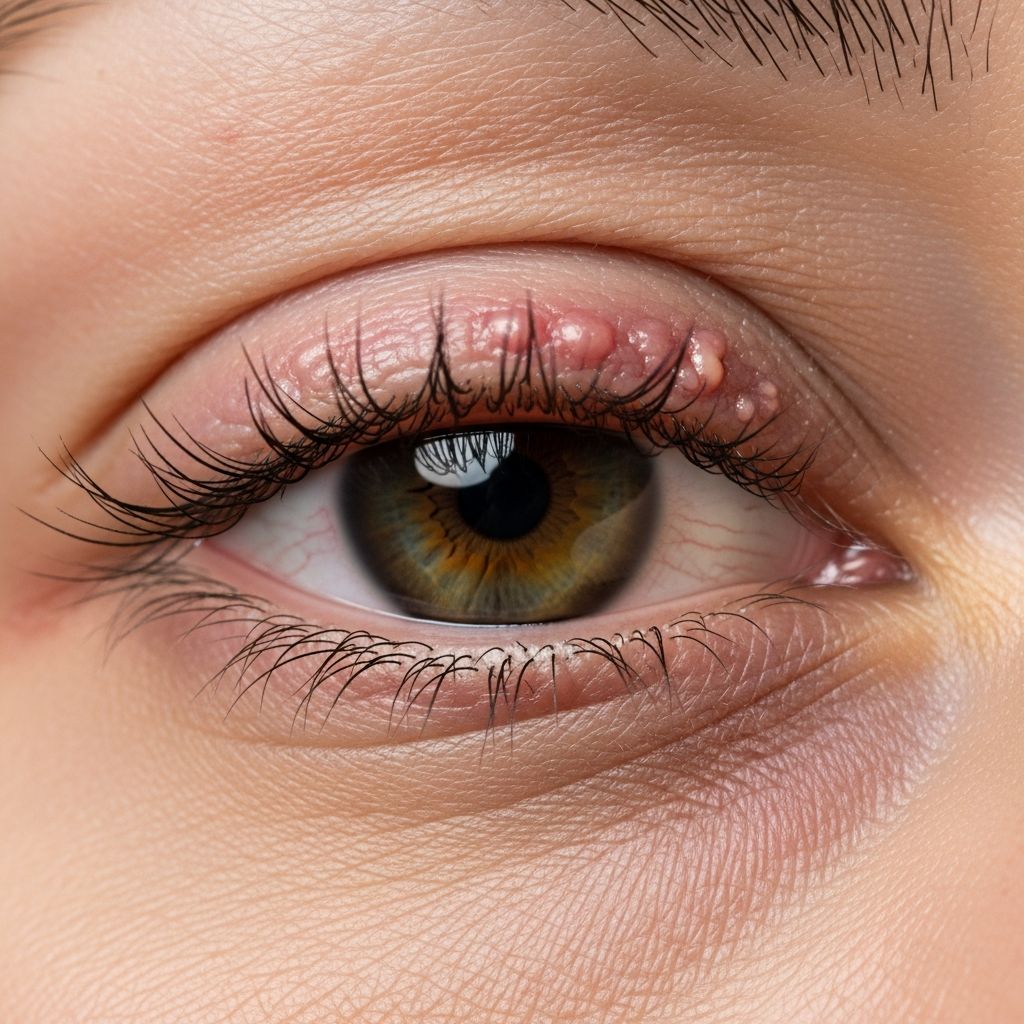
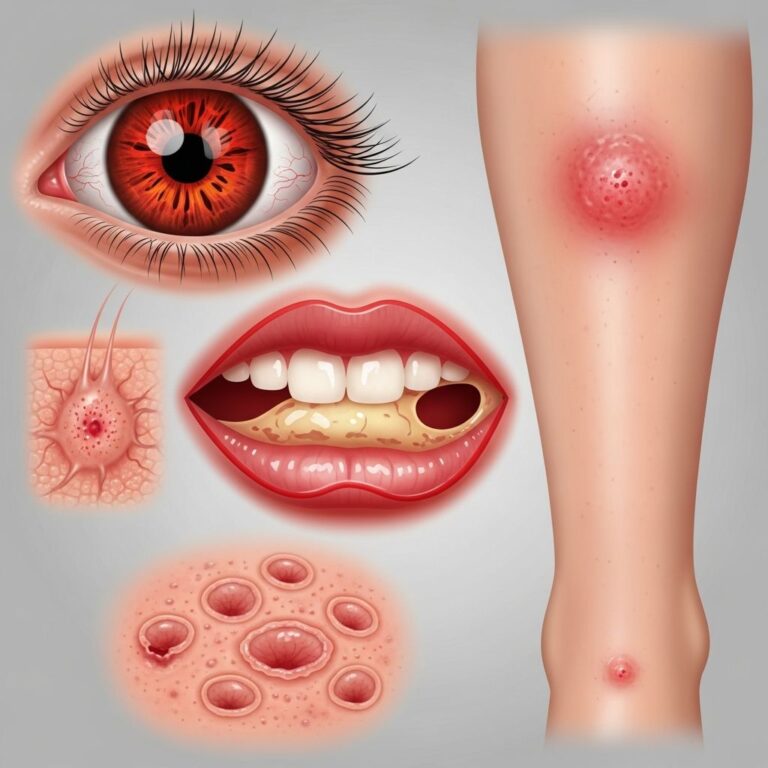
The eyelids are a delicate area prone to various skin conditions due to their thin skin and frequent exposure to irritants, allergens, and environmental factors. Although many skin disorders can affect the eyelids, this article outlines the most common presentations, categorized by clinical features such as dry itchy patches, papules, blisters, swelling, and discolouration. Skin cancers progressively enlarge, while acne vulgaris typically spares the eyelids. Systemic disorders may mimic eyelid disease through swelling or redness.
Inflammatory Skin Conditions Affecting Eyelids
Inflammatory conditions are among the most frequent eyelid issues, often presenting with redness, scaling, itching, or swelling. These can be acute or chronic and may involve the eyelid margins (blepharitis) or the entire lid.
Dry Itchy Patches
Dry, itchy patches on the eyelids commonly indicate eczematous conditions. These patches may be red, scaly, and prone to lichenification (thickening) from chronic rubbing.
- Atopic dermatitis (eyelid eczema): Chronic inflammation in individuals with atopy (history of asthma, hay fever). Features include dry, itchy skin with possible Dennie-Morgan folds (extra crease under the lower eyelid). Scratching can lead to lichenification and secondary infections.
- Irritant contact dermatitis: Caused by direct injury from irritants like soaps, detergents, makeup removers, or physical factors (wind, cold). Common in sensitive skin or atopics. Symptoms: redness, scaling, stinging without true allergy.
- Allergic contact dermatitis: Immune-mediated reaction to allergens such as nail varnish, fragrances, preservatives in cosmetics, or transferred from hands (e.g., hair dye). Delayed onset (1-3 days). Patch testing confirms allergens.
- Seborrhoeic dermatitis: Greasy yellow scales on erythematous base, often involving nasolabial folds and scalp. Associated with Malassezia yeast overgrowth.
Dry Non-Itchy Patches
These are less symptomatic but can cause cosmetic concerns.
- Psoriasis: Well-defined plaques with silvery scales. May affect eyelids rarely, with Auspitz sign (pinpoint bleeding on scale removal).
- Lichen simplex: Thickened, leathery skin from repeated rubbing.
- Discoid eczema: Coin-shaped plaques, often post-inflammatory.
Papules and Pustules
Small raised lesions suggest infectious or inflammatory papulopustular processes.
- Acne rosacea: Persistent erythema, papules, pustules; eye involvement (ocular rosacea) with blepharitis.
- Staphylococcal blepharitis: Anterior lid margin crusting, collarettes around lashes.
- Demodex folliculorum infestation: Mites causing cylindrical dandruff on lashes, itching worse at night.
- Herpes simplex: Grouped vesicles progressing to pustules.
- Milia: Small white keratin cysts.
- Xanthelasma: Yellow cholesterol deposits in periorbital skin, linked to hyperlipidemia.
Blisters and Erosions
Blistering indicates autoimmune, viral, or severe eczematous processes.
- Erythema multiforme: Target lesions from infections/drugs.
- Pemphigus vulgaris: Flaccid blisters, Nikolsky sign positive.
- Herpes zoster: Dermatomal vesicles, painful.
Swelling
Eyelid swelling (oedema) can be acute or chronic.
- Angioedema: Acute, urticarial, from allergy.
- Cellulitis (preseptal): Bacterial infection, tender, warm.
- Orbital cellulitis: Deeper, vision-threatening.
Discolouration
Changes in eyelid colour range from hyperpigmentation to bluish hues.
- Postinflammatory pigmentation: Dark brown after dermatitis resolution.
- Apparent pigmentation: Shadow from infraorbital hollowing or tear trough deformity.
- True pigment deposition: Dermal melanin from rubbing, allergies, or thin translucent skin in elderly/atopics.
- Vascular: Bluish tint from dilated vessels or venous stasis.
Related Stories



Prone individuals include those with atopic dermatitis, thin skin, allergies, fatigue, or family history. Diagnosis involves history, examination, and sometimes imaging. Treatments: camouflage makeup, sun protection, topical agents (hydroquinone, retinoids), chemical peels, or fillers for hollowing.
Infections and Infestations
Infections often complicate eczematous skin due to barrier disruption.
Bacterial
- Impetigo: Honey-crusted erosions from Staph/Strep.
- Styes (hordeolum): Tender abscess at lash follicle.
Viral
- Molluscum contagiosum: Umbilicated pearly papules.
- Warts: HPV-induced verrucous lesions.
Fungal
- Tinea: Annular scaly patches.
Infestations
- Pediculosis: Lice at lash bases.
- Demodex: As above.
Benign Tumours and Cysts
Common non-cancerous growths.
- Seborrhoeic keratosis: Stuck-on warty plaques.
- Basal cell papilloma: Similar to seborrhoeic.
- Milia: As above.
- Chalazion: Chronic granulomatous swelling from meibomian gland.
- Sudoriferous cyst (hidrocystoma): Clear fluid-filled.
Skin Cancers
Progressively enlarging lesions require biopsy.
- Basal cell carcinoma: Pearly nodule with telangiectasia, rodent ulcer.
- Squamous cell carcinoma: Hyperkeratotic plaque.
- Melanoma: Irregular pigmented lesion.
- Sebaceous gland carcinoma: Rare, aggressive, masquerades as chalazia.
Frequently Asked Questions (FAQs)
Q: What causes eyelid dermatitis?
A: Primarily irritants (soaps, makeup) or allergens (cosmetics, fragrances). Atopics are more susceptible.
Q: How is allergic contact dermatitis diagnosed?
A: Clinical features plus patch testing to identify specific allergens.
Q: Can eyelid dermatitis cause dark circles?
A: Yes, via postinflammatory hyperpigmentation.
Q: Is eyelid dermatitis contagious?
A: No, unless secondary bacterial infection present.
Q: When to see a doctor for eyelid swelling?
A: If painful, vision changes, or not resolving in days—could indicate cellulitis.
Q: How to treat Demodex blepharitis?
A: Tea tree oil scrubs, ivermectin, or metronidazole.
Treatment Overview
Management depends on cause: avoid triggers, emollients, topical steroids/calcineurin inhibitors for inflammation, antibiotics for infections, excision for tumours.
| Condition | First-Line Treatment |
|---|---|
| Contact Dermatitis | Avoid irritants/allergens, hydrocortisone 1% |
| Blepharitis | Lid hygiene, baby shampoo scrubs |
| Dark Circles | Sun protection, topical retinoids |
| Skin Cancer | Biopsy, surgical excision |
References
- Eyelid contact dermatitis — DermNet NZ. 2023. https://dermnetnz.org/topics/eyelid-contact-dermatitis
- Eyelid skin problems — DermNet NZ. 2023. https://dermnetnz.org/topics/eyelid-skin-problems
- Eyelid Dermatitis: Contact, Symptoms, Causes, Treatment — Cleveland Clinic. 2023-10-27. https://my.clevelandclinic.org/health/diseases/21930-eyelid-dermatitis
- Seborrheic Dermatitis — NCBI StatPearls. 2023-07-04. https://www.ncbi.nlm.nih.gov/books/NBK551707/
- Atopic dermatitis — DermNet NZ. 2023. https://dermnetnz.org/topics/atopic-dermatitis
- Dark circles under the eyes — DermNet NZ. 2023. https://dermnetnz.org/topics/dark-circles-under-the-eyes
Similar Articles








Read full bio of medha deb