Understanding Facial Masking in Parkinson’s Disease
How Parkinson's affects facial expression and communication abilities
What Is Facial Masking and How Does It Develop?
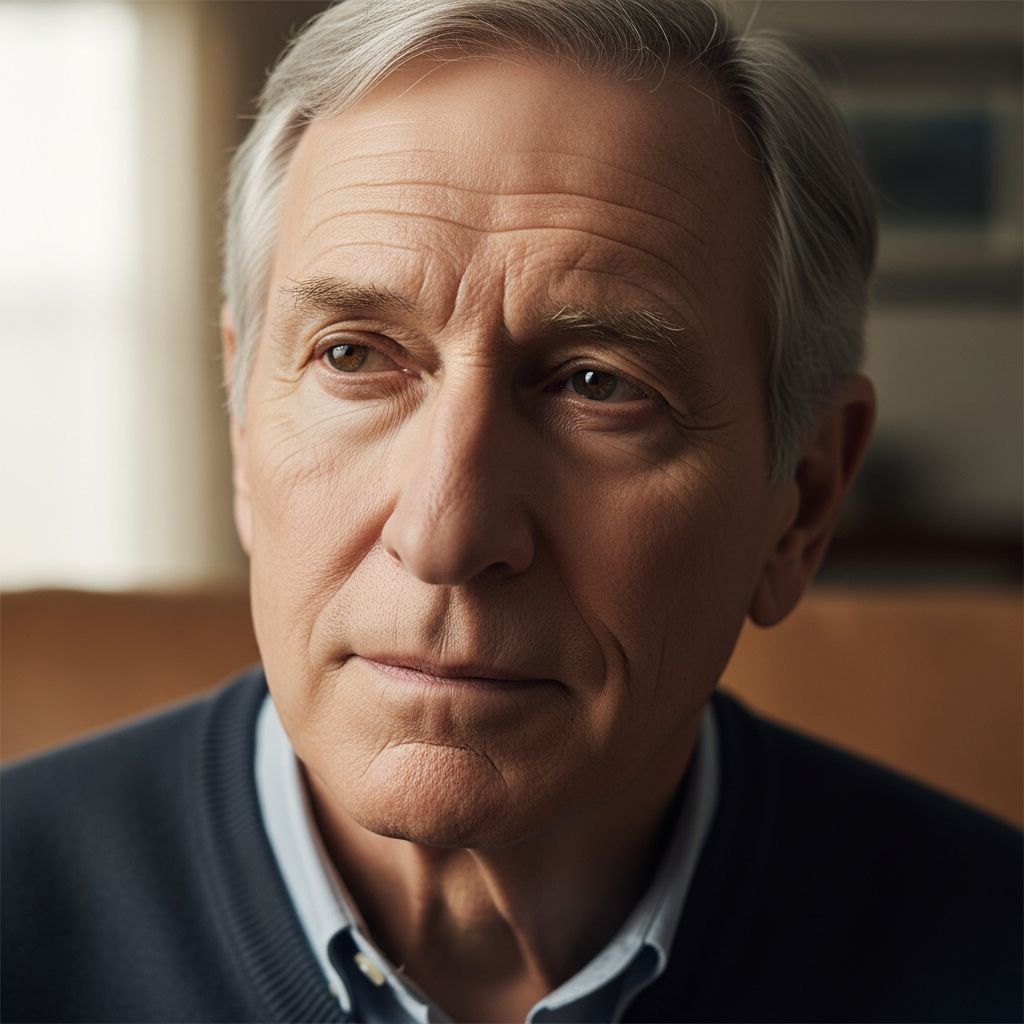
Facial masking, medically termed hypomimia, represents one of the most frequently encountered symptoms among individuals living with Parkinson’s disease. This condition manifests as a significant reduction in the ability to produce facial expressions, resulting in a face that appears blank, emotionless, or perpetually serious regardless of the person’s actual emotional state. Unlike voluntary facial movements, which are executed through conscious effort, facial masking undermines both intentional expressions and the spontaneous, involuntary movements that normally accompany communication and emotional experiences.
The development of facial masking typically occurs gradually as Parkinson’s disease progresses. In its earliest manifestations, a person may notice subtle difficulties in producing expressions that were once automatic—such as smiling in response to humor or raising eyebrows during conversation. As the condition advances, these challenges intensify, potentially limiting facial mobility to a degree where even deliberate attempts to smile or change expression become extremely difficult or impossible.
Understanding the progression of this symptom is essential for both individuals with Parkinson’s disease and their loved ones, as it directly influences how emotions are perceived by others and how effectively interpersonal communication occurs.
The Neurological Basis Behind Facial Expression Loss
Parkinson’s disease fundamentally alters brain chemistry by damaging nerve cells responsible for producing dopamine, a critical chemical messenger that regulates muscle movement throughout the body. When these cells deteriorate, the brain’s capacity to generate sufficient dopamine diminishes significantly. This depletion directly compromises the motor control systems that govern facial muscles, leading to the characteristic symptoms associated with hypomimia.
The loss of dopamine affects facial movement through several interconnected mechanisms:
- Muscle Rigidity and Stiffness: Dopamine deficiency causes facial muscles to become abnormally rigid and resistant to movement. This stiffness makes it physically challenging to execute expressions like smiling, frowning, or raising the eyebrows, even when the person consciously attempts these movements.
- Bradykinesia (Movement Slowness): Beyond stiffness, reduced dopamine causes facial movements to become noticeably slower and less responsive. This slowness means that spontaneous facial reactions—such as the quick eye movements or subtle lip movements that normally accompany speech—become diminished or absent.
- Impaired Automatic Responses: Many facial movements occur automatically in response to emotions or social situations without conscious direction. These autonomic facial responses—including blinking, smiling, and spontaneous laughter—become significantly impaired in Parkinson’s disease, reducing the involuntary expressions that typically convey emotional authenticity.
- Emotional and Motivational Changes: Beyond the purely motor components, dopamine depletion can also contribute to apathy, depression, or reduced emotional responsiveness, which compounds the appearance of emotional detachment created by the physical inability to form expressions.
This multifaceted impact on facial musculature and emotional processing explains why facial masking represents more than a simple motor deficit—it represents a complex interplay between physical movement limitations and neurochemical changes affecting emotional regulation.
Recognizing Severity Levels and Progression Patterns
Medical professionals use a standardized classification system to assess the severity of facial masking in Parkinson’s disease patients. This system, based on the Unified Parkinson’s Disease Rating Scale, categorizes the symptom across five distinct levels:
| Severity Level | Clinical Characteristics |
|---|---|
| Level 0 | Normal facial expression and complete facial muscle function |
| Level 1 | Minimal or barely noticeable reduction in facial expression and movement |
| Level 2 | Clear and recognizable loss of facial mobility and expressiveness |
| Level 3 | Moderate to substantial loss of facial movement that is consistently present throughout interactions |
| Level 4 | Severe reduction or near-complete loss of facial mobility; face appears largely immobilized and expressionless |
Related Stories



The progression of facial masking does not follow an identical timeline across all individuals. Some people experience rapid advancement from minimal symptoms to significant facial immobility, while others progress more gradually over years. The severity at any given point depends on various factors, including the stage of Parkinson’s disease itself, individual responsiveness to medications, and the rate at which dopamine-producing cells continue to deteriorate.
Facial masking can emerge as early as stage one of Parkinson’s disease and may worsen as the condition advances through subsequent stages. However, research indicates that more severe facial masking is not necessarily correlated with more advanced cognitive decline, though some studies have found associations between significant facial masking and dementia symptoms in certain patient populations.
How Facial Masking Impacts Communication and Social Relationships
Beyond the physical manifestation of reduced facial expression, facial masking creates significant communicative and interpersonal challenges. Human communication relies heavily on facial cues—smiles, raised eyebrows, narrowed eyes, and lip movements—to convey emotional intent, sincerity, and engagement. When these facial signals are absent or severely diminished, the communication process becomes substantially compromised.
An individual with facial masking may struggle to:
- Convey enthusiasm, interest, or engagement during conversations, potentially making others perceive them as disinterested or apathetic
- Demonstrate sadness, happiness, anger, or other emotions that would normally be expressed through facial configuration
- Smile socially in response to jokes, friendly gestures, or positive interactions
- Maintain the facial mobility that complements speech and enhances verbal communication effectiveness
When combined with other Parkinson’s symptoms—such as reduced speaking volume or speech clarity issues—facial masking can create a profound communication barrier. A person speaking softly with a blank expression may be perceived as sad, angry, or emotionally withdrawn, even when their actual emotional state is quite different. This disconnect between internal emotional experience and external facial presentation can lead to misunderstandings in relationships, social isolation, and psychological distress.
Friends, family members, and colleagues may misinterpret the lack of facial expression as depression, lack of interest, or emotional coldness, when in reality the person is fully engaged cognitively and emotionally but simply unable to express these internal states through their face.
The Relationship Between Facial Masking and Other Parkinson’s Symptoms
Facial masking does not occur in isolation. It typically develops alongside other motor symptoms characteristic of Parkinson’s disease, and the combination of these symptoms creates compounded challenges for communication and quality of life.
Common concurrent symptoms include:
- Tremors: Involuntary shaking in the hands, arms, legs, or head that can accompany the facial immobility
- Bradykinesia: The generalized slowness of movement that affects the entire body, not just the face
- Muscle Rigidity: Overall stiffness and resistance to movement throughout the body
- Balance and Coordination Difficulties: Problems maintaining stability and executing coordinated movements
- Speech Changes: Reduced voice volume, monotone speech, or difficulty articulating words clearly
- Difficulty Swallowing and Chewing: Problems with oral motor control that can accompany facial muscle dysfunction
The convergence of facial masking with speech alterations creates particularly significant communication impairment. When a person speaks in a soft, monotone voice while displaying an expressionless face, the listener receives minimal emotional and vocal cues to interpret meaning and emotional context. This combination can make conversation exhausting for both the person with Parkinson’s and their communication partners.
Treatment and Management Approaches
While no treatment specifically targets facial masking in isolation, several therapeutic approaches have demonstrated effectiveness in improving facial expression and mobility in individuals with Parkinson’s disease.
Pharmacological Interventions
Dopamine-enhancing medications, particularly levodopa, represent the primary pharmacological approach to managing facial masking symptoms. Research has confirmed that these medications can meaningfully improve facial movement and expressiveness in people living with Parkinson’s disease. By increasing dopamine availability in the brain, these medications help restore some degree of motor control to facial muscles, allowing for improved facial mobility and more spontaneous expressions.
The effectiveness of dopamine medications for facial masking indicates that the symptom responds to neurochemical intervention, making medication optimization an important first step in addressing this particular challenge.
Physical and Creative Therapies
Beyond pharmaceutical approaches, various therapeutic modalities can help expand facial mobility and slow symptom progression:
- Facial Exercise Programs: Structured exercises targeting the facial muscles can help maintain or increase range of motion, even as Parkinson’s progresses
- Speech Therapy: Speech-language pathologists can provide techniques to improve both facial expression and vocal quality simultaneously
- Physical Therapy: General physical therapy addressing overall body mobility often has secondary benefits for facial muscle control
- Creative and Artistic Activities: Participating in music, drama, or other creative pursuits can provide natural opportunities to practice facial expressions and emotional engagement
Supporting Someone With Facial Masking
For individuals experiencing facial masking and their support networks, several strategies can help mitigate the communicative and social challenges:
- Educate friends, family, and colleagues about facial masking so they understand that the blank expression does not reflect emotional indifference or depression
- Encourage open verbal communication about emotions and thoughts, compensating for reduced facial cues through explicit language
- Work with healthcare providers to optimize Parkinson’s medication regimens, as improved overall symptom control often benefits facial expression
- Explore therapy options that address both physical and emotional aspects of living with this symptom
- Recognize and validate the genuine emotional experiences occurring behind the expressionless face
Key Takeaways
Facial masking stands as a common and challenging symptom of Parkinson’s disease that extends far beyond simple cosmetic concerns. Rooted in dopamine depletion and its effects on facial muscle control, this symptom creates barriers to effective communication and can strain social relationships if not properly understood. While comprehensive treatment options exist—including dopamine-enhancing medications and various therapeutic approaches—managing this symptom requires a multifaceted approach addressing both physical movement limitations and the communicative strategies necessary to bridge the gap between internal emotional experience and external facial presentation. By understanding the mechanisms behind facial masking and implementing appropriate interventions, individuals with Parkinson’s disease can maintain more effective communication and preserve meaningful social connections despite this challenging symptom.
References
- Medical News Today — Medical News Today Editorial. 2024. https://www.medicalnewstoday.com/articles/mask-face-parkinsons
- Healthline: Parkinson’s Masked Face — Healthline Media. 2024. https://www.healthline.com/health/parkinsons/mask-face-parkinsons
- Parkinsons.org.uk: What is a Parkinson’s Mask? — Parkinson’s UK. 2024. https://www.parkinsons.org.uk/magazine/stories/what-is-parkinsons-mask
- Healthgrades Health Library: What Is Parkinson’s Masking? — Healthgrades. 2024. https://resources.healthgrades.com/right-care/parkinsons-disease/parkinsons-masking
- UF Health Fixel: Does Replacing Dopamine Help with Facial Masking in PD? — University of Florida Health. 2022. https://fixel.ufhealth.org/2022/11/14/does-replacing-dopamine-help-with-facial-masking-in-pd/
Similar Articles








Read full bio of Sneha Tete