Facial Rashes: 6 Key Types, Diagnosis, And Treatment
Comprehensive guide to identifying, diagnosing, and managing common facial rashes in adults and children.
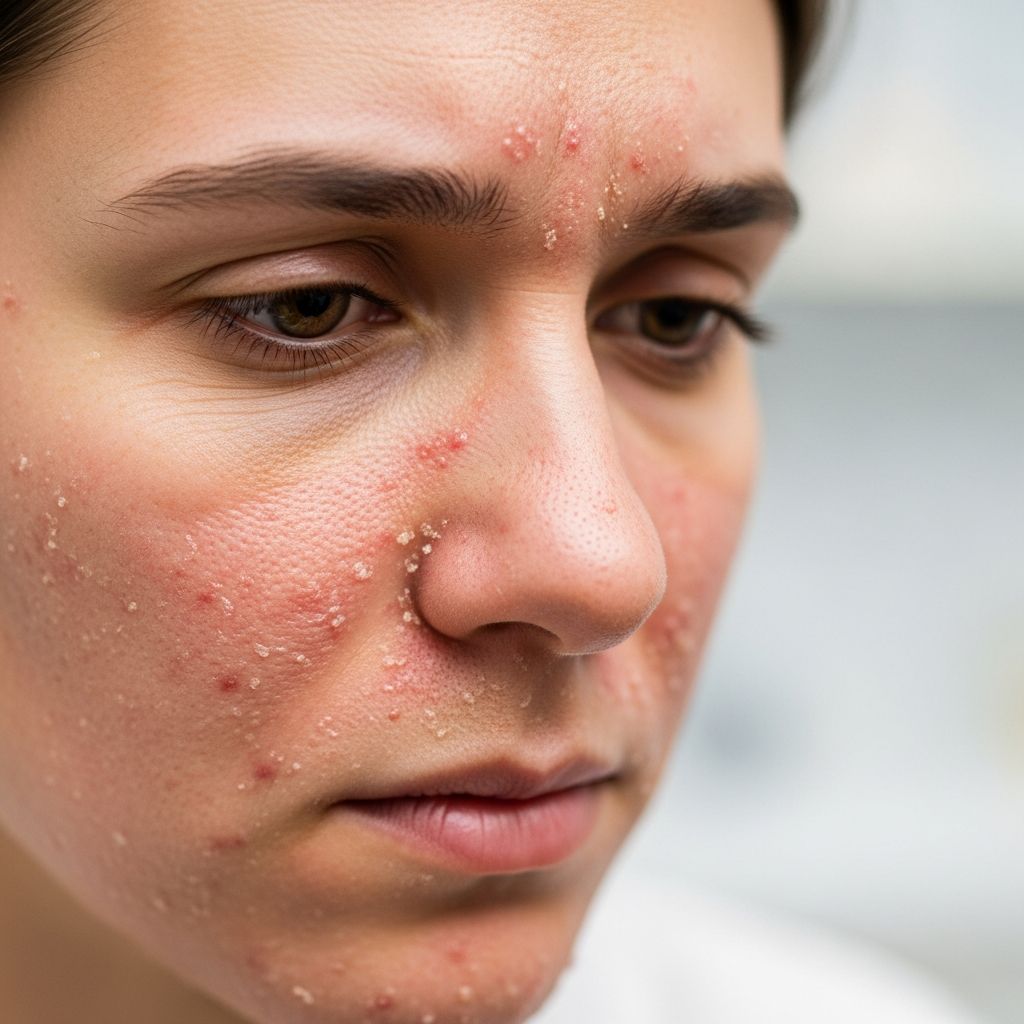
Facial rashes are common dermatological presentations that can arise from a variety of causes, including inflammatory conditions, infections, allergic reactions, and environmental factors. Patients often present with mild signs due to embarrassment, making diagnosis challenging. A systematic approach involving history, morphology, distribution, and clinical clues is essential for accurate identification and management.
Who gets facial rashes?
Facial rashes affect individuals of all ages, races, and skin types, though certain conditions predominate in specific demographics. Atopic dermatitis is more common in children with a personal or family history of atopy. Rosacea typically onset in adults aged 30-50, particularly those with fair skin. Periorificial dermatitis often affects young women using topical corticosteroids or fluoridated toothpaste. Infections like tinea faciei can occur in anyone exposed to dermatophytes, while viral exanthems are frequent in children. Darker skin types may show less pronounced erythema but more hyperpigmentation post-inflammation.
Clinical features of facial rashes
The appearance of facial rashes varies widely based on the underlying pathology. Key morphological features include:
- Erosions/crusting: Seen in impetigo (honey-coloured crusts), herpes simplex (grouped vesicles on erythematous base), or secondarily infected eczemas.
- Dry or scaly rash: Common in seborrhoeic dermatitis (greasy scales on nasolabial folds, eyebrows), psoriasis (well-demarcated plaques with silver scale), or xerosis.
- Papulopustular rash: Characterized by monomorphic papules/pustules in acne, rosacea, or folliculitis.
- Erythema: Background redness in rosacea, lupus (malar rash), or dermatomyositis (heliotrope rash).
- Brown macules/patches: Post-inflammatory hyperpigmentation, melasma, or lentigines.
- Pale or white macules/patches: Pityriasis alba, vitiligo, or tinea versicolor.
Significant itch suggests atopic or contact dermatitis, while pain points to herpes zoster or erysipelas. Distribution patterns aid diagnosis: central face in seborrhoeic dermatitis, butterfly area in lupus, or unilateral in shingles.
Differential diagnosis
Facial rashes require categorization by morphology and distribution for efficient diagnosis (Table 1). Red rashes, the most common, are classified as scaly, papulopustular, or mixed.
| Morphology | Common Conditions | Key Features |
|---|---|---|
| Scaly | Seborrhoeic dermatitis, psoriasis, tinea faciei | Greasy scales, annular with trailing scale, well-defined plaques |
| Papulopustular | Rosacea, acne, periorificial dermatitis | Monomorphic papules/pustules, telangiectasia, periorificial |
| Mixed/Erythematous | Atopic dermatitis, contact dermatitis, lupus | Pruritic, geometric, malar distribution |
Table 1: Morphological classification of facial rashes.
Dry or scaly rash
Seborrhoeic dermatitis presents with yellow, greasy scales in seborrhoeic areas (scalp, nasolabial folds, eyebrows, post-auricular). Psoriasis shows sharply demarcated plaques with micaceous scale, often on elbows/knees too. Tinea faciei is annular, asymmetrical with central clearing and peripheral scale; topical steroids create ‘tinea incognito’ with reduced scale and pustules. Atopic dermatitis features ill-defined erythema with fine scale and lichenification in chronic cases. Keratosis pilaris on cheeks is a clue.
Papulopustular rash
Rosacea displays persistent erythema, telangiectasia, papules, and pustules on central face, sparing periocular/lip areas. Acne includes comedones distinguishing it from rosacea. Periorificial dermatitis shows clusters of 1-2mm papules around mouth/nose/eyes, sparing vermilion border; often history of steroid use. Malassezia folliculitis has uniform itchy papulopustules on forehead/beard area. Pseudofolliculitis barbae occurs post-shaving in curly-haired individuals.
Related Stories



Face: erythema
Acute erythema from flushing (rosacea triggers: heat, alcohol), contact dermatitis, or systemic causes (carcinoid, mastocytosis). Chronic erythema in lupus (smooth malar rash), dermatomyositis (violaceous eyelids), or photodamage. Shingles is vesicular in dermatomal distribution.
Face: brown macules/patches
Melasma (hormonal, centrofacial), post-inflammatory hyperpigmentation (more visible in darker skin), solar lentigines (sun-exposed), or naevi. Riehl melanosis from cosmetics/fragrances.
Face: pale or white macules/patches
Pityriasis alba (post-atopic, hypopigmented scaly patches on cheeks), vitiligo (depigmented with milky-white margin), tinea versicolor (fine scale, fluorescence under Wood’s lamp).
Face: erosions/crusting
Impetigo (contagious, golden crusts), eczema herpeticum (monomorphic punched-out erosions in atopics), or angular cheilitis (moist crusts at mouth corners).
Diagnosis of facial rashes
Diagnosis begins with history (onset, itch/pain, triggers, products, systemic symptoms) and examination of morphology/distribution. Dermoscopy reveals telangiectasia in rosacea, perifollicular scale in demodicosis. Wood’s lamp for pityriasis versicolor. Biopsy if unclear (e.g., granulomatous rosacea vs lupus). Patch testing for contact dermatitis. Culture/swabs for infections.
Treatment of facial rashes
Treatment targets the specific diagnosis:
- Seborrhoeic dermatitis: Antifungal creams (ketoconazole), mild steroids.
- Acne/rosacea: Topical retinoids, metronidazole, ivermectin; oral isotretinoin severe cases.
- Periorificial dermatitis: Stop steroids, topical pimecrolimus or tetracyclines 4-8 weeks.
- Contact dermatitis: Avoid allergen, emollients, moderate potency steroids.
- Tinea: Oral terbinafine if extensive.
- Lupus: Sunscreen, hydroxychloroquine.
Emollients are foundational. Sun protection crucial. Refer to dermatology if persistent/refractory.
What is the outcome for facial rashes?
Most facial rashes resolve with appropriate treatment, though rosacea/periorificial dermatitis may recur. Chronic conditions like atopic dermatitis require ongoing management. Scarring rare except in severe acne or granulomatous forms. Hyperpigmentation lingers in darker skin.
Table: Common facial rashes by morphology
| Condition | Distribution | Morphology | Triggers |
|---|---|---|---|
| Rosacea | Central face | Papules, pustules, erythema | Heat, alcohol, steroids |
| Seborrhoeic dermatitis | Nasolabial, eyebrows | Greasy yellow scales | Yeast overgrowth |
| Periorificial dermatitis | Perioral, periocular | Small papules | Topical steroids |
| Atopic dermatitis | Cheeks (children) | Erythema, scale, lichenified | Allergens, irritants |
| Tinea faciei | Asymmetrical | Annular scaly | Dermatophytes |
Frequently Asked Questions (FAQs)
Why has my face become red and itchy?
A red itchy face suggests atopic dermatitis, allergic contact dermatitis, or seborrhoeic dermatitis. Identify triggers like new skincare products.
Can facial rashes be serious?
Most are benign, but shingles, cellulitis, or cutaneous lupus require prompt treatment. Systemic symptoms warrant medical review.
How long do facial rashes last?
Varies: viral rashes 1-2 weeks, rosacea chronic with flares, contact dermatitis resolves on avoidance.
Is my facial rash contagious?
Possibly if impetigo, herpes, or tinea. Isolate until treated.
When should I see a dermatologist for a facial rash?
If persistent >2 weeks, scarring, systemic symptoms, or not responding to OTC treatment.
References
- Red in the face: Approach to diagnosis of red rashes on the face — Australian Journal of General Practice (RACGP). 2024-04-01. https://www1.racgp.org.au/ajgp/2024/april/red-in-the-face-approach-to-diagnosis-of-red-rashe
- Facial rashes — DermNet NZ. 2023-01-01. https://dermnetnz.org/topics/facial-rashes
- Periorificial dermatitis — DermNet NZ. 2023-01-01. https://dermnetnz.org/topics/periorificial-dermatitis
- Do not be rash with rashes: a guide to dermatological description — RCEMLearning. 2023-01-01. https://www.rcemlearning.co.uk/foamed/do-not-be-rash-with-rashes-a-guide-to-dermatological-description/
Similar Articles








Read full bio of medha deb