Farm-Raised vs. Wild-Caught Fish: Which Has More Nutrients?
Uncover the nutritional differences between farm-raised and wild-caught fish to make informed choices for your health and diet.
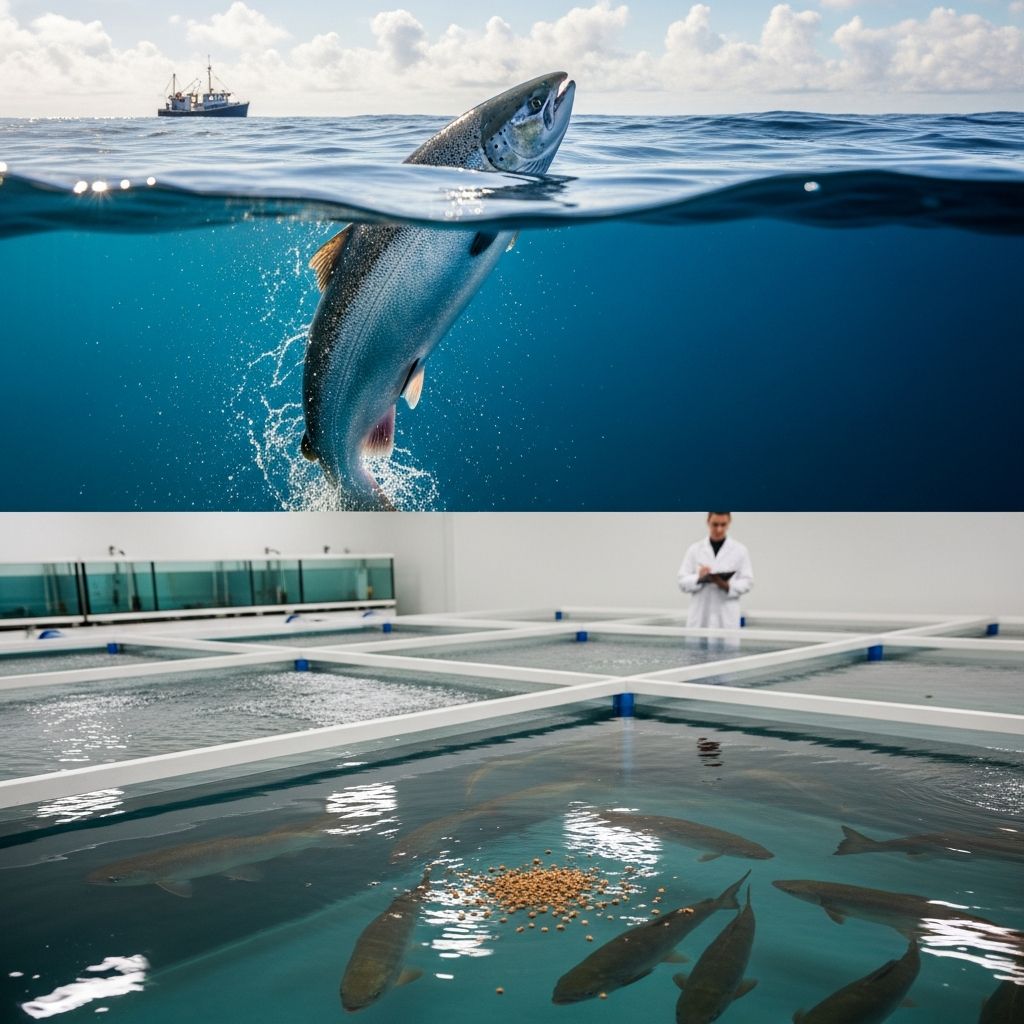
Farm-raised fish often contain higher levels of fat and omega-3 fatty acids due to their fortified feed and lower activity, while wild-caught fish tend to have more minerals like calcium and iron from natural diets.
What Are Farm-Raised and Wild-Caught Fish?
Wild-caught fish live freely in natural environments such as oceans, rivers, or lakes, consuming plants, insects, krill, plankton, and small organisms. This natural diet influences their leaner body composition and nutrient profile, often resulting in higher mineral content.
Farm-raised fish, also known as aquaculture fish, are bred in controlled settings like tanks, ponds, or ocean pens. They receive high-fat, high-protein manufactured feed, leading to increased fat accumulation, including omega-3s and saturated fats, because they exercise less.
Both types provide essential nutrients like protein, vitamin D, vitamin B12, iodine, and omega-3 fatty acids, making fish a cornerstone of healthy diets. However, differences in diet, environment, and farming practices create distinct nutritional profiles.
Nutritional Differences: A Head-to-Head Comparison
The nutrient content varies significantly between farm-raised and wild-caught fish, particularly in fat, protein, minerals, and fatty acids. Farm-raised fish generally have higher caloric and fat content due to their feed, while wild fish offer a leaner profile with superior mineral yields in some cases.
| Nutrient (per 113g serving) | Wild-Caught Salmon | Farm-Raised Salmon | Key Notes |
|---|---|---|---|
| Protein | 22g | 23g | Similar protein levels; both excellent sources. |
| Total Fat | 5g (8% DV) | 15g (19% DV) | Farm-raised has ~3x more fat due to diet and less exercise. |
| Omega-3 Fatty Acids | Higher ratio of omega-3 to omega-6 | Higher total omega-3s but more omega-6 | Wild has better balance for heart health; farm higher in absolute omega-3. |
| Calcium | 39mg (4% DV) | 10mg (1% DV) | Wild significantly higher. |
| Iron | 1mg (6% DV) | 0.4mg (2% DV) | Wild provides more. |
| Calories | Lower (~46% less than farm) | Higher | Farm-raised salmon has more calories from fat. |
Protein remains comparable, with both delivering around 22-23 grams per serving, supporting muscle repair and satiety. Fat differences are stark: a 3-ounce wild salmon fillet has half the fat of farmed, making wild leaner and lower-calorie.
Omega-3s, crucial for brain health, inflammation reduction, and cardiovascular benefits, show nuance. Farmed salmon often has more total omega-3s from enriched feed, but wild offers a superior omega-3 to omega-6 ratio. Studies on Norwegian salmon farming indicate wild feed fish like anchovies have higher omega-3 concentrations than farmed fillets.
Omega-3 Fatty Acids: Wild vs. Farmed
Omega-3s (DHA and EPA) are star nutrients in fish, linked to reduced stroke risk and longer life expectancy. Farmed fish, fed omega-3-fortified diets, can have slightly higher levels, especially in salmon. However, wild salmon’s natural diet yields a healthier fatty acid balance, minimizing inflammation-promoting omega-6s.
Research shows edible portions of wild feed fish exceed farmed salmon in omega-3 yields, with retention under 75% in farming processes. For optimal benefits, both types contribute, but variety prevents omega-6 overload from farmed fish.
Contaminants and Safety Concerns
Both farm-raised and wild-caught fish face contaminants like PCBs, mercury, and dioxins, but levels differ by species, location, and practices. Bottom-feeders and overcrowded farms may accumulate more PCBs from polluted waters or ground fishmeal.
- Wild fish: Mercury risk in large predators (e.g., tuna); PCBs higher in some bottom-feeders.
- Farm-raised: Potential for antibiotics, chemicals if poorly regulated; higher contaminants in dense pens.
Regulations vary globally, with U.S. and Norwegian standards minimizing risks. Choose low-mercury species like salmon over swordfish. Reputable farmed sources avoid antibiotics and additives.
Related Stories



Environmental and Sustainability Factors
Wild fishing pressures oceans, risking overfishing, while aquaculture eases wild stocks but demands sustainable feed. Redirecting wild feed fish (e.g., anchovies) to human consumption boosts nutrient retention over farming.
Farmed salmon requires wild fish for feed, yielding net nutrient loss for six of nine key nutrients. Sustainable farms use plant-based feeds and astaxanthin mimics for color and health, reducing environmental impact.
Which Fish Should You Eat?
No clear winner—both excel nutritionally. Opt for wild for leanness and minerals; farmed for affordability and omega-3 density. Guidelines: 2-3 servings weekly, prioritizing salmon, sardines (low contaminants).
- Best for weight management: Wild-caught (lower calories/fat).
- Best for omega-3 boost: Farmed salmon, if sustainable.
- Budget-friendly: Farm-raised from certified sources.
Dietitians emphasize both fit balanced diets, with minimal overall differences. Prioritize variety, freshness, and low-contaminant species.
Frequently Asked Questions (FAQs)
Is farmed salmon healthier than wild?
No single is superior; farmed has more fat/omega-3s, wild more minerals and leaner profile. Both nutritious.
Does farm-raised fish have more contaminants?
Potentially higher PCBs in poor farms, but regulated sources match wild safety. Check certifications.
Which has more protein?
Negligible difference; both ~22-23g per serving.
Is wild salmon worth the higher price?
For leanness and natural minerals, yes; otherwise, quality farmed suffices.
Can I eat fish daily?
2-3 servings/week recommended to limit mercury; vary species.
Expert Insights and Recommendations
Nutritionists agree: Fish trumps red meat for heart health. A PMC study highlights reallocating feed fish directly boosts global nutrient supply. Cleveland Clinic notes wild’s leanness aids calorie control.
Incorporate both: Grill wild salmon for dinner, add farmed to salads. Sustainability labels (ASC, MSC) ensure ethical choices.
Ultimately, eating any seafood regularly maximizes benefits over avoidance. Consult labels, diversify, and enjoy fish’s versatility in poke bowls, tacos, or bakes for optimal nutrition.
References
- Nutrition Differences in Farm-Raised vs. Wild-Caught Fish — A Healthier Michigan. 2023. https://ahealthiermichigan.org/stories/food-and-recipes/nutrition-differences-in-farm-raised-vs-wild-caught-fish
- Choosing the Best: Wild vs Farm Raised Salmon Guide — MoWi Salmon. 2024. https://mowisalmon.us/choosing-the-best-wild-vs-farm-raised-salmon-guide/
- Wild fish consumption can balance nutrient retention in farmed fish — PMC (NCBI). 2024-03-20. https://pmc.ncbi.nlm.nih.gov/articles/PMC10963266/
- From Our Dietitians: Farmed Versus Wild-Caught Fish — Sage Dining. 2023. https://www.sagedining.com/digest/post/144434/from-our-dietitians-farmed-versus-wild-caught-fish
- Is farmed fish from aquaculture a healthy source of protein? — EIT Food. 2024. https://www.eitfood.eu/blog/is-farmed-fish-a-healthy-source-of-protein
- Which is Better: Wild Salmon or Farmed Salmon? — Healthline. 2024. https://www.healthline.com/nutrition/wild-vs-farmed-salmon
Similar Articles








Read full bio of Sneha Tete