Fat Grafting: 4 Key Applications For Natural Volume Restoration
Comprehensive guide to fat grafting: procedure, uses, benefits, risks, and recovery for natural volume restoration.
Fat Grafting
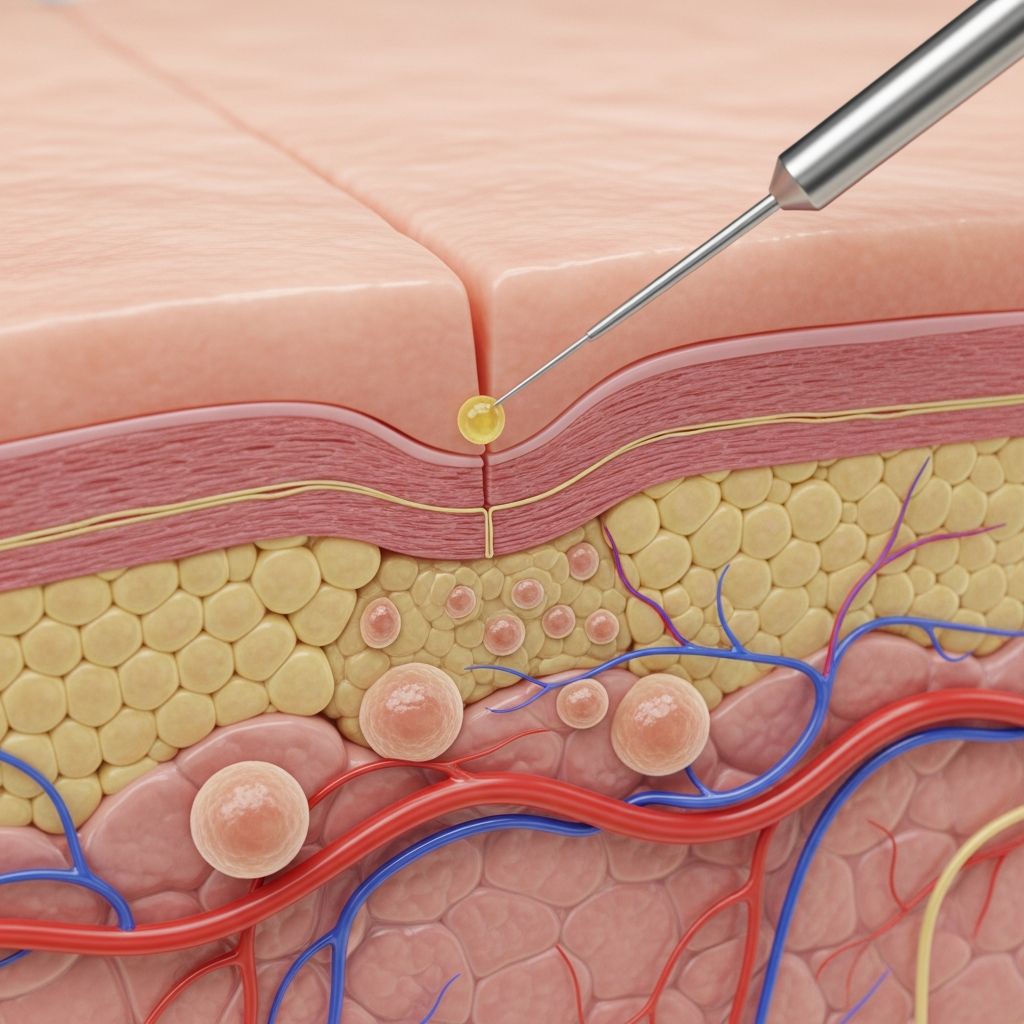
Fat grafting, also known as fat transfer, lipofilling, or autologous fat transplantation, is a surgical technique that harvests adipose tissue from one part of the body via liposuction, processes it, and injects it into another area to restore volume, improve contours, or regenerate tissue. This procedure leverages the body’s own fat cells, including regenerative stem cells, for natural-looking results in cosmetic and reconstructive applications.
What is fat grafting?
Fat grafting involves extracting adipose (fat) tissue from a donor site, such as the abdomen, flanks, or thighs, purifying the fat cells, and reinjecting them into deficient areas like the face, breasts, buttocks, or hands. Unlike synthetic fillers, it uses autologous material, minimizing rejection risks and providing long-term volume enhancement due to fat’s viability and mesenchymal stem cell (MSC) content. Common donor sites include areas with excess fat, ensuring dual benefits of contouring and augmentation.
The technique dates back over a century but gained modern prominence with refined liposuction methods in the late 20th century. Advances in processing have improved graft survival rates to 50-70%, making it reliable for both aesthetic and therapeutic uses.
Who is suitable for fat grafting?
Ideal candidates are adults with sufficient donor fat, good overall health, and realistic expectations. It suits those seeking natural volume restoration without implants, including:
- Patients with age-related facial volume loss (e.g., hollow cheeks, nasolabial folds).
- Individuals post-trauma, surgery, or congenital defects needing contour correction.
- Women undergoing breast reconstruction after mastectomy for symmetry or radiation-damaged tissue improvement.
- Those desiring body contouring, such as Brazilian butt lifts or hand rejuvenation.
Contraindications include active smoking, uncontrolled diabetes, clotting disorders, or unrealistic goals. Thin patients may lack adequate donor fat.
Procedure of fat grafting
The procedure follows a standardized three-step process performed under local, IV sedation, or general anesthesia, depending on fat volume (small volumes <500cc use local; larger require sedation). It typically lasts 1-3 hours as an outpatient surgery.
Harvesting
A surgeon selects a donor site (e.g., abdomen, thighs) and injects tumescent solution (local anesthetic with saline). Thin cannulas (small-diameter tubes) via tiny incisions gently aspirate fat using low-pressure manual liposuction to preserve cell viability. Laser or ultrasonic methods are avoided as they damage adipocytes.
Purification
Harvested fat is processed to isolate viable adipocytes and stem cells. Methods include centrifugation (spinning to separate layers), filtration, or sedimentation, discarding blood, oil, and debris. This yields pure, injectable fat in small syringes.
Transfer and placement
Purified fat is injected in micro-droplets (0.1-0.5mL) through fine cannulas into multiple tissue planes of the recipient site. Multi-pass fanning ensures even distribution, vascular integration, and natural contours. Overcorrection by 20-30% accounts for expected resorption.
Variations: Platelet-rich plasma (PRP) may be added to enhance survival; staged sessions for larger volumes.
Preoperative preparation
Consultation assesses goals, medical history, and donor sites via exam and imaging. Patients stop smoking/aspirin 2-4 weeks prior, maintain stable weight, and arrange recovery support. Labs screen for bleeding risks.
Postoperative recovery
Donor sites may bruise/sw ell for 1-2 weeks; compression garments aid contouring. Recipient areas experience swelling, resolving in 2-4 weeks. Pain is mild, managed with oral meds. Most resume light activities in 3-7 days, full exercise in 4-6 weeks. Multiple sessions may be needed for optimal take.
Initial overcorrection settles as 30-50% fat resorbs; survivors integrate permanently.
What are the uses of fat grafting?
Versatile applications span aesthetics, reconstruction, and regeneration:
- Facial rejuvenation: Restores cheeks, temples, lips, under-eyes; treats asymmetry from aging, trauma, or conditions like Parry-Romberg.
- Breast: Augments, reconstructs post-mastectomy, improves implant ripples or radiation fibrosis.
- Body: Buttocks (BBL), hands, scars; corrects depressions.
- Regenerative: MSCs improve skin quality, vascularity in scarred/radiated tissue.
| Application | Typical Fat Volume (cc) | Common Sites |
|---|---|---|
| Facial | 10-50 | Cheeks, nasolabial folds |
| Breast | 50-300 | Reconstruction, symmetry |
| Buttocks | 200-800 | Contouring |
| Hands | 10-30 | Rejuvenation |
How long do fat grafting results last?
Engrafted fat becomes permanent, behaving like native tissue. Retention varies (50-70%) by technique, site vascularity, and patient factors. Touch-ups ensure longevity; stable weight prevents resorption.
What are the risks and complications of fat grafting?
Low-risk (1-5% major issues), but include:
- Resorption, over-/under-correction.
- Donor: bruising, seroma, asymmetry.
- Injection site: swelling, infection, fat necrosis, embolism (rare, <0.1% with micro-droplet technique).
- Cysts, calcification (monitored via ultrasound in breasts).
No increased cancer risk; board-certified surgeons minimize complications.
Alternatives to fat grafting
- Hyaluronic acid/dermal fillers (temporary).
- Implants (breasts/buttocks).
- Collagen stimulators (Sculptra).
- Liposuction alone for contouring.
Frequently Asked Questions
Is fat grafting permanent?
Yes, surviving fat is permanent, though 30-50% may resorb initially.
Does fat grafting increase breast cancer risk?
No evidence supports this; scarred fat is monitored.
How painful is recovery?
Mild discomfort; swelling peaks at 48 hours, resolves in weeks.
Can smokers undergo fat grafting?
Discouraged; impairs healing and graft take.
What’s the cost?
Varies by volume/site; often $3,000-$10,000 USD.
Can it be combined with other surgeries?
Yes, e.g., facelifts, breast implants.
This comprehensive overview draws from clinical practices and peer-reviewed insights, emphasizing safety with qualified providers.
References
- Your Guide to Fat Grafting — Spiro Plastic Surgery. Accessed 2026. https://drspiro.com/your-guide-to-fat-grafting/
- What Is Fat Grafting? — Aldona J. Spiegel MD. 2022-11-02. https://www.breastrestoration.org/blog/what-is-fat-grafting/
- Fat Grafting History and Applications — American Society of Plastic Surgeons (ASPS). Accessed 2026. https://www.plasticsurgery.org/news/blog/fat-grafting-history-and-applications
- What is fat grafting, and what is it used for? — Johns Hopkins All Children’s Hospital (YouTube). 2023-11-03. https://www.youtube.com/watch?v=1h2t-sLVezs
- Facial Fat Grafting — Stanford Medicine. Accessed 2026. https://med.stanford.edu/cosmeticsurgery/aestheticservices/face/facial-fat-grafting.html
- Fat Transfer Procedures: Everything You Need to Know — AdventHealth. Accessed 2026. https://www.adventhealth.com/hospital/adventhealth-orlando/blog/fat-transfer-procedures-everything-you-need-know
- Fat Transfer: Surgeries, Results, Risks & What to Expect — Cleveland Clinic. Accessed 2026. https://my.clevelandclinic.org/health/treatments/24027-fat-transfer
Similar Articles




Read full bio of medha deb