Favus: Complete Guide To Diagnosis, Treatment, & Prevention
Favus is a chronic form of tinea capitis caused by Trichophyton schoenleinii, featuring scutula and potential scarring alopecia.
What is favus?
Favus, also known as tinea favosa or tinea unguium when nails are involved, is a chronic granulomatous dermatophyte infection predominantly affecting the scalp and sometimes the nails. It is caused almost exclusively by Trichophyton schoenleinii, a zoophilic fungus that invades hair shafts in an endothrix pattern, meaning fungal spores fill the interior of the hair without destroying the cuticle. This form of
tinea capitis
is rare in developed countries but persists in regions with poor hygiene, such as parts of Africa, the Middle East, and Asia. Favus can last for years or even decades if untreated, leading to significant cosmetic disfigurement and psychological distress.Unlike common scalp ringworm caused by Microsporum species, favus produces distinctive
scutula
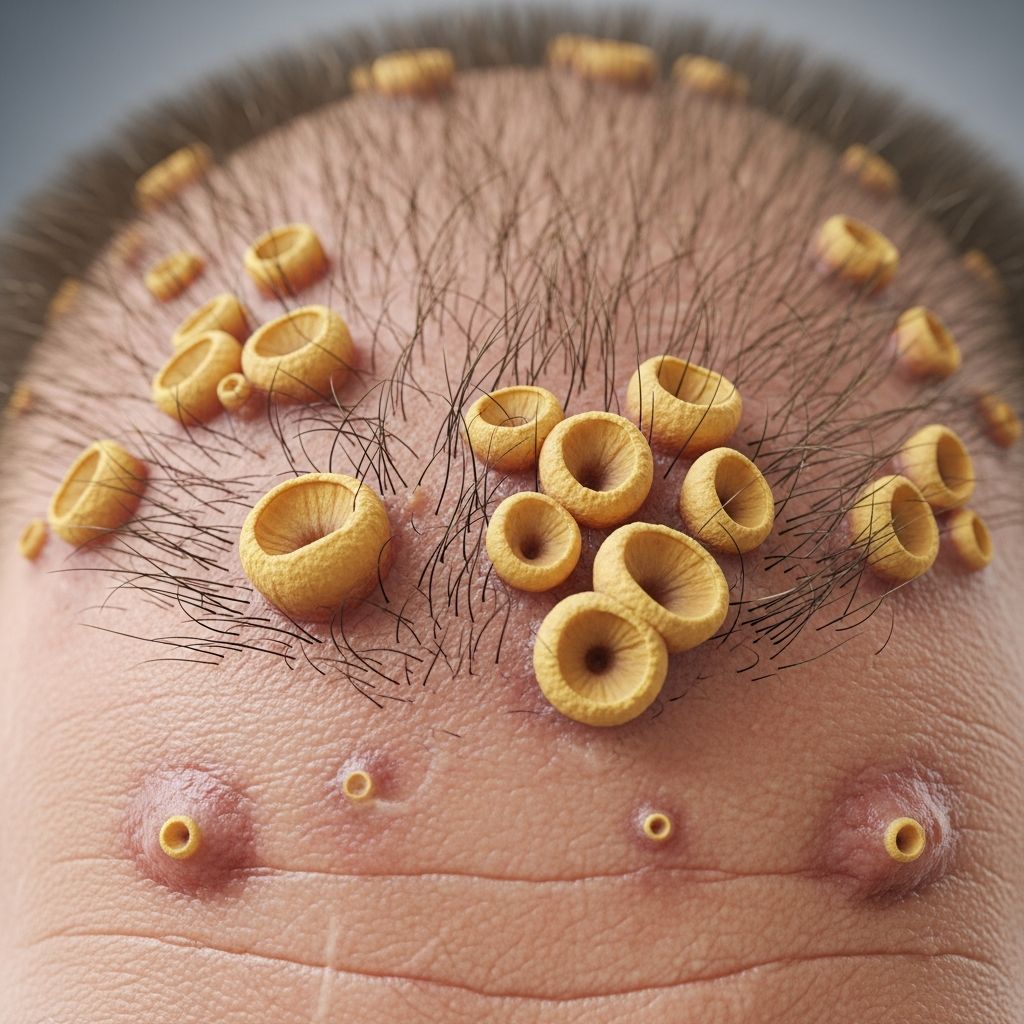
—sulphur-yellow, cup-shaped crusts that emit a mousy odour when pierced. The infection thrives in warm, humid environments and spreads via direct contact or fomites like combs and hats. Children and adolescents are most affected, but adults can develop it, especially in endemic areas.Who gets favus?
Favus primarily affects
children aged 2–12 years
andteenagers
, with a higher incidence in males due to closer shaving practices that may facilitate spread. It is more common incrowded, low-socioeconomic settings
with poor personal hygiene and limited access to healthcare. Endemic regions include North Africa (e.g., Algeria, Tunisia), the Middle East (Iran, Turkey), Pakistan, and parts of China and Europe historically. In Western countries like New Zealand and the US, cases are sporadic, often imported via immigration or travel.Risk factors include:
- Close contact with infected family members or animals (though rare, as T. schoenleinii is anthropophilic).
- Poor hygiene: infrequent hair washing and sharing of personal items.
- Immunosuppression: HIV, diabetes, or corticosteroid use increases susceptibility.
- Overcrowded living: schools, orphanages, or refugee camps.
- Endothrix hair invasion: persists as long as hair follicles remain.
What causes favus?
Trichophyton schoenleinii is the causative agent in over 95% of cases, a slow-growing dermatophyte that produces
favic chandeliers
—unique arthroconidia patterns visible under microscopy. It exhibitsendothrix
invasion, where hyphae and spores fill the hair shaft completely, leading to brittle hairs that break at the surface, mimicking “black dots” in early stages. The fungus producespityriasis-like scales
that coalesce into scutula, composed of keratin, fungal elements, and inflammatory debris.Transmission occurs via:
- Direct contact: person-to-person, especially in households.
- Fomites: contaminated hats, combs, towels, or bedding.
- Autoinoculation: spread to nails or glabrous skin.
The infection induces a granulomatous response, sometimes forming
kerion-like swellings
or abscesses, increasing scarring risk.What are the clinical features of favus?
Favus evolves slowly over months. Initial lesions appear as
erythematous, scaly patches
on the scalp with itching and mild hair loss. Scales thicken intoscutula
—1–10 mm diameter, dome-shaped, yellowish crusts pierced by bent, broken hairs. Multiple scutula coalesce intoscutulate plaques
, emitting a characteristicmousy or cheesy odour
. Affected areas showalopecia
with atrophic, shiny skin; severe cases lead toscarring alopecia
.Related Stories



Key features include:
- Scutula: hallmark; sulphur-yellow, brittle crusts easily detached.
- Hair changes: dull, brittle, comma-shaped; pull test positive.
- Inflammation: mild erythema; rarely pustular kerion.
- Odour: distinctive when crusts manipulated.
- Nail involvement (20–30%): onychodystrophy with thickening, discoloration.
Extrascapular sites (beard, body) show annular plaques. Complications: secondary bacterial infection, permanent bald patches.
Diagnosis of favus
Diagnosis combines clinical suspicion with
mycological confirmation
:- Clinical exam: scutula presence highly suggestive.
- KOH microscopy: reveals endothrix spores, hyphae, and favic chandeliers (antler-like structures).
- Culture: Sabouraud agar grows T. schoenleinii in 2–3 weeks; colony: waxy, folded, cream-colored with radial grooves.
- Wood lamp: dull greenish fluorescence (unlike bright green of Microsporum).
- Biopsy: granulomatous dermatitis with fungal elements (rarely needed).
Differential: psoriasis, seborrheic dermatitis, bacterial folliculitis, alopecia areata.
How is favus treated?
Favus requires
systemic oral antifungals
as topical agents fail to penetrate hair follicles. Treatment duration: 6–12 weeks or longer due to chronicity.| Drug | Dose (Adults) | Duration | Notes |
|---|---|---|---|
| Terbinafine | 250 mg/day | 4–6 weeks | First-line; effective vs T. schoenleinii |
| Griseofulvin | 500–1000 mg/day | 6–8 weeks | Historical gold standard; unavailable in some countries |
| Itraconazole | 200 mg/day | 4–6 weeks | Alternative for resistant cases |
| Fluconazole | 6 mg/kg/week | 6–12 weeks | Useful in children |
Adjunctive therapy:
- Antifungal shampoos: 2% ketoconazole or selenium sulfide 2x/week to reduce spores.
- Local care: remove scutula gently, clip hairs.
- Steroids: short-course prednisone for inflammatory kerion to prevent scarring.
Monitor with repeat KOH/culture at 4 weeks. Cure rates >90% with adherence.
What is the outcome for favus?
With prompt treatment, full recovery with hair regrowth occurs in 80–90% of non-scarring cases. Untreated, favus persists indefinitely, causing
permanent cicatricial alopecia
in 20–50%, social stigma, and rare squamous cell carcinoma. Nail involvement may require 6–12 months therapy. Relapse rare post-cure.How can favus be prevented?
- Avoid sharing combs, hats, towels.
- Maintain scalp hygiene; frequent shampooing.
- Screen contacts in endemic areas.
- Treat carriers with shampoos.
- Improve living conditions in high-risk communities.
Frequently Asked Questions (FAQs)
What does favus look like?
Favus presents with yellow scutula crusts on the scalp, surrounded by broken hairs and scaling, often with a mousy smell.
Is favus contagious?
Yes, highly contagious via direct contact or fomites; isolate infected individuals until non-infectious.
Can favus cause permanent hair loss?
Yes, untreated cases lead to scarring alopecia; early treatment prevents this.
How long does favus treatment take?
Typically 6–12 weeks of oral antifungals; follow-up cultures confirm cure.
Does favus affect nails?
Yes, in 20–30% cases, causing onychomycosis treatable with prolonged systemic therapy.
References
- Tinea Capitis: Causes, Symptoms & Treatment — Bosley. 2023. https://www.bosley.com/blog/tinea-capitis-causes-symptoms-treatment/
- Favus — DermNet NZ. 2023. https://dermnetnz.org/topics/favus
- Tinea Capitis — Cleveland Clinic. 2023-10-10. https://my.clevelandclinic.org/health/diseases/22449-tinea-capitis
- Tinea Capitis — StatPearls, NCBI Bookshelf. 2023. https://www.ncbi.nlm.nih.gov/books/NBK536909/
- Diagnosis and Management of Tinea Infections — American Academy of Family Physicians (AAFP). 2014-11-15. https://www.aafp.org/pubs/afp/issues/2014/1115/p702.html
- Favus — MD Searchlight. 2023. https://mdsearchlight.com/infectious-disease/favus/
- Favus — StatPearls, NCBI Bookshelf. 2023. https://www.ncbi.nlm.nih.gov/books/NBK559024/
Similar Articles








Read full bio of Sneha Tete