FDA Ban on Compounded GLP-1 Drugs: What You Need to Know
The FDA has ended compounding of popular weight-loss drugs. Here's what changed and why it matters.
FDA Ends Permission for Compounded GLP-1 Medications
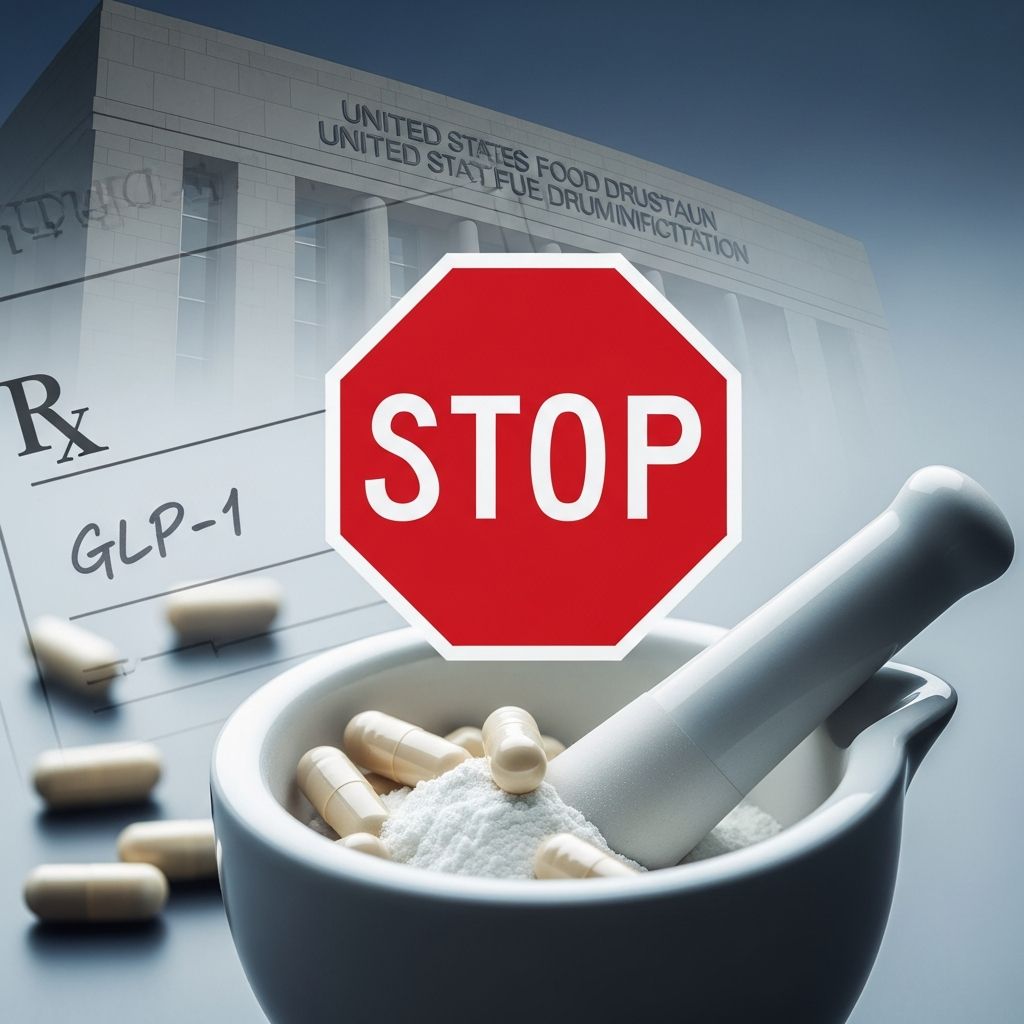
The U.S. Food and Drug Administration has officially ended its allowance for compounding pharmacies to produce copycat versions of popular weight-loss and diabetes medications, marking a significant shift in drug regulation and patient access. This regulatory change follows the FDA’s 2025 declaration that drug shortages for these medications have been resolved, eliminating the emergency circumstances that previously permitted compounders to manufacture these drugs. The deadline for stopping production and distribution of compounded tirzepatide passed in March 2025, while the final day for compounded semaglutide occurred in May 2025.
The affected medications include semaglutide (branded as Ozempic for diabetes and Wegovy for weight loss) and tirzepatide (branded as Mounjaro for diabetes and Zepbound for weight loss). These GLP-1 receptor agonist drugs have become enormously popular in recent years after doctors and researchers discovered that medications originally created to help control diabetes also produce dramatic weight loss and offer additional cardiovascular benefits.
What Is Compounding and Why Was It Allowed?
Pharmaceutical compounding is the practice of combining, mixing, or altering ingredients to create a medication tailored to a patient’s needs. During the height of shortages for GLP-1 medications, the FDA granted temporary permission for compounding pharmacies—typically smaller operations than major pharmaceutical manufacturers—to produce their own versions of semaglutide and tirzepatide.
This emergency measure was intended to ensure patients had access to these life-changing medications while supply chain issues were resolved. The compounded versions were significantly more affordable than brand-name alternatives, with some patients paying a fraction of the cost of FDA-approved drugs. Olympia Pharmaceuticals alone supplied more than 70,000 people each week before the ban took effect, according to its chief financial officer Josh Fritzler.
The Impact on Patient Access and Affordability
For thousands of patients, the discontinuation of compounded GLP-1 medications represents a serious challenge to continued treatment. These affordable alternatives had become a lifeline for individuals who could not afford brand-name versions, particularly those without comprehensive insurance coverage or facing high out-of-pocket costs.
Patient stories illustrate the real-world impact of this regulatory shift. Michelle Pierce, a 25-year-old from Texas, used compounded semaglutide to lower her blood sugar and avoid back surgery. When the ban took effect, she expressed her distress to CNN, stating: “I don’t really have any other options. I absolutely cannot afford to completely pay out of pocket.” Her situation reflects the broader concern among patient advocates and healthcare providers about accessibility following the compounding ban.
While drug manufacturers like Novo Nordisk have expressed confidence in their supply and manufacturing capacity, many patients and healthcare providers worry about potential affordability gaps and whether approved medications will be financially accessible to those who previously relied on compounded alternatives.
Safety Concerns About Compounded Versions
Medical professionals have raised significant safety concerns about compounded GLP-1 medications, concerns that partially justified the FDA’s decision to end compounding permissions. Compounded versions of these drugs were never FDA-approved, meaning they were not subject to the same rigorous manufacturing, purity, and quality standards as brand-name medications.
Dr. Jody Dushay, an endocrinologist at Beth Israel Deaconess Medical Center in Boston, articulated these concerns: “You just don’t have that security of [compounded versions] being FDA-regulated. I don’t know what’s in this compound. I don’t know about purity, I don’t know about safety. I don’t know about dosing. I don’t know about drug interactions.” She added, “I really wouldn’t want to be responsible for that.”
Related Stories



Foreign Manufacturing Issues
A critical safety issue involves the sourcing of active pharmaceutical ingredients for compounded semaglutide. Nearly all “semaglutide” used in compounding was manufactured by Chinese and other foreign suppliers. The FDA has never authorized or approved the manufacturing processes used by these foreign suppliers, nor has it reviewed or authorized the quality of the semaglutide they produce.
According to a report by the Brookings Institute, these foreign suppliers have been manufacturing semaglutide using their own standards without FDA oversight. Even more concerning, Novo Nordisk’s testing revealed that the semaglutide used in compounding was manufactured using a process that poses significant safety risks to patients. Analysis further showed that more than half of the Chinese suppliers exporting semaglutide to the U.S. for compounding in 2024 and early 2025 are not even permitted to manufacture semaglutide for use in drugs in China.
Documented Adverse Events
The FDA has received multiple reports of adverse events related to compounded semaglutide, including cases requiring hospitalization. Some of these incidents involved dosing errors, highlighting another significant risk associated with non-FDA-approved compounded medications that lack standardized quality controls.
The FDA’s Authority and Legal Enforcement
Under current U.S. compounding laws, it is now illegal to make or sell compounded versions of semaglutide and tirzepatide that are essentially copies of FDA-approved drugs, with rare exceptions such as an allergy to a dye or other specific medical circumstances. Any entity that mass produces or sells knockoff semaglutide is breaking the law and putting patient safety at risk.
Attempts by compounders to evade these laws by making manipulated, unnecessary, or pretextual changes to ingredients, routes of administration, or dosages are also considered unlawful. To protect patients, Novo Nordisk has filed nearly 120 lawsuits across 34 states against compounders and other entities making false and misleading claims about semaglutide drugs, including entities deceiving patients into believing they are receiving “personalized” or “customized” drugs.
Manufacturing Capacity and Supply Assurance
A key justification for ending the compounding permission was the FDA’s determination that drug manufacturers have achieved sufficient capacity to meet current and expected demand. The FDA stated that drugmakers now have enough manufacturing capacity to meet these needs without relying on compounded alternatives.
Novo Nordisk specifically expressed confidence in its supply of semaglutide, stating that all doses of FDA-approved Wegovy are now fully available nationwide. The company has also launched new initiatives to support patient access, including affordability and accessibility programs designed to help patients obtain authentic, FDA-approved medications.
What Happened to Compounded GLP-1s?
It is important to note that compounded GLP-1 medications have not entirely vanished from the market. There are specific reasons why compounded versions may still be legally offered in limited circumstances. These include:
- Non-standard doses not available in FDA-approved formulations
- Alternative forms of administration for patients who cannot tolerate the standard route
- Legitimate medical exceptions, such as documented allergies to specific inactive ingredients in approved medications
However, compounded GLP-1s that are essentially copies of FDA-approved versions are not permitted, with only limited exceptions for these specific medical circumstances.
Counterfeit Medications: An Additional Concern
Beyond the regulatory ban on compounding, the FDA has issued warnings about counterfeit versions of GLP-1 medications, including fake Ozempic, circulating throughout the United States. These fraudulent products present serious health risks and may contain false information on product labels.
Patients and healthcare providers should be extremely cautious about purchasing GLP-1 medications from unofficial channels or unverified online sources. The FDA recommends obtaining these medications only through licensed pharmacies and verified healthcare providers.
How This Affects Providers and Patients
Healthcare providers face new challenges in the post-compounding era. Dr. Jody Dushay predicted that the new restrictions may strain the supply of approved drugs, especially at initial dosages, as patients previously using compounded alternatives seek to transition to brand-name medications.
For patients, the ban creates several potential outcomes:
- Increased costs if insurance does not cover FDA-approved versions adequately
- Need to explore manufacturer assistance programs and patient support initiatives
- Possible delays in obtaining medications if supply constraints emerge
- Greater assurance of product safety and quality through FDA approval
Patient Options Moving Forward
Patients who were using compounded GLP-1 medications have several options to consider:
- Brand-name medications: Switching to FDA-approved Ozempic, Wegovy, Mounjaro, or Zepbound through licensed pharmacies
- Manufacturer programs: Novo Nordisk and other manufacturers offer patient assistance programs, including copay cards and sliding-scale pricing for eligible patients
- Insurance exploration: Working with healthcare providers to determine insurance coverage options and appeal processes if medications are initially denied
- Healthcare provider consultation: Discussing alternative treatment options or modified dosing schedules that may be more affordable
Frequently Asked Questions
Q: Is it completely illegal to obtain compounded semaglutide or tirzepatide now?
A: Yes, with rare exceptions. It is illegal to make or sell compounded versions of these drugs that are essentially copies of FDA-approved medications. Limited exceptions exist for specific medical circumstances, such as documented allergies to dyes or other inactive ingredients in approved formulations.
Q: When did the ban on compounded GLP-1s take effect?
A: The deadline for tirzepatide compounding passed in March 2025, and the final deadline for semaglutide compounding occurred in May 2025.
Q: Are there safety risks associated with compounded versions?
A: Yes. Compounded versions were not FDA-approved and were manufactured by foreign suppliers using unregulated processes. The FDA received reports of adverse events, including cases requiring hospitalization, associated with compounded semaglutide.
Q: Will brand-name GLP-1 medications be affordable for patients?
A: Manufacturers have launched assistance programs to improve affordability. Patients should explore insurance coverage, manufacturer copay cards, sliding-scale pricing, and patient assistance programs to reduce costs.
Q: What should I do if I was using a compounded GLP-1 medication?
A: Consult with your healthcare provider immediately to discuss switching to an FDA-approved version. Ask about manufacturer assistance programs, insurance coverage, and alternative dosing options that may be more affordable.
Q: Are there legitimate compounded GLP-1s still available?
A: Yes, in limited circumstances. Compounded versions may still be legally prescribed for non-standard doses, alternative forms, or when patients have documented allergies to specific ingredients in FDA-approved medications.
Q: How can I protect myself from counterfeit GLP-1 medications?
A: Only obtain medications through licensed pharmacies and verified healthcare providers. Avoid purchasing from unofficial online sources. If something seems suspicious, report it to the FDA.
References
- Compounded GLP-1 Ban: What Providers Need to Know — Nebraska Medicine. 2025. https://www.nebraskamed.com/for-providers/moments-in-medicine/compounded-glp-1-ban-what-providers-need-to-know
- FDA Halts Sale of Off-Brand Ozempic and Other GLP-1 Drugs — RheumatologyAdvisor/HealthDay News. 2025. https://www.rheumatologyadvisor.com/news/fda-halts-sale-of-off-brand-ozempic-and-other-glp-1-drugs/
- Compounded “Semaglutide” Is Not FDA-Approved — Novo Medlink. 2025. https://www.novomedlink.com/semaglutide/patient-safety/difference-fda-approved-compounded-semaglutide.html
- New Novo Nordisk Initiatives Support Patient Access to Authentic FDA-Approved Wegovy — Novo Nordisk/PR Newswire. 2025. https://www.prnewswire.com/news-releases/new-novo-nordisk-initiatives-support-patient-access-to-authentic-fda-approved-wegovy-as-federal-ban-on-mass-compounding-of-semaglutide-takes-effect-302463064.html
- FDA Officials Warn of Fake Weight Loss Drugs — UCHealth. 2025. https://www.uchealth.org/today/what-to-do-about-fake-weight-loss-drugs-and-ban-on-compounded-versions/
- Are Compounded GLP-1s Going Away? Not Entirely — GoodRx. 2025. https://www.goodrx.com/classes/glp-1-agonists/compounded-glp-1-going-away
- FDA’s Concerns with Unapproved GLP-1 Drugs Used for Weight Loss — U.S. Food and Drug Administration. 2025. https://www.fda.gov/drugs/postmarket-drug-safety-information-patients-and-providers/fdas-concerns-unapproved-glp-1-drugs-used-weight-loss
- FDA Alerts Health Care Providers, Compounders of Dosing Errors — U.S. Food and Drug Administration. 2025. https://www.fda.gov/drugs/human-drug-compounding/fda-alerts-health-care-providers-compounders-and-patients-dosing-errors-associated-compounded
Similar Articles








Read full bio of medha deb