Feed A Cold, Starve A Fever: Science-Backed Nutrition Tips
Unpacking the age-old adage: Does feeding a cold and starving a fever hold up to modern science?
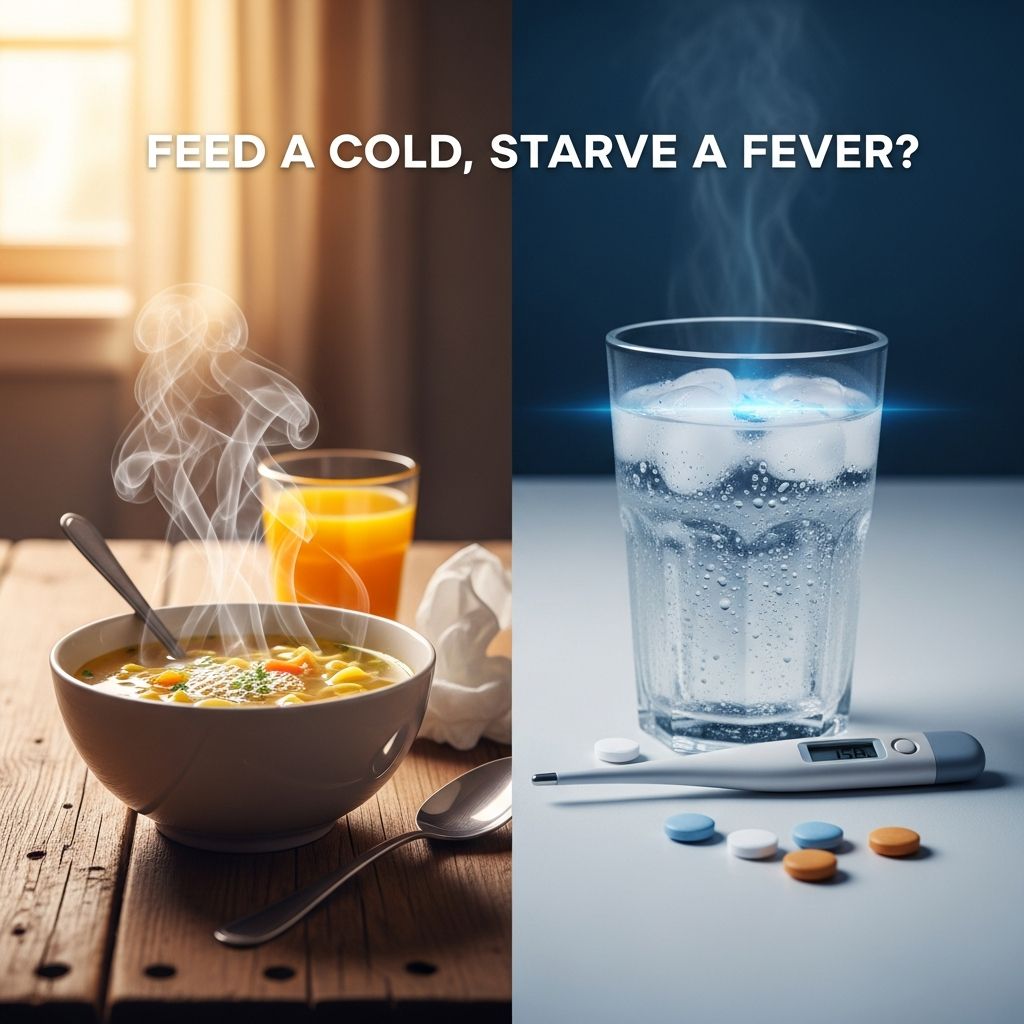
The saying ‘feed a cold, starve a fever’ has echoed through generations, offering seemingly simple advice for battling illness. But does this folk wisdom align with scientific evidence? This article delves into its origins, examines modern research on nutrition’s role in immune responses, and provides practical guidance for recovery from colds, fevers, and related infections.
Origins of the Saying
The proverb ‘feed a cold, starve a fever’ traces back to the 1500s, rooted in ancient beliefs about body temperature and humoral theory. People thought colds required ‘warming’ the body through food to generate heat, while fevers demanded ‘cooling’ via fasting to reduce internal fire.
Historical texts, including those from medieval Europe, promoted eating during chills to stoke the body’s furnace and abstaining during hot fevers to prevent overheating. This idea persisted into the 19th century, appearing in works like John Withy’s 1574 dictionary and later popularized in American culture.
While charming, these origins reflect pre-scientific understandings rather than empirical evidence. Today, we know infections involve complex immune processes influenced by metabolism, not just temperature.
Scientific Evidence: Does It Hold Up?
Modern research largely debunks the strict ‘feed or starve’ dichotomy. A landmark 1998 study in Clinical and Diagnostic Laboratory Immunology tested the proverb directly on human volunteers. After overnight fasting, participants received either a 1,200-calorie meal or water. Feeding boosted gamma interferon (IFN-γ), a marker of Th1 cell-mediated immunity ideal for viral infections like colds. Starvation, conversely, increased interleukin-4 (IL-4), promoting Th2 humoral responses better suited to some bacterial threats.
This suggests nutritional status modulates T helper cell balance: calories favor antiviral defenses, while deprivation shifts toward antibody production. However, the study used whole blood assays and called for more research, noting potential white blood cell variations.
Recent reviews, including a 2024 analysis in Current Nutrition Reports, expand on this. For bacterial infections (often linked to fevers), low glucose intake may starve pathogens that rely on host glucose metabolism, as many bacteria exploit glycolysis. Viruses, like those causing colds, depend less on glucose, so feeding supports host energy without fueling the invader.
Calorie ingestion favors cell-mediated immunity (IFN-γ upregulation), while starvation skews toward humoral responses.
Yet, consensus emphasizes hydration and rest over rigid feeding rules. Fevers elevate metabolic demand—each degree Fahrenheit increase raises energy needs by 10-13%. Starving risks weakening the host, especially in prolonged illness.
Nutrition During a Cold
Colds, typically viral (rhinovirus), trigger upper respiratory symptoms. Your body ramps up immune activity, burning extra calories. Eating provides fuel without directly aiding viruses.
- Hydrate aggressively: Water, herbal teas, and broths prevent dehydration from mucus production and fever.
- Opt for nutrient-dense foods: Fruits (vitamin C), lean proteins, and whole grains support Th1 responses per the 1998 study.
- Comfort foods work: Chicken soup hydrates, delivers electrolytes, and may reduce inflammation via anti-inflammatory compounds.
Related Stories



Avoid heavy, greasy meals that burden digestion when appetite wanes. Sugary drinks like juices or sports beverages offer calories and hydration when solids are unappealing.
Nutrition During a Fever
Fevers signal infection-fighting, often bacterial. Elevated temperature accelerates metabolism, demanding more energy. Complete starvation is counterproductive; instead, eat lightly to sustain the host.
| Condition | Recommended Approach | Why? |
|---|---|---|
| Cold (Viral) | Feed moderately | Boosts Th1 immunity, provides energy for repair |
| Fever (Bacterial) | Light feeding, low glucose | May limit pathogen fuel; prioritize host energy |
| Both | Hydrate + rest | Universal: Supports recovery without excess |
Studies on sepsis show context matters: early feeding aids viral cases, while caloric restriction helps some bacterial ones. Pre-infection nutrition (e.g., moderate caloric restriction) enhances resilience in animal models.
General Recovery Tips
Regardless of ‘feed or starve,’ prioritize these evidence-based strategies:
- Stay hydrated: Aim for 8-12 cups daily; include electrolytes via broths or oral rehydration solutions.
- Eat bland, easy foods: BRAT diet (bananas, rice, applesauce, toast) soothes the gut.
- Incorporate antimicrobials: Honey (antiviral, soothing), lemon (vitamin C), ginger (anti-inflammatory).
- Rest profoundly: Sleep bolsters immune cytokines.
- Monitor symptoms: Seek care for high fevers (>103°F), dehydration, or persistence beyond 10 days.
Microbiome support via probiotics shows promise for both viral and bacterial infections.
Debunking Myths and Modern Insights
Myths persist: Grandma’s chicken soup ‘cures’ colds (it comforts and hydrates, not cures); fasting ‘detoxes’ (no evidence; it stresses the body). Obesity worsens outcomes in infections, underscoring pre-illness diet importance.
Post-pandemic research highlights viral sepsis benefits from early nutrition, challenging blanket starvation.
Frequently Asked Questions (FAQs)
What should you eat with a cold?
Nutrient-rich, hydrating foods like soups, fruits, and teas. Chicken noodle soup provides comfort, calories, and fluids.
Is starving a fever helpful?
Not entirely; light eating supports energy needs. Low-glucose options may limit bacterial growth, but hydration trumps all.
Does honey help with colds or fevers?
Yes, it soothes throats and has antiviral properties. Add to tea; avoid under age 1.
How much should you eat when sick?
Listen to your body: small, frequent meals. Fevers increase calorie needs by 10-13% per degree.
Can diet influence immunity type?
Yes, feeding boosts Th1 (antiviral), starving Th2 (antibacterial) per human studies.
Conclusion: Listen to Science, Not Just Sayings
While ‘feed a cold, starve a fever’ captures nutritional-immune links, it’s oversimplified. Hydrate, rest, eat appropriately, and consult professionals. Tailor to your symptoms for optimal recovery.
References
- Nutrition Mythbusters – Feed a Cold, Starve a Fever — St. Joseph’s Health. 2023-02-02. https://www.sjhsyr.org/newsroom/blog-articles/nutrition-mythbusters-feed-cold-starve-fever
- Should You Feed a Cold and Starve a Fever? — Summit Health. 2020-07-15. https://www.summithealth.com/health-wellness/should-you-feed-cold-and-starve-fever
- Feed a Cold, Starve a Fever? — National Center for Biotechnology Information (PMC). 1998-11-01. https://pmc.ncbi.nlm.nih.gov/articles/PMC119893/
- Is ‘starve a fever, feed a cold’ good advice? (Video Transcript) — Upstate Medical University. 2024-05-29. https://www.youtube.com/watch?v=jS9sE00-sPM
Similar Articles








Read full bio of Sneha Tete