Feed a Cold, Starve a Fever: Separating Myth from Medical Fact
Debunking the age-old adage: What science really says about nutrition during illness.
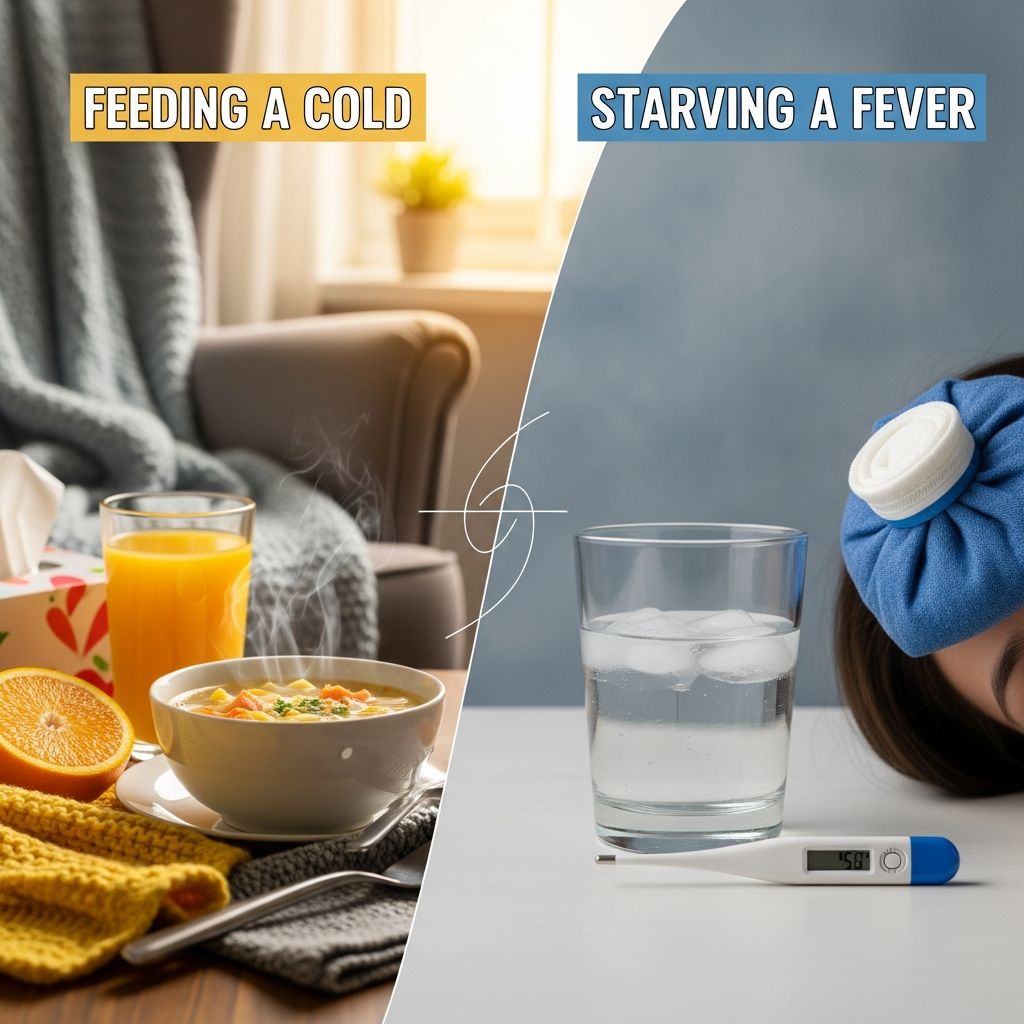
The saying “feed a cold, starve a fever” has been passed down through generations as common medical wisdom. This age-old adage has become so ingrained in popular culture that many people instinctively follow it when they fall ill. However, the relationship between nutrition and illness recovery is far more nuanced than this simple rhyme suggests. Understanding the actual science behind managing colds and fevers requires examining the origins of this belief, the research that has investigated its validity, and what modern medical experts actually recommend for optimal recovery.
The Origins of an Ancient Belief
The phrase “feed a cold, starve a fever” dates back centuries, with roots tracing to the time of Hippocrates and ancient Greek medicine. During this era, fever itself was poorly understood and was often considered the disease rather than a symptom of an underlying illness. Hippocrates believed that starvation could help eliminate fever by essentially starving the disease. His philosophy was reflected in his statement: “The more you feed a diseased body, the worse you make it.” This concept persisted for centuries, with John Withals publishing “Fasting is a great remedie of feuer” in a dictionary as recently as 1574, demonstrating how long this belief has influenced medical thinking.
The origins of the “feed a cold” portion of the adage are somewhat different. Early beliefs held that colds made the body feel cold, so eating more food was thought to generate warmth and help combat the chills associated with a cold. Conversely, fevers were seen as overheating conditions, so the logic suggested that withholding food might help cool the body down. While these explanations seem quaint and unscientific by modern standards, they represent humanity’s early attempts to understand and manage illness using available knowledge.
What Modern Science Reveals
Modern medical research has begun to investigate whether this age-old saying holds any merit. In 2002, a groundbreaking Dutch study conducted by researchers examining the immune response found some interesting correlations between food intake and immune function. The study discovered that food consumption correlated with increased levels of gamma interferon (IFN-γ) production, a cytokine that stimulates immune cells to respond to viral infections such as the common cold. Conversely, fasting was associated with an increase in interleukin-4 (IL-4), which is used in the body’s response to bacterial infections—a common cause of fever.
This research suggested a biological basis for the old adage: eating might theoretically support the immune response to colds (which are typically viral), while fasting might support the response to fevers (which are often bacterial). However, many scientists have noted that this 2002 study was small-scale, and the results have not been successfully replicated in larger, more rigorous studies. Despite generating headlines, the findings remain controversial and are not considered definitive proof that the adage is medically sound.
A 1942 paper published by The Johns Hopkins University Press initially determined that the “feed a cold, starve a fever” adage was justified according to medical knowledge at that time. However, modern perspectives have shifted significantly. A 2007 New York Times article concluded that “there is little scientific evidence behind the notion of starving a cold and feeding a fever,” and more recent expert opinions have become increasingly skeptical of the traditional wisdom.
Expert Medical Perspectives
Today’s medical professionals offer a more nuanced perspective on managing colds and fevers. According to Dr. Rachel Dawkins from Johns Hopkins All Children’s Hospital, the focus should be less on whether to eat and more on maintaining proper hydration. “Both fevers and colds can cause dehydration,” she explains, emphasizing that the body uses more water than usual when fighting illness.
Related Stories



Pediatric infectious disease expert Jon S. Abramson has stated clearly: “Feed a cold, feed a fever. Nurture your body, and never starve it.” This represents a significant departure from the traditional adage. Similarly, Emory University internist Sharon Horesh Bergquist agrees with this approach while also advising that “when you’re sick, drink more than you think you need.” These expert opinions emphasize that starving the body during illness is counterproductive, regardless of whether the illness is a cold or a fever.
Ruslan Medzhitov from Yale School of Medicine has contributed important research on this topic by studying how nutritional status affects illness outcomes. His experiments on mice have revealed some surprising findings: mice infected with Listeria bacteria died when forced to eat, while animals that naturally stopped eating eventually recovered. However, the type of food mattered significantly. Mice survived after being fed protein and fats but no glucose. Interestingly, a separate study of mice infected with the flu virus showed the opposite pattern—the infected mice survived when fed glucose but died when not given food. These results suggest that different infections may have different nutritional requirements, further complicating the simple “feed” or “starve” dichotomy.
The Critical Importance of Hydration
Perhaps the most consistent piece of advice from medical professionals is the emphasis on hydration. Both colds and fevers can cause significant dehydration. When you have a cold, the body produces excess mucus that must be expelled, requiring additional fluid to maintain. With a fever, the body loses water through increased sweating and elevated metabolic demands. In severe cases, dehydration from flu or viral infections is a primary reason patients require hospitalization.
To maintain proper hydration, experts recommend drinking water regularly throughout the day. Warm beverages like hot water with a touch of lemon and honey can be particularly soothing if you have a sore throat. Moderate amounts of tea or coffee are acceptable alternatives. Fruit juices can also help, though they should not be the only source of fluids. The goal is to keep your urine a pale yellow color, indicating adequate hydration. For more severe dehydration or if you have gastrointestinal symptoms like vomiting or diarrhea, electrolyte powders or sports drinks can help replenish essential minerals along with fluids.
Nutrition During Cold and Fever Recovery
While eating is not contraindicated during either illness, the approach should be practical and symptom-based. If you have an appetite when suffering from a cold, eating nutritious food will not harm your recovery. Many people throughout history have touted the benefits of chicken soup when under the weather, and there is indeed scientific support for this traditional remedy. The warm liquid contributes to hydration, and the nutrients in the broth and ingredients provide vitamins, minerals, and protein that support immune function.
For those who prefer vegetarian or vegan options, plant-based soups and broths can provide equally nutritious alternatives. In fact, any food containing key vitamins and minerals, proteins, omega-3 fatty acids, and antioxidants can help maintain energy levels while your immune system works to fight infection. The primary goal is to keep your diet as balanced as possible while you’re sick.
When you have a fever, eating may be the last thing on your mind, and this is perfectly normal. Loss of appetite is a common condition during illness. Medical professionals advise against force-feeding yourself if you’re not hungry, but if you do feel hungry, there is no medical reason to deprive yourself of food. If you’ve been without food for an extended period or are experiencing nausea, diarrhea, or vomiting, start with bland foods like plain toast or crackers that are easier for your digestive system to handle.
Other Supportive Measures for Recovery
Beyond nutrition and hydration, several over-the-counter remedies can help manage symptoms while your body fights infection. Acetaminophen or ibuprofen can effectively address headaches and general body aches associated with colds and fevers. Your pharmacist can recommend appropriate cough medicines or throat lozenges if needed. Rest is also crucial—allowing your body adequate sleep helps direct energy toward immune function rather than daily activities.
Frequently Asked Questions
Q: Should I really starve a fever?
A: No. Modern medical consensus advises against starving a fever. If you’re hungry, eating nutritious food supports your immune system. The old belief originated with Hippocrates and lacks solid scientific support. Focus instead on staying hydrated and eating if you have appetite.
Q: What should I eat when I have a cold?
A: Eat nutritious foods if you have appetite. Chicken soup, broths, foods rich in vitamins and minerals, proteins, omega-3 fatty acids, and antioxidants are all beneficial. Maintain a balanced diet to support your immune system’s fight against infection.
Q: How much should I drink when sick?
A: Drink more fluids than you think you need. Both colds and fevers cause dehydration. Aim to keep your urine pale yellow. Water, warm lemon water with honey, tea, coffee in moderation, and fruit juice are all acceptable. For severe symptoms, consider electrolyte drinks.
Q: Does the “feed a cold” part have any scientific basis?
A: A 2002 Dutch study found that eating correlated with increased gamma interferon production, which helps fight viral infections like colds. However, this small study has not been replicated, and scientists debate its significance. The relationship between nutrition and viral infection response remains incompletely understood.
Q: What if I have no appetite when sick?
A: This is normal. Don’t force yourself to eat if you’re not hungry. However, prioritize hydration and ensure you’re getting adequate nutrition once your appetite returns. Start with bland foods like toast if gastrointestinal symptoms accompany your illness.
Q: Are there specific foods I should avoid when sick?
A: Avoid heavy, greasy, or spicy foods that might upset your stomach, especially if you’re experiencing nausea or digestive upset. Stick with easily digestible options and focus on nutrient-dense whole foods that support immune function.
The Bottom Line
The adage “feed a cold, starve a fever” is largely a myth that has persisted for over two thousand years despite lacking strong scientific support. While a single small study suggested some biological correlation between feeding and immune response to viral infections, more recent research and expert medical opinion have moved away from this traditional wisdom. Modern medicine emphasizes that the body requires adequate nutrition and hydration to effectively fight any infection, whether viral or bacterial.
The most important takeaway is that individual response to illness varies. If you feel hungry when sick, eat nutritious food without guilt. If you have no appetite, focus on hydration and gentle nutrition once you feel ready. Listen to your body’s signals, drink plenty of fluids, get adequate rest, and seek medical attention if symptoms are severe or persistent. In doing so, you’ll be following evidence-based medicine rather than folklore, giving your immune system the best possible support for recovery.
References
- Feed a Cold, Starve a Fever? — Nutritional status modulates T helper 1 (Th1)-Th2 balance — National Center for Biotechnology Information (NIH). 2002. https://pmc.ncbi.nlm.nih.gov/articles/PMC119893/
- Feed A Cold, Starve A Fever: What’s The Science Behind The Saying — IFLScience. 2021. https://www.iflscience.com/health-and-medicine/feed-a-cold-starve-a-fever-whats-the-science-behind-the-saying/
- Feed a cold, starve a fever — Wikimedia Foundation. Updated 2024. https://en.wikipedia.org/wiki/Feed_a_cold,_starve_a_fever
- Feed a Cold, Starve a Fever? Unpacking This Age-Old Adage — DHGate Smart. 2023. https://smart.dhgate.com/feed-a-cold-starve-a-fever-unpacking-this-age-old-adage/
- Feed a Cold and Starve a Fever — Science Magazine — American Association for the Advancement of Science. 1930. https://www.science.org/doi/10.1126/science.70.1825.610.a
Similar Articles








Read full bio of Sneha Tete