Femoral Artery: Anatomy, Function & Location
Complete guide to femoral artery: anatomy, structure, function, and clinical significance.
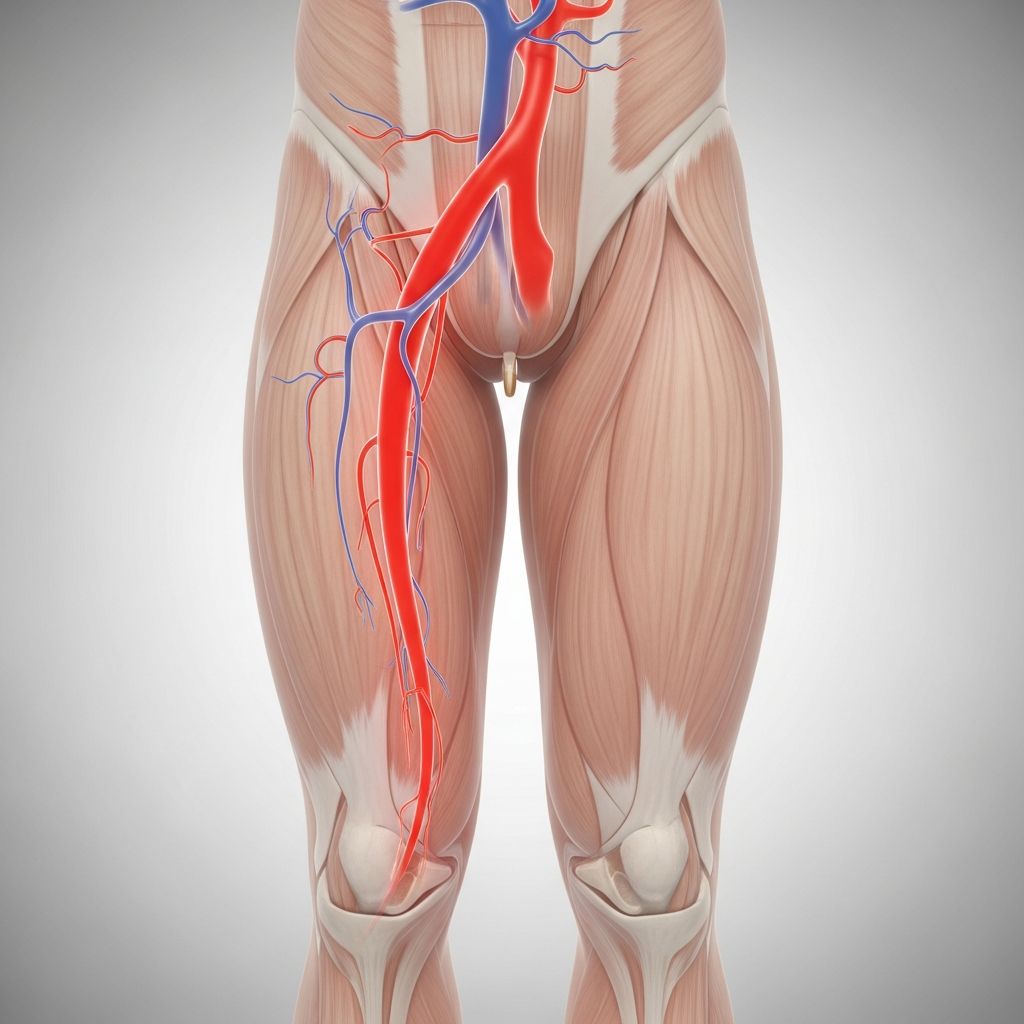
The femoral artery is one of the largest and most important blood vessels in the human body. It plays a critical role in delivering oxygen-rich blood to the lower half of your body, including your legs, feet, and lower abdomen. Understanding the anatomy and function of the femoral artery is essential for recognizing potential health issues and understanding various medical procedures that may involve this vital vessel.
What Is the Femoral Artery?
The femoral artery is a large blood vessel that serves as a continuation of the external iliac artery after it passes beneath the inguinal ligament. This transition marks the point where the vessel changes names and enters the lower limb region. You have one femoral artery in each leg, with each artery responsible for supplying blood to its respective side of the body. These arteries carry oxygen-rich blood away from your heart and distribute it throughout the lower extremities, ensuring that all tissues receive the oxygen and nutrients they need to function properly.
Anatomy and Structure of the Femoral Artery
The femoral artery is organized into distinct sections, each with specific anatomical characteristics and functions. Understanding this structure is crucial for healthcare providers performing diagnostic procedures or surgical interventions.
The Common Femoral Artery
The common femoral artery begins just below the inguinal ligament and is located within the femoral triangle, an important anatomical landmark in the upper thigh. This region is identified by three key borders: the inguinal ligament superiorly, the adductor longus muscle medially, and the sartorius muscle laterally. Within the femoral triangle, the anatomical relationship from medial to lateral includes the femoral vein, common femoral artery, and femoral nerve. Importantly, both the artery and vein are contained within the femoral sheath, while the nerve lies outside this protective covering.
The common femoral artery typically measures approximately 4-5 centimeters in length before it bifurcates into two major branches. During this course, it gives off several smaller branches that supply blood to the pubic area, groin, and lower abdominal wall. These branches include the superficial inferior epigastric artery, superficial circumflex artery, superficial external pudendal artery, and the medial and lateral circumflex arteries.
The Superficial Femoral Artery
After the common femoral artery bifurcates, the superficial femoral artery continues distally through the medial thigh. This segment plays a crucial role in delivering oxygenated blood to the entire lower leg and surrounding musculature. As the superficial femoral artery travels through the thigh, it traverses the adductor canal and gives off the descending genicular artery, which supplies part of the knee joint. Minor branches along this segment also supply the thigh muscles.
The superficial femoral artery emerges from the adductor hiatus, located in the distal thigh just above the knee, where it transitions and becomes the popliteal artery. This transition is an important anatomical landmark that marks the boundary between the thigh and the lower leg regions.
The Deep Femoral Artery
The deep femoral artery, also known as the profunda femoris, branches off from the common femoral artery and dives deep into the thigh compartment. This vessel gives rise to medial and lateral circumflex arteries that supply the femur and hip region. The deep femoral artery terminates as perforating arteries that extend into the deep thigh tissues, providing oxygenated blood to the thigh musculature and hip joint. This artery is particularly important for supplying the hip and posterior thigh structures.
Related Stories



Location and Anatomical Landmarks
Identifying the precise location of the femoral artery is essential for healthcare providers performing procedures such as catheterization or vascular access. The femoral artery is located in the femoral triangle, positioned close to the surface of the skin in the upper third of the thigh. The common femoral artery sits just medial to the midpoint of the inguinal ligament in the inguinal crease region.
Two important bony landmarks help identify the inguinal ligament: the anterior superior iliac spine and the pubic symphysis. These landmarks serve as reference points for locating the femoral artery during physical examination or procedural planning. Modern ultrasound guidance has become the preferred method for precisely identifying the femoral artery, particularly for determining the location of the common femoral artery bifurcation and the relationship to the inferior epigastric artery. Fluoroscopy may also be used to identify the femoral head as an additional anatomical landmark.
Function and Blood Supply
The primary function of the femoral artery is to deliver oxygen-rich blood to all structures of the lower extremities. This includes muscles, bones, skin, and other tissues from the hip and groin region down through the foot. The femoral artery accomplishes this through its organized branching pattern, with each branch serving specific anatomical regions.
Blood Supply to the Thigh Muscles
The femoral artery’s branches supply all the major muscle groups of the thigh through a carefully organized vascular network. The medial circumflex artery courses along the posterior aspect of the femur and supplies the thigh adductors (longus, magnus, and brevis), the gracilis muscle, and the pectineus. Additionally, the medial circumflex artery provides the primary blood supply to the hip joint itself.
The lateral circumflex artery courses laterally and supplies oxygenated blood to the major knee extensor group, including the vastus lateralis, vastus intermedius, and rectus femoris muscles. The vastus medialis receives blood supply from both the superficial femoral artery and the deep femoral artery, creating a dual blood supply to this important muscle.
The perforating arteries of the deep femoral artery supply the four hamstring muscles: the semitendinosus, semimembranosus, and both the short and long heads of the biceps femoris. This intricate system ensures that all major thigh muscles receive adequate oxygen and nutrients for proper function.
Blood Supply to the Lower Leg and Foot
After exiting the adductor canal, the superficial femoral artery continues distally as the popliteal artery at the level of the adductor hiatus. The popliteal artery serves the entire calf and foot with oxygen-rich blood, making the transition from the thigh region to the lower leg region seamless and continuous. This continuation of the femoral artery system ensures uninterrupted blood supply throughout the entire lower extremity.
Relationship to Adjacent Structures
The femoral artery does not exist in isolation; it is part of a complex anatomical network within the femoral triangle. The femoral vein courses posterior to the femoral artery through the adductor canal, running parallel to the artery as it delivers deoxygenated blood back to the heart. The femoral nerve, one of the largest nerves in the leg, runs lateral to both the artery and vein, providing motor and sensory innervation to the lower extremity.
Understanding these relationships is crucial for healthcare providers performing procedures or surgeries in this region, as damaging any of these structures can result in serious complications. The proximity of these vital structures within the femoral sheath requires precise anatomical knowledge and careful technique.
Clinical Significance
Beyond its fundamental role in circulation, the femoral artery is clinically significant for several important reasons. It is a common site for peripheral arterial disease complications, including claudication (pain during walking due to inadequate blood flow) and critical limb ischemia (severe reduction in blood flow that threatens tissue viability). The common femoral artery also serves as the preferred access site for percutaneous catheterization in a wide variety of endovascular procedures, including coronary angiography, angioplasty, and other interventional techniques.
Healthcare providers rely on this access point because of its large diameter, relative accessibility, and consistent anatomical location. A thorough understanding of the femoral artery’s anatomy and potential anatomical variations is crucial for surgeons and interventionalists to avoid complications and ensure successful procedures.
Common Procedures Involving the Femoral Artery
The femoral artery serves as an important access point for numerous diagnostic and therapeutic procedures. Cardiac catheterization frequently uses femoral artery access to evaluate heart function and coronary blood vessels. Interventional radiologists use femoral artery catheterization to perform angiography, allowing visualization of blood vessels throughout the body. Angioplasty and stent placement procedures often utilize femoral artery access to open blocked vessels in the lower extremities and other parts of the body.
Health Considerations
Maintaining healthy femoral arteries is essential for overall cardiovascular health and mobility. Risk factors for femoral artery disease include smoking, diabetes, high blood pressure, high cholesterol, and advancing age. Regular exercise, a healthy diet, smoking cessation, and management of chronic conditions can help preserve femoral artery health and reduce the risk of peripheral arterial disease and its complications.
Frequently Asked Questions
Q: Where exactly is the femoral artery located?
A: The femoral artery is located in the femoral triangle in the upper third of your thigh, just below the inguinal ligament. It runs close to the surface of your skin in the inner thigh region, between the groin and the knee.
Q: What is the difference between the superficial and deep femoral arteries?
A: The superficial femoral artery continues from the common femoral artery through the thigh and supplies blood to the lower leg and foot. The deep femoral artery branches off and dives deep into the thigh to supply the hip, thigh muscles, and buttocks.
Q: Why is the femoral artery used for catheterization procedures?
A: The femoral artery is preferred for catheterization because of its large diameter, consistent anatomical location, and easy accessibility, making it ideal for inserting catheters for diagnostic and therapeutic procedures.
Q: What are the signs of femoral artery problems?
A: Signs of femoral artery disease may include leg pain during walking (claudication), numbness or weakness in the leg, skin color changes, or wounds that heal poorly. Seek medical attention if you experience these symptoms.
Q: How can I keep my femoral arteries healthy?
A: Maintain femoral artery health through regular exercise, a heart-healthy diet, not smoking, managing blood pressure and cholesterol levels, and controlling diabetes if present.
References
- Anatomy, Bony Pelvis and Lower Limb: Femoral Artery — National Center for Biotechnology Information (NCBI), U.S. National Library of Medicine. https://www.ncbi.nlm.nih.gov/books/NBK538262/
- Femoral Artery: What to Know — WebMD. 2024. https://www.webmd.com/heart/femoral-artery-what-to-know
- Femoral Vein: Anatomy & Function — Cleveland Clinic. https://my.clevelandclinic.org/health/body/23041-femoral-vein
- Arteries: What They Are, Anatomy & Function — Cleveland Clinic. https://my.clevelandclinic.org/health/body/22896-arteries
- Popliteal Artery: Function & Anatomy — Cleveland Clinic. https://my.clevelandclinic.org/health/body/22708-popliteal-artery
- Femoral Nerve: What Is It, Branches, Anatomy & Function — Cleveland Clinic. https://my.clevelandclinic.org/health/body/21786-femoral-nerve
Similar Articles








Read full bio of medha deb