Femoral Hernia: Symptoms, Causes, And When To Repair
Understand femoral hernia symptoms, causes, diagnosis, treatment options, and recovery for this serious groin condition.
A
femoral hernia
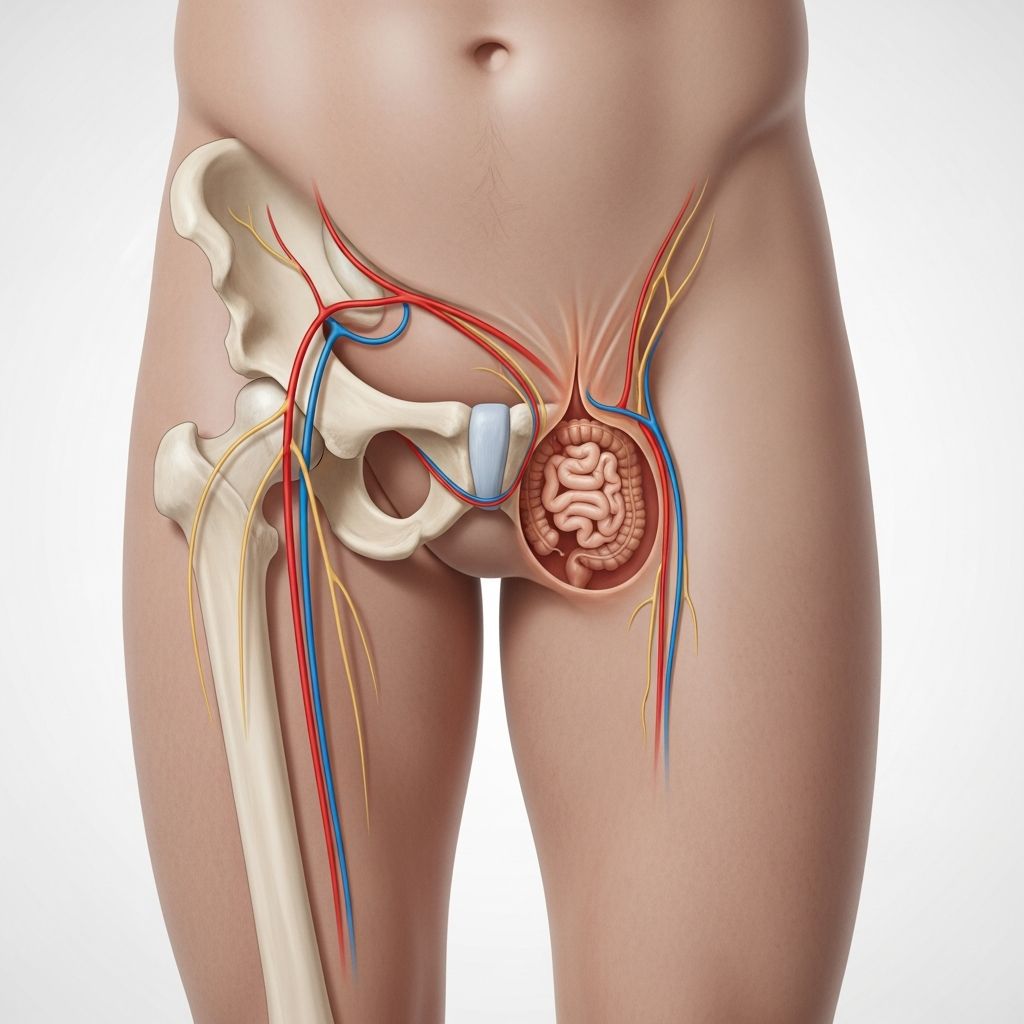
develops when tissue pushes through a weak spot in the groin area’s muscle wall, just below the inguinal ligament into the femoral canal. These rare hernias account for about 3% of all hernias and 6% of groin hernias, but they pose significant risks due to their narrow neck, leading to high rates of incarceration and strangulation (15-20%). Unlike inguinal hernias, femoral hernias occur lower in the groin and are more common in women.What Is a Femoral Hernia?
The femoral canal, bordered by the inguinal ligament above, Cooper’s ligament below, the femoral vein laterally, and the lacunar ligament medially, is the site of femoral hernias. Weakness or widening of this ring allows abdominal contents like small bowel or omentum to protrude, forming a bulge below the groin. This anatomical position makes them prone to complications, as the tight opening can trap contents.
Femoral hernias differ from inguinal hernias, which pass through the inguinal canal above the ligament. They are less common but more dangerous, especially in older adults or women post-pregnancy or with obesity.
Symptoms of Femoral Hernia
Many femoral hernias are asymptomatic, discovered during routine exams. When symptoms appear, they include:
- A small, tender
bulge
in the upper inner thigh or below the groin, often more visible when standing, coughing, or straining. - Groin
discomfort
or pain, described as aching, pulling, or burning, worsening with activity. - Sudden severe
pain
if incarcerated.
In complicated cases signaling obstruction or strangulation:
- Intense groin or abdominal
pain
. - **Nausea**,
vomiting
, abdominal distention. - **Fever**, rapid heartbeat, skin color changes around the bulge.
- Paresthesias or numbness from nerve compression.
Strangulation, where blood supply is cut off, is a medical emergency causing tissue death and potential sepsis if untreated.
Causes and Risk Factors
Femoral hernias result from increased intra-abdominal pressure overcoming femoral canal weakness. Common causes include:
- **Chronic straining**: Constipation, heavy lifting, chronic cough.
- **Obesity** or sudden weight loss weakening tissues.
- **Pregnancy** and multiparity stretching the area.
- **Aging** and tissue degeneration.
- Congenital weaknesses or prior surgeries.
Risk factors disproportionately affect women (70-80% of cases) due to wider pelvises and pregnancy effects. Others: older age, smoking, family history.
| Feature | Femoral Hernia | Inguinal Hernia |
|---|---|---|
| Location | Below inguinal ligament, upper thigh | Above inguinal ligament, groin |
| Prevalence | 3% of hernias, mostly women | 75% of hernias, mostly men |
| Strangulation Risk | High (15-20%) | Lower |
| Symptoms | Small bulge, high complication rate | Larger bulge, often reducible |
Diagnosis
Diagnosis starts with history and physical exam: inspecting for bulge below the ligament, worsened by Valsalva. Asymptomatic cases may need palpation.
Imaging confirms:
- **Ultrasound**: First-line, differentiates hernia types, detects contents.
- **CT/MRI**: For obese patients or unclear cases, assesses complications.
- No routine imaging if obvious clinically.
Differential includes inguinal hernia, lymph nodes, abscesses. Urgent imaging if strangulation suspected.
Related Stories



Treatment Options
All femoral hernias warrant
surgical repair
due to strangulation risk—even asymptomatic ones electively. Watchful waiting is inappropriate.Surgical approaches:
- Open repair: Inguinal or preperitoneal incision, hernia reduction, defect closure with sutures or mesh (preferred for tension-free repair).
- Laparoscopic/robotic: Minimally invasive, mesh placement, ideal for bilateral or recurrent cases.
Emergency surgery for incarcerated/strangulated: Resection if bowel necrosis. Recurrence: 1-4% elective, higher non-mesh/emergent.
Non-surgical: Lifestyle (fiber, weight loss) only pre-op or unfit patients, but risky.
Recovery After Femoral Hernia Surgery
Most outpatient, resume light activities in days. Full recovery: 4-6 weeks.
- Immediate post-op: Pain meds, ice, rest. Walk to prevent clots.
- Diet: High-fiber, hydrate vs. constipation.
- Activity: No heavy lifting 4-6 weeks; gradual return.
- Wound care: Keep dry, watch infection.
Call doctor for: fever >101°F, worsening pain, swelling, bleeding, nausea.
Complications
Besides strangulation (15-20%), risks: incarceration, obstruction, recurrence (1-10%), infection, mesh issues, chronic pain.
Surgery complications: bleeding, injury to vessels/nerves/bowel (rare), seroma.
Prevention
- Maintain
healthy weight
. - **Proper lifting**: Bend knees, no waist strain.
- Treat
constipation/cough
promptly. - Quit
smoking
. - Strengthen
core
with exercise.
Frequently Asked Questions (FAQs)
Can a femoral hernia heal without surgery?
No, hernias do not resolve spontaneously and require surgery to prevent life-threatening complications like strangulation.
How serious is a femoral hernia?
Very serious due to high strangulation risk (15-20%), higher than other hernias; prompt repair recommended.
Is femoral hernia repair painful?
Mild-moderate post-op pain managed with medication; most resume normal activities quickly.
Who is at higher risk for femoral hernia?
Women, older adults, obese individuals, multiparous women, those with chronic straining.
What does a strangulated femoral hernia feel like?
Sudden severe pain, tenderness, nausea, vomiting, fever, skin changes—emergency!
References
- Femoral Hernia – StatPearls — Zachary M. Begasse, et al. 2023-07-17. https://www.ncbi.nlm.nih.gov/books/NBK535449/
- Femoral hernia: Symptoms, pictures, treatments, and more — Medical News Today. 2023-11-01. https://www.medicalnewstoday.com/articles/324118
- Femoral hernia — MedlinePlus. 2024-05-01. https://medlineplus.gov/ency/article/001136.htm
Similar Articles








Read full bio of medha deb