Femur Fracture: Open Reduction and Internal Fixation
Comprehensive guide to ORIF surgery for femur fractures: procedure, recovery, and outcomes.
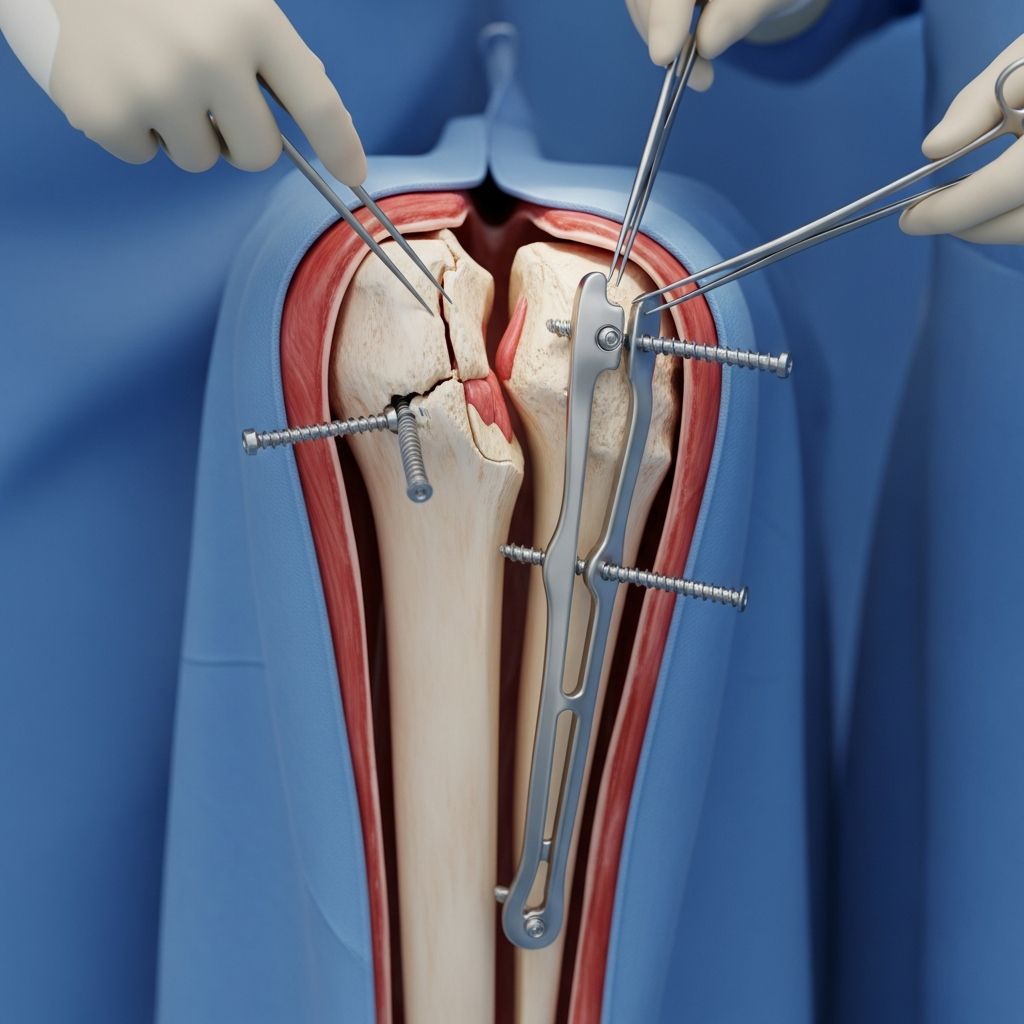
Understanding Femur Fractures and Treatment Options
The femur, or thighbone, is the longest and strongest bone in the human body. When this bone fractures, it represents a serious injury that typically requires surgical intervention to restore proper function and mobility. Femur fractures can occur due to high-impact trauma such as motor vehicle accidents, falls from significant heights, or sports-related injuries. The location and severity of the fracture determine the most appropriate treatment approach.
Among the various surgical techniques available for treating femur fractures, open reduction and internal fixation (ORIF) is one of the most commonly used and effective methods. This procedure involves realigning the broken bone fragments and securing them in place using specialized hardware such as plates, screws, rods, or nails. ORIF has become the gold standard for many types of femur fractures because it allows for early mobilization, reduces complications, and promotes better functional outcomes compared to conservative treatment methods.
What Is Open Reduction and Internal Fixation?
Open reduction and internal fixation, commonly abbreviated as ORIF, is a surgical procedure designed to repair fractured bones by using metal hardware to hold the broken pieces together while they heal. The term “open reduction” refers to the surgical exposure of the fracture site, allowing the surgeon to visualize and properly align the bone fragments. “Internal fixation” describes the use of metal implants to maintain this alignment during the healing process.
During an ORIF procedure for a femur fracture, the surgeon makes an incision over the fracture site to gain direct access to the broken bone. Once the fracture is exposed, the surgeon carefully repositions the bone fragments into their anatomically correct position. Metal plates and screws, intramedullary nails, or other fixation devices are then applied to hold the fragments securely in place. This direct visualization and precise positioning distinguishes ORIF from other techniques like closed reduction or percutaneous fixation, where the fracture is treated without surgical exposure.
Types of Femur Fractures Treated with ORIF
Femur fractures can be classified in several ways, and the specific location and pattern of the fracture influence whether ORIF is the most appropriate treatment. The femur is typically divided into three main regions: the proximal femur (hip area), the shaft or diaphysis (middle section), and the distal femur (knee area). Each region requires different surgical approaches and fixation strategies.
Proximal femur fractures include femoral neck fractures, intertrochanteric fractures, and subtrochanteric fractures. These fractures are particularly common in elderly patients with osteoporosis but can occur in younger individuals following high-energy trauma. Intertrochanteric fractures are frequently treated with ORIF using dynamic hip screws, side plates, or intramedullary nails.
Femoral shaft fractures involve the middle portion of the thighbone and are commonly the result of high-energy mechanisms. These fractures are typically treated with intramedullary nailing, which involves inserting a metal rod through the center of the bone. However, ORIF with plate fixation may be indicated in specific cases, particularly when the fracture pattern is complex or when there are associated injuries.
Related Stories



Distal femur fractures occur near the knee joint and frequently involve the articular surface. These fractures require meticulous surgical technique to restore anatomic alignment and prevent post-traumatic arthritis. ORIF with fixed-angle plates or less invasive stabilization systems (LISS) is often the preferred treatment for these injuries, particularly when the fracture involves the articular surface.
Surgical Approaches and Techniques
The surgical approach used for ORIF of femur fractures varies depending on the fracture location and pattern. Different approaches provide optimal visualization and access to different regions of the femur while minimizing damage to surrounding soft tissues.
Lateral approach: This is commonly used for femoral shaft and distal femur fractures. The surgeon makes an incision along the lateral (outer) aspect of the thigh, providing direct access to the lateral cortex of the femur. This approach allows for plate fixation and is frequently used with minimally invasive plate osteosynthesis (MIPO) techniques that reduce soft tissue trauma.
Medial approach: Used less frequently, this approach provides access to the medial (inner) surface of the femur. It may be used for specific fracture patterns or when medial plate fixation is required.
Anterior approach: This approach provides access to the anterior aspect of the femur and is sometimes used for proximal femur fractures or when intramedullary nailing is performed.
Minimally invasive approaches: Modern surgical techniques emphasize minimizing soft tissue damage. Techniques such as MIPO involve making smaller incisions and using specialized instruments to place plates or nails with reduced disruption to muscle and soft tissue attachments. These approaches have been shown to reduce complications and promote faster healing.
Fixation Methods and Hardware Options
Several types of metal hardware can be used to stabilize femur fractures during ORIF. The choice of fixation method depends on the fracture pattern, bone quality, patient age, and other clinical factors.
Plates and screws: Metal plates are fixed to the bone with screws and provide rigid stabilization. Modern plates often feature fixed-angle or variable-angle technology, which improves biomechanical stability. The Less Invasive Stabilizing System (LISS) and Dynamic Condylar Screw (DCS) plates are examples of specialized plates used for distal femur fractures. Plates can be placed on the lateral or medial surface of the femur depending on the fracture configuration.
Intramedullary nails: These metal rods are inserted through the center of the femur, providing load-sharing fixation that allows earlier weight-bearing and functional recovery. Retrograde nailing, where the nail is inserted from the distal femur near the knee, is commonly used for certain femoral shaft and distal femur fractures. Antegrade nailing, where the nail is inserted from the proximal femur at the hip, is used for other shaft fractures.
Lag screws and antiglide plates: In fractures involving the articular surface, lag screws may be used first to reduce and secure articular fragments before plate fixation is applied. This technique ensures anatomic restoration of the joint surface and reduces the risk of post-traumatic arthritis.
Bone grafting: When significant comminution (shattering) of the bone occurs, bone grafting may be necessary to fill voids and restore cortical integrity. Cortical, cancellous, or combined grafts harvested from the iliac crest, proximal tibia, or other sites can be used to support healing.
The ORIF Procedure: Step-by-Step Overview
Understanding the surgical steps involved in ORIF can help patients better prepare for and understand their procedure. While the exact steps vary based on fracture type and location, the general process follows a similar pattern.
Preparation: The patient is positioned on the operating table, and the surgical site is cleaned and draped with sterile materials. Most ORIF procedures are performed under general anesthesia, though regional anesthesia may be used in some cases.
Surgical exposure: The surgeon makes an incision at the fracture site, carefully exposing the broken bone while minimizing damage to surrounding muscles, nerves, and blood vessels. In some cases, muscle is reflected to provide better visualization.
Fracture reduction: The bone fragments are carefully realigned to restore normal anatomic position. Specialized instruments and temporary clamps may be used to hold fragments in proper alignment while the fixation is being applied.
Hardware placement: Metal plates, screws, nails, or other fixation devices are positioned and secured according to surgical plan. The surgeon verifies proper positioning using intraoperative X-rays to ensure anatomic alignment and hardware placement.
Closure: The surgical wound is closed in layers, with muscles, fascia, and skin carefully repaired to promote optimal healing and minimize scarring.
Recovery and Rehabilitation
Recovery following ORIF of a femur fracture is a structured process that typically progresses through several phases over several months. The goal of rehabilitation is to restore strength, range of motion, and functional ability while protecting the healing fracture.
Immediate post-operative period: Patients spend time in the recovery room following surgery and are typically admitted to the hospital for observation and pain management. Pain control is an important component of early recovery and enables patients to participate in physical therapy. Most patients can begin gentle range-of-motion exercises within the first few days after surgery.
Early mobilization: One of the key advantages of ORIF is that it allows early mobilization compared to non-operative treatment. Patients may begin weight-bearing exercises and gentle strengthening within days to weeks, depending on fracture pattern and surgeon preference. This early activity helps prevent stiffness, reduces risk of blood clots, and promotes faster recovery.
Progressive rehabilitation: As healing progresses, physical therapy becomes more intensive. Exercises progress from gentle range of motion to active-assisted exercises, then active exercises, and finally resistance training. The timeline for progression depends on healing progression as evidenced by radiographs and clinical assessment.
Return to function: Most patients can return to light activities within 4-6 weeks and progressively increase activity levels over the following months. Full recovery with return to all normal activities typically occurs within 3-6 months, though this timeline varies based on fracture severity and patient factors.
Potential Complications and Risks
While ORIF is generally a safe and effective procedure, complications can occur and should be understood before surgery. Risk varies based on fracture severity, patient age and health status, and surgical technique.
Infection: Infection at the surgical site or in deeper tissues is a potential complication that occurs in a small percentage of cases. Prophylactic antibiotics reduce infection risk, and strict surgical technique minimizes contamination risk.
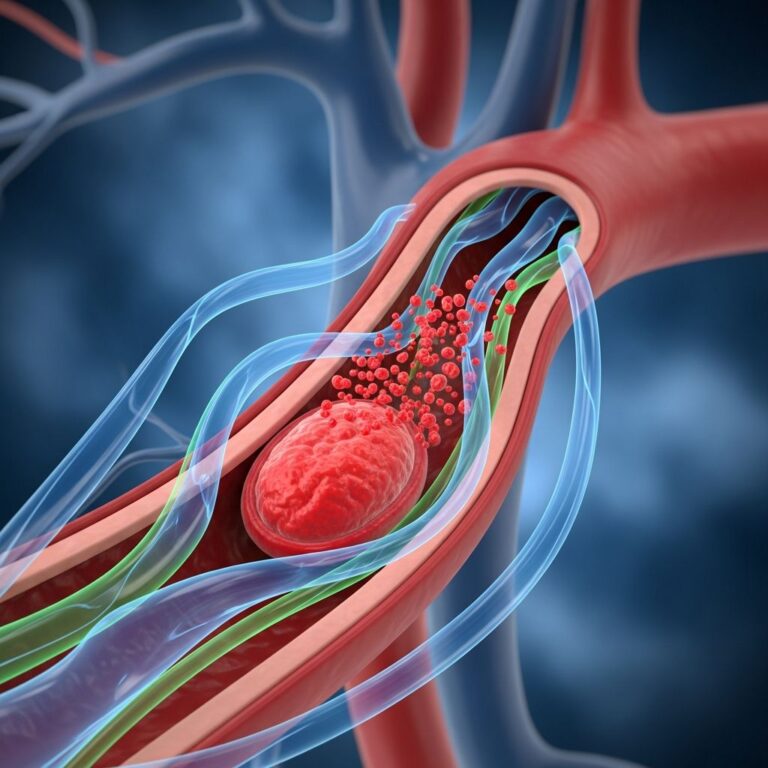
Blood clots: Deep vein thrombosis (DVT) and pulmonary embolism (PE) are potential complications following femur fracture surgery. Early mobilization and sometimes prophylactic anticoagulation reduce these risks.
Nonunion and malunion: In some cases, the bone fragments fail to heal together (nonunion) or heal in an improper position (malunion). Factors that increase risk include smoking, poor bone quality, inadequate fixation, and infection. These complications may require additional surgery.
Hardware failure: Metal implants can occasionally break or loosen, necessitating revision surgery. This risk is minimized through proper surgical technique and appropriate post-operative weight-bearing precautions.
Stiffness and reduced range of motion: Particularly with distal femur fractures involving the knee, some loss of range of motion can occur. Aggressive physical therapy and early mobilization help minimize this complication.
Post-traumatic arthritis: Femur fractures, particularly those involving the articular surface, increase the risk of degenerative arthritis in the hip or knee joint over time. This risk cannot be completely eliminated but is minimized by achieving anatomic reduction and preventing complications.
Advantages of ORIF for Femur Fractures
ORIF offers several important advantages over other treatment options for femur fractures. The ability to visualize and directly manipulate the fracture site allows for precise anatomic reduction, which is critical for restoring normal function and preventing long-term complications. Direct visualization also enables the surgeon to address any associated soft tissue injuries or articular cartilage damage.
Early mobilization is another significant advantage of ORIF. The rigid fixation provided by metal hardware allows patients to begin moving the affected limb within days of surgery, reducing risk of stiffness, blood clots, and other complications associated with prolonged immobilization. This early activity also promotes faster rehabilitation and return to normal function.
ORIF also eliminates the need for prolonged immobilization in casts or braces, which can lead to significant stiffness, skin breakdown, and psychological distress. The ability to perform early weight-bearing with ORIF reduces the disability period and allows faster return to normal activities.
Outcomes and Success Rates
Overall outcomes following ORIF of femur fractures are generally favorable. Studies demonstrate that 70-80% of patients achieve excellent or good functional results, with successful fracture healing in the majority of cases. Outcomes are influenced by several factors including fracture complexity, patient age, overall health status, and compliance with rehabilitation.
For distal femur fractures treated with modern fixed-angle plates and appropriate surgical technique, union rates exceed 90% in most studies. Outcomes are best when anatomic reduction is achieved and maintained, highlighting the importance of proper surgical technique and appropriate hardware selection.
Frequently Asked Questions
Q: How long does an ORIF procedure for a femur fracture typically take?
A: The duration varies depending on fracture complexity and location, typically ranging from 1 to 3 hours. Simple fractures may be completed in 60-90 minutes, while complex comminuted fractures may require 2-3 hours or longer.
Q: When can patients bear weight after ORIF of a femur fracture?
A: Weight-bearing protocols vary by fracture type and fixation method. Many patients can begin partial weight-bearing within 1-2 weeks and progress to full weight-bearing by 6-12 weeks, though some fractures require longer protection.
Q: Will the metal hardware need to be removed after the fracture heals?
A: In most cases, hardware does not require routine removal after the bone heals. However, if hardware causes pain, infection, or other problems, removal may be recommended.
Q: How long does it take for a femur fracture to heal after ORIF?
A: Femur fractures typically show radiographic evidence of healing within 8-12 weeks, though complete remodeling continues for several months. Most patients achieve functional recovery within 3-6 months.
Q: Are there alternatives to ORIF for treating femur fractures?
A: Alternatives include intramedullary nailing, external fixation, and in specific cases, distal femur replacement. The choice depends on fracture pattern, bone quality, patient age, and other clinical factors.
Q: What is the risk of infection after ORIF surgery?
A: Superficial infections occur in 1-3% of cases, while deep infections are less common at less than 1%. Prophylactic antibiotics and proper surgical technique significantly reduce infection risk.
Q: Can patients with femur fracture ORIF return to sports or strenuous activity?
A: Most patients can return to recreational activities within 3-6 months, though return to contact sports may require longer healing time. Individual progression should be guided by orthopedic surgeon recommendations.
References
- A comparison of distal femoral replacement versus fixation in periprosthetic supracondylar femur fractures: a meta-analysis — PubMed Central, National Institutes of Health. 2022-09-15. https://pubmed.ncbi.nlm.nih.gov/36088601/
- Treatment Options for Distal Femoral Fractures — PubMed Central, National Institutes of Health. 2017-03-01. https://pmc.ncbi.nlm.nih.gov/articles/PMC5327816/
- Femur Fracture Treatment Guidelines by Age — Pediatric Orthopaedic Society of North America (POSNA). 2024-01-01. https://posna.org/physician-education/study-guide/femur-fracture
- Distal Femur Fractures: Core Curriculum — Orthopaedic Trauma Association (OTA). 2021-06-01. https://ota.org/
Similar Articles








Read full bio of Sneha Tete