Femur (Thighbone): Anatomy, Function & Common Conditions
Understanding the femur: The strongest bone in your body and its vital role in movement and stability.
The Femur: Understanding Your Body’s Strongest Bone
The femur, commonly known as the thighbone, is the longest, strongest bone in your body. Most adult femurs measure approximately 18 inches long and can support as much as 30 times the weight of your entire body. This remarkable bone plays a critical role in how you stand, move, and maintain your balance. The femur connects your hip to your knee and serves as a crucial attachment point for numerous muscles, tendons, ligaments, and parts of your circulatory system. Understanding the structure and function of your femur is essential for maintaining bone health and preventing injury.
Femur Anatomy: Parts and Structure
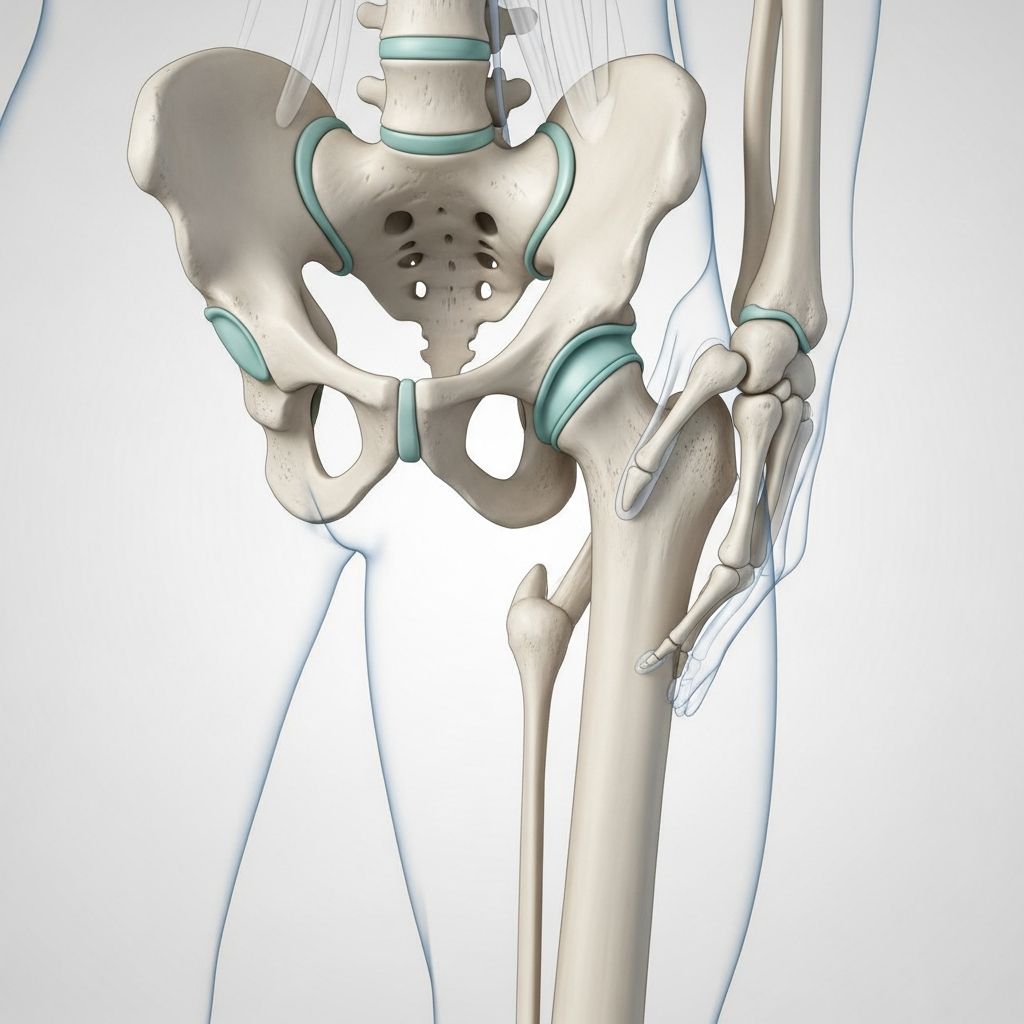
Your femur consists of several distinct parts, each serving specific functions in supporting your body and enabling movement. The bone has a characteristic shape with two rounded ends and a long shaft in the middle, resembling the classic bone shape seen in cartoons. Even though it functions as a single bone, the femur is anatomically divided into three main sections: the upper end, the shaft, and the lower end.
The Upper (Proximal) End
The upper end of the femur connects directly to your hip joint. This section contains the femoral head, which forms a ball-and-socket joint with the pelvis. The femoral head is supported by the femoral neck, which extends downward from the head. Below the neck, you’ll find two bony prominences called the greater trochanter and the lesser trochanter. These trochanters serve as attachment points for important hip muscles. The intertrochanteric area sits between the neck and the shaft, while the subtrochanteric area marks the transition to the femoral shaft. Stress fractures, which commonly affect long-distance runners, can occur in the femoral neck region.
The Femoral Shaft
The shaft is the long, hollow middle portion of your femur that extends from below your hip to above your knee. This section is approximately 1.5 inches thick and bears the primary responsibility for supporting your body weight and forming the structure of your thigh. The shaft angles slightly toward the center of your body, which contributes to proper biomechanics during walking and running. Its hollow structure provides strength while minimizing weight, making it an efficient design for supporting substantial loads.
The Lower (Distal) End
The lower end of your femur forms the top of your knee joint and widens significantly to accommodate articulation with two bones: your tibia (shin bone) and your patella (kneecap). This section includes rounded structures called condyles that fit into corresponding grooves on the tibia, allowing for smooth knee movement. The groove between the condyles, called the patellar groove, helps guide the kneecap during movement.
Key Functions of the Femur
Your femur performs several vital functions that are essential for daily activities and overall physical functioning. Understanding these functions highlights why maintaining femur health is so important:
- Weight Support: The femur carries your entire upper body weight when standing, walking, or running. Its exceptional strength allows it to withstand tremendous force without breaking under normal circumstances.
- Movement Facilitation: The femur serves as a crucial connection point for muscles that enable hip and knee movement, allowing you to walk, run, climb stairs, and perform countless other activities.
- Balance and Stability: Working with surrounding muscles and ligaments, the femur helps you maintain stability and prevents falls by supporting proper posture and body alignment.
- Muscle and Ligament Attachment: The femur provides attachment points for major muscle groups, tendons, and ligaments that control leg movement and provide structural support.
- Circulatory System Support: The femur surrounds and protects the femoral artery, which supplies oxygen-rich blood to your lower body.
Related Stories



Femoral Muscles and Surrounding Structures
The femur is completely surrounded by powerful thigh muscles organized into three compartments: the anterior, medial, and posterior compartments. The femur itself is located in the anterior compartment, which contains muscles responsible for moving your hip and extending your knee. These muscles include the quadriceps, which are essential for straightening your leg and climbing stairs. The medial compartment contains the adductor muscles that bring your leg toward your body’s midline, while the posterior compartment houses the hamstring muscles that bend your knee and pull your leg backward. All these muscle groups work together to provide movement, support, and protection for your femur.
Common Femur Conditions and Issues
Although the femur is exceptionally strong, several conditions can affect this important bone and impact your mobility and quality of life.
Femoral Fractures
A femoral fracture is a break in the thighbone that typically results from severe trauma such as car accidents, falls from significant heights, or other major injuries. Because femurs are so strong, they usually require serious trauma to break. However, if your bones are weakened by osteoporosis or other conditions, you may experience fractures from seemingly minor falls.
Different types of femur fractures are classified based on the pattern of the break:
- Transverse Fracture: A horizontal break that goes directly through the femoral shaft.
- Oblique Fracture: A break that occurs at an angle through the bone.
- Spiral Fracture: A break caused by twisting motion that forms a fracture line curling around the bone like a corkscrew.
- Comminuted Fracture: The bone breaks into more than two pieces, occurring only when extreme force is applied to the bone.
- Open (Compound) Fracture: The broken bone fragments puncture through the skin, or the wound extends down to the broken bone. These fractures typically cause more damage to surrounding muscles, ligaments, and tendons, require longer healing time, and carry a greater risk of infection.
Osteoporosis
Osteoporosis weakens bones by reducing their mineral density, making them more susceptible to sudden and unexpected fractures. Many people don’t realize they have osteoporosis until after it causes them to break a bone, as there are usually no obvious symptoms. The femur is particularly vulnerable to osteoporosis-related fractures, especially in the femoral neck and intertrochanteric areas.
Patellofemoral Pain Syndrome
Patellofemoral pain syndrome, commonly called runner’s knee, affects the area where the kneecap meets the thighbone. This condition causes pain around the kneecap and can result from muscle imbalances, overuse, or improper tracking of the kneecap.
Symptoms of Femur Problems
If something is wrong with your femur or surrounding area, you may experience several warning signs:
- Difficulty moving the leg or reduced range of motion
- Inability to stand or walk without assistance
- Pain or swelling in the thigh area
- Bruising around the affected area
- Deformity or abnormal shape of the thigh
- Bone pushing through the skin, indicating a severe fracture requiring emergency care
Diagnosis and Imaging
If your healthcare provider suspects a femur fracture or other femoral issues, they may order several imaging tests to confirm the diagnosis and determine the severity of the injury:
- X-rays: The first-line imaging tool that provides clear images of bone fractures and their patterns.
- MRI (Magnetic Resonance Imaging): Offers detailed images of both bone and surrounding soft tissues, useful for detecting stress fractures and ligament injuries.
- CT (Computed Tomography) Scan: Provides three-dimensional images helpful in evaluating complex fractures.
Treatment Options for Femur Fractures
Treatment for femur fractures depends on the type of fracture, its location, and the severity of the injury. Because femurs are so strong, most fractures require surgical intervention to heal properly. Your healthcare provider will likely recommend surgery within 24 to 48 hours of your injury.
Surgical Intervention
Surgeons typically use one of two main approaches to treat femur fractures:
- Open Reduction Internal Fixation (ORIF): The surgeon makes an incision at your hip or knee joint, lines up the broken pieces, and stabilizes the femur with metal hardware such as plates and screws.
- Intramedullary Nailing: A long titanium rod is inserted through the center of the femur to align and stabilize the broken pieces.
These metal devices are commonly used in orthopedic surgery today and provide excellent stability for bone healing. After surgery, immobilization using splints or casts protects the healing bone.
Rehabilitation and Recovery
Following surgery, physical therapy is essential for regaining strength and mobility. Your rehabilitation program will gradually progress from gentle motion exercises to weight-bearing activities as your bone heals. Recovery from a femur fracture typically takes several months, with most people returning to normal activities within 3 to 6 months.
When to Seek Emergency Care
You should go to the emergency room immediately if you’ve experienced a trauma or suspect you have a femur fracture. Seek urgent care if you experience sudden onset of severe thigh pain, inability to walk or bear weight, visible deformity, or bone protruding through the skin.
Frequently Asked Questions
Q: How long is the average adult femur?
A: Most adult femurs measure approximately 18 inches long, which is about 46 centimeters.
Q: How much weight can the femur support?
A: The femur can support as much as 30 times your body weight, making it an exceptionally strong bone designed for load-bearing.
Q: What is the difference between a simple fracture and a compound fracture?
A: A simple fracture breaks the bone but doesn’t break the skin. A compound (open) fracture breaks the bone and also causes the bone fragments to puncture through the skin, increasing the risk of infection and complications.
Q: How long does it take to recover from a femur fracture?
A: Recovery typically takes 3 to 6 months, depending on the type of fracture and your overall health. Physical therapy is essential for regaining full function.
Q: Can osteoporosis be prevented?
A: While some bone loss is natural with aging, you can reduce your risk of osteoporosis through adequate calcium and vitamin D intake, regular weight-bearing exercise, and avoiding smoking and excessive alcohol consumption.
Q: What connects the femur to the hip?
A: The femoral head connects to the pelvis through a ball-and-socket joint, which allows for a wide range of hip movements.
References
- What to Know About the Femur Bone — WebMD. 2024. https://www.webmd.com/a-to-z-guides/femur-what-to-know
- Femur (Thighbone): Anatomy, Function & Common Conditions — Cleveland Clinic. 2022-03-11. https://my.clevelandclinic.org/health/body/22503-femur
- Broken Femur: Causes, Symptoms, and Treatment — Cleveland Clinic. https://my.clevelandclinic.org/health/diseases/22299-broken-femur
- Femoral Artery: Location and Anatomy — Cleveland Clinic. https://my.clevelandclinic.org/health/body/21645-femoral-artery
- Hip Joint: What It Is, Anatomy & How It Works — Cleveland Clinic. https://my.clevelandclinic.org/health/body/24675-hip-joint
- Bones: How Many Do Humans Have, Types, Anatomy & Function — Cleveland Clinic. https://my.clevelandclinic.org/health/body/25176-bones
Similar Articles








Read full bio of medha deb