Fesoterodine Tablets (Toviaz): An Essential Guide
Comprehensive guide to fesoterodine for overactive bladder symptoms including frequency, urgency, and incontinence in adults.
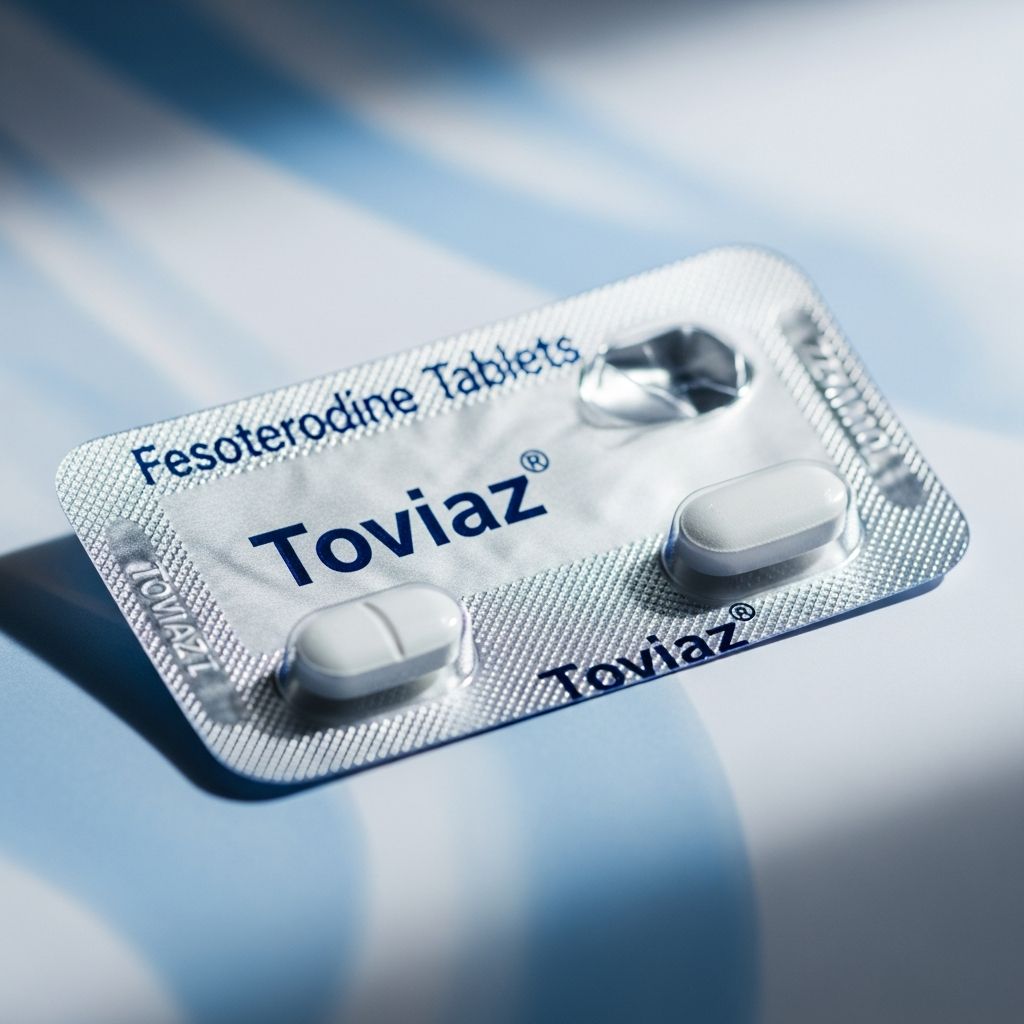
Fesoterodine, marketed as
Toviaz
orTeraleve
, is an antimuscarinic medication designed to manage symptoms ofoveractive bladder (OAB)
in adults, including urinary frequency, urgency, and urgency incontinence.About fesoterodine
Fesoterodine belongs to the class of antimuscarinic medicines, which work by relaxing the bladder muscles to increase bladder capacity and reduce involuntary contractions. It is specifically indicated for adults experiencing overactive bladder syndrome, characterized by a sudden need to urinate (urgency), more frequent urination than normal (frequency), and leakage of urine (incontinence).
| Type of medicine | Used for | Also called | Available as |
|---|---|---|---|
| An antimuscarinic medicine | Symptoms of urinary frequency, urgency, and incontinence in adults | Toviaz®, Teraleve® | Prolonged-release tablets (4 mg and 8 mg) |
Key facts
- Fesoterodine is a
prolonged-release
tablet, meaning the active ingredient is released slowly over several hours for steady symptom control. - It is prescription-only and typically taken once daily.
- Commonly used for
overactive bladder (OAB)
in adults; also approved forneurogenic detrusor overactivity (NDO)
in pediatric patients aged 6 years and older. - Effects are usually noticeable within 2 weeks, with full benefits after 4-12 weeks.
- Not suitable for everyone; contraindicated in urinary retention, gastric retention, uncontrolled narrow-angle glaucoma, myasthenia gravis, severe liver disease, or severe ulcerative colitis.
How fesoterodine works
The active substance,
fesoterodine fumarate
, is a competitive muscarinic receptor antagonist. After ingestion, it is rapidly hydrolyzed by plasma esterases to its active metabolite, 5-hydroxymethyl derivative, which exerts the therapeutic effect. This metabolite blocks muscarinic receptors in the bladder detrusor muscle, causing relaxation. This increases bladder capacity, reduces unwanted contractions, and helps control symptoms like urgency and incontinence.In clinical terms, fesoterodine modifies bladder muscle contractions as the organ fills, preventing sudden urges. Studies show significant reductions in micturitions per 24 hours, urge incontinence episodes, and improvements in voided volume per micturition.
How and when to take fesoterodine
Take fesoterodine exactly as prescribed by your doctor. Swallow the
prolonged-release tablets
whole with liquid; do not chew, crush, or divide them, as this can affect the release mechanism.- Dosage: Start with 4 mg once daily. Your doctor may increase to 8 mg if needed and tolerated.
- Timing: Can be taken with or without food, at any time of day. Consistency helps maintain steady levels.
- Missed dose: Take as soon as remembered unless close to the next dose. Do not double up.
- Duration: Often long-term for ongoing OAB management. Do not stop abruptly without medical advice.
For pediatric NDO patients (≥6 years, >25 kg), dosing is weight-based: 4 mg for those >25 kg, up to 8 mg.
Dosage
Standard adult dose for OAB:
4 mg to 8 mg once daily
. Adjust based on efficacy and tolerability. In patients with severe renal or hepatic impairment, maximum is 4 mg.| Patient Group | Starting Dose | Maximum Dose |
|---|---|---|
| Adults with OAB | 4 mg once daily | 8 mg once daily |
| Pediatric NDO (>25 kg) | 4 mg once daily | 8 mg once daily |
| Renal/Hepatic impairment | 4 mg once daily | 4 mg once daily |
Getting the most from your treatment
- Combine with
bladder training
: Gradually increase time between bathroom visits to improve control. - Avoid caffeine, alcohol, and fizzy drinks, which can irritate the bladder.
- Maintain fluid intake but limit evening consumption to reduce nighttime urination.
- Pelvic floor exercises (Kegels) can enhance effects.
- Monitor symptoms and report lack of improvement after 4-12 weeks.
Related Stories



Side effects
Most side effects are mild and improve over time. Common ones affect more than 1 in 100 people.
| Common Side Effects | Frequency | Management |
|---|---|---|
| Dry mouth | Very common (>1/10) | Sip water, chew sugar-free gum |
| Constipation | Common (1-10%) | Increase fiber, stay hydrated |
| Headache | Common | Rest, over-the-counter pain relief if approved |
| Dizziness | Common | Avoid driving until settled |
| Blurred vision | Common | Avoid tasks needing sharp vision |
Serious side effects (rare): Angioedema (swelling of face/throat), urinary retention, severe constipation, or confusion (especially in elderly). Seek immediate medical help. Dry mouth can increase dental issues; maintain oral hygiene.
Cautions
Use with caution in:
- People over 65: Higher risk of side effects like confusion.
- Renal or hepatic impairment: Dose adjustment needed.
- Conditions with decreased gut motility, autonomic neuropathy, or controlled narrow-angle glaucoma.
- Those on potent CYP2D6 inhibitors (e.g., paroxetine), as exposure increases.
Contraindications: Urinary/gastric retention, uncontrolled narrow-angle glaucoma, myasthenia gravis, severe liver disease, severe ulcerative colitis.
Interactions
Fesoterodine may interact with other anticholinergics, potentiating side effects. Avoid with drugs causing QT prolongation or those affecting CYP enzymes.
- Increased exposure: CYP2D6 inhibitors like fluoxetine.
- Additive anticholinergic effects: Amitriptyline, oxybutynin.
Other medicines, alcohol, and fesoterodine
Inform your doctor of all medications, including over-the-counter and herbals. Alcohol may worsen dizziness or drowsiness. No major food interactions, but grapefruit juice may slightly increase levels.
Pregnancy and breastfeeding
Pregnancy: Limited data; use only if benefits outweigh risks (Category C).
Breastfeeding: Unknown if excreted in milk; weigh risks or consider alternatives.
Common questions
How long does fesoterodine take to work?
Improvements often start within 2 weeks, with peak effects by 12 weeks.
Can I drive while taking fesoterodine?
Yes, unless you experience dizziness or blurred vision. Avoid until effects are known.
Does fesoterodine cause weight gain?
Not commonly reported; dry mouth may indirectly affect eating.
Can I stop fesoterodine suddenly?
Consult your doctor; symptoms may return.
Is fesoterodine suitable for children?
Approved for NDO in children ≥6 years (>25 kg).
Frequently Asked Questions (FAQs)
Q: What is fesoterodine used for?
A: Fesoterodine treats overactive bladder symptoms like urgency, frequency, and incontinence in adults, and neurogenic detrusor overactivity in children.
Q: What are the side effects of Toviaz?
A: Common side effects include dry mouth, constipation, headache, and dizziness. Serious ones like angioedema are rare.
Q: How should I take fesoterodine tablets?
A: Swallow whole once daily, with or without food. Do not crush or chew.
Q: Who should not take fesoterodine?
A: Those with urinary retention, uncontrolled glaucoma, myasthenia gravis, or severe liver issues.
Q: Can fesoterodine be used long-term?
A: Yes, for ongoing OAB management under medical supervision.
References
- Toviaz | European Medicines Agency (EMA) — EMA. 2023. https://www.ema.europa.eu/en/medicines/human/EPAR/toviaz
- Toviaz, INN-Fesoterodine fumarate – EMA — EMA. 2023. https://www.ema.europa.eu/en/documents/overview/toviaz-epar-summary-public_en.pdf
- Fesoterodine tablets (Toviaz) — Patient.info. 2023. https://patient.info/medicine/fesoterodine-tablets-toviaz
- Fesoterodine (oral route) — Mayo Clinic. 2023. https://www.mayoclinic.org/drugs-supplements/fesoterodine-oral-route/description/drg-20072389
- TOVIAZ 4 mg prolonged-release tablets — medicines.org.uk. 2023. https://www.medicines.org.uk/emc/product/6291/smpc
- TOVIAZ® (fesoterodine) FDA Label — FDA. 2021-06-28. https://www.accessdata.fda.gov/drugsatfda_docs/label/2021/022030s019lbl.pdf
Similar Articles








Read full bio of medha deb