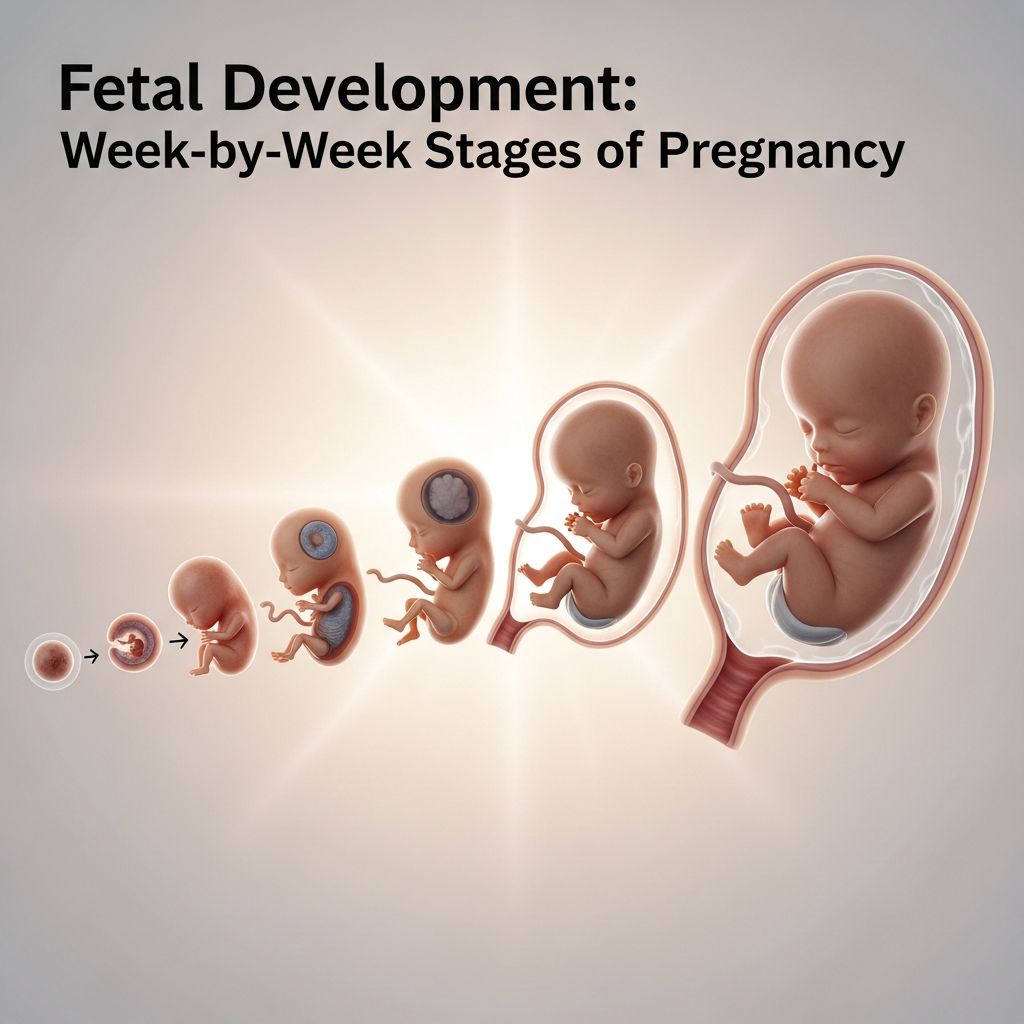
Fetal Development: Week-by-Week Stages of Pregnancy
Understand the three stages of fetal development from conception through birth and pregnancy milestones.
Understanding Fetal Development: From Conception to Birth
Pregnancy is a remarkable journey of growth and transformation that spans approximately 40 weeks. During this time, a single fertilized egg develops into a fully formed human ready for life outside the uterus. While many people discuss pregnancy in terms of trimesters, understanding the three distinct stages of fetal development—germinal, embryonic, and fetal—provides valuable insight into how your baby grows and changes throughout pregnancy. Each stage brings unique developments that are crucial for your baby’s health and preparation for birth.
The Three Stages of Fetal Development
Fetal development is divided into three primary stages, each with its own characteristics and milestones. Understanding these stages helps expectant parents grasp the complexity of human development and appreciate the remarkable changes occurring within the uterus.
The Germinal Stage (Weeks 2-4)
The germinal stage represents the earliest phase of fetal development, beginning at fertilization and lasting through the fourth week of pregnancy. During this brief but critical period, the fertilized egg undergoes rapid cell division and begins its journey to the uterus. The blastocyst—a hollow ball of cells—forms and travels through the fallopian tube before implanting into the uterine wall. Once implantation occurs, the placenta and amniotic sac begin to develop. The placenta serves the vital function of supplying your baby with nutrients and oxygen from your blood while transferring waste away from the developing embryo. The amniotic sac fills with fluid, creating a protective cushion for the growing life inside you. Although these structures are microscopic at this stage, they establish the foundation for all subsequent fetal development.
The Embryonic Stage (Weeks 4-10)
The embryonic stage spans from approximately the third week through the eighth week of pregnancy and represents a period of dramatic transformation. During this stage, the blastocyst takes on distinct human characteristics and is now referred to as an embryo. This is when the most critical developmental processes occur, as important organs and body structures form. The neural tube, which eventually becomes the brain and spinal cord, begins to develop. The heart begins to form around five to six weeks of pregnancy, with cells clustering together and beginning to pulse, marking one of the most significant early milestones.
By the end of the second month, the embryo measures only about 0.5 to 1 inch long—roughly the size of a black bean. Despite this tiny size, remarkable development has occurred. Structures needed to form the eyes and ears develop, and small buds appear that will become arms and legs. The face begins to take shape, with the ears starting to form alongside arms, legs, fingers, and toes. The neural tube is established, while the digestive tract and sensory organs begin their development. Additionally, bone starts to replace cartilage during this stage. For many expectant parents, the embryonic stage concludes with an exciting moment: after six weeks, you may hear your baby’s heartbeat for the first time during an ultrasound examination.
The Fetal Stage (Week 11 Until Birth)
The fetal stage begins around the ninth week of pregnancy and continues until birth, representing the longest phase of development. At this point, the embryo officially transitions into a fetus, and the terminology changes to reflect this new stage. The fetus’s assigned sex develops around nine weeks of pregnancy, although your healthcare provider cannot yet detect it on ultrasound. The fetus’s major organs and body systems continue to grow and mature throughout this extended stage. Fingernails, eyelashes, and hair begin to grow, and the fetus becomes capable of moving its limbs, although these movements may not be felt by the mother until around 20 weeks of pregnancy. The majority of growth in both weight and length occurs during the fetal stage, making this an period of rapid and visible expansion.
Related Stories



First Trimester: Weeks 1-12
The first trimester encompasses the first three months of pregnancy, from conception through 12 weeks. This period is both exciting and challenging for many expectant parents. During these weeks, the fertilized egg transforms from a small grouping of cells into a fetus that begins to exhibit human features. The first trimester is marked by significant developmental milestones and is often accompanied by common pregnancy symptoms such as morning sickness and fatigue.
Development During Early Weeks
By four weeks after conception (the sixth week of pregnancy), small buds appear that will become arms, and the neural tube along your baby’s back begins closing. The brain and spinal cord develop from this neural tube, while the heart and other organs start to form. Structures necessary for eye and ear formation develop, and your baby’s body takes on a C-shaped curve.
Five weeks after conception (the seventh week of pregnancy), your baby’s brain and face become the primary focus of development. Depressions that will form nostrils become visible, and the retinas of the eyes begin to form. Lower limb buds appear that will eventually become legs, while the arm buds develop a paddle-like shape.
End of First Trimester
By the end of the third month of pregnancy, an embryo officially becomes a fetus, marking a period of rapid growth and development. The fetus develops distinct facial features, limbs, organs, bones, and muscles. By the end of the 12th week, the fetus has an assigned sex, although this won’t be visible on ultrasound for several more weeks. At this crucial juncture, most of the embryo’s organs and body systems have taken shape, and healthcare providers note that the first trimester represents the most critical period for fetal development.
Second Trimester: Weeks 13-26
The second trimester, spanning weeks 13 through 26, is often considered the most comfortable phase of pregnancy for many expectant mothers. As morning sickness typically subsides and energy levels improve, the focus shifts to the continued growth and maturation of the fetus.
Months 4-5 Development
Almost midway through your pregnancy, during the fourth month, your baby’s fingers and toes are well-established. The eyelids, eyelashes, eyebrows, hair, and nails begin to take form. The nervous system begins to function, and your doctor may be able to determine the baby’s sex during an ultrasound examination.
By the end of the fifth month, the fetus measures approximately 9 to 10 inches long and weighs about 1 pound. If you could peer inside your uterus at this stage, you would observe that the fetus’s skin appears reddish in color, wrinkled, with veins visible through translucent skin. The fetus becomes increasingly active, and many expectant mothers begin to feel distinct fetal movements during this period.
Month 6 Development
During the sixth month of pregnancy, significant changes become apparent. The fetus’s eyelids begin to part, and you may notice regular, jerky movements. The fetus responds to sounds by moving or increasing its pulse, demonstrating developing sensory capabilities. By the end of the sixth month, the fetus measures approximately 12 inches long and weighs about 2 pounds. The fetus continues to mature and develop reserves of body fat, changes position frequently, and responds to various stimuli including sound, pain, and light. During this period, the amniotic fluid begins to diminish as the fetus grows larger within the uterus.
Third Trimester: Weeks 27-40
The third trimester represents the final stage of pregnancy, characterized by rapid fetal growth and preparation for birth. During these final weeks, you may be tempted to count down the days to your due date and hope it arrives early. However, each week of this final developmental stage helps the fetus prepare for life outside the uterus in crucial ways.
Months 7-8 Development
During the seventh and eighth months of pregnancy, the fetus continues to mature and develop substantial reserves of body fat. The brain develops most rapidly during this time, enabling the fetus to see and hear most stimuli. Most internal body systems are well-developed, though the lungs may still be somewhat immature. By the end of this period, the fetus measures approximately 17 to 18 inches long and weighs as much as 5 pounds. At 29 weeks specifically, all of your baby’s organs are developed and most are fully functioning. The baby’s brain is rapidly developing, and they can see and hear. The baby continues to get heavier and develops body fat, while making red blood cells in their bone marrow. The eyelids can now open, and eyelashes have grown, although the eyes still require further development before sight is fully functional.
Month 9 Development
During the ninth month, the fetus continues to grow and mature. The lungs are close to being fully developed at this point in pregnancy. The ninth month is largely devoted to putting the finishing touches on growth and brain development, preparing the newborn for independent life. By the end of the ninth month and completion of pregnancy, the fetus measures approximately 17 to 19 inches long and weighs between 6 to 7 pounds. The fetus has accumulated sufficient body fat to maintain body temperature after birth, and the immune system has developed protective antibodies passed from the mother.
Critical Development Milestones by Trimester
Each trimester or phase of pregnancy carries its own unique developmental milestones and associated risks. While it’s difficult to pinpoint specific weeks as being more or less important, most healthcare providers emphasize that the most critical time for fetal development is the first 13 weeks of pregnancy—the first trimester. The risk of miscarriage drops significantly after the first trimester, when the fetus’s major organs and systems are formed and working. This doesn’t mean pregnancy becomes less important after 13 weeks; rather, many of the critical developmental steps and processes are complete, and most major birth disorders occur during the first trimester.
Essential Structures Supporting Fetal Development
Several crucial structures work together to support and sustain fetal development throughout pregnancy. Understanding these components helps expectant parents appreciate the biological systems that nurture their growing baby.
The Placenta
The placenta is arguably the most important organ during pregnancy, serving as the lifeline between mother and baby. This remarkable organ develops early in pregnancy and serves multiple critical functions. It supplies your baby with essential nutrients and oxygen from your blood while simultaneously transferring waste away from the developing fetus. The placenta also provides protective antibodies that help establish the baby’s immune system.
The Umbilical Cord
The umbilical cord links the baby to the placenta, creating a physical connection that facilitates nutrient and oxygen transfer. This cord forms between the embryo and placenta during early pregnancy, allowing continuous nutrient transfer from the mother to the baby. The cord typically contains two arteries and one vein, enabling efficient exchange of nutrients and waste products.
The Amniotic Sac and Fluid
The amniotic sac protects your baby in the uterus, providing a safe, cushioned environment for development. This sac fills with amniotic fluid, which serves multiple protective and developmental purposes. The fluid cushions the growing fetus, maintains consistent temperature, and allows the fetus to move and exercise developing muscles.
Importance of Early Prenatal Care
The early weeks of pregnancy require special attention to diet and other health habits to ensure the fetus does not develop any health issues or defects. Regular prenatal care throughout all three trimesters helps monitor fetal development, identify potential complications early, and ensure both mother and baby remain healthy. Healthcare providers use ultrasounds, blood tests, and physical examinations to track fetal development and address any concerns that may arise.
Frequently Asked Questions
Q: What are the three stages of fetal development?
A: The three stages are the germinal stage (weeks 2-4), the embryonic stage (weeks 4-10), and the fetal stage (week 11 until birth). Each stage involves specific developmental processes and milestones.
Q: When can you hear a baby’s heartbeat?
A: After six weeks of pregnancy, you may hear your baby’s heartbeat for the first time during an ultrasound examination. The heart begins to form around five to six weeks, with cells clustering together and beginning to pulse.
Q: When does a baby’s sex become determined?
A: The fetus gets its assigned sex around nine weeks of pregnancy, although your healthcare provider cannot detect it on ultrasound until several weeks later.
Q: When will I feel my baby move?
A: While the fetus becomes capable of moving its limbs during the fetal stage, most mothers don’t feel these movements until around 20 weeks of pregnancy.
Q: What is the most critical period for fetal development?
A: The most critical time for fetal development is the first 13 weeks of pregnancy (the first trimester), when the fetus’s major organs and systems form and begin working.
Q: How much does a baby weigh at birth?
A: By the end of pregnancy, a baby typically weighs between 6 to 7 pounds and measures approximately 17 to 19 inches long.
References
- Conception and Fetal Development — Pregnancy, Birth and Baby. Australian Government Department of Health. https://www.pregnancybirthbaby.org.au/conception-and-fetal-development
- The Stages of Fetal Development During Pregnancy — Brauer Natural Medicine. https://brauer.com.au/blogs/health-library/conception-to-birth-the-stages-of-fetal-development-during-pregnancy
- Fetal Development: Week-by-Week Stages of Pregnancy — Cleveland Clinic. December 2024. https://my.clevelandclinic.org/health/articles/7247-fetal-development-stages-of-growth
- Fetal Development: The First Trimester — Mayo Clinic. 2024. https://www.mayoclinic.org/healthy-lifestyle/pregnancy-week-by-week/in-depth/prenatal-care/art-20045302
- Fetus — EBSCO Research Starters. https://www.ebsco.com/research-starters/health-and-medicine/fetus
Similar Articles








Read full bio of medha deb