Fetal Positions For Birth: Presentation, Types & Function
Understanding fetal positioning and how it affects your labor and delivery options.
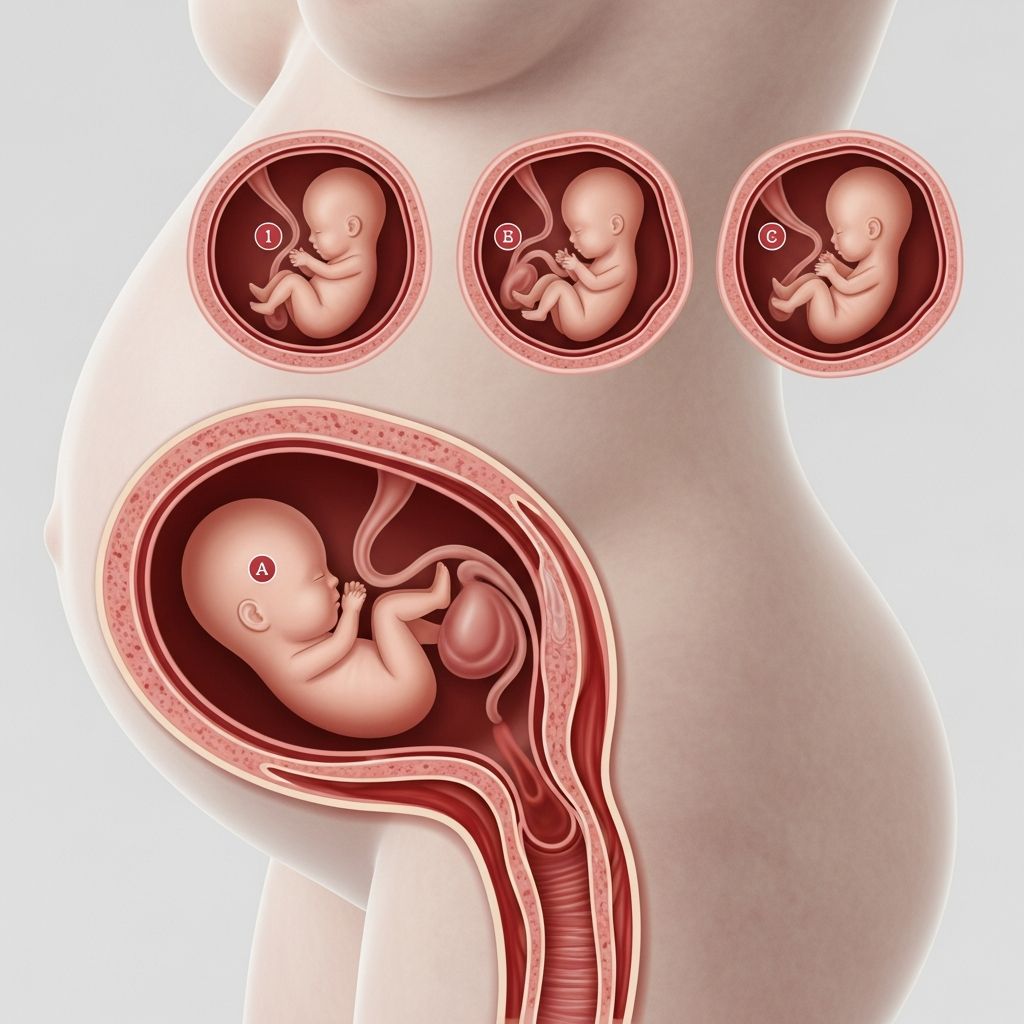
Understanding Fetal Positions For Birth
Fetal positioning refers to a fetus’s position in your uterus before birth. Your pregnancy care provider may call it fetal presentation or the presentation of the fetus, although this usually refers to which part of a fetus’s body will move into the birth canal first. Knowing the position of the fetus helps a pregnancy care provider determine if it’s safe for you to have a vaginal delivery or if they should consider a C-section, also known as cesarean delivery.
During childbirth, your healthcare provider’s primary goals are to safely deliver your baby and ensure your health after delivery. A vaginal delivery can become more challenging, or even unsafe, if the fetus is in certain positions. Understanding these positions and how they may affect your birth plan is an important part of your prenatal care.
The Ideal Fetal Position For Labor
The ideal fetal position for labor is when the fetus is head down, facing your back, with its chin tucked to its chest and the back of the head ready to enter your pelvis. This position is called cephalic or occiput anterior presentation. It’s the safest fetal position because it carries the least amount of risk to both the birth mother and the fetus.
In a vertex presentation, the fetus is in a headfirst, head-down position with its chin tucked toward its chest, facing your spine. This positioning allows the smallest part of the baby’s head to enter the birth canal first, making passage through the pelvis easier and reducing the need for medical interventions during delivery.
Most fetuses settle into this optimal position naturally by the 36th week of pregnancy. This gives healthcare providers several weeks to monitor positioning and make adjustments if needed before labor begins.
Understanding Fetal Attitude and Fetal Lie
To fully understand fetal positioning, it’s helpful to know two related concepts: fetal attitude and fetal lie.
Fetal Attitude
Fetal attitude describes the position of specific parts of a fetus’s body. The ideal fetal attitude is when the fetus has its chin tucked to its chest, arms crossed over its chest, and legs flexed. However, there can be times when the fetal attitude is irregular. For example, its chin may be tilted back instead of tucked, which can affect how easily the baby passes through the birth canal during delivery.
Fetal Lie
Fetal lie describes how the fetus’s spine lines up with its birth mother’s spine. Ideally, they line up vertically because the fetus’s head is down in the birth canal. This is called longitudinal lie. If the fetus is sideways or horizontally across the uterus, it’s in a transverse lie, which can complicate vaginal delivery.
Types of Fetal Positions
Sometimes, your baby doesn’t get into the perfect position before birth. There are several positions that a fetus can be in, and some of these positions could come with complications during childbirth.
Cephalic or Vertex Presentation (Head Down)
This is the most favorable position for vaginal delivery. The baby is positioned head down with the back of the head entering the birth canal first. This is the safest and most common presentation at term.
Related Stories



Breech Presentation
A baby is breech when it’s positioned feet or bottom first in your uterus. Breech is common in early pregnancy, but most fetuses will move to a head-down position by 36 weeks of pregnancy. Breech position isn’t a typical position for full-term pregnancies—it accounts for only 3% to 4% of all full-term pregnancies at 39 and 40 weeks.
There are four different breech positions:
- Frank breech: The baby’s hips are flexed and legs are extended straight up in front of the body
- Complete breech: Both hips and knees are flexed, with feet positioned below the buttocks
- Footling breech: One or both feet point downward and will exit the birth canal first
- Transverse lie: The baby is positioned horizontally across the uterus rather than vertically
All breech positions increase your chances of having a C-section delivery because a vaginal delivery can become unsafe. Before delivery, there’s no risk to a fetus in a breech position. But there are risks to attempting a vaginal delivery on a fetus in the breech position.
Posterior Position
In a posterior position, the baby is facing the mother’s front instead of the back. This can make labor longer and more challenging, though vaginal delivery may still be possible.
Transverse Lie
When a fetus is positioned horizontally across the uterus rather than vertically, it’s in a transverse lie. This position makes vaginal delivery impossible and typically requires a C-section delivery.
How Healthcare Providers Check Fetal Position
Your healthcare provider will check fetal positioning by touching or gently pressing on parts of your abdomen during your regular prenatal appointments. This examination will happen during most of your appointments in the third trimester. If your provider is unsure about the fetal position, they may also perform an ultrasound to check fetal positioning more accurately.
Beginning around the third trimester, your provider will press certain areas of your belly to determine if the fetus is breech. If they detect a breech position before 36 weeks, they’ll allow some time for it to turn into a preferable position on its own.
When Does Fetal Positioning Occur?
Typically, the fetus moves into position for birth in the third trimester. This happens in the last few weeks of your pregnancy, often between weeks 32 and 36. During this time, decreased amniotic fluid and increased fetal size encourage the baby to settle into a more stable position.
Keep in mind that a fetus moves freely and can take up until the end of 36 weeks of pregnancy to settle into an optimal position. The fetus’s position becomes critical when you’re nearing your due date and deciding on which method of delivery is safest for both you and your baby.
Risks Associated with Abnormal Fetal Positions
Breech position is probably the most unfavorable fetal position because it comes with the most risks. Different healthcare providers have various levels of comfort with vaginal deliveries of breech babies. A vaginal breech birth can be dangerous, so most providers recommend a C-section delivery when your baby remains breech.
If your baby is in a posterior position, facing the mother’s front, or breech, labor can be much more challenging. In many cases, a C-section is the best and safest option for birth when these abnormal positions persist near your due date.
The position of the fetus doesn’t usually affect your pain or discomfort during pregnancy. The movements you feel are just different from if the fetus was head down.
Turning a Breech Baby: External Cephalic Version
When a fetus is in a breech position or another abnormal position, your healthcare provider may suggest a C-section delivery because it’s safer. However, there is one noninvasive way to try to turn the fetus and improve your chances of having a vaginal birth.
What is External Cephalic Version?
External cephalic version (ECV) is a medical procedure where your healthcare provider attempts to manually turn your baby from a breech position to a head-down position. Your pregnancy care provider performs ECV in the labor and delivery unit in case of a complication.
How ECV Works
This procedure involves a provider lifting the fetus’s buttocks in an upward position and then applying pressure through the abdominal wall to your uterus to rotate the fetal head forward or backward. The best time to perform this procedure is between 36 to 38 weeks of pregnancy.
ECV is one of the safest options for attempting to turn a breech baby without surgical intervention. However, success rates vary, and the procedure isn’t appropriate for everyone. Your healthcare provider will discuss whether ECV is a good option for your specific situation.
Fetal Position and Labor Progression
Your position during labor can significantly impact how your baby moves through the birth canal and how labor progresses. Moving into different birthing positions can be important for positioning your pelvis in different ways to help with labor progression.
Hands and Knees Position
Positioning yourself on your hands and knees for birth is a helpful position to use if the fetus is positioned face up. The hands-and-knees position can sometimes leave you feeling exposed, but it’s especially helpful for facilitating optimal fetal positioning during labor. Research shows that lateral or posterior position of the presenting part of the fetus was less likely to persist following 10 minutes in the hands and knees position compared to a sitting position.
Side-Lying Position
There’s no downside to giving birth while lying on your side. And many find it creates an intimate experience because they can face their partner while delivering the baby.
Your position options during labor depend on whether you’ve received an epidural and how the labor and delivery team is monitoring the fetus.
Delivery Options Based on Fetal Position
If you’re planning a vaginal delivery, an abnormal fetal position could change these plans. When your baby is in a non-optimal position, your healthcare provider will discuss the risks and benefits of different types of birth for your baby’s specific situation.
Vaginal Delivery
The best position for a baby to be in during birth is the anterior position, with the baby’s head down and facing the mother’s back. This position makes it easier for the baby to pass through the birth canal and reduces the risk of interventions.
Cesarean Delivery
In many cases, your healthcare provider will recommend a C-section instead of a vaginal birth when the fetus is in a breech or other abnormal position. Cesarean delivery is often the safest option when fetal position creates complications that could endanger you or your baby.
Remember, things can change quickly during childbirth. Having a C-section may not be a part of your birth plan. However, the goal is to safely deliver your child and protect your health.
Frequently Asked Questions
Q: What is the most common fetal position at delivery?
A: The most common and ideal position is cephalic or vertex presentation, where the baby is head down, facing your back, with its chin tucked to its chest. Most babies naturally settle into this position by 36 weeks of pregnancy.
Q: How often do babies stay in a breech position until birth?
A: Breech position accounts for only 3% to 4% of full-term pregnancies at 39 and 40 weeks. Most babies turn to a head-down position by 36 weeks of pregnancy.
Q: Can fetal position affect my comfort during pregnancy?
A: The position of the fetus doesn’t usually affect your pain or discomfort during pregnancy. The movements you feel may feel different depending on the baby’s position, but positioning doesn’t typically cause additional discomfort.
Q: When is the best time to try turning a breech baby?
A: External cephalic version (ECV) is best performed between 36 to 38 weeks of pregnancy. Your healthcare provider can discuss whether this procedure is appropriate for your situation.
Q: Does fetal position affect the type of delivery I can have?
A: Yes, significantly. While cephalic presentation allows for vaginal delivery, breech and transverse positions typically require cesarean delivery due to safety concerns. Your healthcare provider will discuss your delivery options based on your baby’s position.
Q: How will my healthcare provider know my baby’s position?
A: Your provider will check fetal positioning by gently pressing on parts of your abdomen during prenatal appointments in your third trimester. If they’re unsure, they may perform an ultrasound for accurate assessment.
References
- Fetal Positions For Birth: Presentation, Types & Function — Cleveland Clinic. Accessed 2025-12-01. https://my.clevelandclinic.org/health/articles/9677-fetal-positions-for-birth
- Breech Baby: Causes, Complications, Turning & Delivery — Cleveland Clinic. Accessed 2025-12-01. https://my.clevelandclinic.org/health/diseases/21848-breech-baby
- Baby’s Position Matters: A Pregnant Chiropractor Near Me Can Help — MyChiroMom. Accessed 2025-12-01. https://www.mychiromom.com/why-babys-position-matters-how-a-pregnant-chiropractor-near-me-can-help
- Hands and knees posture in late pregnancy or labour for fetal positioning — PubMed Central. Accessed 2025-12-01. https://pmc.ncbi.nlm.nih.gov/articles/PMC8407052/
- Explore Your Options: Labor and Birthing Positions To Consider — Cleveland Clinic Health. Accessed 2025-12-01. https://health.clevelandclinic.org/labor-positions
- Vertex Presentation: Position, Birth & What It Means — Cleveland Clinic. Accessed 2025-12-01. https://my.clevelandclinic.org/health/articles/24999-vertex-presentation
Similar Articles








Read full bio of Sneha Tete