Fetoscopic Tracheal Occlusion: Advancing Fetal Surgery
Minimally invasive fetal surgery advancing lung development in severe congenital diaphragmatic hernia cases.
Fetoscopic Tracheal Occlusion: A Breakthrough in Fetal Surgery
Fetoscopic tracheal occlusion (FETO) represents a significant advancement in prenatal medicine, offering hope to families whose fetuses are diagnosed with severe congenital diaphragmatic hernia (CDH). This minimally invasive fetal surgical technique has transformed the landscape of fetal intervention by providing a safer alternative to traditional open fetal surgery. By strategically blocking the fetal airway during pregnancy, FETO stimulates accelerated lung growth, dramatically improving survival rates and long-term respiratory outcomes for affected newborns. The procedure combines advanced imaging technology, specialized surgical instruments, and innovative medical thinking to address one of the most challenging prenatal diagnoses.
Understanding Congenital Diaphragmatic Hernia and Lung Development
Congenital diaphragmatic hernia occurs when there is an opening or defect in the diaphragm, the muscular wall that separates the chest from the abdomen. This opening allows abdominal organs, including the intestines, stomach, and liver, to migrate into the chest cavity during fetal development. When these organs occupy space in the chest, they compress and restrict the developing lungs, leading to severe pulmonary hypoplasia, a condition characterized by underdeveloped lungs with insufficient tissue to support adequate gas exchange after birth.
In severe cases of CDH, fetal lungs fail to develop adequately, resulting in critically reduced lung volumes and a dramatically diminished chance of survival with conventional postnatal therapy. Conventional management involves immediate postnatal surgery to repair the diaphragmatic defect, but without intervention to promote lung growth during pregnancy, many infants with severe CDH experience respiratory failure. This challenge prompted researchers to explore novel interventions during fetal life to accelerate lung development before birth.
The Science Behind Tracheal Occlusion
The concept of tracheal occlusion emerged from understanding normal fetal physiology and an unusual natural condition called Congenital High Airway Obstruction Syndrome (CHAOS). In this rare condition, complete obstruction of the fetal windpipe prevents lung fluid from escaping. Paradoxically, this obstruction results in dramatically enlarged lungs, as the accumulated fluid increases pressure within the trachea and lungs, stimulating tissue stretch and accelerated lung growth. This natural experiment provided the conceptual foundation for therapeutic tracheal occlusion.
During normal fetal development, the lungs continuously produce fluid that the fetus “breathes” into the amniotic fluid. When the trachea is blocked, this fluid cannot escape, creating increased intraluminal pressure. This elevated pressure acts as a growth stimulus, triggering accelerated lung expansion and tissue proliferation. The strategy involves temporarily occluding the trachea before birth to harness this growth mechanism, then removing the occlusion before delivery to allow normal breathing after birth. This elegant approach transforms a pathologic process into a therapeutic intervention.
Evolution from Open Fetal Surgery to Minimally Invasive FETO
The clinical application of tracheal occlusion initially utilized open fetal surgery techniques. In these procedures, surgeons would directly dissect the fetal trachea and place surgical clips across the airway to obstruct it. While this approach proved the concept that tracheal occlusion could accelerate lung growth, it was highly invasive and posed significant risks to both mother and fetus, including increased rates of complications and preterm labor.
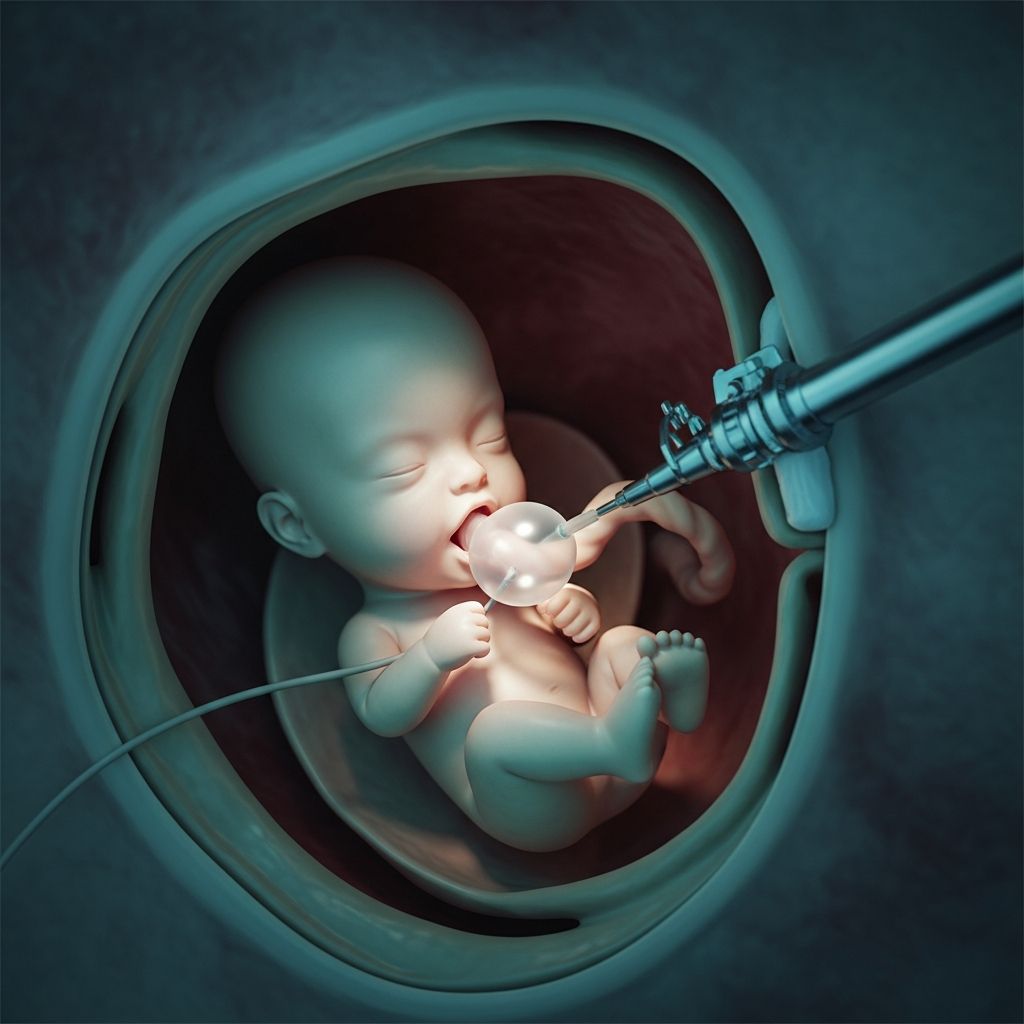
To minimize these risks, researchers developed the fetoscopic approach, known as Fetoscopic Endoluminal Tracheal Occlusion (FETO). Rather than requiring an extensive uterine incision, FETO employs a tiny camera-equipped instrument called a fetoscope and a detachable balloon. Extensive laboratory studies in fetal sheep confirmed the safety and efficacy of this minimally invasive approach. Subsequently, hundreds of patients have undergone FETO worldwide, with results demonstrating significantly improved survival compared to conventional postnatal therapy, particularly in the most severe cases of CDH.
Related Stories



The FETO Procedure: Step-by-Step Overview
Pre-Procedure Preparation
Patients are asked to follow nothing-by-mouth (NPO) instructions from midnight before surgery. Admission occurs on the morning of the procedure. Upon arrival, detailed ultrasound imaging is performed to assess fetal position, placental location, and maternal anatomy. A tocodynamometer is placed to continuously record uterine activity, allowing medical staff to monitor for premature contractions. Informed consent is obtained from the patient and partner after thorough discussion of risks, benefits, and alternative management options.
Anesthesia and Fetal Protection
FETO is most commonly performed under epidural anesthesia, which provides maternal pain relief while minimizing fetal medication exposure. General anesthesia is rarely required except in exceptional circumstances. In highly selected cases, local anesthesia may be sufficient. Critically, the fetus receives appropriate anesthetic medication to ensure comfort and prevent movement during the delicate procedure. External fetal monitoring continues throughout the operation to ensure fetal well-being.
Instrument Placement and Visualization
After sterile preparation and draping of the maternal abdomen, a small 4-millimeter incision is made in the maternal skin. Through this tiny opening, a curved 3.3-millimeter sheath is introduced into the amniotic cavity under continuous ultrasound guidance. A small fetoscope with an attached video camera is advanced through the sheath, and the surgeon visualizes the amniotic cavity contents on a monitor. Occasionally, the fetus may need gentle external manipulation to optimize positioning and facilitate fetoscopic entry into the fetal mouth and airway.
Balloon Placement and Detachment
Under direct visualization through the fetoscope, the surgeon carefully navigates the instrument into the fetal mouth, visualizing anatomic landmarks including the tongue, uvula, epiglottis, and vocal cords. Once the instrument passes through the vocal cords, the surgeon positions it in the trachea just above where the windpipe divides into the right and left main bronchi. Through the fetoscope’s working channel, a small balloon attached to a microcatheter is advanced into position. The balloon is then inflated with sterile saline solution (typically 0.6 milliliters), creating an obstruction to tracheal flow. Once properly inflated and positioned, the balloon is detached from the catheter using a release mechanism, leaving the deflated catheter to be withdrawn.
Post-Procedure Care
Before withdrawing the fetoscope, antibiotics are delivered into the amniotic fluid to prevent infection. The small skin incision is closed with a single stitch. The mother is monitored overnight in the hospital, and medications may be administered to suppress uterine contractions and prevent preterm labor. Most mothers are discharged on postoperative day one with instructions for activity restriction and close follow-up care. Throughout the 4-6 week period that the balloon remains in place, regular ultrasound examinations monitor fetal growth, lung volumes, and overall well-being.
Balloon Removal Procedure
At approximately 34 weeks of gestation, the mother is readmitted to the fetal care center for the removal procedure. Before balloon removal, medications are administered to promote fetal lung maturity and surfactant production (corticosteroids), prevent infection (antibiotics), and inhibit uterine contractions. The balloon can be removed using several methods, depending on institutional expertise and clinical circumstances.
The primary method involves fetoscopic retrieval, performed similarly to the initial placement procedure. Under direct fetoscopic visualization, specialized forceps grasp the tail of the balloon, which is then punctured using an adjustable needle and withdrawn. Alternatively, the balloon can be needle-punctured under ultrasound guidance through the maternal abdomen. In some cases, the balloon remnant remains in the amniotic cavity to be expelled by the fetus or coughed out into the amniotic fluid, where it does not interfere with fetal development.
Outcomes and Clinical Evidence
The cumulative worldwide experience with FETO now exceeds 300 procedures, with data demonstrating its transformative impact on survival rates. The TOTAL trial, a landmark study evaluating FETO outcomes, revealed remarkable results in cases of severe pulmonary hypoplasia. In fetuses with an observed-to-expected lung-head ratio (O/E LHR) of 25 or less—representing the most severe cases—conventional postnatal therapy alone achieves survival rates of only 15-20%. In stark contrast, fetuses treated with FETO in the same severity category demonstrate survival rates of approximately 40%, representing a doubling of survival probability.
These survival improvements translate to meaningful benefits for affected families. Infants born following FETO experience better respiratory function, require shorter durations of mechanical ventilation, and demonstrate improved long-term pulmonary outcomes. The procedure has successfully transitioned from experimental technology to established clinical practice at multiple specialized fetal care centers.
Patient Selection and Candidacy
Appropriate patient selection is essential for optimizing FETO outcomes. Candidates typically include patients with singleton pregnancies complicated by severe CDH, where prenatal assessment predicts very poor survival with conventional management. Detailed ultrasound assessment determines fetal lung volumes, diaphragmatic defect size, and organ herniation patterns. Advanced imaging modalities, including three-dimensional ultrasound and fetal MRI, provide comprehensive anatomic information.
Candidates must be medically stable and willing to commit to intensive perioperative monitoring and follow-up care. The procedure is generally performed between 27-31 weeks of gestation, allowing adequate time for lung growth before balloon removal at 32-34 weeks. Maternal factors, including overall health status and ability to comply with activity restrictions, are carefully evaluated. Families undergo comprehensive counseling regarding procedure risks, expected outcomes, and alternative management strategies.
Safety Profile and Considerations
Fetoscopic tracheal occlusion is recognized as a minimally invasive procedure with an excellent safety profile and no known serious complications. The tiny incision size, absence of large uterine defects, and avoidance of extensive surgical dissection significantly reduce risks compared to open fetal surgery. Maternal morbidity remains minimal, with most patients experiencing only mild discomfort at the incision site and no long-term sequelae.
Potential fetal considerations include the rare possibility of premature balloon detachment or malposition, though experienced surgeons achieve reliable balloon placement on the first attempt in the vast majority of cases. The reversible nature of the intervention—the balloon is removed weeks before delivery—provides an additional safety advantage. Neonatal outcomes demonstrate that infants born following FETO experience improved respiratory function compared to historical controls with equivalent prenatal severity.
Frequently Asked Questions
Q: What is the difference between FETO and conventional CDH management?
A: Conventional CDH management involves postnatal surgery after birth, but does not address the underlying problem of underdeveloped lungs. FETO promotes lung growth during pregnancy through temporary tracheal occlusion, improving lung volumes before birth and dramatically increasing survival rates in severe cases.
Q: How long does the FETO procedure take?
A: The procedure typically takes 30-60 minutes from start to finish, depending on fetal position, placental location, and individual anatomic factors. Most of the time involves careful navigation and positioning rather than the balloon placement itself.
Q: Will the balloon affect the baby’s normal development?
A: No. The fetus receives oxygen through the placenta, not through breathing, so the blocked trachea does not interfere with oxygen delivery during pregnancy. The balloon stimulates lung growth while remaining safely in place for 4-6 weeks.
Q: What happens after the balloon is removed?
A: After balloon removal at 34 weeks, the fetus’s lungs continue normal maturation for the remaining weeks of pregnancy. The baby is born with larger, more developed lungs capable of supporting adequate gas exchange and oxygen delivery after birth.
Q: Is FETO successful in all cases of CDH?
A: FETO is most effective in severe CDH cases with poor predicted outcomes using conventional therapy. Mild to moderate CDH cases typically have adequate lung development and may not benefit from FETO. Careful prenatal assessment determines candidacy.
Q: What are the risks to the mother?
A: Risks are minimal due to the minimally invasive approach. Possible complications include infection at the incision site, premature rupture of membranes, premature labor, and bleeding, though these occur rarely. Discuss specific risks with your fetal care team.
Q: Can FETO be performed at any hospital?
A: No. FETO requires specialized expertise and equipment only available at select fetal care centers with experienced teams in maternal-fetal medicine and fetal surgery. Johns Hopkins and other major academic medical centers offer this procedure.
Q: What should I expect after going home following FETO?
A: Activity should be restricted, and women should avoid strenuous exercise or heavy lifting. Regular ultrasound examinations will monitor fetal progress. Most women can return to modified activities within a few days to weeks, depending on how they feel.
References
- Fetoscopic Endoluminal Tracheal Occlusion (FETO) to Treat CDH — Cincinnati Children’s Hospital Medical Center. 2024. https://www.cincinnatichildrens.org/service/f/fetal-care/conditions/congenital-diaphragmatic-hernia/feto
- Fetoscopic Tracheal Occlusion for Congenital Diaphragmatic Hernia — Connecticut Children’s Hospital. 2024. https://www.connecticutchildrens.org/specialties-conditions/fetal-care-center/treatments-and-services/fetoscopic-tracheal-occlusion
- Fetal Endoscopic Tracheal Occlusion (FETO) – Michigan Medicine — University of Michigan Health. 2024. https://www.uofmhealth.org/our-care/specialties-services/fetal-endoscopic-tracheal-occlusion-feto
- Fetal endoscopic tracheal occlusion for congenital diaphragmatic hernia — National Center for Biotechnology Information. PubMed Central. 2021. https://pmc.ncbi.nlm.nih.gov/articles/PMC8192998/
- Fetoscopy and Fetoscopic Endoluminal Tracheal Occlusion — Children’s Hospital Colorado. 2024. https://www.childrenscolorado.org/doctors-and-departments/departments/colorado-fetal-care-center/services/fetoscopy/
- Trial of Fetoscopic Endoluminal Tracheal Occlusion (FETO) for CDH — ClinicalTrials.gov. U.S. National Library of Medicine. 2024. https://clinicaltrials.gov/study/NCT02530073
Similar Articles








Read full bio of Sneha Tete