Fever in Children and Teens: A Parent’s Guide
Understanding fever in children: When to worry, when to treat, and how to help your child recover safely.
Understanding Fever in Children and Teens
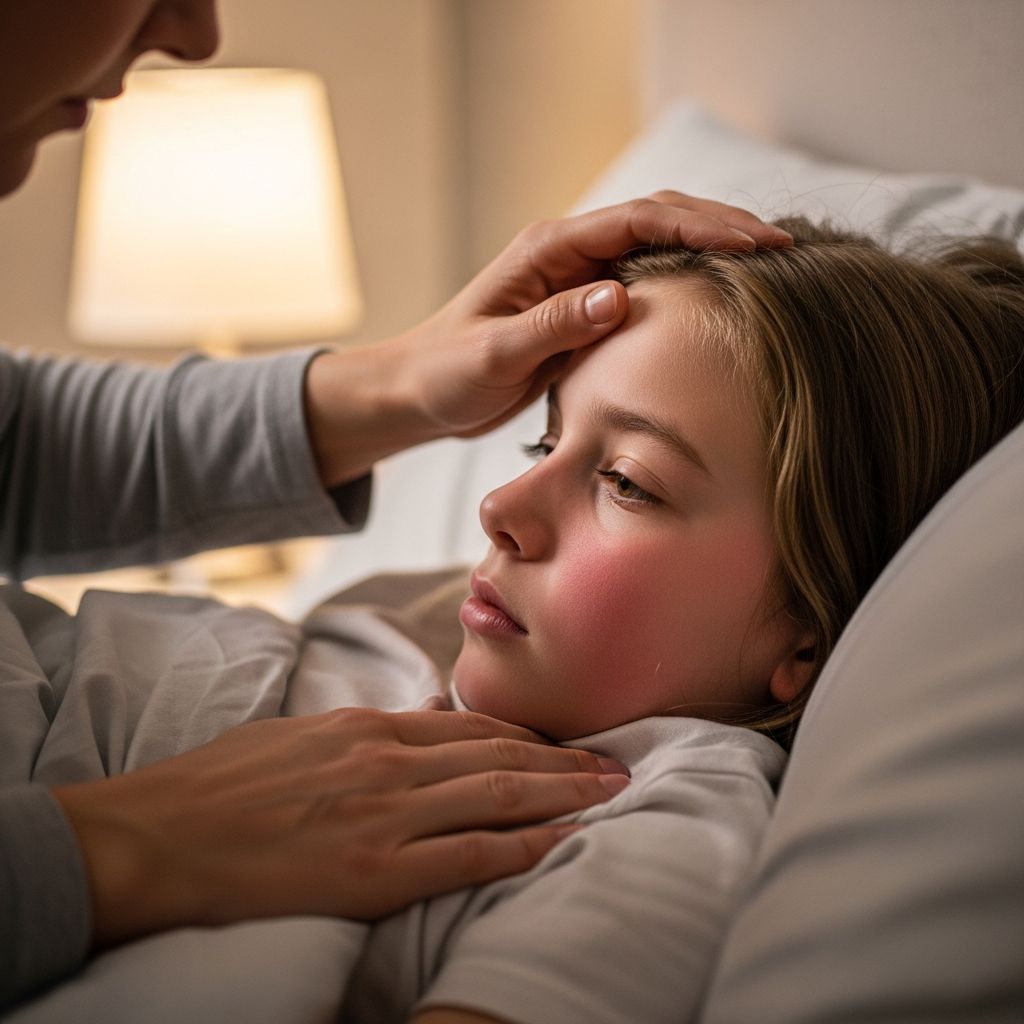
Fever is one of the most common health concerns parents face when caring for children and teenagers. While a fever can be alarming, it is important to understand that fever itself is not a disease but rather a sign that your child’s body is fighting an infection or responding to another health condition. Fever occurs when the body’s temperature regulation system, controlled by the hypothalamus, adjusts the body’s set-point temperature upward in response to illness, typically through exposure to endogenous pyrogens.
Many parents worry excessively about fever, but it is actually a beneficial response that helps the body combat infections by creating an environment where bacteria and viruses cannot thrive as easily. However, knowing when fever requires medical attention and how to manage it safely is crucial for every parent and caregiver.
What Is Considered a Fever?
Defining fever in children varies slightly depending on how the temperature is measured. A rectal temperature, which is the most accurate method for infants and young children, of 100.4°F (38°C) or higher is considered a fever. For children measured orally, a temperature of 99.5°F (37.5°C) or higher may indicate fever, while an armpit temperature reading of 99°F (37.2°C) suggests a fever.
It is essential to use the correct thermometer for your child’s age. Digital thermometers are recommended for accuracy, and parents should follow the manufacturer’s instructions carefully. For infants under three months old, rectal temperature measurement is most reliable, as oral and axillary readings may not provide sufficient accuracy during this critical developmental period.
Common Causes of Fever in Children
Understanding what typically causes fever can help parents contextualize their child’s illness. The most common cause of fever in children is viral infection. Common viral infections include:
- Upper respiratory infections (colds and flu)
- Roseola infantum (sixth disease)
- Fifth disease
- Hand, foot, and mouth disease (coxsackie virus)
- Chickenpox
- Gastroenteritis (stomach flu)
- Measles and mumps
Bacterial infections, while less common than viral infections, can also cause fever and may require antibiotic treatment. These include ear infections, urinary tract infections, strep throat, and pneumonia. Rarely, fever may result from immunizations, teething, or other non-infectious causes.
Age-Specific Considerations
Infants Under 3 Months Old
Fever in very young infants requires immediate medical evaluation. Any infant under three months of age with a rectal temperature of 100.4°F (38°C) or higher should be seen by a healthcare provider right away, even if the infant appears well. This age group cannot clearly communicate their symptoms, and serious bacterial infections may be present without obvious signs. Parents should not give fever-reducing medications before a doctor evaluates the baby, as this could mask important diagnostic signs.
Infants and Toddlers (3 Months to 3 Years)
Children in this age range with fever over 102°F (38.9°C) should be evaluated by a healthcare provider. Clinical assessment is particularly important because young children may not show obvious signs of serious illness. Healthcare providers will conduct a thorough hands-on physical examination, looking for red flag signs that indicate potential serious bacterial infection.
Older Children and Teens
Children older than three years with fever generally require less urgent evaluation unless other concerning symptoms are present. However, fever lasting longer than three days, fever above 104°F (40°C), or fever accompanied by other symptoms warrants medical attention.
Warning Signs and Red Flags
While most fevers in children result from minor viral infections that resolve on their own, certain warning signs require immediate medical evaluation. Parents should seek emergency care if their child exhibits any of the following red flag symptoms along with fever:
- Difficulty breathing or rapid breathing
- Severe headache or stiff neck
- Unusual lethargy, unresponsiveness, or extreme irritability
- Confusion or disorientation
- Petechial or purpuric rash (small red or purple spots that do not blanch when pressed)
- Severe abdominal pain
- Bluish or grayish skin color
- Inability to drink fluids or persistent vomiting
- Convulsions or febrile seizures
- Extreme paleness or mottled skin appearance
These symptoms may indicate serious bacterial infections such as meningitis, sepsis, or other medical emergencies requiring immediate hospitalization and treatment.
Febrile Seizures
Febrile seizures are convulsions that can occur during very high fevers in children between 6 months and 5 years of age. While frightening for parents to witness, febrile seizures are generally not dangerous and do not indicate epilepsy. About one-third of children who experience one febrile seizure will have another, and most children outgrow this tendency by age five.
If your child has a febrile seizure, remain calm and take the following steps: place your child on their side to prevent aspiration, do not place anything in their mouth, and seek medical attention. Most febrile seizures last only a few minutes. After the seizure ends, your healthcare provider can assess your child and recommend fever management strategies to potentially reduce the risk of future seizures.
Managing Fever at Home
Fever-Reducing Medications
Two types of over-the-counter medications can help reduce fever in children: acetaminophen and ibuprofen. Acetaminophen can be used in children as young as two months old (with appropriate dosing), while ibuprofen is suitable for children six months and older. Always follow package directions carefully, using the child’s weight to determine the correct dose rather than age alone.
Important safety considerations include never giving aspirin to children under 12 years old due to the risk of Reye syndrome, avoiding combining acetaminophen and ibuprofen, and never exceeding recommended dosing intervals. Some children with specific health conditions, such as liver or kidney disease, require special consideration before receiving these medications.
Comfort Measures
Beyond medication, several comfort measures can help your child feel better during fever:
- Ensure adequate fluid intake to prevent dehydration, offering water, clear broths, juice, or electrolyte solutions such as Pedialyte
- Dress your child lightly and use light bedding to allow heat dissipation
- Keep the room at a comfortable temperature
- Offer cool, soft foods if your child is hungry
- Use lukewarm baths or cool compresses to provide comfort, but avoid ice baths which can cause discomfort and shivering
- Monitor your child’s hydration by checking for adequate wet diapers (for infants) or regular urination
When to Seek Medical Attention
Immediate Care Required
Contact emergency services or go to the emergency room immediately if your child has fever accompanied by:
- Difficulty breathing
- Loss of consciousness or unresponsiveness
- Severe lethargy or inability to be awakened
- Stiff neck with pain when bending the head forward
- Severe headache
- Purple or dark red rash that does not fade when pressed
- Febrile seizures
- Any signs of severe illness
Urgent Care Evaluation Needed
Contact your pediatrician or seek urgent care if your child:
- Is younger than three months old and has any fever
- Is 3 months to 3 years old with fever above 102°F (38.9°C)
- Has had fever lasting longer than three days
- Has fever with severe pain (ear, throat, abdomen)
- Has a rash along with fever
- Appears unusually ill or you have concerns about their condition
- Has underlying medical conditions or immunocompromise
- Recently received immunizations
Special Populations
Children with Chronic Illnesses
Children with chronic health conditions, immunosuppression, or congenital heart disease may require more aggressive evaluation and treatment for fever. These children should be managed by their primary healthcare provider who understands their specific medical history and needs.
Immunocompromised Children
Children with weakened immune systems due to medications, chemotherapy, or conditions such as HIV require prompt medical evaluation for any fever. These children are at higher risk for serious infections and may need hospitalization, intravenous medications, and specific laboratory testing.
Frequently Asked Questions
Q: Will high fever cause brain damage?
A: No, fever itself does not cause brain damage. The body has protective mechanisms that prevent dangerous temperature increases. Brain damage from infection is possible with some serious illnesses, but fever temperature alone will not cause this complication.
Q: Should I wake my sleeping child to give fever medication?
A: No, sleep is beneficial when a child has fever. If your child is comfortable and sleeping, allow them to rest. Give medication only if your child is awake and uncomfortable.
Q: Can fever kill a child?
A: While extremely high fevers are concerning and require evaluation, the fever itself rarely causes serious harm. However, the underlying infection causing the fever could be serious, which is why medical evaluation is important for high fevers or concerning symptoms.
Q: How often should I check my child’s temperature?
A: During illness, checking temperature 2-4 times daily is usually sufficient unless symptoms worsen. Excessive temperature checking can increase parental anxiety without changing management.
Q: Can fever cause permanent harm to my child?
A: Fever caused by common childhood illnesses is generally not harmful and is actually a helpful immune response. Serious infections causing high fever require treatment, but the fever itself is not damaging.
Q: Is fever contagious?
A: No, fever is not contagious. However, the infection causing the fever often is. Children with fever from contagious illnesses should generally stay home until symptoms improve and fever resolves.
Key Takeaways for Parents
Understanding fever in children and teenagers empowers parents to respond appropriately to this common occurrence. Remember that fever is usually a sign that your child’s immune system is working properly to fight infection. Most fevers in children result from minor viral infections that resolve without specific treatment.
Focus on keeping your child comfortable through adequate hydration, appropriate fever-reducing medication when needed, and light clothing. Use your clinical judgment and your knowledge of your child to determine when medical evaluation is necessary. If you have any doubt about your child’s condition or feel that something is seriously wrong, contact your healthcare provider immediately. Trust your instincts as a parent—you know your child best.
By understanding the difference between a simple fever that can be managed at home and warning signs that require medical attention, you can navigate your child’s febrile illness with confidence and help ensure their speedy recovery.
References
- Fever in Children: Pearls and Pitfalls — Barbi, E., et al. PubMed Central/National Institutes of Health. 2017. https://pmc.ncbi.nlm.nih.gov/articles/PMC5615271/
- Symptoms of Fever in Adults, Children, and Babies — Healthline Medical Network. 2024. https://www.healthline.com/health/fever-symptoms
- AAP Clinical Report: Fever and Antipyretic Use in Children — American Academy of Pediatrics. 2011. https://publications.aap.org/pediatrics/
Similar Articles







Read full bio of Sneha Tete