Feverfew: Uses, Benefits, Dosage, and Safety
Explore feverfew's traditional and modern uses for migraine prevention and inflammation relief.
What Is Feverfew?
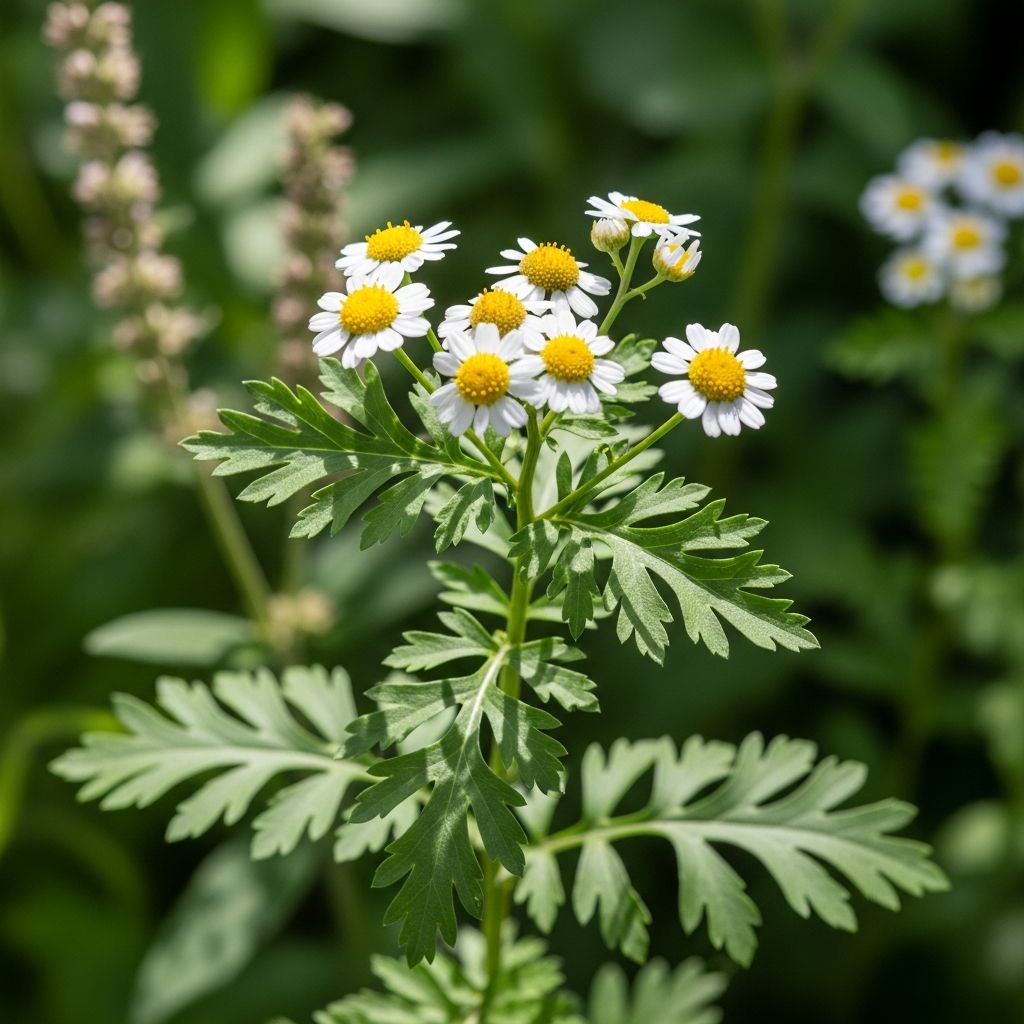
Feverfew, scientifically known as Tanacetum parthenium L., is a medicinal plant that belongs to the daisy family and has been used for centuries in traditional medicine systems across various cultures. The herb is native to southeastern Europe but is now cultivated worldwide, particularly in temperate regions. Feverfew is characterized by its small white and yellow daisy-like flowers and feathery green leaves, which are harvested and dried for medicinal use.
The name “feverfew” is derived from its traditional use as an antipyretic, or fever-reducing agent. The herb gained prominence in ancient Greek medicine, where practitioners used it to treat inflammatory disorders and various ailments. Today, feverfew is predominantly recognized and used as a natural supplement for migraine prevention and inflammation management, though it continues to be explored for multiple health applications.
Traditional and Historical Uses
Throughout history, feverfew has served as a versatile herbal remedy in traditional medicine systems. The plant has been employed to address a wide range of health concerns, reflecting its status as a multi-purpose therapeutic agent. Historically documented uses include:
- Fevers and fever reduction
- Migraine and headache management
- Rheumatoid arthritis and joint inflammation
- Stomach aches and digestive discomfort
- Toothaches and oral pain
- Insect bites and skin irritation
- Menstrual and gynecological disorders
- Asthma and respiratory conditions
- Psoriasis and dermatological conditions
- General inflammatory conditions
The versatility of feverfew in traditional medicine reflects the plant’s complex phytochemical composition and multiple mechanisms of action within the body. Its use as an anti-inflammatory and pain-relieving agent has been particularly consistent across different cultures and time periods.
Active Compounds and How Feverfew Works
The therapeutic properties of feverfew are attributed to several bioactive compounds that work synergistically to produce its medicinal effects. The most significant of these is parthenolide, a sesquiterpene lactone that comprises up to 85% of the total sesquiterpene content in feverfew leaves. Parthenolide is found exclusively in the leaves of the plant, not in the stems, making leaf selection crucial for product quality.
In addition to parthenolide, feverfew contains flavonoids and other sesquiterpene lactones that contribute to its biological activity. Research has demonstrated that these compounds exhibit significant analgesic, anti-inflammatory, and antipyretic properties. The exact mechanisms through which feverfew produces its therapeutic effects involve several biological pathways:
- Prostaglandin Inhibition: Parthenolide inhibits prostaglandin synthetase in vitro, which contributes to its analgesic and anti-inflammatory effects
- Cytokine Reduction: Feverfew extracts inhibit pro-inflammatory cytokines, particularly those involved in inflammatory responses
- Platelet Modulation: The herb inhibits serotonin and 5-HT secretion from platelets, which may explain its benefit for migraine prevention
- Histamine Inhibition: Feverfew inhibits histamine release from mast cells through mechanisms involving calcium entry
- Neutrophil Activity Reduction: The herb reduces neutrophil activity, contributing to its anti-inflammatory effects
Related Stories



Some researchers suggest that feverfew’s high melatonin content may also play a role in its migraine-preventive effects, particularly given the link between decreased melatonin excretion during migraine attacks.
Migraine Prevention and Relief
The most extensively researched application of feverfew is its use for migraine prevention and relief. Clinical studies have demonstrated that feverfew can reduce both the frequency and severity of migraine attacks. One systematic analysis found that feverfew reduced migraine frequency by 1.9 attacks per month (from 4.8 to 2.9 attacks), compared to placebo reduction of 1.3 attacks per month (from 4.8 to 3.5 attacks).
Participants in clinical studies who took feverfew for approximately six months reported experiencing fewer migraines overall. In several placebo-controlled trials, feverfew demonstrated superior effectiveness compared to placebo in reducing both the severity and frequency of migraine attacks. The mechanism of migraine relief appears to involve feverfew’s ability to prevent platelet buildup in capillaries and blood vessels, thereby reducing the cardiovascular tension that contributes to migraine development.
Importantly, feverfew functions more effectively as a preventative treatment rather than as an acute rescue medication for active migraines. The herb should be taken consistently over time to achieve maximum benefit. Researchers have also predicted that feverfew may be useful not only for classical migraine and cluster headaches but also for premenstrual, menstrual, and other hormone-related headaches.
Anti-Inflammatory and Immune Benefits
Beyond migraine prevention, feverfew has demonstrated significant anti-inflammatory properties that make it potentially valuable for managing various inflammatory conditions. The plant’s long history of use for soothing inflammation has been validated by modern research demonstrating the mechanisms underlying these effects.
Parthenolide, the primary active compound, has been shown to reduce inflammatory cytokines in research models, with studies demonstrating its protective effects against hepatitis-related inflammation. The compound’s ability to inhibit pro-inflammatory cytokines and prostaglandin synthesis positions feverfew as a potential therapeutic agent for conditions characterized by excessive inflammation.
Research on feverfew’s effects on inflammatory skin diseases indicates that parthenolide may protect the skin from inflammation and potentially offer therapeutic benefits for conditions such as psoriasis and dermatitis. Additionally, the herb’s antimicrobial properties have been documented, with parthenolide demonstrating inhibitory activity against gram-positive bacteria, yeast, and filamentous fungi, as well as certain pathogenic organisms including Leishmania and Mycobacterium species.
Dosage and Administration
Appropriate dosing of feverfew is essential for achieving therapeutic benefits while minimizing the risk of adverse effects. The optimal dosage varies depending on the condition being treated and the form of the supplement being used:
For Migraine Headaches
Adults should take 100 to 300 mg, up to four times daily, of a feverfew supplement standardized to contain 0.2 to 0.4 percent parthenolides. Alternatively, CO2-extracted feverfew supplements can be taken at 6.25 mg, three times daily, for up to 16 weeks. Canada’s Health Protection Branch recommends a daily dosage of 125 mg of dried feverfew leaf preparation from authenticated Tanacetum parthenium containing at least 0.2% parthenolide for migraine prevention.
For Inflammatory Diseases
For conditions such as arthritis and other inflammatory disorders, use 60 to 120 drops of a 1:1 or 1:5 weight-per-volume feverfew extract or tincture, respectively, taken two times daily.
Special Considerations
Children younger than two years should not be given feverfew. For older children, parental consultation with a healthcare provider is recommended before administration. The dosage form used in clinical trials has varied, including dried powdered feverfew leaf extract (50-100 mg/day), alcoholic extracts (143 mg/day), and CO2 extracts, with study durations ranging from two to eight months.
Safety and Side Effects
While feverfew is generally considered safe for most adults when used appropriately, several potential side effects have been documented in clinical practice and research studies.
Common Side Effects
- Nausea and digestive disturbances
- Skin rash and dermatological reactions
- Mouth inflammation and oral irritation
- Gastrointestinal upset
Withdrawal Effects
One notable concern is the potential for rebound headaches upon abrupt discontinuation of feverfew therapy. Some patients have experienced incapacitating headaches after suddenly stopping feverfew use, suggesting that gradual discontinuation may be advisable.
Drug Interactions
Feverfew may interact with certain medications, particularly those affecting blood clotting and inflammation. Individuals taking anticoagulants, antiplatelet agents, or nonsteroidal anti-inflammatory drugs should consult with healthcare providers before using feverfew supplements.
Scientific Evidence and Research Status
The scientific evidence for feverfew’s effectiveness, while generally supportive, presents mixed results across different studies. The European Federation of Neurological Societies (EFNS) has stated that feverfew is possibly beneficial for migraine prevention. However, results from clinical trials have varied depending on study design, participant characteristics, dosage forms used, and study duration.
Factors contributing to variability in research outcomes include:
- Differences in feverfew product standardization and parthenolide content
- Variation in dosage forms (dried leaf, alcoholic extract, CO2 extract)
- Inconsistent study durations ranging from 2 to 24 weeks
- Differences in participant populations and migraine types
- Methodological variations in trial design and outcome measurement
Despite these variables, the preponderance of evidence suggests that feverfew can be a beneficial addition to a migraine management toolkit as a natural alternative to pharmaceutical interventions, particularly for migraine prevention rather than acute treatment.
Product Quality and Selection
When selecting feverfew supplements, consumers should look for products that meet quality standards and contain verified levels of active compounds. The most important factors to consider include:
- Standardization to contain at least 0.2-0.4% parthenolides
- Use of authenticated Tanacetum parthenium species
- Third-party testing and verification
- Appropriate storage to maintain potency
- Reputable manufacturers with quality assurance protocols
Products such as those approved by regulatory agencies (like Canada’s Health Protection Branch) provide additional assurance of quality and safety standards.
Frequently Asked Questions
Q: How long does it take for feverfew to work for migraines?
A: Feverfew typically requires consistent use over several weeks to months to achieve maximum benefit for migraine prevention. Clinical studies suggest improvements may be noticeable after 6-8 weeks of regular use, though individual responses vary.
Q: Can feverfew be used to stop a migraine once it has started?
A: Feverfew is most effective as a preventative medication rather than an acute treatment for active migraines. It works best when taken regularly to reduce the frequency and severity of migraine attacks over time.
Q: Is feverfew safe for pregnant women?
A: Feverfew has historically been used in some cases to address menstrual disorders, but pregnant women should consult healthcare providers before use, as safety in pregnancy has not been definitively established.
Q: Can feverfew interact with blood thinners?
A: Yes, feverfew may interact with anticoagulant and antiplatelet medications due to its effects on platelet function. Individuals taking blood thinners should consult with their healthcare provider before starting feverfew.
Q: What is the difference between feverfew extracts and dried leaf supplements?
A: Different extraction methods produce varying concentrations of active compounds. Dried leaf preparations, alcoholic extracts, and CO2 extracts may have different potencies and require adjusted dosing based on standardization levels.
References
- Feverfew (Tanacetum parthenium L.): A systematic review — PubMed Central, National Center for Biotechnology Information. 2012-12-15. https://www.ncbi.nlm.nih.gov/pmc/articles/PMC3210009/
- What Is Feverfew Good For? 8 Health Benefits, Uses, and Side Effects — MedicineNet. 2024. https://www.medicinenet.com/what_is_feverfew_good_for/article.htm
- Feverfew for preventing migraine — Cochrane Database of Systematic Reviews, PubMed Central. 2015-04-12. https://www.ncbi.nlm.nih.gov/pmc/articles/PMC7133498/
- Headaches and Complementary Health Approaches — National Center for Complementary and Integrative Health (NCCIH), National Institutes of Health. 2024. https://www.nccih.nih.gov/health/providers/digest/headaches-and-complementary-health-approaches-science
- Headaches: What You Need To Know — National Center for Complementary and Integrative Health (NCCIH), National Institutes of Health. 2024. https://www.nccih.nih.gov/health/headaches-what-you-need-to-know
- Things to Know About Complementary Health Approaches for Headache and Migraine — National Center for Complementary and Integrative Health (NCCIH), National Institutes of Health. 2024. https://www.nccih.nih.gov/health/tips/things-to-know-about-complementary-health-approaches-for-headache-and-migraine
- Evidence Based Integrative Treatments for Headache — Headache: The Journal of Head and Face Pain, Wiley Online Library. 2021-08-01. https://doi.org/10.1111/head.13555
Similar Articles








Read full bio of medha deb