Fiberoptic Evaluation Of Swallowing: Patient Guide
Understanding FEES: A comprehensive guide to fiberoptic swallowing evaluation for dysphagia diagnosis and treatment.
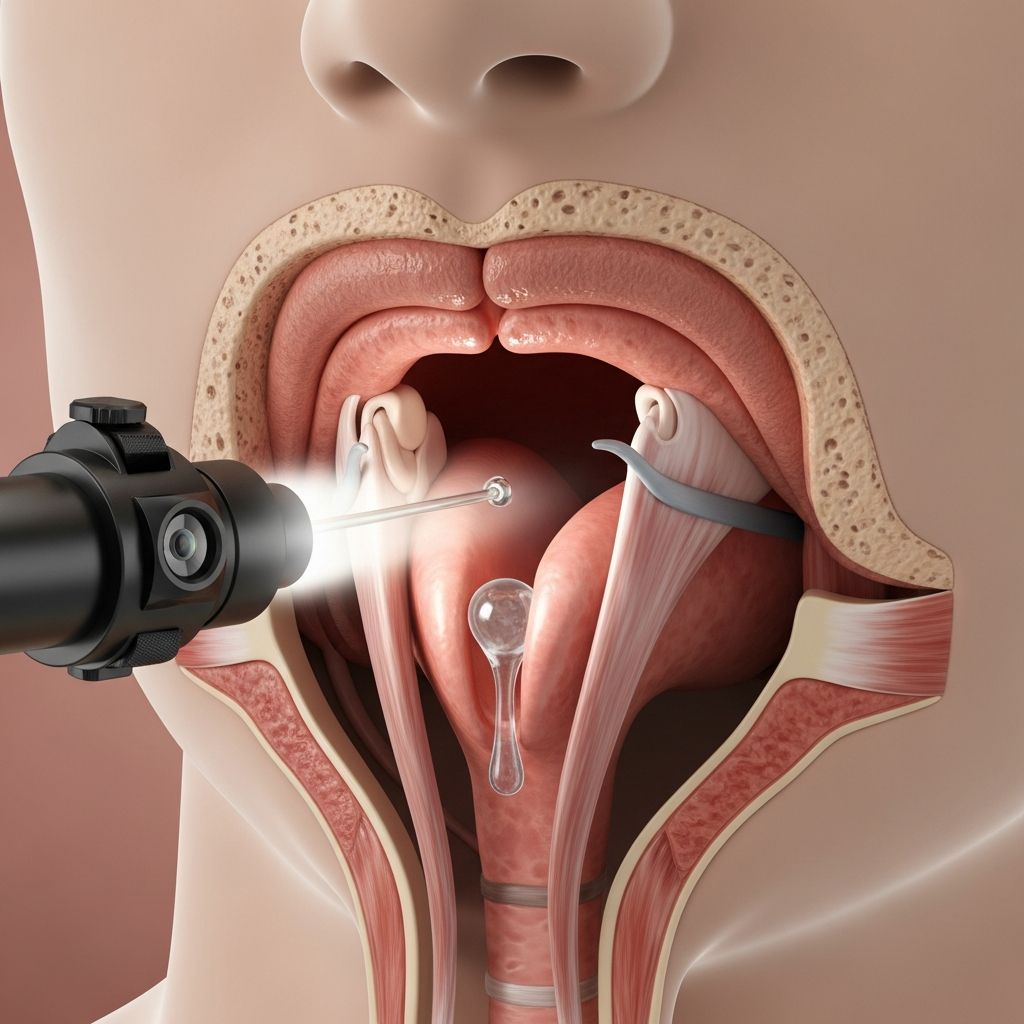
Fiberoptic Evaluation of Swallowing: A Comprehensive Guide
Swallowing disorders, medically known as dysphagia, affect millions of people worldwide and can significantly impact quality of life and nutritional status. Healthcare providers require precise diagnostic tools to accurately assess swallowing function and develop appropriate treatment plans. The fiberoptic endoscopic evaluation of swallowing (FEES) has emerged as a critical diagnostic procedure in modern medicine, offering detailed visualization of the swallowing mechanism in real time. This comprehensive guide explores the procedure, its applications, benefits, and what patients can expect during examination.
What is Fiberoptic Evaluation of Swallowing?
Fiberoptic endoscopic evaluation of swallowing (FEES) is a diagnostic procedure that enables direct visualization of the throat structures during the swallowing process. The procedure involves passing a small, flexible endoscope through the nasal passage to examine the pharynx (throat), larynx (voice box), and surrounding structures. Unlike other swallowing assessments that rely on indirect observation, FEES provides real-time visualization recorded in continuous motion-picture format, allowing clinicians to assess both the anatomy and physiology of swallowing in detail. This minimally invasive approach has become a standard tool in clinical practice for evaluating patients with suspected swallowing difficulties.
How the FEES Procedure Works
Equipment and Setup
The FEES examination utilizes specialized equipment designed for patient safety and optimal visualization. A flexible fiberoptic endoscope, approximately the diameter of a piece of spaghetti, is equipped with a light source and a camera for video recording. The endoscope transmits high-intensity light through a fiberoptic bundle to illuminate the structures being examined while capturing detailed images. The equipment is connected to video recording technology, enabling the clinician to document the examination for analysis, comparison with future studies, and discussion with other healthcare providers.
Procedure Steps
During a FEES examination, the patient is seated in an upright position while remaining awake and alert. The speech-language pathologist or otolaryngologist performing the procedure will typically apply a topical anesthetic to the nasal passage to minimize discomfort. The flexible endoscope is then gently inserted through the nose and passed transnasally into the hypoharynx, often to the level of the valleculae or laryngeal vestibule. The endoscope provides a superior view of the nasopharynx, pharynx, base of tongue, larynx, and the opening of the esophagus.
The examination occurs in two distinct phases. Initially, the clinician performs a structural and functional assessment without introducing any food or liquids. This phase involves evaluating the integrity of key structures including the velum, base of tongue, pharynx, and larynx. The clinician assesses tissue symmetry, appearance, quality and management of secretions, and any observed food residue at baseline. Additionally, the clinician checks velopharyngeal closure, pharyngeal wall movement, laryngeal abduction and adduction, and observes the patient’s cough reflex.
Following the initial assessment, the patient is presented with foods and liquids of varying consistencies, and the swallowing mechanism is observed in real time for any dysfunction. During this dynamic phase, the speech-language pathologist may ask the patient to try various compensatory positions or maneuvers, such as tucking the chin, to determine if specific techniques improve swallowing efficacy.
What FEES Can Assess and Detect
The FEES procedure enables clinicians to evaluate several specific indicators of abnormal swallowing function. These assessments include:
| Assessment Area | Purpose |
|---|---|
| Premature Spillage | Detection of food or liquid entering the hypopharynx and laryngeal vestibule before the swallow is initiated |
| Vocal Fold Function | Evaluation of the vocal folds’ ability to adduct during coughing, breath holding, and swallowing |
| Post-Swallow Residue | Identification of residual food or liquid remaining in the hypopharynx and laryngopharynx after swallowing |
| Laryngeal Penetration and Aspiration | Detection of bolus material entering the supraglottic larynx or passing below the vocal folds into the subglottic region |
| Sensory Function | Assessment of laryngeal sensitivity through direct stimulation of pharyngeal-laryngeal areas |
Related Stories



FEES is particularly sensitive to detecting trace aspiration and aspiration of secretions, which other imaging methods may miss. The procedure can identify dysphagia up to the level of the vocal folds and provides valuable information about the efficacy of swallowing in its various stages and the protection of the lower airways.
Advantages of FEES
FEES has become a first-choice method for studying swallowing disorders due to its numerous clinical advantages:
- Minimally Invasive – The procedure is only slightly invasive, making it well-tolerated by most patients
- Ease of Performance – FEES is straightforward to perform with appropriate training and clinical experience
- Bedside Capability – The portable nature of the equipment allows for examination at the patient’s bedside, in outpatient clinic spaces, or in hospital settings
- Repeatability – The procedure can be repeated as needed to monitor progress or changes in swallowing function
- Cost-Effectiveness – FEES is economical compared to other instrumental swallowing evaluations
- Real-Time Assessment – Clinicians can observe swallowing physiology dynamically and assess the effects of therapeutic interventions immediately
- Therapeutic Guidance – The procedure enables clinicians to identify and test compensatory positions and swallowing maneuvers to improve swallowing efficacy
- Treatment Planning – Results help establish appropriate feeding methods (oral feeding, oral feeding with dietary restrictions, or tube feeding)
- Rehabilitation Programming – FEES findings guide the development of rehabilitation programs and dietary recommendations
Limitations and Disadvantages
While FEES offers substantial clinical value, healthcare providers recognize certain limitations of the procedure:
- Limited Scope – FEES investigates primarily the pharyngeal stage of swallowing and does not visualize the oral or esophageal stages
- White-Out Phenomenon – A brief moment of obscured visualization occurs during the most active part of the swallow, creating a gap in observation
- No Quantification – The procedure cannot quantify the amount of bolus material that may be aspirated into the trachea
- Radiation-Free but Limited Scope – Unlike videofluoroscopy, FEES cannot visualize the entire swallowing process from mouth to esophagus
Potential Risks and Side Effects
Although FEES is generally well-tolerated, patients should be aware of potential risks and side effects. The most common consequences include discomfort, gagging, and vomiting sensations during the procedure. Other potential complications, though rare, include vasovagal syncope (fainting), epistaxis (nosebleeds), mucosal perforation, adverse reactions to topical anesthetics, and laryngospasm (involuntary contraction of the vocal folds). Patients with specific contraindications, such as abundant secretion in the laryngeal vestibule or a non-protective cough reflex, may not be suitable candidates for the procedure.
Clinical Applications and Benefits
FEES serves multiple critical functions in swallowing disorder management. The procedure is invaluable for identifying organic and functional alterations in structures involved in swallowing, determining the degree of efficacy of swallowing in its various stages, and ensuring adequate protection of the lower airways. Healthcare providers utilize FEES to detect and quantify any penetration of bolus material into the tracheal-bronchial passage. Additionally, FEES enables clinicians to establish the best means of feeding for individual patients, indicate and monitor appropriate rehabilitation programs, advise appropriate diets, and plan additional diagnostic investigations if needed.
FEES vs. Other Swallowing Evaluation Methods
While videofluoroscopy is currently considered the gold standard for studying all stages of swallowing, FEES offers distinct advantages for specific clinical scenarios. Videofluoroscopy permits real-time investigation of all swallowing stages but involves radiation exposure and requires specialized equipment. FEES provides superior visualization of pharyngeal structures and sensory function without radiation and offers greater portability. Other diagnostic tools, including scintigraphy, ultrasound, and pH-manometry, assess specific aspects of swallowing physiology but have their own limitations and applications. Many comprehensive swallowing evaluations incorporate multiple diagnostic methods to obtain complete clinical information.
Professional Qualifications and Licensing
FEES can be performed by trained speech-language pathologists or otolaryngologists (ear, nose, and throat physicians). According to New York State regulations and professional standards, while speech-language pathologists are qualified and licensed to assess swallow function, physicians are the only professionals licensed to render medical diagnoses related to identification of laryngeal and pharyngeal pathology and anatomical abnormalities. Proper training and clinical experience are essential for safe and effective FEES performance and interpretation.
What to Expect During Your FEES Exam
Understanding what occurs during a FEES examination can help patients feel more prepared and comfortable. Upon arrival, you will be seated in an upright position in a comfortable chair. The clinician will explain the procedure and answer any questions you may have. A topical anesthetic spray may be applied to your nasal passage to minimize discomfort. You will remain awake and alert throughout the procedure, which typically lasts 15-30 minutes. After the initial assessment of your throat structures at rest, you will be given small amounts of foods and liquids of different consistencies to swallow while the clinician observes and records the swallowing process. You may be asked to change positions or perform specific swallowing techniques to assess their effectiveness. Most patients tolerate the procedure well, though mild discomfort or gagging sensations are normal.
Frequently Asked Questions
Q: Is FEES painful?
A: FEES is generally not painful, though some patients experience mild discomfort or gagging sensations. Topical anesthetics are applied to minimize discomfort, and the endoscope is very thin and flexible.
Q: How long does the FEES procedure take?
A: The examination typically takes 15-30 minutes, depending on the complexity of the assessment and the patient’s tolerance of the procedure.
Q: Can FEES be performed at the bedside?
A: Yes, one of the significant advantages of FEES is its portability. The procedure can be performed at a patient’s bedside, in outpatient clinics, or in hospital settings.
Q: What is the difference between FEES and a barium swallow study?
A: FEES provides direct visualization of throat structures without radiation, while a barium swallow study uses X-ray imaging to visualize the entire swallowing process from mouth to esophagus. FEES is superior for detecting trace aspiration and assessing sensory function.
Q: Will I be able to eat normally after FEES?
A: Most patients can resume normal eating and drinking immediately after FEES, though the clinician may recommend specific dietary modifications based on the examination findings.
Q: Who performs FEES examinations?
A: FEES can be performed by trained speech-language pathologists or otolaryngologists who have received appropriate clinical training and education in the procedure.
Q: Is FEES safe for elderly patients?
A: FEES is generally safe for elderly patients, though individual medical conditions should be evaluated. The procedure’s non-invasive nature and lack of radiation make it suitable for most patient populations.
Q: Can FEES results guide treatment decisions?
A: Yes, FEES findings directly inform treatment planning, including the appropriate feeding method, dietary recommendations, swallowing rehabilitation strategies, and the need for additional diagnostic testing.
References
- Fiberoptic Endoscopic Examination of Swallowing (FEES) Procedure — New York State Education Department, Office of the Professions. https://www.op.nysed.gov/professions/speech-language-pathology/professional-practice/fiberoptic-endoscopic-examination-swallowing-fees-procedure
- Fiberoptic Endoscopic Evaluation of the Swallow — New Mexico Health and Wellness. https://www.nm.org/conditions-and-care-areas/treatments/fiberoptic-endoscopic-swallow
- Fiberoptic endoscopic evaluation of swallowing (FEES): proposal for standardization of terms, definitions, and diagnostic procedures — National Center for Biotechnology Information (NCBI/PubMed Central). https://pmc.ncbi.nlm.nih.gov/articles/PMC2644994/
- Fiberoptic Endoscopic Evaluation of Swallow (FEES) Exam NYC — Mount Sinai Health System, Grabscheid Voice and Swallowing Center. https://www.mountsinai.org/locations/grabscheid-voice-swallowing-center/diagnostics-treatment/fees-exam
- Fiberoptic Endoscopic Evaluation of Swallowing — Hartford HealthCare Rehabilitation Network. https://hartfordhealthcarerehabnetwork.org/services/speech-therapy/departments-services/fiberoptic-endoscopic-evaluation-of-swallowing
- Flexible Endoscopic Evaluation of Swallowing (FEES) — American Speech-Language-Hearing Association (ASHA) Practice Portal. https://www.asha.org/practice-portal/resources/flexible-endoscopic-evaluation-of-swallowing/
- Fiberoptic Endoscopic Evaluation of Swallowing — Cedars-Sinai Health System. https://www.cedars-sinai.org/health-library/tests-and-procedures/f/fiberoptic-evaluation-of-swallowing.html
Similar Articles








Read full bio of Sneha Tete