Fibroepithelioma Of Pinkus: What You Need To Know
Rare basal cell carcinoma variant: clinical features, diagnosis, treatment, and prognosis of fibroepithelioma of Pinkus.
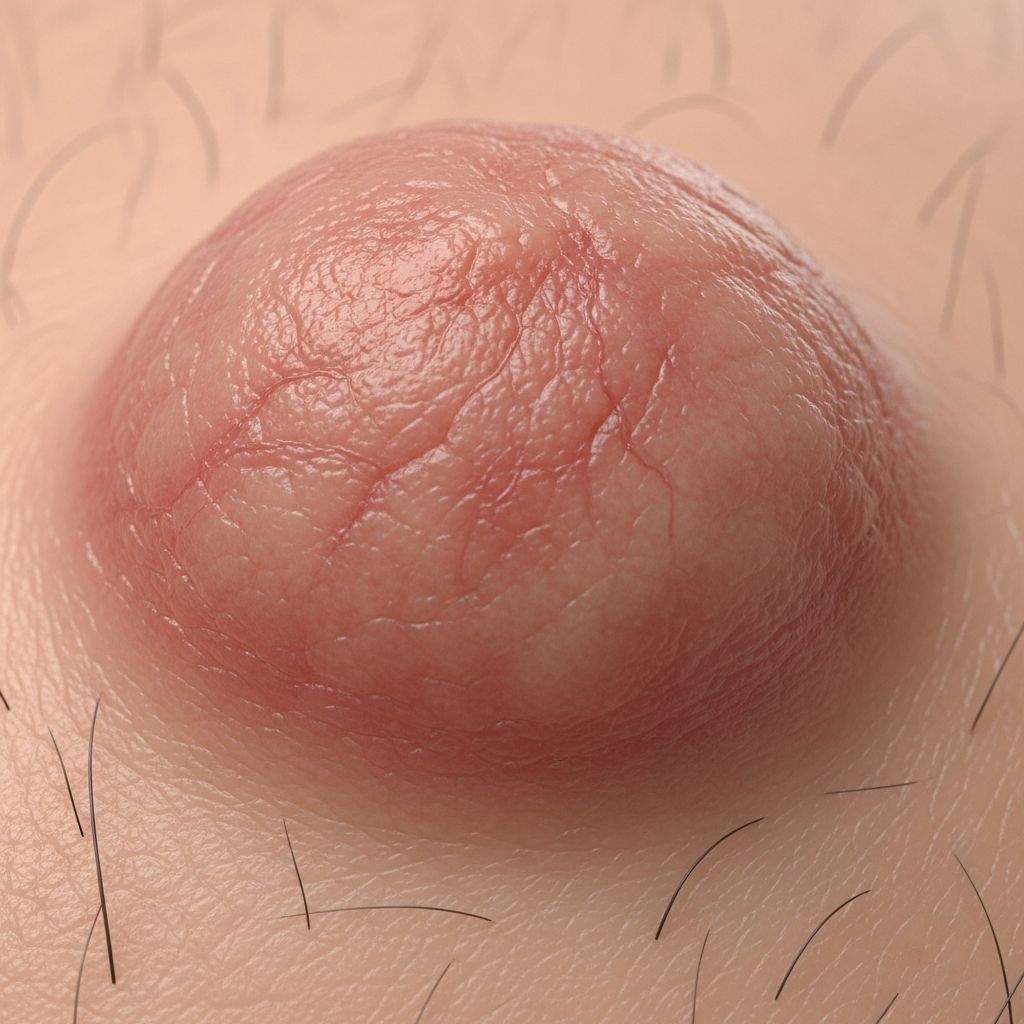
Fibroepithelioma of Pinkus (FEP), also known as premalignant fibroepithelial tumour of Pinkus, is a rare variant of basal cell carcinoma (BCC). It was first described by Hermann Pinkus in 1953 and primarily affects the trunk, particularly the lower back. FEP typically presents as a slow-growing, flesh-coloured or pinkish lesion that clinically mimics benign conditions, making histopathological confirmation essential. Unlike typical BCCs, FEP shows a predilection for non-sun-exposed areas and exhibits indolent behaviour with no reported metastatic potential.
What is fibroepithelioma of Pinkus?
Fibroepithelioma of Pinkus represents less than 1% of all BCC cases and is characterised by its unique histopathological architecture. It originates from basaloid cells in the epidermis extending into the dermis within a fibrovascular stroma. While historically classified as a BCC subtype, some researchers propose it may be more akin to trichoblastoma due to its non-aggressive nature and differential response to therapies. FEP most commonly arises on the trunk (77-80% of cases), followed by extremities (12%), with rare occurrences on the head and neck (10%) or sun-damaged skin (5%). The mean age at diagnosis is 64 years, with a slight female predominance (63% in some series).
Clinically, FEP manifests as solitary (most cases) or occasionally multiple, well-circumscribed, flat or polypoid plaques or nodules measuring 0.5-2 cm. Lesions are typically asymptomatic, flesh-coloured, pink, or grey-brown, and grow slowly over months to years. Multiple lesions may occur in 10-20% of patients and can signal underlying systemic disease.
Who gets fibroepithelioma of Pinkus?
FEP affects adults predominantly, with peak incidence in the sixth to eighth decades. It shows no strong racial predilection but has been reported more frequently in females in Italian cohorts (63%). Risk factors mirror those of BCC, including fair skin, though FEP uniquely favours covered body sites away from chronic UV exposure. Genetic associations are unclear, but rare syndromic cases exist. In a series of 49 patients, 18% had gastrointestinal tumours (e.g., colonic adenocarcinoma, neuroendocrine), 8% breast carcinoma, and 14% other cancers, suggesting possible paraneoplastic links warranting screening in multiple FEP cases.
- Age: Mean 64 years (range 30-90)
- Sex: Slight female predominance
- Sites: Trunk (esp. lumbosacral, 77%), extremities (12%), head/neck (10%)
- Associations: GI cancers (18%), breast ca (8%), other malignancies (14%)
Clinical features of fibroepithelioma of Pinkus
FEP appears as a pink to flesh-coloured, well-demarcated plaque or polypoid nodule, often with a smooth or slightly verrucous surface. Size varies from 5 mm to several centimetres, with slow expansion. Pigmentation is uncommon but may present as grey-brown hues. Lesions lack ulceration, telangiectasia, or rolled borders typical of nodular BCC, contributing to frequent misdiagnosis as benign entities.
In advanced cases, lesions may become pedunculated or exophytic. Multiple FEP lesions raise suspicion for syndromic associations or internal malignancy.
Dermoscopy of fibroepithelioma of Pinkus
Dermoscopy significantly aids diagnosis, revealing characteristic patterns not evident clinically. Key features include:
- White intersecting lines/treelike vessels: Parallel or arborising white lines corresponding to fibrous septa (most specific)
- Polysided white circles: Represent dilated follicular infundibula
- White-grey clods/globules: Keratin-filled cysts or horn cysts
- Linear branching vessels: Pink-red background with arborising pattern
- Absence of pigmentation/melanophages: Distinguishes from melanocytic lesions
These patterns yield diagnostic accuracy up to 90% when combined with histopathology. Confocal microscopy further shows clefting, dark basaloid silhouettes, and thickened collagen stroma.
Diagnosis of fibroepithelioma of Pinkus
Clinical suspicion is low due to benign mimicry; definitive diagnosis requires biopsy.
Related Stories



- Physical exam: Assess size, site, colour, mobility
- Dermoscopy: White lines, circles, vessels (90% sensitive)
- Biopsy: Shave, punch, or excisional; gold standard
- Histopathology: Branching basaloid cords in fibrous stroma (see below)
- Imaging: MRI/CT rarely for deep invasion assessment
Histopathology of fibroepithelioma of Pinkus
Microscopy reveals long, thin, interconnected strands of basaloid cells (resembling rete ridges) extending from the epidermis into a loose, vascularised fibrous stroma. Strands often anastomose, forming a ‘net-like’ pattern. Peripheral palisading with retraction artefact is subtle or absent, unlike classic BCC. No necrosis, mitoses, or cytological atypia typically seen.
Immunohistochemistry shows BerEP4+, CK5/6+, contrasting trichoblastoma. Electron microscopy confirms basaloid differentiation.
Differential diagnosis of fibroepithelioma of Pinkus
FEP mimics numerous benign lesions:
| Condition | Key Distinguishing Features |
|---|---|
| Intradermal naevus | Globular pattern, milia-like cysts, comma vessels on dermoscopy |
| Skin tag (acrochordon) | Pedunculated, softer, no white lines |
| Seborrhoeic keratosis | Stuck-on appearance, comedo-like openings |
| Dermofibroma | Firmer, central dimple, lattice-like dermoscopy |
| Trichoblastoma | |
| Classic BCC | Ulceration, rolled edges, nodular growth |
Dermoscopy and biopsy resolve most differentials.
Treatment of fibroepithelioma of Pinkus
Surgical excision remains definitive, mirroring BCC protocols.
- Standard: Excision with 4 mm margins (complete removal)
- High-risk sites/large tumours: Mohs micrographic surgery (tissue-sparing, >99% clearance)
- Alternative: Electrodessication/curettage (small, low-risk)
- Topical (imiquimod): Ineffective, unlike superficial BCC
- Radiation/chemotherapy: No role; reserved for inoperable cases (rare)
Post-excision, monitor for recurrence (low risk) and screen for internal malignancy if multiple lesions.
Complications and prognosis of fibroepithelioma of Pinkus
FEP follows an indolent course with excellent prognosis. Local recurrence is rare post-excision (<5%), and metastasis has never been documented. No deaths attributed to FEP. Aggressive behaviour or resistance to non-surgical therapy distinguishes it from BCC. Rare associations with breast carcinoma, mammary Paget disease, and GI tumours necessitate holistic evaluation.
Prevention of fibroepithelioma of Pinkus
No specific prevention exists due to unclear aetiology. General BCC measures apply: UV protection, though less relevant for acral/trunk sites. Regular skin exams for high-risk patients.
Other names for fibroepithelioma of Pinkus
- Premalignant fibroepithelial tumour
- Fibroepithelial basal cell tumour
- Premalignant fibroepithelial tumor of Pinkus
FAQ
Is fibroepithelioma of Pinkus cancer?
Yes, FEP is a variant of basal cell carcinoma, but it behaves indolently without metastatic potential.
How is fibroepithelioma of Pinkus diagnosed?
Via dermoscopy (white lines/circles) and confirmatory biopsy showing basaloid strands in stroma.
What does fibroepithelioma of Pinkus look like on dermoscopy?
White intersecting lines, polysided white circles, linear vessels on pink background.
Is surgery the only treatment for FEP?
Primary treatment; Mohs preferred for conservation. Topicals ineffective.
Does FEP spread or metastasise?
No; excellent prognosis, no deaths reported.
References
- Fibroepithelioma of Pinkus (FEP) – Symptoms, Treatment & Support — Without a Ribbon. 2023. https://withoutaribbon.org/fibroepithelioma-of-pinkus-fep-symptoms-treatment-support/
- A New Look at Fibroepithelioma of Pinkus: Features on Confocal Microscopy — Journal of Clinical and Aesthetic Dermatology. 2016-07-01. https://jcadonline.com/a-new-look-at-fibroepithelioma-of-pinkus-features-on-confocal-microscopy/
- Fibroepithelioma of Pinkus Revisited — National Library of Medicine, PMC. 2016-07-20. https://pmc.ncbi.nlm.nih.gov/articles/PMC4972729/
- Premalignant Fibroepithelial Tumor of Pinkus — MD Searchlight. 2024. https://mdsearchlight.com/skin-problems-and-treatments/premalignant-fibroepithelial-tumor-of-pinkus/
- Fibroepithelioma of Pinkus — DermNet NZ. 2023-08-15. https://dermnetnz.org/topics/fibroepithelioma-pinkus
- Fibroepithelioma of Pinkus: Solitary tumor or sign of a complex clinical syndrome? — Spandidos Publications. 2016-07-01. https://www.spandidos-publications.com/10.3892/mco.2016.794
- What is Fibroepithelioma of Pinkus? — GentleCure. 2023. https://www.gentlecure.com/what-is-fibroepithelioma-of-pinkus/
Similar Articles








Read full bio of Sneha Tete