Fibrous Papule of the Nose: Causes, Treatment & Removal
Understanding fibrous papules: harmless bumps, causes, and dermatologist removal options.
What Is a Fibrous Papule of the Nose?
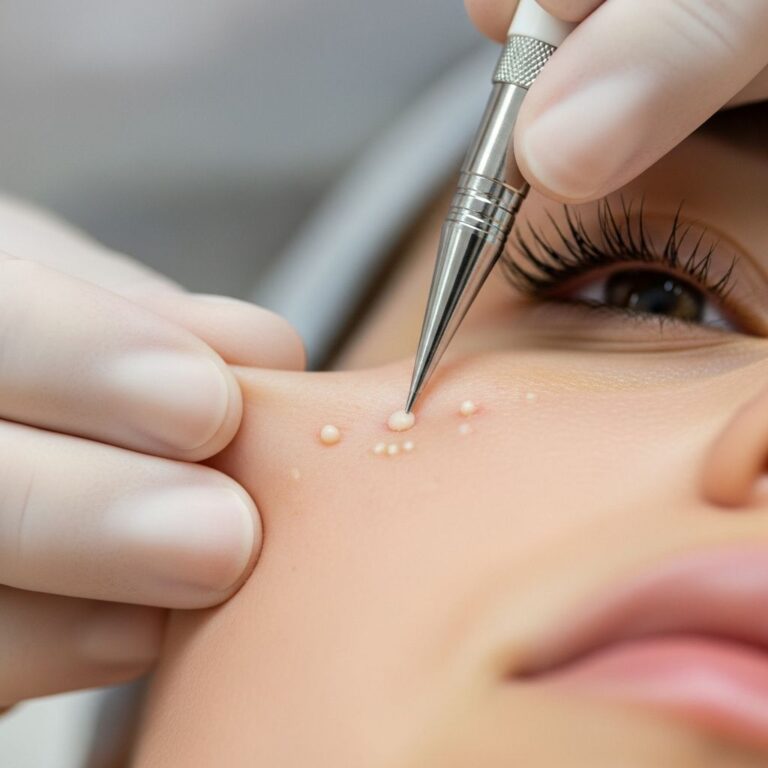
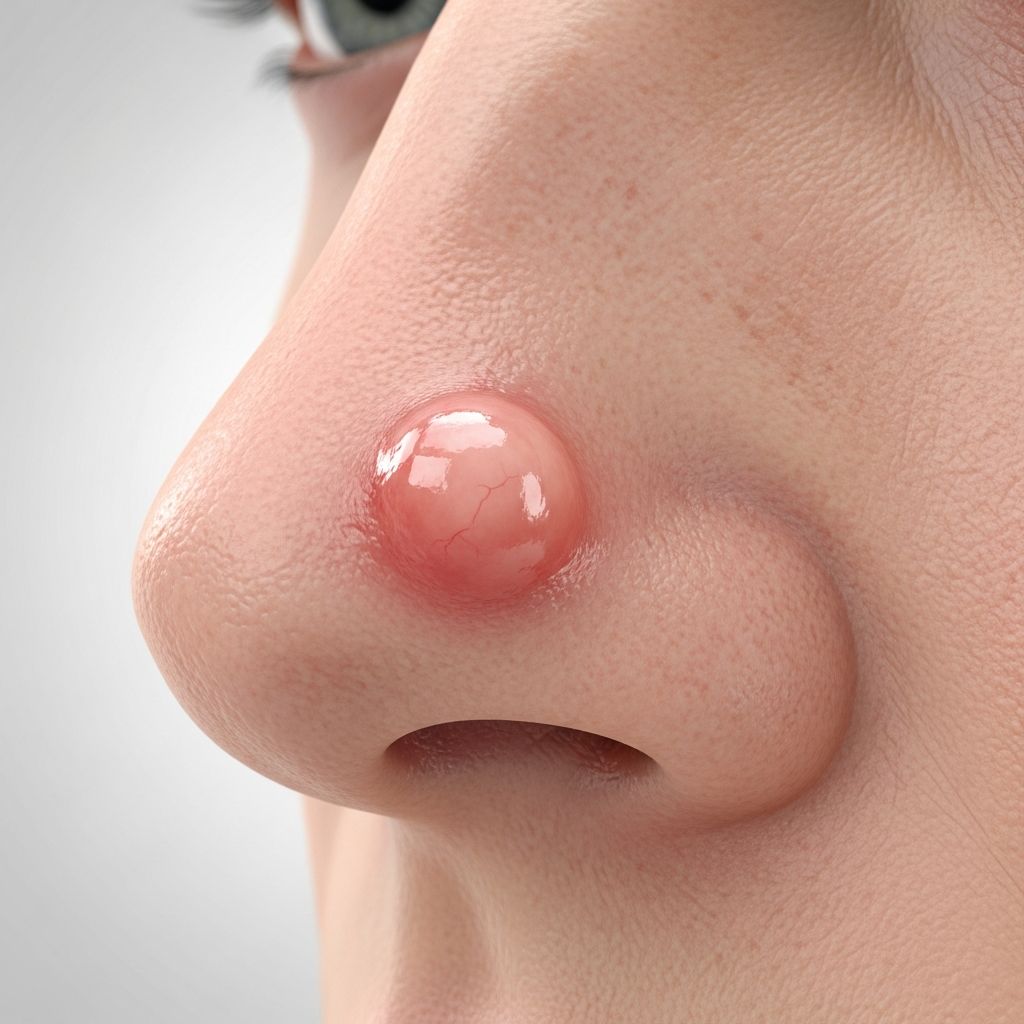
A fibrous papule of the nose is a small, firm bump that develops on or around the nasal area. This common skin lesion is completely harmless and noncancerous, making it one of the most benign conditions affecting the facial skin. The papule typically measures up to 5 millimeters in diameter and appears as a dome-shaped, solitary bump on the surface of the skin.
Healthcare providers may sometimes use the term “tumor” to describe a fibrous papule, which can understandably cause concern. However, it’s important to understand that this terminology is purely descriptive and does not indicate any malignant potential. A fibrous papule is absolutely not cancerous and will never develop into cancer. It isn’t a sign of anything serious or a warning signal for other health conditions.
The papule may also be referred to by alternative names in medical literature, including solitary angiofibroma or sporadic angiofibroma. Regardless of the terminology used, all these names refer to the same benign skin condition that affects many people throughout their lives.
Composition and Structure
Understanding what comprises a fibrous papule can help demystify this common skin condition. A fibrous papule contains a specific combination of biological components that give it its characteristic appearance and texture. These components include blood vessels, connective tissue cells known as fibroblasts, and collagen—the primary structural protein found throughout the skin.
The structural composition of a fibrous papule is distinct from other common skin lesions. Unlike acne or pimples, which form from bacterial infections and excess sebum production, fibrous papules develop from an overgrowth of dilated blood vessels, fibroblast cells, and collagen deposits. This fundamental difference in composition is why standard acne treatments are ineffective against fibrous papules.
Characteristics and Appearance
Fibrous papules present with several distinctive features that help dermatologists identify them accurately:
- Small, firm bump that protrudes from the skin surface
- Dome-shaped appearance under magnification
- Measures approximately 1 to 6 millimeters in diameter
- Can be skin-colored, pigmented, white, or red in appearance
- Non-tender and painless under normal circumstances
- Remains stable over time without significant changes
- Typically solitary, appearing as a single lesion
The visual appearance of a fibrous papule can vary from person to person, depending on individual skin tone, pigmentation, and the specific characteristics of the lesion. Some individuals may notice their papule blends with their natural skin tone, while others may observe it has a slightly reddish or whitish appearance.
Symptoms and Presentation
One of the defining characteristics of fibrous papules is that they are asymptomatic, meaning they typically cause no physical symptoms whatsoever. Most people with a fibrous papule experience no pain, itching, tenderness, or discomfort associated with the lesion. The bump simply exists on the skin without causing any physiological distress.
Related Stories



However, mild symptoms can develop if you accidentally scratch or irritate the area where the papule is located. In such cases, you might experience mild pain, swelling, or minor bleeding. These symptoms would be the result of trauma to the lesion rather than symptoms inherent to the condition itself.
For some individuals, the primary concern with a fibrous papule isn’t physical symptoms but rather the psychological and emotional impact. Since the nose is one of the most prominent features of the face, a visible bump in this location may cause self-consciousness, affecting how you feel about your appearance, your self-esteem, and your confidence in social situations.
Causes and Risk Factors
The exact cause of fibrous papules remains unknown, which is why dermatologists continue to study this condition. What is understood is that an overgrowth of expanded (dilated) blood vessels, fibroblast cells, and collagen causes the papule to form. The precise reason why this overgrowth occurs in some individuals and not others is not yet fully understood.
Fibrous papules can affect anyone at any age, though they most commonly appear during adolescence, particularly during puberty. This timing suggests that hormonal changes during adolescent development may play a role in their formation, though this connection requires further research.
Several genetic conditions can increase your risk of developing multiple fibrous papules rather than a single lesion. If you have one of the following genetic conditions, you may be at higher risk:
- Tuberous sclerosis—a genetic disorder affecting multiple organ systems
- Birt-Hogg-Dubé syndrome—a hereditary condition affecting the skin, lungs, and kidneys
- Multiple endocrine neoplasia type 1 (MEN1)—a genetic syndrome affecting endocrine glands
In these genetic conditions, fibrous papules are typically numerous and widespread, often extending beyond just the nasal area to other parts of the face and body. If you have a family history of these genetic conditions or if you’ve developed multiple fibrous papules, discussing this with a healthcare provider is important.
Diagnosis
A fibrous papule is typically diagnosed through clinical examination by a dermatologist. However, because fibrous papules can resemble other skin lesions, a skin biopsy may be performed to confirm the diagnosis with certainty.
During a skin biopsy, a small sample of tissue is removed from the lesion and examined under a microscope. Fibrous papules have distinctive microscopic features that allow pathologists to identify them accurately. The microscopic examination reveals characteristic architectural features and cellular composition that are specific to fibrous papules.
The biopsy process is quick, minimally invasive, and can be performed in an outpatient dermatology setting. Local anesthesia is typically used to ensure patient comfort during the procedure.
Fibrous Papule vs. Other Skin Conditions
Fibrous papules can sometimes resemble other skin lesions, which is why professional diagnosis is important. One condition that fibrous papules may be confused with is basal cell carcinoma, a type of skin cancer. Understanding the differences is crucial:
| Feature | Fibrous Papule | Basal Cell Carcinoma |
|---|---|---|
| Cancerous Status | Benign (noncancerous) | Malignant (cancerous) |
| Symptoms | None (asymptomatic) | Itching, growing lesion, skin sores |
| Growth Pattern | Stable, doesn’t change | Continues to grow over time |
| Treatment Necessity | Optional, cosmetic only | Requires medical treatment |
Fibrous papules differ significantly from acne and pimples as well. Acne forms from excess oil production, bacteria, hormones, and sometimes medications. Pimples have a different composition entirely, with a pus-filled center. For this reason, acne treatments and home remedies that work for pimples will not be effective for treating fibrous papules.
Treatment and Removal Options
Since fibrous papules are benign and harmless, they do not require medical treatment. If a fibrous papule is not bothering you and you’re comfortable with its appearance, no intervention is necessary. The papule will remain stable and won’t pose any health risks.
However, if you’re self-conscious about the bump’s appearance or simply prefer to have it removed for cosmetic reasons, a dermatologist can help. Several professional removal methods are available:
- Shave biopsy: A specialized technique where the papule is shaved off at skin level using a special blade
- Surgical excision: Complete removal of the lesion with stitches if necessary
- Cryotherapy: Freezing the lesion with liquid nitrogen to destroy the tissue
- Laser therapy: Using focused laser energy to remove the papule
- Electrosurgery: Using electrical current to remove the lesion
Each removal method has its advantages and considerations. Your dermatologist will recommend the most appropriate option based on the size, location, and characteristics of your particular papule, as well as your preferences and skin type.
Can At-Home Treatments Work?
You might wonder whether over-the-counter treatments like salicylic acid—commonly used for acne—could help remove a fibrous papule. Unfortunately, salicylic acid is not an effective treatment for fibrous papules. This is because the composition of a fibrous papule is fundamentally different from that of a pimple. Salicylic acid works by dissolving the sebum and dead skin cells that form pimples, but it cannot affect the blood vessels, fibroblasts, and collagen that comprise a fibrous papule.
Home remedies designed for acne simply won’t address the underlying structure of a fibrous papule, making professional removal the only effective option if you choose to have it removed.
Recurrence After Removal
Good news: once a fibrous papule is removed by a dermatologist, it typically does not return. The removal is usually permanent and complete. However, if you have an underlying genetic condition associated with fibrous papule development, new papules might develop in other locations on your skin.
Sometimes, fibrous papules may spontaneously resolve on their own without any treatment, though this is not the most common outcome. Most papules remain stable indefinitely unless removed professionally.
Health Implications
From a purely medical perspective, a fibrous papule of the nose poses no health risks whatsoever. It will not become cancerous, it will not affect your physical health, and it will not progress into a more serious condition. Your overall health and wellbeing are completely unaffected by the presence of a fibrous papule.
The primary impact of a fibrous papule is typically psychological and cosmetic rather than medical. Because your nose is one of the most visible features of your face, a bump in this location may affect how you perceive yourself and how you feel in social situations. This psychological impact on self-esteem and self-confidence is valid and worthy of consideration when deciding whether to pursue removal.
When to See a Healthcare Provider
While fibrous papules are asymptomatic by definition, you should consult a healthcare provider if you experience any unusual symptoms associated with a bump on your nose. Specifically, seek professional evaluation if you notice:
- Pain or tenderness in the area
- Swelling that develops or worsens
- Bleeding or discharge from the lesion
- Rapid growth or changes in appearance
- Itching or other unusual sensations
These symptoms might indicate a condition other than a simple fibrous papule and warrant professional medical evaluation to ensure proper diagnosis and care.
Frequently Asked Questions
Q: Is a fibrous papule on the nose cancerous?
A: No. A fibrous papule is completely benign and noncancerous. It will not become cancer and is not a sign of any serious health condition.
Q: How long do fibrous papules last?
A: Fibrous papules typically persist for months to years once they appear. They remain stable and don’t tend to change in size or appearance unless professionally removed or they spontaneously resolve.
Q: Can I remove a fibrous papule myself?
A: No. At-home removal attempts are not recommended. Professional removal by a dermatologist ensures proper treatment and minimizes the risk of scarring or infection.
Q: Will a fibrous papule return after removal?
A: Typically no. Once professionally removed, fibrous papules rarely recur. However, if you have an underlying genetic condition, new papules may develop elsewhere on your skin.
Q: Why did I develop a fibrous papule?
A: The exact cause is unknown, though an overgrowth of blood vessels, fibroblasts, and collagen is responsible. They commonly appear during adolescence and can affect anyone at any age.
Q: Can salicylic acid remove a fibrous papule?
A: No. Salicylic acid is ineffective because it’s designed for acne, which has a different composition than a fibrous papule. Professional removal methods are necessary for effective treatment.
References
- Fibrous Papule of the Nose: Causes, Treatment & Removal — Cleveland Clinic. 2025-04-16. https://my.clevelandclinic.org/health/diseases/fibrous-papule-of-the-nose
- Fibrous papule of the nose: Diagnosis and Treatment — DermNet NZ. https://dermnetnz.org/topics/fibrous-papule-of-the-nose
- Fibrous papule of the nose with granular cells: two cases — de J Guitart, PubMed Central. 1991. https://pubmed.ncbi.nlm.nih.gov/1719050/
Similar Articles








Read full bio of Sneha Tete