Filariasis: Expert Guide To Symptoms, Diagnosis, & Treatment
Comprehensive guide to filariasis: causes, symptoms, diagnosis, treatment, and prevention of this parasitic infection.
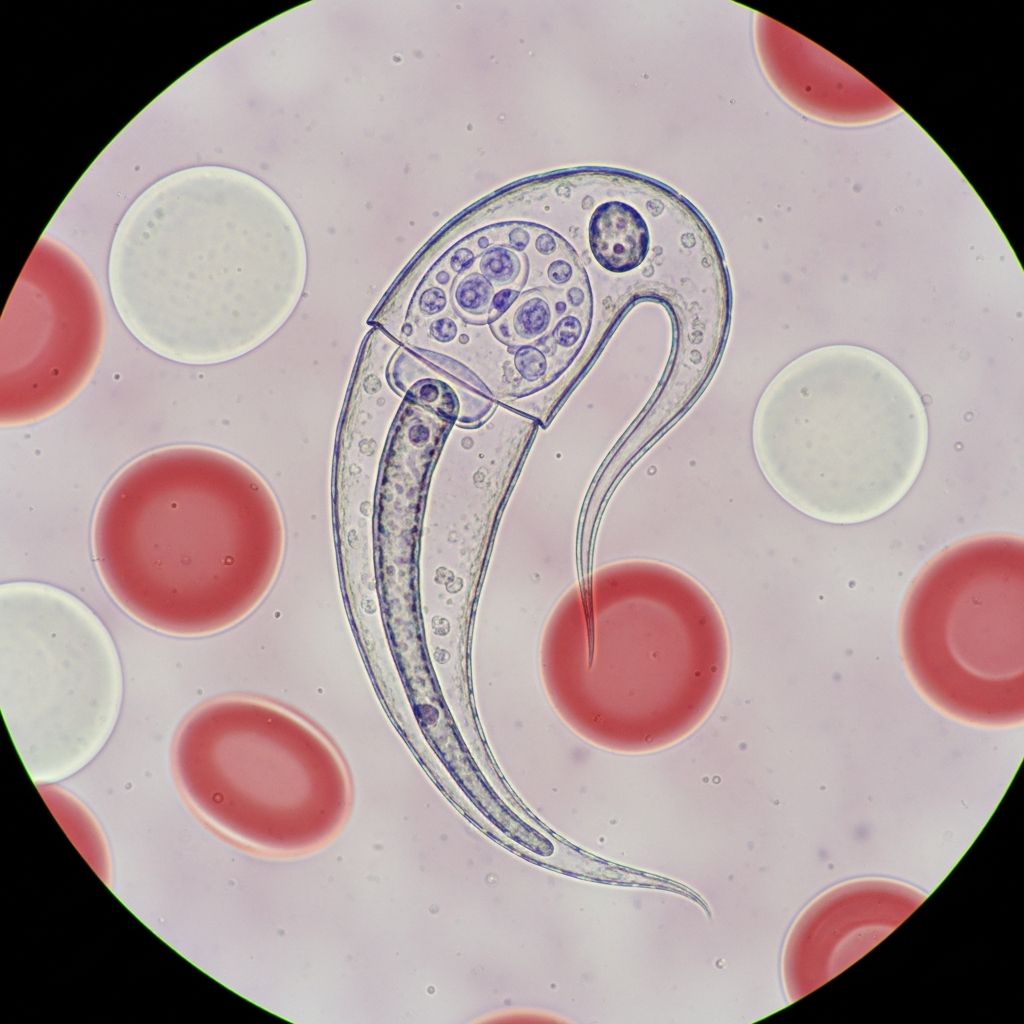
Filariasis encompasses a group of parasitic infections caused by thread-like nematodes (filarial worms) transmitted to humans through the bites of infected mosquitoes or blackflies. These neglected tropical diseases primarily affect lymphatic and subcutaneous tissues, leading to severe morbidity including lymphedema, elephantiasis, and blindness.
What is filariasis?
Filariasis refers to infections by filarial parasites belonging to the superfamily Filarioidea. The most common forms are lymphatic filariasis (caused by Wuchereria bancrofti, Brugia malayi, and Brugia timori) and onchocerciasis (river blindness, caused by Onchocerca volvulus). These infections are classified as neglected tropical diseases due to their prevalence in low-income tropical regions and significant public health impact.
Lymphatic filariasis, often termed elephantiasis, impairs the lymphatic system, causing abnormal enlargement of body parts, pain, disability, and social stigma. Over 657 million people in 39 countries require preventive chemotherapy to halt transmission. Onchocerciasis leads to skin changes and ocular damage, being a leading cause of preventable blindness.
Who gets filariasis?
Filariasis predominantly affects individuals in endemic tropical and subtropical regions of Africa, Asia, the Western Pacific, and parts of the Americas. Lymphatic filariasis threatens over 657 million people, with children acquiring infection early in life. Migrants and travelers to endemic areas are also at risk, experiencing more severe secondary infections. Poverty, poor sanitation, and proximity to vector breeding sites exacerbate vulnerability.
What causes filariasis?
Filariasis is caused by mosquito- or fly-borne filarial nematodes. Key species include:
- Wuchereria bancrofti: Responsible for 90% of lymphatic filariasis cases, transmitted by Culex, Anopheles, and Aedes mosquitoes.
- Brugia malayi and Brugia timori: Cause the remaining lymphatic cases, vectored by Mansonia and Anopheles species.
- Onchocerca volvulus: Causes onchocerciasis, transmitted by blackflies (Simulium spp.).
Infection begins when larvae (L3 stage) enter the skin via insect bites, mature into adults in lymphatic or subcutaneous tissues, and produce microfilariae that circulate in blood or skin, perpetuating transmission.
What are the clinical features of filariasis?
Lymphatic filariasis
Clinical manifestations range from asymptomatic to acute and chronic. Most infections are asymptomatic, yet cause subclinical lymphatic damage, renal issues, and immune alterations.
Acute features include episodic fever, lymphangitis, lymphadenitis, orchitis, and epididymitis 5-7 days post-infection, often with secondary bacterial superinfections.
Chronic features develop over years: lymphatic dilation leads to lymphedema (tissue swelling), progressing to elephantiasis (skin thickening, nodularity). Common sites are legs, arms, breasts, and genitals; hydrocele (scrotal swelling) affects males. Chyluria (milky urine from lymph rupture) and recurrent adenolymphangitis episodes cause disability and economic loss.
Onchocerciasis
Symptoms include intense pruritus, urticarial rashes, hyper/hypopigmented macules, subcutaneous nodules housing adult worms, lymphadenopathy, and arthritis. Ocular involvement causes river blindness: sclerosing keratitis, iridocyclitis, and optic atrophy.
Diagnosis of filariasis
Diagnosis combines clinical suspicion, microscopy, imaging, and serology.
- Microscopy: Detect microfilariae in blood (nocturnal periodicity for W. bancrofti, B. malayi) via thick smears or Knott’s concentration; skin snips for onchocerciasis.
- Antigen tests: Circulating filarial antigen (CFA) tests for W. bancrofti (e.g., ICT card) detect active infection.
- Serology: Antibody tests confirm exposure but not active disease.
- Imaging: Ultrasonography reveals ‘filarial dance sign’ of wriggling worms in lymphatics; lymphoscintigraphy assesses damage.
In non-endemic areas, travel history is crucial.
Treatment of filariasis
Treatment targets microfilariae, adult worms, symptom management, and morbidity control.
| Drug | Indication | Dosage |
|---|---|---|
| Diethylcarbamazine (DEC) | Microfilaricide for lymphatic filariasis | 6 mg/kg/day x 12 days |
| Ivermectin | Onchocerciasis; lymphatic filariasis | 150-200 mcg/kg single dose |
| Doxycycline | Adult worm kill (Wolbachia symbiont) | 200 mg/day x 4-6 weeks |
| Albendazole | Adjunct in mass drug administration | 400 mg single dose |
Related Stories



DEC kills microfilariae but can provoke Mazzotti reactions (fever, rash from dying parasites); contraindicated in onchocerciasis co-infection. Ivermectin is safe for onchocerciasis mass treatment. Doxycycline targets Wolbachia bacteria essential for filarial survival. Chronic lymphedema requires hygiene, compression, and antibiotics for secondary infections. Surgical hydrocelectomy for severe cases.
Prevention of filariasis
Prevention strategies include vector control, mass drug administration (MDA), and personal protection.
- MDA: WHO-recommended annual/single-dose ivermectin + albendazole or DEC + albendazole in endemic areas until transmission interruption.
- Vector control: Insecticide-treated nets (ITNs), indoor residual spraying, larval habitat reduction.
- Personal measures: Repellents (DEET), long clothing, avoiding bites at peak times.
Global programs have eliminated lymphatic filariasis as a public health problem in several countries.
Filariasis in specific populations
Children show filarial lymphadenopathy detectable by ultrasound. Pregnant women require caution with antifilarials. Immigrants from endemic areas face severe acute episodes. Co-infections (e.g., with HIV, malaria) worsen outcomes.
Complications of filariasis
Untreated, filariasis causes permanent disability: elephantiasis restricts mobility, hydrocele impairs work, river blindness leads to total vision loss. Secondary bacterial infections accelerate progression; social stigma, poverty, and mental health decline follow. Renal damage from chyluria and immune dysregulation occur asymptomatically.
Patient outcomes in filariasis
Early treatment halts progression; MDA reduces microfilaraemia and transmission. Chronic cases improve with morbidity management, though elephantiasis is irreversible. Global efforts aim for elimination by 2030.
What’s new in filariasis?
Recent advances include triple-drug therapy (ivermectin + DEC + albendazole) for faster transmission clearance. Wolbachia-targeting antibiotics show macrofilaricidal potential. mRNA vaccines and new vector controls are in trials. WHO’s 2021-2030 roadmap targets interruption in 73 countries.
Frequently Asked Questions (FAQs)
Q: Is filariasis contagious?
A: No, filariasis is not directly contagious between humans; it requires vector insects like mosquitoes or blackflies to transmit larvae.
Q: Can filariasis be cured completely?
A: Acute infections respond well to antifilarials, but chronic damage like elephantiasis is irreversible; management focuses on symptom control.
Q: How long does it take for symptoms to appear after infection?
A: Asymptomatic phase lasts months to years; acute symptoms may appear 5-7 days post-infection, chronic changes over years.
Q: Is there a vaccine for filariasis?
A: No licensed vaccine exists; research is ongoing, focusing on larval stages and Wolbachia.
Q: Can travelers get filariasis?
A: Yes, though rare in short-term travel; prophylaxis is not standard, but bite prevention is advised.
References
- Lymphatic filariasis — World Health Organization. 2023-11-17. https://www.who.int/news-room/fact-sheets/detail/lymphatic-filariasis
- Clinical Overview of Lymphatic Filariasis — Centers for Disease Control and Prevention (CDC). 2024-05-15. https://www.cdc.gov/filarial-worms/hcp/clinical-overview/index.html
- Lymphatic Filariasis — Pan American Health Organization (PAHO/WHO). 2023-08-22. https://www.paho.org/en/topics/lymphatic-filariasis
- Filariasis — National Organization for Rare Disorders (NORD). 2022-04-12. https://rarediseases.org/rare-diseases/filariasis/
- Filariasis — Wikipedia (informed by primary sources). 2026-01-20. https://en.wikipedia.org/wiki/Filariasis
Similar Articles








Read full bio of medha deb