Finding NIH-Funded Research on NIH RePORTER
Access NIH-funded research projects with NIH RePORTER's comprehensive database and search tools.
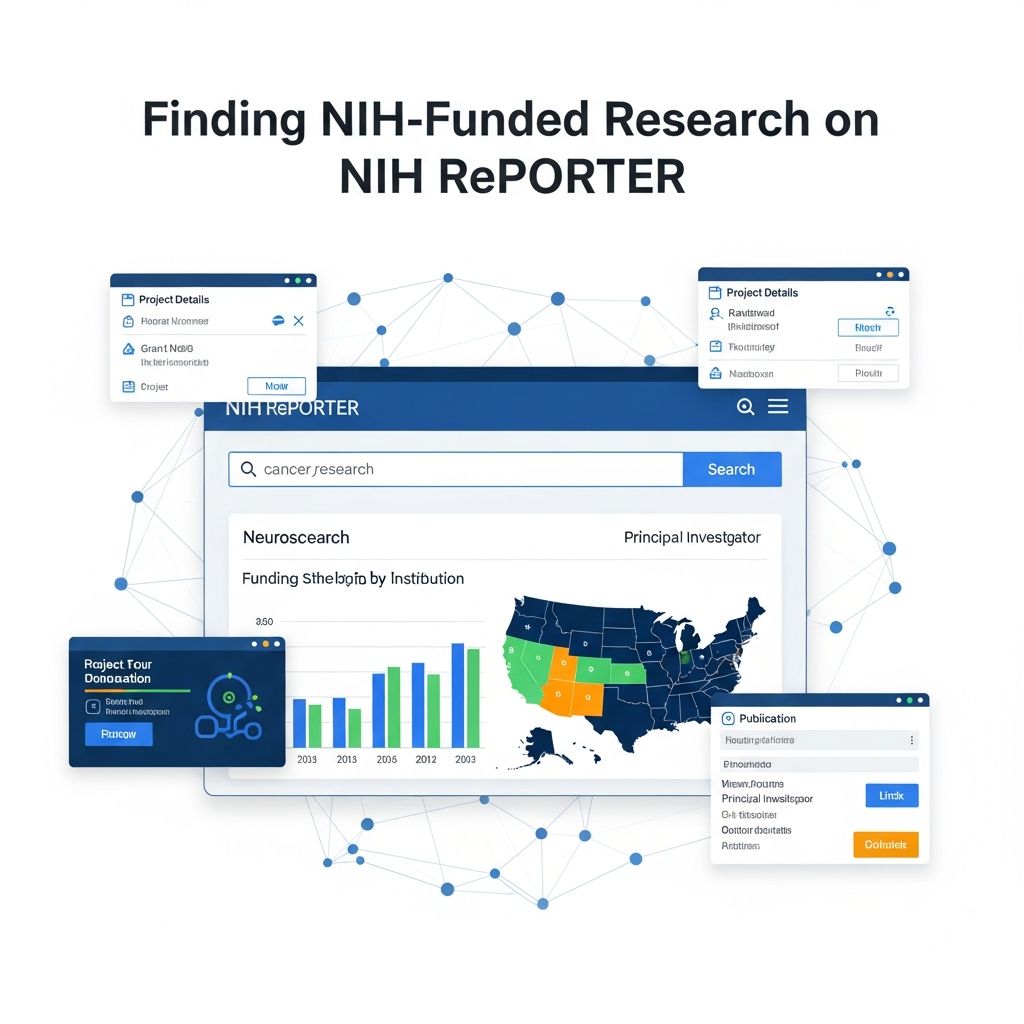
Finding Information About NIH-Funded Research on NIH RePORTER
If you’re interested in discovering what research projects the National Center for Complementary and Integrative Health (NCCIH) or the entire National Institutes of Health (NIH) has funded on a complementary and integrative health topic, NIH RePORTER is an invaluable resource. This comprehensive online tool provides access to an extensive database of information on NIH-funded research projects, enabling researchers, administrators, policymakers, and the general public to explore federally-funded research initiatives and understand where tax dollars are being invested in biomedical and behavioral research.
Located online at reporter.nih.gov, NIH RePORTER stands for Research Portfolio Online Reporting Tools Expenditures and Results. It functions as a powerful search tool within the larger RePORT website, which provides access to a variety of tools, reports, data, and analyses of NIH research activities. The database is updated weekly with the latest project information, ensuring users have access to current data on funded research initiatives.
Understanding NIH RePORTER Features
The most recent update to NIH RePORTER, implemented in 2020, introduced several features that significantly improved user experience and search functionality. These enhancements make it considerably easier for users to navigate the extensive database and find relevant research projects without requiring advanced technical knowledge.
Quick Search Capabilities
The centerpiece of the updated RePORTER interface is the single Quick Search box that accepts multiple types of information. This versatile search field simplifies the research process by allowing users to enter various search parameters without needing to navigate complex forms or multiple pages. Whether you’re searching for specific topics, investigator names, project numbers, or funding agencies, the Quick Search box provides a streamlined entry point for database exploration.
Refined Search Results Without Rerunning
One of the most practical improvements in the updated version is the ability to refine search results without rerunning the entire search. After conducting an initial search, users can apply filters and modify parameters directly on the results page, significantly saving time and improving research efficiency. This iterative refinement process allows researchers to progressively narrow their focus and discover exactly what they’re seeking.
Comprehensive Single-Page Project Display
All information about a research project is now displayed together on a single page, eliminating the need to navigate between multiple pages or windows. This consolidated presentation of data improves accessibility and allows researchers to view all relevant information in context.
Accessing Detailed Project Information
When you click on the title of a project in your search results list, you’ll access extensive information about that specific research initiative. The detailed project page includes several critical components:
- An abstract of the project, providing a summary of the research focus and methodology
- A statement about its public health relevance, explaining the broader impact and importance of the research
- Details about the principal investigators, federal agency program officials, project start and end dates, and funding amounts
- A direct link to the original funding opportunity announcement (FOA)
- Lists of publications, patents, and outcomes generated from the project
Related Stories



This comprehensive information architecture enables researchers to understand not only what was funded but also who conducted the research, how much was invested, when the research occurred, and what results and publications emerged from the project.
Types of Information You Can Search
NIH RePORTER’s Quick Search feature is designed to handle the most frequently used search parameters. In addition to words that would appear in the abstract of a study (such as “tai chi” for complementary health research), you can use other types of search terms in the Quick Search box:
- The investigator’s name (principal investigator or co-investigators)
- The funding agency (such as NCCIH, NCI, NHLBI, or other NIH institutes)
- The project (grant) number, which uniquely identifies each funded project
- The name of the university or other institution that received the grant
- The fiscal year or year range of interest
This diversity of searchable fields makes NIH RePORTER accessible to multiple user types, from researchers looking for collaborators to administrators tracking institutional funding.
Refining Your Search Results
Using Filters
There are two primary ways to refine a RePORTER search. The first involves using the filters located on the left-hand side of the search results page. These filters enable users to narrow results by multiple dimensions without returning to the search form. For example, if you want to refine your search to include only NCCIH-funded projects, you can click on the Agencies option in the Filters list. A hierarchical menu appears, allowing you to access the complete list of NIH Institutes and Centers (ICs). By clicking the > symbol after NIH, the full list of ICs becomes visible, and you can select the NIH/NCCIH checkbox to obtain your refined results list.
Adding Search Terms
The second option for refining your search is to add NCCIH as a search term directly in the Quick Search box at the top of your search results page, then click the Search button to update your results. Either approach—using filters or adding search terms—will yield the refined results you’re looking for, and the choice between them depends on your personal preference and search workflow.
When Quick Search Doesn’t Work
While the Quick Search feature of NIH RePORTER is designed around the most frequently searched items such as investigator names, institutions, and grant numbers, less common types of search terms may not produce results. In these situations, the Advanced Projects Search box on the NIH RePORTER homepage becomes invaluable. This advanced search interface enables you to perform very specific searches using a wide variety of fields, providing more granular control over your search parameters.
Example: Searching by Funding Opportunity Announcement
To illustrate the difference between Quick Search and Advanced Projects Search, consider searching for a Funding Opportunity Announcement (FOA) number. If you attempt to search for FOA number RFA-AT-19-008 using Quick Search, the system may not yield any results. However, when you enter the same FOA number in the correct format in the Advanced Projects Search field, the search successfully returns information about all five projects that NCCIH has funded in response to that specific FOA. This example demonstrates why knowing which search tool to use for specific research needs is important for effective database navigation.
Who Benefits from NIH RePORTER
NIH RePORTER serves multiple constituencies, each with different research needs and objectives:
- Researchers use the tool to identify potential collaborators, understand funding trends in their field, and discover what research is being conducted by peers
- Administrators and policymakers analyze NIH investments to understand funding patterns, evaluate research priorities, and make informed decisions about research policy
- The public and media access the database to promote transparency in government-funded research and understand how taxpayer dollars support the nation’s research enterprise
- Students and early-career researchers explore the database to understand funding opportunities and see examples of successful research proposals
- Institutional officials track their institution’s NIH funding and monitor research portfolio trends
Additional Resources and Support
For comprehensive guidance on using NIH RePORTER, the NIH provides a detailed FAQ that can be accessed directly from the RePORTER homepage. This resource answers common questions about database functionality, search strategies, and how to interpret search results. Additionally, NIH RePORTER is part of the larger RePORT (Research Portfolio Online Reporting Tools) website, which provides access to a variety of additional tools, reports, data, and analyses of NIH research activities beyond just project searching.
Data Sources and Coverage
The information found in NIH RePORTER is drawn from multiple authoritative sources including eRA databases, Medline, PubMed Central, the NIH Intramural Database, and iEdison. While the database’s primary focus is NIH-funded projects, it also includes projects funded by other federal health agencies including the Centers for Disease Control and Prevention (CDC), Agency for Healthcare Research and Quality (AHRQ), Health Resources and Services Administration (HRSA), Administration for Children and Families (ACF), and U.S. Department of Veterans Affairs (VA). The database contains coverage dating back to the 1980s, providing historical context for understanding the evolution of NIH research funding.
Frequently Asked Questions
What is NIH RePORTER?
NIH RePORTER is a free, searchable online database that contains information about research projects funded by the National Institutes of Health and other federal health agencies. It allows users to access project details, investigator information, funding amounts, and resulting publications and patents from NIH-funded research.
Is there a cost to use NIH RePORTER?
No, NIH RePORTER is completely free and publicly accessible. There are no subscription fees or user costs to access the database. This open access approach aligns with the NIH’s commitment to making publicly-funded research information available to all.
How often is the NIH RePORTER database updated?
The database is updated weekly with the latest project information, ensuring that users have access to current data on funded research initiatives and recently published results.
Can I search for research on complementary health topics?
Yes, you can specifically search for NCCIH-funded research on complementary and integrative health topics using the agency filter. You can also search by keywords related to specific complementary health practices such as tai chi, acupuncture, or other areas of interest.
What information is available for each research project?
For each project, you can access the project abstract, public health relevance statement, principal investigator details, funding amount, project timeline, funding opportunity announcement link, and lists of resulting publications, patents, and other research outcomes.
Can I use NIH RePORTER to find potential research collaborators?
Yes, many researchers use NIH RePORTER to identify investigators working on similar research topics and to understand funding trends in specific research areas, making it useful for identifying potential collaborators.
What federal agencies’ research projects are included in the database?
While the database primarily focuses on NIH-funded projects, it also includes research funded by CDC, AHRQ, HRSA, ACF, and the U.S. Department of Veterans Affairs, providing a comprehensive view of federal biomedical and behavioral research investments.
Getting Started with NIH RePORTER
To begin using NIH RePORTER, simply visit reporter.nih.gov and enter your search terms in the Quick Search box. Whether you’re searching for research on a specific health topic, looking for publications from a particular investigator, or exploring projects funded by a specific institute or center, the database provides the tools necessary to navigate the extensive landscape of NIH-funded research. For complex searches requiring more specific parameters, utilize the Advanced Projects Search feature to achieve more granular results. The combination of intuitive search functionality and comprehensive data makes NIH RePORTER an essential resource for anyone seeking information about the nation’s federally-funded research enterprise.
References
- Finding Information About NIH-Funded Research on NIH RePORTER — National Center for Complementary and Integrative Health (NCCIH), National Institutes of Health. 2020. https://www.nccih.nih.gov/health/finding-information-about-nih-funded-research-on-nih-reporter
- NIH RePORTER — National Institutes of Health. 2025. https://reporter.nih.gov
- Search Funded Projects Using NIH RePORTER — National Institute of General Medical Sciences (NIGMS), National Institutes of Health. 2025-02-26. https://www.nigms.nih.gov/Research/Pages/nih-reporter
- NIH RePORTER — Rutgers University Libraries. https://www.libraries.rutgers.edu/databases/nih_reporter
- Links and Data – NIH RePORT — National Institutes of Health. 2025. https://report.nih.gov/databases
Similar Articles








Read full bio of medha deb