Fine Motor Skills: Development, Milestones & Examples
Understanding fine motor skill development from birth through adulthood with practical examples.
What Are Fine Motor Skills?
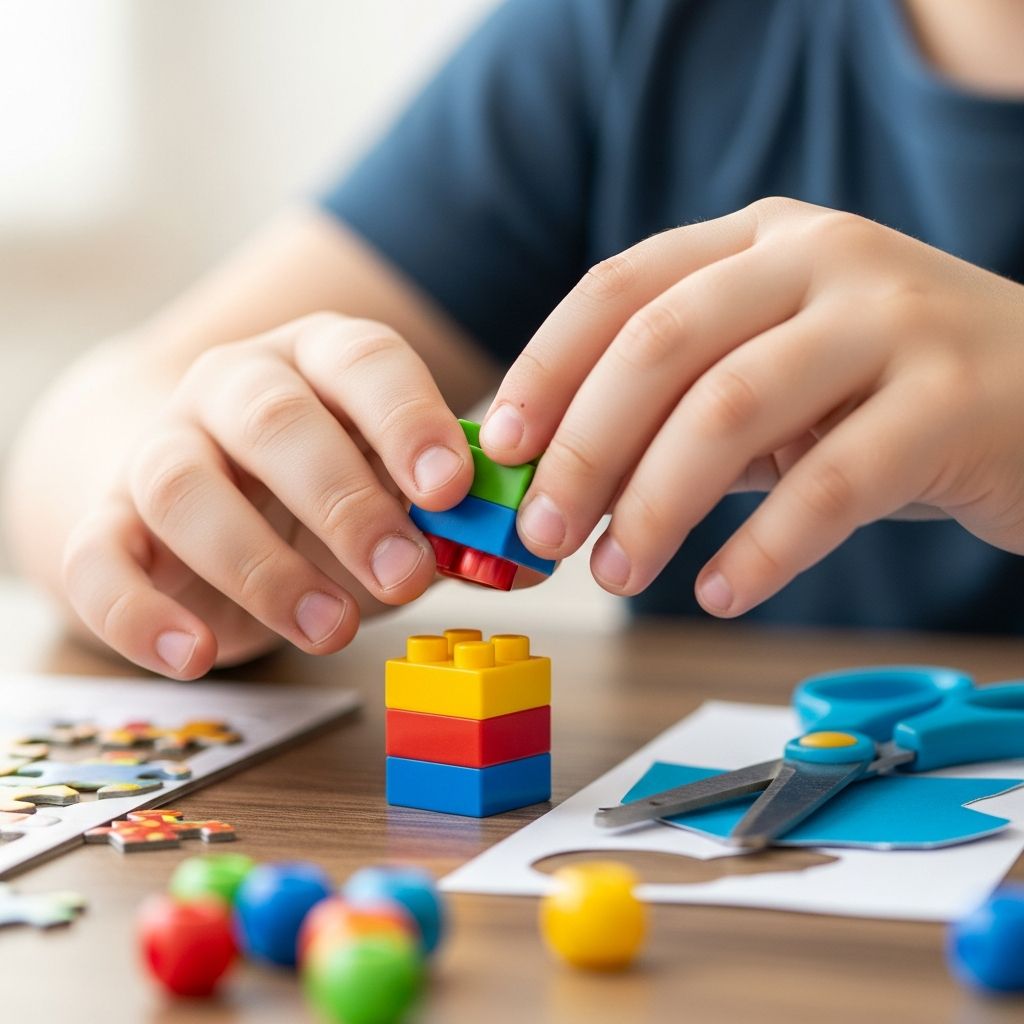
Fine motor skills are the small, precise movements we make with our hands, fingers, feet, and toes. These tiny movements allow us to perform countless everyday tasks that we often take for granted. Fine motor skills involve the complex coordination of your muscles, joints, and nerves working together seamlessly to create controlled, intentional movements.
When we think of fine motor skills, we primarily focus on hand, wrist, and finger movements, such as picking up an object by pinching it with your pointer finger and thumb. However, fine motor control extends beyond the hands. You can also make fine movements with your foot, ankle, and toes. These motions are essential for sports like dancing and soccer, or for individuals who use their feet to perform tasks instead of their hands.
From tying shoelaces to holding a pencil, writing, buttoning clothing, and using utensils, fine motor skills enable us to function independently and participate fully in daily activities. These skills develop gradually from birth through adulthood, with significant milestones occurring during childhood.
Why Fine Motor Skills Matter
Fine motor skills are fundamental to a child’s independence, confidence, and overall development. Children who develop strong fine motor skills can dress themselves, feed themselves, participate in classroom activities, and engage in creative play with greater ease and confidence.
These abilities directly impact academic readiness and performance. Writing, drawing, cutting with scissors, and manipulating classroom materials all require well-developed fine motor skills. When children struggle with these skills, they may experience difficulties that extend beyond simple physical challenges.
Children with delayed fine motor development may find it challenging to color within the lines, handle small objects, or write legibly. Such challenges can lead to low self-esteem, academic delays, and even behavioral issues. Early identification and intervention are crucial for supporting a child’s confidence and setting a strong academic foundation.
How Fine Motor Skills Develop
Fine motor skills start developing as soon as babies are born. One of the earliest examples is the involuntary grasp reflex that newborns possess. If you gently stroke a baby’s palm, they will typically close their hand and cling to your finger. This is the earliest type of fine motor movement.
As children grow, these tiny movements continue to improve significantly. Over time, the muscles in their hands and fingers grow stronger, and they develop increased coordination to perform more precise and complex movements. This development is a gradual process that extends well beyond early childhood.
Fine motor skills continue to develop and strengthen through childhood and into adulthood. Even adults can refine their fine motor skills through practice and training. Rock climbers, for example, may work on improving their grip strength to better cling to rock crevices. Surgeons practice exercises to maintain accurate, steady, and precise hand movements. This demonstrates that fine motor skill development is a lifelong process.
Related Stories



Key Developmental Milestones
Healthcare providers have established benchmarks—or milestones—for different fine motor skills at various age ranges. It’s important to remember that each child develops at their own pace, and these milestones serve as general guidelines rather than strict requirements.
Understanding these milestones helps parents and caregivers track typical development and identify when professional evaluation might be beneficial:
- Newborns to 3 months: Babies develop their grasp reflex and begin to move their hands to their mouth
- 3 to 6 months: Infants start reaching for objects and raking (using all fingers together) to grasp items
- 6 to 12 months: Babies develop the pincer grasp (using thumb and one finger) and begin exploring objects with their fingers
- 12 to 18 months: Toddlers can stack blocks, point with one finger, and begin turning pages in books
- 18 to 24 months: Children scribble with crayons, stack multiple blocks, and begin self-feeding attempts
- 2 to 3 years: Toddlers can copy simple lines and shapes, turn doorknobs, and use utensils with increasing control
- 3 to 4 years: Children can cut paper with safety scissors, draw simple shapes, and begin writing letters
- 4 to 5 years: Preschoolers demonstrate improved pencil control, can tie simple knots, and write their names
If you’re concerned about your child’s fine motor milestones, it’s essential to talk to their healthcare provider. They can provide guidance specific to your child’s development and recommend interventions if needed.
Conditions That May Affect Fine Motor Skills
Issues with fine motor skills can develop at any age. Healthcare providers focus significant attention on fine motor skills in child development because significant delays in these milestones can indicate various neurological and physical conditions. The sooner healthcare providers identify potential issues, the sooner children can receive appropriate support and intervention.
Fine motor control depends on proper function of several body systems and areas, including the brain, muscles, joints, and nerves. Problems with any of these areas can affect fine motor skills. Because of this interconnected relationship, hundreds of conditions can interfere with fine motor skills, ranging from mild to severe.
Conditions affecting fine motor skills in children include:
- Cerebral palsy
- Autism spectrum disorder
- Developmental coordination disorder
- Down syndrome
- Duchenne muscular dystrophy
- Hypotonia (low muscle tone)
- Apraxia of speech
Conditions affecting fine motor skills in both children and adults include:
- Stroke
- Traumatic brain injury
- Spinal cord injury
- Multiple sclerosis
- Parkinson’s disease
Conditions affecting fine motor skills in adults include:
- Arthritis
- Carpal tunnel syndrome
- Essential tremor
- Peripheral neuropathy
If you or your child experiences a sudden regression (worsening) in fine motor skills, it’s crucial to contact a healthcare provider as soon as possible. This could indicate a serious underlying condition requiring immediate evaluation and treatment.
Activities to Support Fine Motor Development
While children naturally develop fine motor skills through exploring their environment, parents and caregivers can implement specific activities to actively support this development. These activities should be age-appropriate, engaging, and incorporate variety to maintain interest and challenge.
Recommended activities include:
- Playing with playdough or modeling clay to build hand strength
- Drawing and coloring with crayons, markers, and colored pencils
- Sorting coins or small objects using tweezers or tongs
- Playing with building blocks and LEGOs
- Stringing beads onto string or yarn
- Playing with stickers and practicing placement
- Tracing shapes and practicing simple writing
- Learning origami or paper folding activities
- Engaging in sensory play with textured materials
- Practicing self-care tasks like buttoning, zipping, and tying
- Playing games that require hand-eye coordination
- Using child-safe scissors to cut paper
Creating a routine that includes fine motor activities reinforces skill development. Integrating these tasks into everyday activities like dressing, eating, and playtime helps children develop skills consistently and effectively. Providing variety in activities keeps children engaged, prevents boredom, and promotes continuous skill improvement.
Supporting Fine Motor Development Through Therapy
When children experience persistent challenges with fine motor skills, occupational therapy can provide significant support. Occupational therapy focuses on helping children develop skills that allow them to participate fully in daily life. Through fun, interactive activities, therapists help children improve hand strength, coordination, and dexterity.
Therapy techniques may include:
- Engaging in sensory play to build tactile awareness using playdough or textured objects
- Building hand strength through activities like squeezing stress balls or using tweezers
- Enhancing hand-eye coordination with games like catching a ball or lacing strings
- Practicing daily tasks in a structured, supportive environment
If you’re concerned about your child’s fine motor skills or daily independence, scheduling an evaluation with a pediatric occupational therapist can be beneficial. By addressing specific needs, therapy doesn’t just build motor skills—it helps develop confidence, promotes independence, and ensures children are ready to thrive in school and beyond.
Adaptation and Support Strategies
For individuals who struggle with fine motor skills, whether due to developmental delays or acquired conditions, adaptation and modification strategies can make everyday tasks more accessible. The good news is that there are countless ways to adapt activities and environments to support independence and reduce frustration.
Some helpful strategies include:
- Using adaptive utensils with thicker grips for easier handling
- Modifying writing instruments with grip aids or pencil grips
- Using button hooks or adaptive dressing aids for clothing fasteners
- Implementing voice-activated technology for tasks requiring precise typing or writing
- Using larger or textured objects for easier manipulation
- Modifying activity setups to reduce complexity or demands
Frequently Asked Questions
Q: At what age should children develop the pincer grasp?
A: The pincer grasp (using thumb and index finger to pick up objects) typically develops between 8 to 12 months of age. This is an important milestone indicating developing fine motor control.
Q: How can sensory play help with fine motor skills?
A: Sensory play activities help children develop fine motor skills like tying shoes, writing, and zipping coats. These activities build tactile awareness, hand strength, and coordination through engaging, enjoyable experiences.
Q: What should I do if my child is behind on fine motor milestones?
A: Talk to your child’s healthcare provider if you have concerns about fine motor development. They can evaluate your child, discuss what to expect at different age levels, and recommend appropriate interventions or referrals for occupational therapy if needed.
Q: Can adults improve their fine motor skills?
A: Yes, adults can refine and improve their fine motor skills through practice and training. Surgeons, musicians, artists, and athletes regularly work to enhance precision, coordination, and control through targeted exercises and practice.
Q: What is the difference between fine and gross motor skills?
A: Fine motor skills involve small, precise movements of hands, fingers, feet, and toes. Gross motor skills involve larger movements of the arms, legs, and body, such as running, jumping, and crawling. Both are important for overall development.
References
- Fine Motor Skills: What They Are, Development & Examples — Cleveland Clinic. 2023-09-07. https://my.clevelandclinic.org/health/articles/25235-fine-motor-skills
- Understanding Fine Motor Skill Delays in Children — Therapy Smarts. https://therapysmarts.net/understanding-fine-motor-skill-delays-in-children/
- Top Tips to Develop Fine Motor Skills for 2-Year-Olds — Coral Care. https://www.joincoralcare.com/blog/fine-motor-age-two
- Finger to Thumb: What To Know About the Pincer Grasp — Cleveland Clinic. https://health.clevelandclinic.org/pincer-grasp
- The Benefits of Sensory Play For Your Child — Cleveland Clinic. https://health.clevelandclinic.org/benefits-of-sensory-play-ideas
Similar Articles








Read full bio of medha deb