Fingerprints: 5 Skin Conditions That Can Erase Patterns
Exploring the formation, structure, and clinical significance of fingerprints in dermatology and identification.
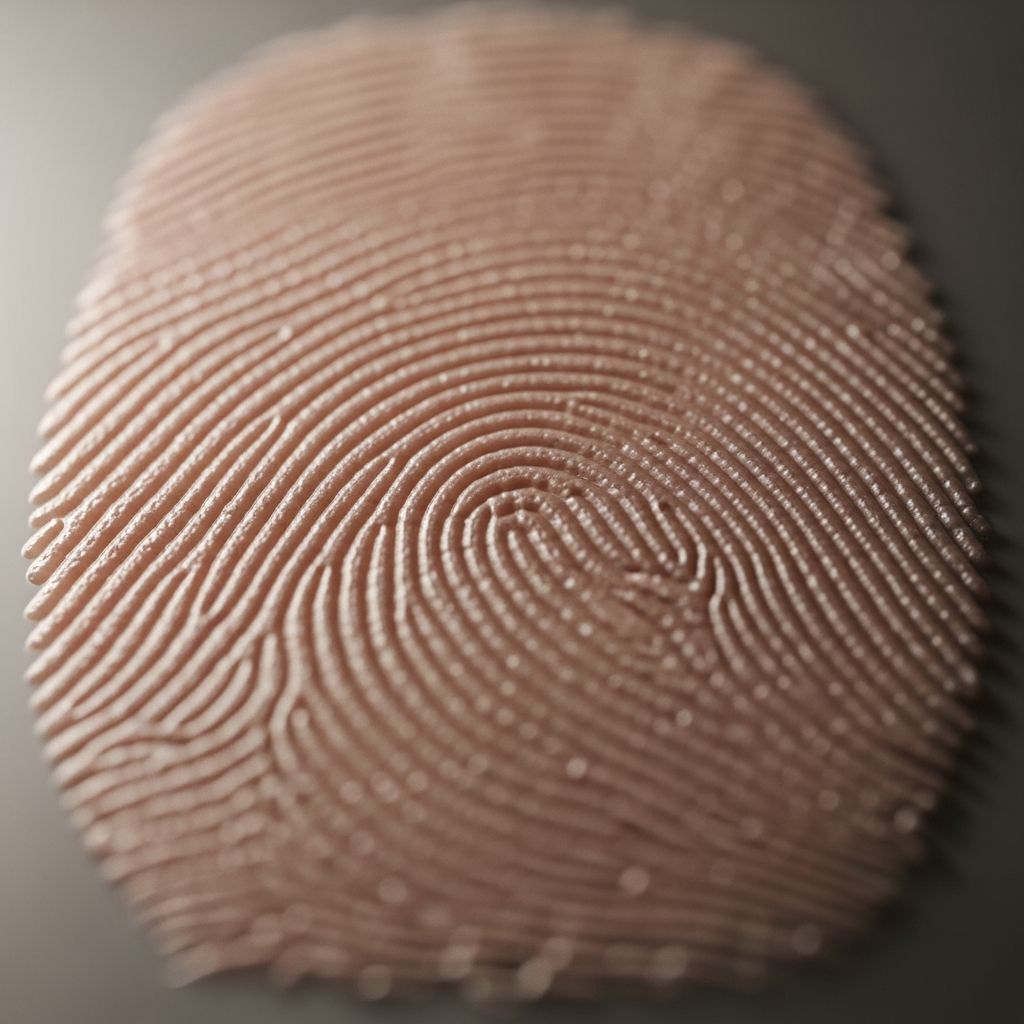
Fingerprints are the unique patterns of epidermal ridges on the fingers, palms, and soles, consisting of friction ridge units characterized by overall patterns and minutiae such as ridge endings and bifurcations. These patterns are essential for grip, personal identification, and forensic analysis, but can be altered by dermatological conditions.
What are fingerprints?
Fingerprints refer to the visible ridge patterns on the skin of the fingers, thumbs, palms, and soles. These are formed by friction ridge units, which are the raised portions of the epidermis separated by valleys. The patterns can be classified into three main types: loops, whorls, and arches, with further subdivisions based on minutiae—small details like ridge endings, bifurcations, dots, and islands. These features make each individual’s fingerprints unique, even among identical twins.
The epidermal ridges enhance tactile sensitivity and provide better grip on surfaces, aiding in everyday activities. In dermatology, understanding fingerprint structure is crucial because disruptions to these ridges can occur due to various skin pathologies, affecting not only function but also modern biometric identification systems.
Friction ridge development
Fingerprint formation begins in early fetal life, with crucial events occurring during the early weeks of the second trimester, around 10-16 weeks of gestation. The process involves a buckling instability in the basal cell layer of the fetal epidermis, where differential growth and mechanical stress lead to the formation of ridges perpendicular to the direction of greatest stress.
Initially, volar pads—temporary swellings on the fingertips—form and influence the overall pattern orientation. As the pads regress, compressive forces in the basal layer cause buckling, creating ridges. This is supported by analysis of von Karman equations modeling tissue stress, with computer simulations confirming that ridge direction aligns perpendicular to stress from pad regression and furrow resistance.
By 24 weeks, primary dermal ridges are established, and the patterns remain stable throughout life unless altered by pathology or trauma. Genetic factors determine the general pattern type, while local stresses finalize minutiae placement. Environmental influences in utero, such as fetal position, contribute to individuality.
- Key phases: Volar pad formation (6-12 weeks), ridge buckling (10-16 weeks), maturation (16-24 weeks).
- Influencing factors: Mechanical stress, basal layer growth, pad regression.
Age-related changes
With advancing age, friction ridges undergo gradual changes. Ridges may become thicker and shorter, with valleys widening, making patterns harder to discern. This is due to epidermal thinning, reduced cell turnover, and dermal atrophy. In older adults, fingerprints can appear blurred or distorted, complicating biometric scanning.
Studies show that while core patterns persist, minutiae clarity diminishes, particularly after age 60. These changes are reversible to some extent with skin hydration but highlight the need for adaptive biometric technologies for the elderly.
Related Stories



Clinical relevance of loss of fingerprints
Loss or alteration of fingerprints is observed in various skin conditions, disrupting papillary lines and affecting ridge depth and steepness. This impacts biometric pattern recognition systems used in security and identification.
Most damages are reversible if superficial, as the epidermis regenerates. However, deep lesions cause permanent scarring, destroying the papillary structure in the basal layer, preventing ridge regrowth in the original form. Conditions affecting the dermis may spare underlying patterns if not destructive.
Skin diseases causing loss of fingerprints
Several dermatological pathologies lead to temporary or permanent fingerprint alterations:
- Trauma: Cuts, burns, or abrasions disrupt ridges; superficial heal with regeneration, deep cause scars mimicking new patterns.
- Benign lesions: Warts (verruca vulgaris) create dome-shaped elevations obscuring ridges (Fig. 8 example).
- Malignant lesions: Melanoma or squamous cell carcinoma erodes tissue, permanently altering patterns.
- Infections: Bacterial (impetigo), fungal (tinea), or viral (herpes) cause vesicles or crusts blurring ridges.
- Inflammatory conditions: Atopic eczema leads to dry, fissured skin with disrupted lines (Fig. 9); psoriasis forms scaly plaques hiding patterns (Fig. 10).
Systemic diseases like systemic sclerosis (acrosclerosis) cause skin stiffening and edema, obliterating ridges. Other examples include incontinentia pigmenti, affecting infants and persisting into adulthood.
| Condition | Effect on Fingerprints | Reversibility |
|---|---|---|
| Warts | Ridges obscured by lesions | Temporary (post-treatment) |
| Atopic Eczema | Fissures, dryness distort lines | Reversible with treatment |
| Psoriasis | Scales cover ridges | Temporary |
| Systemic Sclerosis | Skin stiffening erases patterns | Often permanent |
| Deep Burns/Scars | Permanent ridge destruction | Irreversible |
Impact on biometrics
Skin diseases significantly hinder fingerprint acquisition and recognition. Optical scanners fail on discolored or structurally altered skin, while minutiae detection is impossible if ridges are damaged. Post-recovery, if the epidermis layer is scarred, original patterns do not regenerate, excluding affected individuals from biometric systems.
Research classifies diseases by impact: color changes (minor for some scanners) vs. structural damage (critical). Examples include poor quality images from eczema or psoriasis, unsuitable for processing.
Dermoscopy of fingerprint-related lesions
Dermoscopy reveals specific patterns in pigmented lesions on acral sites, aiding differentiation from melanoma. On palms and soles, benign naevi show parallel furrow patterns, with pigmentation in furrows. Variants include fibrillar (weight-bearing sites), lattice (arches), or homogeneous.
- Parallel furrow: Common on foot sides.
- Globules: Occasionally present.
Nail melanocytic lesions appear as uniform longitudinal bands, brown and equal width. Halo naevi show central naevus with symmetrical hypopigmentation. Suspicious features like asymmetry or multicolours warrant biopsy.
Frequently Asked Questions (FAQs)
What causes fingerprints to form?
Fingerprints form via buckling instability in the fetal basal epidermis due to stress from volar pad regression, around 10-16 weeks gestation.
Can fingerprints change over time?
Yes, ageing thickens ridges, and diseases like eczema or psoriasis can temporarily or permanently alter them.
Do skin diseases permanently erase fingerprints?
Superficial ones are reversible; deep dermal damage causes scarring and permanent loss.
How do fingerprints affect biometrics?
Diseases disrupting ridges prevent minutiae detection, excluding users from systems.
Are fingerprints unique?
Yes, due to in utero stresses; even twins differ.
Management and prevention
Treatment of underlying conditions restores fingerprints if superficial. For biometrics, alternative modalities or multi-factor authentication help affected individuals. Dermatologists monitor acral lesions with dermoscopy for early intervention.
In forensics, scarred prints require expert analysis. Preventive skincare, like moisturizing for eczema-prone skin, minimizes disruptions.
References
- Dermoscopy of Benign Melanocytic Lesions — DermNet NZ. 2008 (updated). https://dermnetnz.org/cme/dermoscopy-course/dermoscopy-of-benign-melanocytic-lesions
- Fingerprint Recognition Influenced by Skin Diseases — Martin Drahansky et al., International Journal of Biometrics and Bioinformatics. 2010-12. https://gvpress.com/journals/IJBSBT/vol2_no4/2.pdf
- Fingerprints — DermNet NZ. Accessed 2026. https://dermnetnz.org/topics/fingerprints
- Fingerprint formation — Kücken M, Newell AC. PubMed/Chaos. 2005-04-22. https://pubmed.ncbi.nlm.nih.gov/15833314/
- Friction ridge development and clinical relevance — Inferred from DermNet NZ core content. N/A. https://dermnetnz.org/topics/fingerprints
Similar Articles








Read full bio of Sneha Tete