Fingertip Dermatitis: 5 Key Causes, Symptoms & Treatment Guide
Comprehensive guide to causes, symptoms, diagnosis, and management of fingertip dermatitis for effective skin care.
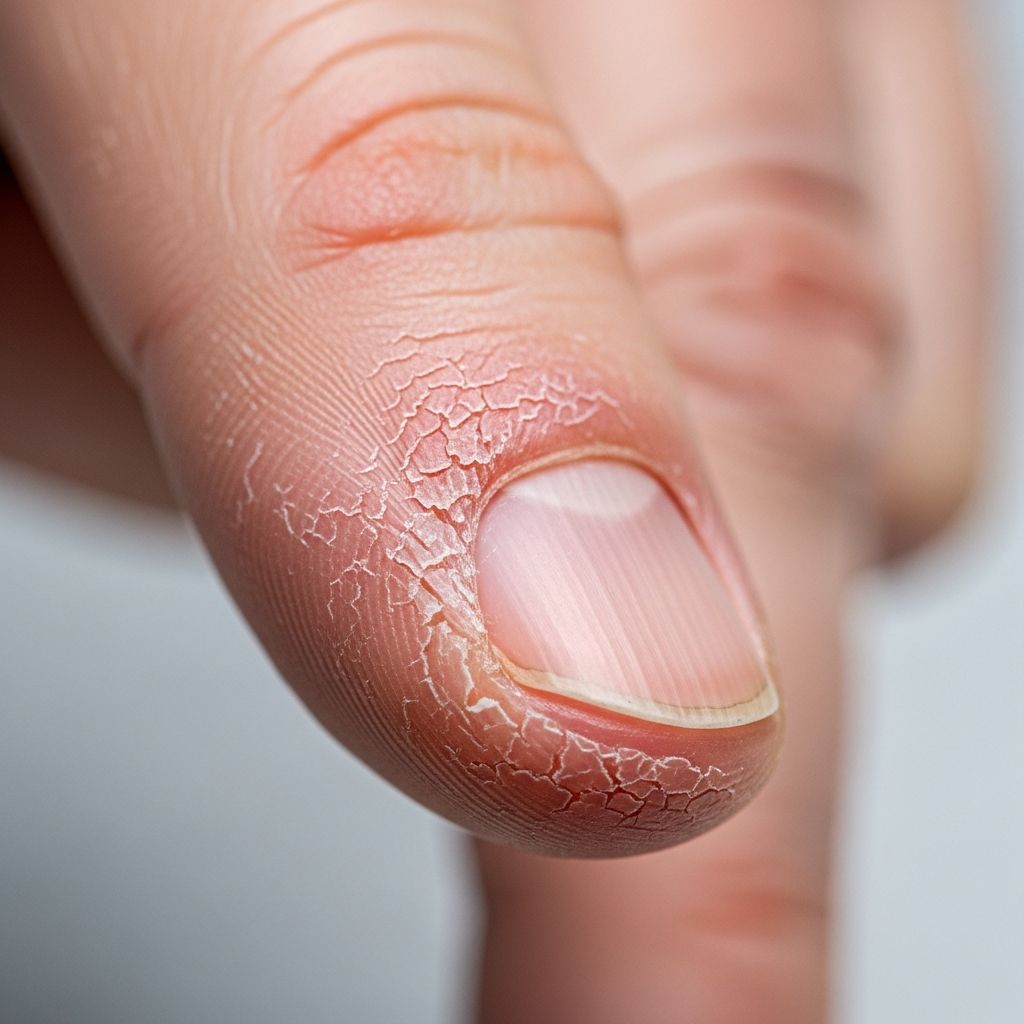
Fingertip dermatitis, also known as acral dermatitis or distal fingertip eczema, is a localized form of
contact dermatitis
primarily affecting the fingertips, particularly the pulps and sides of the fingers. This condition is prevalent among individuals whose occupations or daily activities involve frequent hand use, exposure to irritants, or allergens. It manifests as an inflammatory response leading to redness, scaling, fissuring, and sometimes painful cracking of the skin on the fingertips.What is Fingertip Dermatitis?
**Fingertip dermatitis** represents a specific subtype of hand dermatitis concentrated on the distal aspects of the fingers. Unlike generalized hand eczema, it spares the palms and backs of hands more often, focusing on areas with high mechanical stress and exposure. The skin barrier on fingertips is thinner and more prone to breakdown from repeated friction, moisture, or chemicals, making it susceptible to both
irritant contact dermatitis
(ICD) andallergic contact dermatitis
(ACD).ICD occurs from direct damage by irritants like water, soaps, detergents, and solvents, while ACD involves a delayed hypersensitivity reaction to allergens such as nickel, fragrances, or rubber accelerators. Women and those in wet-work professions (e.g., healthcare, cleaning, food handling) are at higher risk.
Who Gets Fingertip Dermatitis?
This condition affects approximately 10-20% of hand dermatitis cases, with higher incidence in adults aged 20-50 years. Key risk groups include:
- Healthcare workers (nurses, doctors) due to frequent handwashing and glove use.
- Caterers and food processors from exposure to fruits, vegetables, and wet environments.
- Cleaners and hairdressers handling detergents and chemicals.
- Individuals with atopic background (history of eczema, asthma, hay fever), increasing susceptibility by 2-3 times.
Occupational exposure accounts for up to 80% of cases, often termed
occupational irritant dermatitis
. Genetic factors impairing filaggrin (a skin barrier protein) also contribute.Causes of Fingertip Dermatitis
The etiology is multifactorial, combining endogenous and exogenous factors:
- Irritants: Prolonged water immersion (‘wet work’), soaps, detergents, alcohols, acids/bases. Even ‘mild’ hand washes erode the stratum corneum.
- Allergens: Common culprits include nickel (jewelry/tools), fragrances, preservatives (thiomersal), rubber chemicals in gloves, and food proteins (e.g., thiuram).
- Mechanical: Friction from tools, paper handling, or typing.
- Environmental: Low humidity, cold weather exacerbating dryness.
- Endogenous: Atopy, hyperhidrosis (excessive sweating), stress.
In food handlers,
protein contact dermatitis
from fruits/vegetables (e.g., pineapple bromelain) mimics allergy but is irritant-based.Signs and Symptoms
Symptoms develop gradually over days to weeks:
- Early: Dryness, chapping, mild redness (erythema), itchiness.
- Progressed: Scaling, fissuring (deep cracks, painful), hyperkeratosis (thickening), vesicles (small blisters in dyshidrotic variant).
- Severe: Oozing, crusting, secondary infection (bacterial/fungal, yellow pus, swelling).
Affected sites: Fingertip pulps, lateral finger creases, nail folds (paronychia). Pain on pressure/use distinguishes it from milder eczema. Chronic cases show lichenification (skin thickening).
| Grade | Symptoms |
|---|---|
| Mild | Dryness, slight erythema, no fissures |
| Moderate | Erythema, scaling, superficial fissures |
| Severe | Deep fissures, vesicles, oozing, infection |
Diagnosis
Diagnosis is clinical, based on history and examination:
- History: Occupation, exposures, atopy, symptom triggers/patterns.
- Examination: Localized to fingertips, pattern suggesting irritant vs. allergic.
- Patch Testing: Gold standard for ACD; tests common allergens (e.g., TRUE Test series) applied 48 hours, read at 96 hours. Positive if erythema/papules >5mm.
- Differentials: Psoriasis (well-demarcated plaques), tinea manuum (fungal, scaly), scabies (burrows), pompholyx (palmar vesicles).
- Biopsy: Rarely needed; shows spongiosis, parakeratosis.
Related Stories



Prick testing for protein contact dermatitis in food workers.
Treatment of Fingertip Dermatitis
Treatment is stepwise, focusing on barrier repair, inflammation control, and avoidance:
General Measures
- Emollients: Apply frequently (post-wash, bedtime); thick, fragrance-free (e.g., petrolatum, CeraVe). Use ‘soak and smear’ for fissures.
- Hand Protection: Cotton-lined vinyl gloves for wet work; avoid occlusive rubber. Short gloves for dry tasks.
- Wash Strategy: Cool water, pH-neutral soap, pat dry.
Topical Therapies
- Corticosteroids: Potent (betamethasone) for palms/fingertips (thick skin); 2-week bursts. Mild (hydrocortisone) OTC for early cases.
- Calcineurin Inhibitors: Tacrolimus for steroid-sparing.
- Antibiotics: If infected (mupirocin topical; flucloxacillin oral).
Advanced Therapies
- Phototherapy: Narrowband UVB for chronic cases.
- Systemic: Oral steroids (prednisone short course), immunosuppressants (methotrexate, ciclosporin), alitretinoin for refractory.
- Biologics: Dupilumab for atopic overlay.
Response expected in 2-4 weeks with compliance.
Prevention
Prevention is paramount, especially occupational:
- Avoid triggers via patch test guidance.
- Daily emollient routine.
- Glove protocols: Inner cotton, outer nitrile/vinyl (not latex if allergic).
- Workplace adjustments: Reduced wet work, after-work creams.
- Legislative: EU mandates skin protection in high-risk jobs.
Outlook
With early intervention, 70-80% achieve control. Chronicity in 20-30%, especially atopics or non-compliant. Occupational change resolves 50% cases. Monitor for complications like nail dystrophy.
Frequently Asked Questions
Q: Is fingertip dermatitis contagious?
A: No, it is not infectious; secondary bacterial infection is treatable.
Q: Can diet affect fingertip dermatitis?
A: Rarely, but food handlers should avoid raw proteins; no general link.
Q: How long does treatment take?
A: Improvement in 1-2 weeks; full control 4-6 weeks with adherence.
Q: Are gloves always necessary?
A: Yes for wet/irritant work; choose hypoallergenic types.
Q: When to see a dermatologist?
A: If persistent >2 weeks, spreading, or occupational impact.
References
- Hand Eczema: Causes, Symptoms and Treatment Options — National Eczema Association. 2023. https://nationaleczema.org/types-of-eczema/hand-eczema/
- Hand Eczema — National Eczema Society. 2024. https://eczema.org/information-and-advice/types-of-eczema/hand-eczema/
- Contact Dermatitis — NHS UK. 2023-10-23. https://www.nhs.uk/conditions/contact-dermatitis/
- Hand Dermatitis — Dermatology Group of the Carolinas. 2024. https://dermgroup.org/conditions/hand-dermatitis/
- Atopic Dermatitis: Symptoms, Causes & Treatment — Cleveland Clinic. 2023-11-12. https://my.clevelandclinic.org/health/diseases/24299-atopic-dermatitis
- Dermatitis – Symptoms and Causes — Mayo Clinic. 2024. https://www.mayoclinic.org/diseases-conditions/dermatitis-eczema/symptoms-causes/syc-20352380
- Treating Eczema on Hands and Fingers — GoodRx. 2024. https://www.goodrx.com/conditions/eczema/hand-eczema
Similar Articles








Read full bio of Sneha Tete