Fingertip Unit: Practical FTU Guide, Dosing Chart & Examples
Practical guide to measuring topical creams and ointments for effective skin treatment dosing.
The
fingertip unit (FTU)
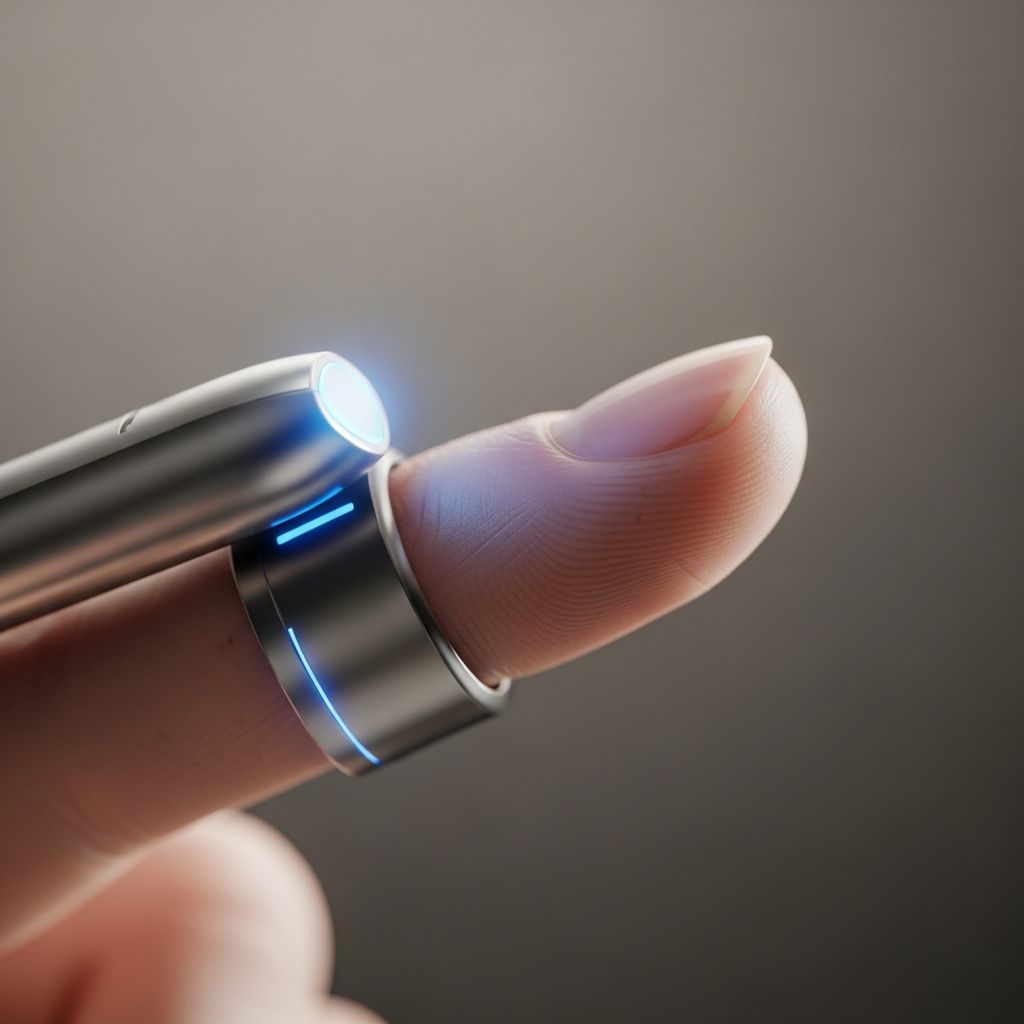
is a practical, patient-friendly method to measure the correct amount of topical creams, ointments, or gels for treating skin conditions. Developed to ensure accurate dosing, particularly for potent medications like topical corticosteroids, one FTU equals approximately 0.5 g for adults, squeezed from a standard tube onto the end of an adult index finger.What is a Fingertip Unit?
Fingertip units were coined by CC Long and AY Finlay in a 1991 article, providing a convenient way to prescribe and apply topical treatments without scales or syringes. This approach is especially vital for topical steroids, where underuse is common and overuse risks side effects like skin thinning.
One FTU is the amount squeezed onto the volar aspect (palm side) of the terminal phalanx (end segment) of the index finger, from the tip to the first crease. It covers an area equivalent to one side of two flat adult hands (about 2% of total body surface area). Creams cover slightly less than ointments due to spreading differences.
- Adult male FTU: ~0.5 g
- Adult female FTU: ~0.4 g
- Child/infant: 1/4 to 1/3 adult amount, measured on adult finger
This variation accounts for finger size differences by sex and age, promoting precision in home application.
History and Development
In 1991, dermatologists Long and Finlay introduced FTUs to standardize topical therapy amid challenges in quantifying ‘pea-sized’ or ‘thin layer’ instructions. Their method empowers patients, reduces waste, and improves adherence. Reviewed and endorsed by experts like Hon A/Prof Amanda Oakley (2001, reviewed 2023), it remains a cornerstone in guidelines from DermNet, bpac.org.nz, and NICE.
Studies confirm FTUs enhance treatment outcomes for eczema, psoriasis, and dermatitis by addressing under-dosing, which affects up to 80% of prescriptions.
How to Measure a Fingertip Unit
To measure:
- Hold the tube upright with a standard 5 mm nozzle.
- Squeeze gently until cream reaches the first finger crease.
- Apply immediately to the affected area, rubbing thinly.
This yields consistent dosing. Visual aids, like those from DermNet and Royal Children’s Hospital, show the exact squeeze.
Note: Always use clean hands or a spatula to avoid contamination. For children, measure on an adult finger, then apply proportionally.
Coverage Area
One FTU treats:
- Adults: One side of two flat hands (palms together, fingers aligned).
- One gram (2 FTUs): Both sides of two hands.
- Ointments spread ~10-20% further than creams due to occlusive properties.
This ‘handprint’ rule simplifies estimation: gauge affected skin against your hand size.
FTUs by Body Area (Adults)
The number of FTUs varies by body region due to surface area and absorption rates (thinner skin like face requires less).
Related Stories



| Body Part | Fingertip Units | Approx. Prescription (2 weeks, once daily) |
|---|---|---|
| One hand | 1 | 15 g |
| One arm | 3 | 30 g |
| One foot | 2 | 15 g |
| One leg | 6 | 50 g |
| Face and neck | 2.5 | 30 g |
| Trunk (front and back) | 14 | 100 g |
| Entire body | ~40 | 300 g |
Data adapted from bpac.org.nz and DermNet; prescriptions assume adult, single daily application for 2 weeks.
FTUs for Children and Infants
Children use less due to smaller fingers and body size. Measure on adult finger, apply to child’s skin area matching adult hand equivalents adjusted for age.
Infants (3-12 months)
| Area | FTUs |
|---|---|
| Face/neck | 1 |
| Arm/hand | 1.5 |
| Leg/foot | 1.5 |
| Chest/abdomen (front) | 1 |
| Back/buttocks | 1.5 |
Children (>1-3 years)
| Area | FTUs |
|---|---|
| Face/neck | 1.5 |
| Arm/hand | 2 |
| Leg/foot | 3 |
Children (>3-6 years)
| Area | FTUs |
|---|---|
| Face/neck | 2 |
| Arm/hand | 3 |
| Leg/foot | 4.5 |
Sources: Royal Children’s Hospital and Patient.info guidelines.
Practical Examples
Adult Female: Both Arms Once Daily
2 arms × 3 FTUs/arm × 0.4 g/FTU = 2.4 g/day. Weekly: 16.8 g. A 30 g tube lasts ~2 weeks. Twice daily: 33.6 g/week, tube finishes in <1 week.
Adult Male: Hands + Feet Once Daily
2 feet × 2 FTUs × 0.5 g + 2 hands × 1 FTU × 0.5 g = 3 g/day. Weekly: 21 g. 50 g tube lasts ~2.5 weeks.
Infant: Entire Body Twice Daily
~10 g/day total (using age-adjusted FTUs). Emphasizes caution with potent steroids in babies.
Applications and Benefits
FTUs guide treatment for eczema, psoriasis, dermatitis, and more. Benefits include:
- Reducing underuse (most common error).
- Minimizing side effects via precise dosing.
- Cost savings: avoids over-prescription.
- Empowering patients with visual, replicable method.
Integrate with emollients; apply steroids first if combining.
Frequently Asked Questions (FAQs)
What is one fingertip unit equal to?
~0.5 g for adult males, 0.4 g females; covers two flat hand areas.
How many FTUs for a child’s face?
1 FTU (3-12 mo), 1.5 (1-3 yrs), 2 (>3-6 yrs).
Does cream or ointment differ?
Ointments cover slightly more area.
Can I use FTUs for non-steroids?
Yes, for any topical like antifungals or emollients.
How to avoid overuse?
Follow FTU guides, use lowest potency needed, limit potent steroids to 2 weeks.
References
- Topical formulations — DermNet NZ. 2023. https://dermnetnz.org/topics/topical-formulations
- Fingertip unit — DermNet NZ. Reviewed 2023. https://dermnetnz.org/topics/fingertip-unit
- Topical corticosteroid treatment for skin conditions — bpac.org.nz. 2009-09-01. https://bpac.org.nz/bpj/2009/september/docs/bpj23_corticosteroids_pages8-13.pdf
- Eczema Clinical Practice Guidelines — Royal Children’s Hospital (rch.org.au). Accessed 2023. https://www.rch.org.au/clinicalguide/guideline_index/eczema/
- Fingertip Units for Topical Steroids — Patient.info. 2023-01-19. https://patient.info/treatment-medication/steroids/fingertip-units-for-topical-steroids
- Topical steroids (corticosteroid creams) — DermNet NZ. 2023. https://dermnetnz.org/topics/topical-steroid
Similar Articles








Read full bio of medha deb