First Trimester Screening: Nuchal Translucency and NIPT
Comprehensive guide to first trimester screening tests for detecting fetal chromosomal abnormalities.
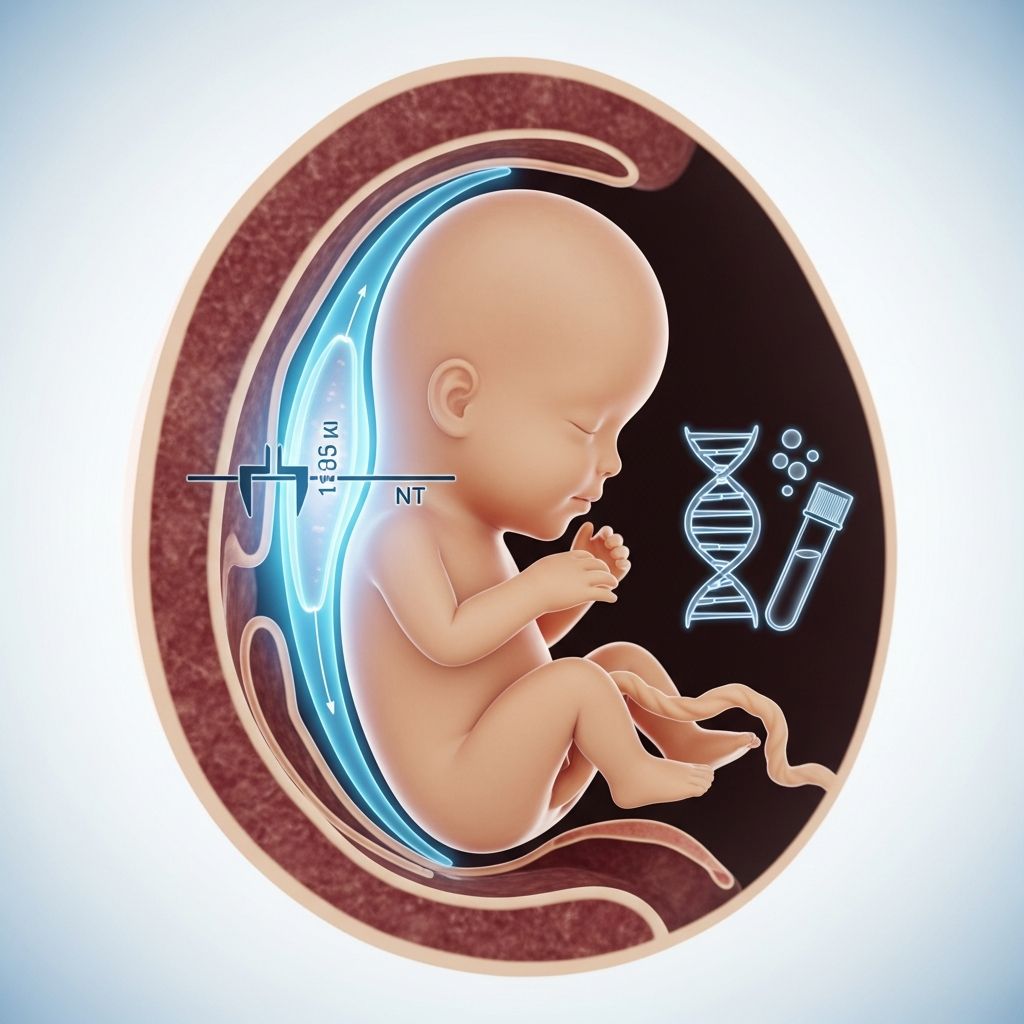
Understanding First Trimester Screening
First trimester screening represents a comprehensive approach to assessing fetal health during the earliest stages of pregnancy. This combination of tests is designed to evaluate the risk of chromosomal abnormalities and certain genetic conditions in your developing baby. By combining ultrasound measurements with maternal blood tests, healthcare providers can identify pregnancies that may benefit from further diagnostic testing.
First trimester screening is typically performed between 10 and 14 weeks of pregnancy, making it one of the earliest opportunities to screen for conditions such as Down syndrome (trisomy 21), Edwards syndrome (trisomy 18), and Patau syndrome (trisomy 13). Unlike diagnostic tests, screening tests do not provide a definitive diagnosis but rather calculate the probability that your baby may have a particular condition.
What is Nuchal Translucency (NT) Screening?
Nuchal translucency screening is a specialized ultrasound examination that measures the amount of fluid beneath the skin at the back of your baby’s neck during the first trimester of pregnancy. This fluid collection, known as the nuchal fold, is present in all developing fetuses and serves as an important marker for assessing chromosomal risk.
How Nuchal Translucency Works
During an NT scan, your healthcare provider uses abdominal or vaginal ultrasound to visualize the fluid-filled space behind your baby’s neck. A small amount of fluid in this area is completely normal and expected. However, an increased amount of fluid has been shown to be significantly associated with chromosomal abnormalities and certain genetic conditions. The measurement is taken in millimeters and compared to established standards for your baby’s gestational age.
The timing of the NT measurement is critical to its accuracy. The test is most effective when performed between 11 and 13 weeks and six days of pregnancy, or when your baby measures between 45 and 84 millimeters from crown to rump. After 14 weeks, the fluid behind the neck tends to be naturally reabsorbed by the fetus, making measurements less reliable.
What NT Measurements Mean
Healthcare providers use specific measurement thresholds to determine risk levels. A measurement of up to 3 millimeters is generally considered normal and indicates low risk for chromosomal abnormalities. Measurements above this threshold suggest an increased risk that warrants further evaluation or additional testing. It is important to note that different medical facilities may use slightly different measurement standards based on their clinical experience and population studies.
The Role of Blood Tests in First Trimester Screening
While the nuchal translucency ultrasound is an important component of first trimester screening, combining it with maternal blood tests significantly improves the accuracy of risk assessment. The blood tests measure specific substances produced during pregnancy that can indicate chromosomal abnormalities.
Key Markers Measured
The first trimester blood screening typically measures three important markers:
Pregnancy-Associated Plasma Protein-A (PAPP-A): This protein is produced by the placenta during early pregnancy. Abnormally low levels of PAPP-A have been associated with an increased risk of Down syndrome and other chromosomal abnormalities.
Human Chorionic Gonadotropin (hCG): This hormone is produced during pregnancy. Elevated levels of hCG, particularly the beta subunit, can indicate an increased risk for Down syndrome and trisomy 18.
Related Stories



Dimeric Inhibin A (DIA): This hormone produced by the ovaries and placenta is elevated in pregnancies affected by Down syndrome. Measuring this marker adds to the overall accuracy of screening.
Combination Screening Accuracy
When the NT ultrasound measurement is combined with the maternal blood markers PAPP-A and hCG, the detection rate for Down syndrome improves substantially. Studies have demonstrated that NT screening alone can detect approximately 70 percent of Down syndrome cases. However, when combined with first trimester blood tests, the detection rate increases to approximately 90 to 95 percent, with a false positive rate of only 3 to 5 percent.
Understanding NIPT (Noninvasive Prenatal Testing)
Noninvasive prenatal testing, commonly referred to as NIPT or cell-free fetal DNA testing, represents an advanced screening approach that has become increasingly popular in recent years. This blood test analyzes fragments of fetal DNA that naturally circulate in the maternal bloodstream during pregnancy.
How NIPT Works
NIPT requires only a simple maternal blood draw, typically performed after 10 weeks of pregnancy. The test analyzes small fragments of DNA from the placenta and fetus that are present in the mother’s blood. By examining the proportion of chromosomes in these DNA fragments, healthcare providers can assess the risk for chromosomal abnormalities with high accuracy.
What NIPT Can Detect
NIPT is most commonly used to screen for trisomy 21 (Down syndrome), trisomy 18 (Edwards syndrome), and trisomy 13 (Patau syndrome). Many NIPT tests also screen for sex chromosome abnormalities such as Turner syndrome and Klinefelter syndrome. Some expanded NIPT panels can additionally assess the risk for other genetic conditions and chromosomal imbalances, though the clinical significance of these findings is still being evaluated.
Advantages of NIPT
NIPT offers several advantages over traditional first trimester screening. The test can be performed earlier in pregnancy and carries no risk of miscarriage, as it only requires a blood draw. NIPT provides higher detection rates for common aneuploidies compared to traditional screening and may reduce the number of women who need invasive diagnostic testing such as amniocentesis or chorionic villus sampling.
Comparing First Trimester Screening Methods
| Screening Method | Timing | What It Measures | Detection Rate | Risk of Miscarriage |
|---|---|---|---|---|
| Nuchal Translucency (NT) Ultrasound | 11-14 weeks | Fluid behind fetal neck | ~70% (alone) | None |
| Combined First Trimester Screening (NT + Blood Tests) | 11-14 weeks | NT measurement plus PAPP-A and hCG | 90-95% | None |
| NIPT (Cell-Free Fetal DNA) | 10+ weeks | Fetal DNA fragments in maternal blood | 95-99% | None |
| Amniocentesis | 15+ weeks | Fetal cells from amniotic fluid | 99%+ (diagnostic) | ~1 in 200-400 |
What to Expect During Your Screening
The Ultrasound Procedure
The nuchal translucency ultrasound is a non-invasive, painless procedure that typically takes 15 to 30 minutes. Your healthcare provider will apply ultrasound gel to your abdomen and use a handheld transducer to visualize your baby. The images will appear on a monitor, and the provider will carefully measure the fluid collection behind your baby’s neck. During this same appointment, your provider will also examine basic fetal anatomy, including the heart, spine, and limbs.
The Blood Test
The maternal blood test for first trimester screening is a simple procedure requiring only a small blood sample drawn from your arm. Results typically become available within two to five days. The blood sample is analyzed in a laboratory using specialized techniques to measure the specific markers associated with chromosomal abnormalities.
Understanding Your Results
Risk Assessment
Screening results are presented as a risk assessment rather than a definitive diagnosis. Your healthcare provider will calculate your individual risk based on your age, the measurements from the ultrasound, and the results of your blood tests. Results are typically categorized as either screen-negative (low risk) or screen-positive (increased risk).
Screen-Negative Results
A screen-negative result indicates that your risk for chromosomal abnormalities is low. However, it is important to understand that screening tests cannot completely rule out the possibility of chromosomal abnormalities or other genetic conditions. Many pregnancies with screen-negative results are completely healthy.
Screen-Positive Results
A screen-positive result means that your baby has an increased risk for a chromosomal abnormality. This does not mean your baby definitely has the condition. Many babies with screen-positive results are born completely healthy. However, your healthcare provider may recommend additional testing to clarify the diagnosis, such as ultrasound follow-up, NIPT if not previously done, or diagnostic testing such as amniocentesis.
Next Steps After Screening
Counseling and Discussion
Regardless of your screening results, your healthcare provider should offer appropriate counseling to help you understand what the results mean for your pregnancy. This includes discussing the limitations of screening tests, the implications of potential findings, and your options for further testing if needed.
Diagnostic Testing Considerations
If your screening indicates increased risk, your healthcare provider may recommend diagnostic testing to obtain a definitive answer. Diagnostic tests such as amniocentesis or chorionic villus sampling analyze fetal cells directly and can provide a diagnosis rather than just a risk assessment. However, these procedures carry a small risk of miscarriage and should be discussed thoroughly with your healthcare team.
Important Considerations
Individual Risk Factors
Your healthcare provider will consider your individual risk factors when interpreting screening results. These factors include your age, personal medical history, family history of genetic conditions, and findings from ultrasound examinations. Maternal age is an important factor, as the risk of chromosomal abnormalities increases with maternal age.
Multiple Gestations
First trimester screening in pregnancies with twins or higher-order multiples requires special consideration. While screening is still possible, interpretation may be more complex, and providers should discuss the specific implications with you.
Ethnic and Genetic Considerations
Certain ethnic groups have different baseline risks for specific chromosomal abnormalities. Your healthcare provider should discuss how ethnicity and any known family history of genetic conditions may affect screening interpretation.
Frequently Asked Questions
Q: Is first trimester screening mandatory?
A: No, first trimester screening is optional. It is your decision whether to undergo screening. Your healthcare provider can discuss the benefits and limitations to help you make an informed choice.
Q: Can screening tests diagnose Down syndrome?
A: No, screening tests assess risk but do not provide a diagnosis. Only diagnostic tests such as amniocentesis or chorionic villus sampling can provide a definitive diagnosis of chromosomal abnormalities.
Q: What does an increased nuchal translucency measurement mean?
A: An increased NT measurement suggests a higher risk for chromosomal abnormalities or congenital heart conditions. However, many babies with increased NT measurements are born healthy. Further testing may be recommended to clarify the findings.
Q: Is NIPT more accurate than traditional first trimester screening?
A: NIPT generally has higher detection rates (95-99%) compared to traditional combined first trimester screening (90-95%), but both are highly accurate screening methods. The choice between them depends on your preferences and circumstances.
Q: When will I receive my screening results?
A: Ultrasound results may be available immediately or within a few days. Blood test results typically take two to five days. Your healthcare provider will discuss results with you and recommend next steps if needed.
Q: Are screening tests safe for my baby?
A: Yes, both ultrasound and blood screening tests are safe with no risk of miscarriage. They are non-invasive procedures that do not pose a risk to your pregnancy.
Q: What should I do if I have a screen-positive result?
A: If you have a screen-positive result, your healthcare provider will counsel you about the findings and your options. These may include repeat ultrasound, NIPT if not previously performed, or diagnostic testing. Take time to discuss all options with your healthcare team and consider genetic counseling.
References
- First Trimester Diagnosis and Screening for Fetal Aneuploidy — National Center for Biotechnology Information (NCBI)/PubMed Central. 2012. https://pmc.ncbi.nlm.nih.gov/articles/PMC3110997/
- Nuchal Translucency Scan: Purpose, Procedure & Results — Cleveland Clinic. 2024. https://my.clevelandclinic.org/health/diagnostics/23333-nuchal-translucency
- First Trimester Screening — Children’s Hospital of Philadelphia (CHOP). 2024. https://www.chop.edu/pages/first-trimester-screening
- 017500: First Trimester Screen With Nuchal Translucency — Labcorp. 2024. https://www.labcorp.com/tests/017500/first-trimester-screen-with-nuchal-translucency
- Nuchal Translucency Screening Test — Alberta Health Services. 2024. https://myhealth.alberta.ca/Health/pages/conditions.aspx?hwid=abo6088
- Nuchal Translucency Test Information — Mount Sinai. 2024. https://www.mountsinai.org/health-library/tests/nuchal-translucency-test
- Nuchal Translucency Scan — Fetal Medicine Foundation (FMF). 2024. https://fetalmedicine.org/fmf-certification-2/nuchal-translucency-scan
Similar Articles








Read full bio of medha deb