Fissured Tongue: Causes, Symptoms & Treatment
Understanding fissured tongue: A harmless condition with grooves on your tongue surface.
What Is a Fissured Tongue?
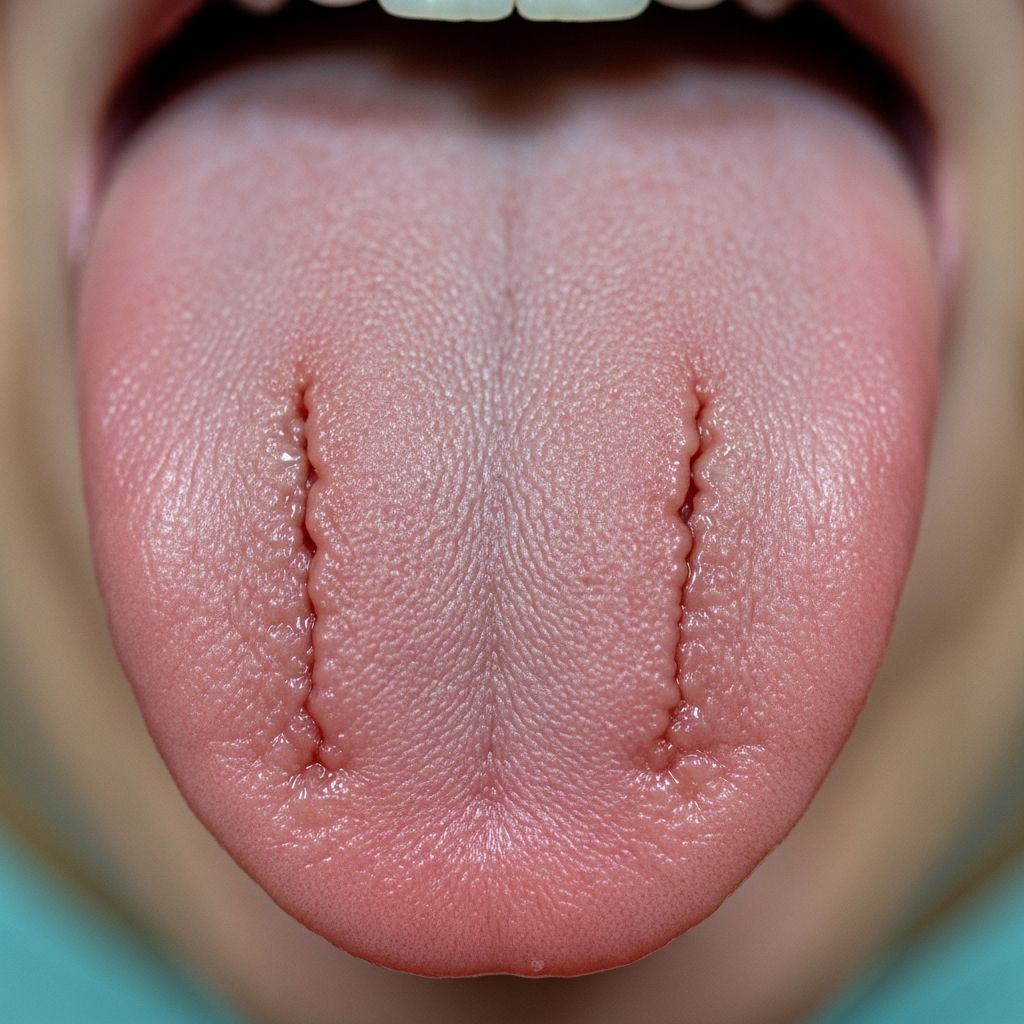
A fissured tongue is a benign condition that involves having grooves, furrows, or cracks on the surface of your tongue. Unlike the typical flat and smooth tongue with tiny bumps called papillae, a fissured tongue displays visible grooves or fissures across its surface. These fissures can vary significantly in appearance and depth, ranging from shallow indentations to deeper cracks that make the tongue look wrinkled or cracked.
This condition is also known by several other names, including lingua plicata, furrowed tongue, scrotal tongue, and plicated tongue. Despite its appearance, a fissured tongue is a completely normal variation of tongue anatomy and does not indicate any underlying health problem or disease.
How Common Is Fissured Tongue?
The prevalence of fissured tongue varies depending on geographic location and study methodology. Research suggests that anywhere from 2% to 20% of people worldwide have tongue fissures, with rates in the United States typically ranging between 2% to 5%. The variation in reported prevalence is partly due to the lack of universal diagnostic guidelines for this condition.
Fissured tongues are slightly more common in males and in people older than 50 years of age. Researchers are not entirely certain why this age-related increase occurs, but it may relate to the natural aging process where grooves deepen over time. Some geographic regions show notably higher instances of tongue fissures than others, suggesting that genetic or environmental factors may play a role in the condition’s development.
Understanding the Appearance of Fissured Tongue
Fissured tongues come in many different varieties and presentations. The grooves may be as shallow as 2 millimeters or as deep as 6 millimeters. The fissures typically make your tongue appear cracked, wrinkled, or furrowed, depending on their depth and pattern.
When examining your tongue in a mirror, you might observe:
– Deep or shallow grooves running along the tongue surface- A wrinkled or corrugated appearance- Cracks that may extend to the margin of the tongue- Patterns that are confined to the anterior two-thirds of the tongue- Varying depths of fissures across different areas of the tongue
What Causes Fissured Tongue?
The exact cause of fissured tongue remains unknown, and researchers continue to investigate the underlying mechanisms. However, several factors appear to contribute to the development of this condition.
Genetic Factors
One of the most compelling theories suggests that genetics play a significant role in fissured tongue development. Tongue fissures can run in families, which may explain why certain populations in specific geographic regions are more likely to have fissured tongues than people in other regions. A polygenic or autosomal dominant hereditary component is presumed, though more research is needed to fully understand the genetic mechanisms involved.
Associated Conditions
While fissured tongue itself is not a sign of disease, certain medical conditions are more commonly associated with the development of fissures. People with specific health conditions are statistically more likely to have tongue fissures, including:
– Geographic tongue (benign migratory glossitis)- Melkersson-Rosenthal syndrome- Down syndrome- Sjögren syndrome- Psoriasis- Acromegaly- Macroglossia- Oral-facial-digital syndrome type I- Pierre Robin syndrome- Pernicious anemia- Removable dentures
It is important to note that having fissures on your tongue is not a warning sign of any of these conditions. Instead, fissures simply occur more frequently alongside certain health issues. The presence of fissures alone does not indicate that you have developed a disease or are missing key nutrients.
Symptoms and When They Occur
A fissured tongue is typically asymptomatic, meaning most people experience no discomfort or noticeable symptoms from the condition itself. However, if the fissures are deep, food particles or bacteria may become lodged within the grooves, which can trigger various symptoms.
When food or bacteria become trapped in the fissures, you may experience:
– Tongue inflammation or swelling- Burning sensation on the tongue- Halitosis (bad breath)- Mild discomfort or irritation- Infection if bacteria proliferate in the grooves
These symptoms are not caused by the fissures themselves but rather by the accumulation of debris and bacteria within the grooves. You can develop these symptoms even without fissures if bacteria accumulate in other areas of your mouth. The good news is that keeping the grooves free of bacteria through proper oral hygiene can keep you completely symptom-free.
How Is Fissured Tongue Diagnosed?
Diagnosing a fissured tongue is straightforward and requires no special tests or procedures. Healthcare providers can identify fissures simply by looking at your tongue. Your dentist may notice them during a routine dental cleaning or examination.
Since the diagnosis is clinical and based on visual inspection, there are no blood tests, imaging studies, or laboratory analyses needed. A simple examination of your tongue’s dorsal (top) surface is sufficient for your healthcare provider to confirm the presence of fissures and rule out other conditions that might cause similar appearances.
Treatment Options for Fissured Tongue
Treatment for fissured tongue depends on whether you are experiencing symptoms. In most cases, no active treatment is necessary.
Self-Care and Oral Hygiene
The primary approach to managing a fissured tongue involves maintaining excellent oral hygiene:
– Brush your teeth and tongue regularly with a soft-bristled toothbrush- Gently clean the grooves on your tongue to remove food debris and bacteria- Floss daily to remove food particles between teeth- Rinse your mouth with water after meals- Use a tongue scraper if recommended by your dentist- Maintain regular dental checkups
When Professional Treatment Is Needed
You won’t need professional treatment unless food or bacteria get stuck inside a groove, leading to inflammation or infection. In cases where deeper grooves are causing problems with bacterial accumulation, your healthcare provider may recommend antimicrobial rinses such as chlorhexidine gargles to help control bacteria and prevent infection.
If you develop signs of infection or persistent inflammation, your dentist or physician can provide appropriate treatment to address these complications.
Is Fissured Tongue Dangerous or a Sign of Cancer?
No. Tongue fissures are benign and are not a sign of any disease, including cancer. A fissured tongue is simply a less common version of a normal tongue. Having fissures is as harmless as having an outie instead of an innie for a belly button—it is just a natural variation in human anatomy.
If you notice changes in your tongue’s appearance or develop unusual symptoms, it is never wrong to ask your healthcare provider about them. However, when it comes to tongue fissures, the difference in appearance is entirely harmless and does not require any concern about malignancy or serious disease.
Key Differences Between Fissured Tongue and Other Tongue Conditions
It is important to distinguish between fissured tongue and other tongue conditions that may require attention. Fissured tongue and geographic tongue (benign migratory glossitis) are distinct entities that often coexist in the same individual. While both are benign, they present differently. Geographic tongue causes smooth, reddish patches on the tongue that may migrate over time, whereas fissured tongue specifically involves grooves or fissures on the surface.
Geographic tongue may or may not cause noticeable symptoms, and like fissured tongue, it requires no specific treatment other than monitoring and maintaining good oral hygiene. Both conditions can coexist without indicating any underlying disease.
Frequently Asked Questions About Fissured Tongue
Q: Is a fissured tongue a sign of nutritional deficiency?
A: No. A fissured tongue is not a sign that you are missing key nutrients or have a vitamin deficiency. It is simply a harmless characteristic that occurs more frequently alongside certain conditions but is not indicative of any deficiency itself.
Q: Can fissured tongue be prevented?
A: Since the exact cause is unknown and genetics appear to play a role, fissured tongue cannot be completely prevented. However, maintaining good oral hygiene can prevent symptoms from developing if fissures are present.
Q: Should I be concerned if I notice fissures on my tongue?
A: If you have fissured tongue without symptoms, there is no reason for concern. As long as you maintain good oral hygiene and practice proper tongue cleaning, the grooves in your tongue should not cause any trouble. Mention it to your healthcare provider during routine checkups if you have concerns.
Q: Do fissures get worse with age?
A: It is possible that fissures may deepen with age as part of the natural aging process. Tongue fissures are slightly more common in people older than 50, which may relate to this age-related deepening of grooves.
Q: What should I do if food gets trapped in my tongue fissures?
A: Gently clean the grooves with a soft toothbrush or tongue scraper. Maintain good oral hygiene and rinse your mouth regularly. If you develop inflammation or signs of infection, contact your dentist or healthcare provider.
Q: Do I need to see a specialist for fissured tongue?
A: In most cases, you do not need to see a specialist. Your regular dentist or primary care physician can diagnose and monitor your fissured tongue. Specialists may be consulted only if complications develop or if the fissures are associated with an underlying condition.
When to Contact Your Healthcare Provider
While fissured tongue is harmless in most cases, you should contact your healthcare provider if you experience:
– Persistent pain or discomfort on your tongue- Signs of infection such as increasing swelling or pus- Difficulty eating or swallowing- Sudden changes in tongue appearance- Symptoms that do not improve with good oral hygiene- Concern that bacteria may be trapped in the grooves
Your provider can assess your symptoms and recommend appropriate management strategies or refer you to a specialist if needed.
Conclusion
A fissured tongue is a benign condition that represents a normal variation in tongue anatomy. With a prevalence ranging from 2% to 20% depending on geographic location and population studied, fissured tongues are more common than many people realize. The condition is typically asymptomatic and requires no treatment beyond maintaining excellent oral hygiene.
Understanding that fissured tongue is harmless can help alleviate concerns about this condition. By practicing good dental hygiene, brushing and cleaning your tongue regularly, and monitoring for any unusual symptoms, you can ensure that your fissured tongue remains trouble-free throughout your life. If you ever have concerns about your tongue or notice changes in its appearance, do not hesitate to discuss them with your dentist or healthcare provider.
References
- Fissured Tongue — Cleveland Clinic Journal of Medicine. 2019-11. https://www.ccjm.org/content/86/11/714
- Fissured Tongue: Causes & Treatment — Cleveland Clinic. 2024-03-27. https://my.clevelandclinic.org/health/diseases/fissured-tongue
- Fissured Tongue — American Academy of Oral Medicine. https://www.aaom.com/fissured-tongue
- Benign Migratory Glossitis and Fissured Tongue — Cleveland Clinic Journal of Medicine. 2013-10. https://www.ccjm.org/content/92/10/591
- Oral Health and Tongue Conditions — National Institutes of Health, PubMed. https://pubmed.ncbi.nlm.nih.gov/31710590/
Similar Articles








Read full bio of medha deb