Fit Balance Exercises Into Your Busy Day
Discover practical strategies to incorporate balance exercises into your hectic daily schedule.
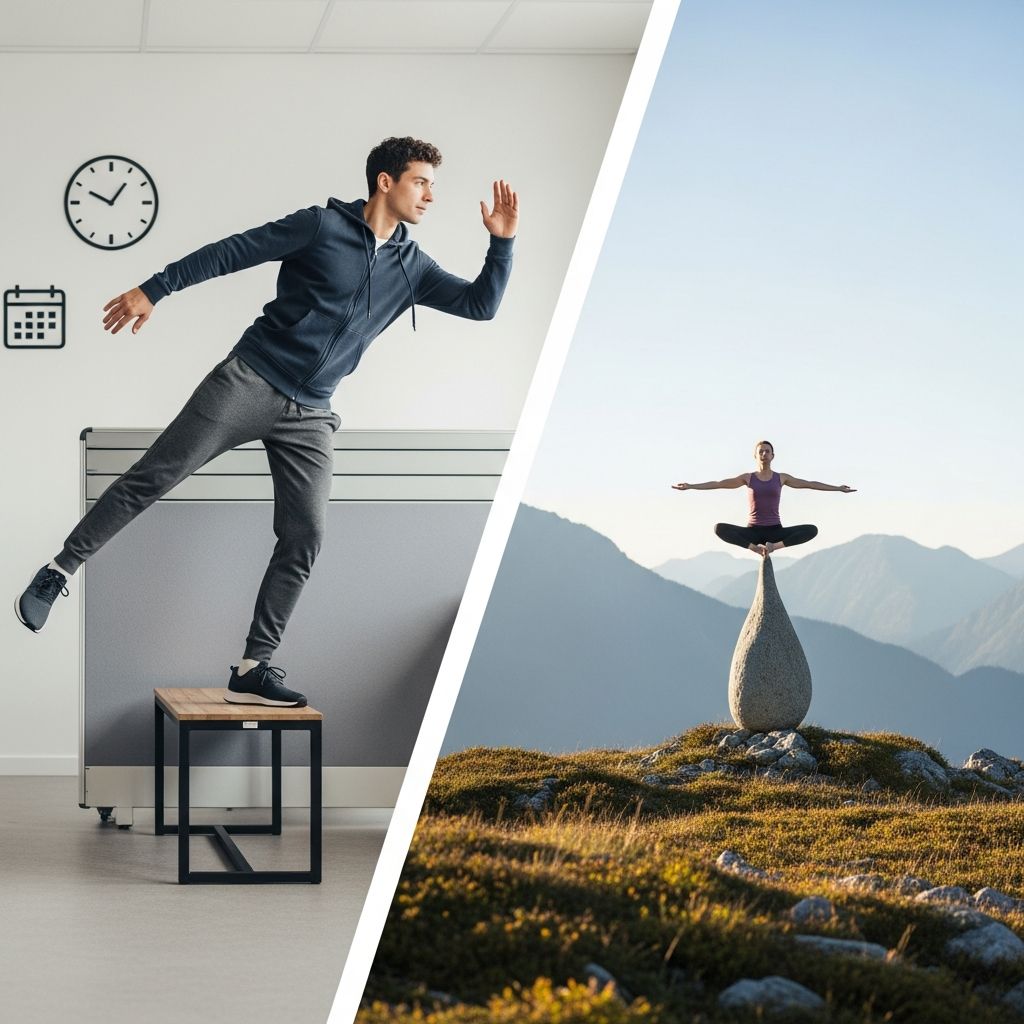
Finding time to exercise when your schedule is packed can feel nearly impossible. Between work commitments, family responsibilities, and daily obligations, physical activity often takes a backseat. However, maintaining regular exercise, particularly balance work, is essential for preventing falls, improving stability, and supporting overall health. The good news is that you don’t need to carve out hours at the gym to reap significant benefits. Balance exercises can be integrated seamlessly into your existing daily routine, requiring just a few minutes here and there.
Balance training is particularly valuable for people of all ages, from young adults looking to improve athletic performance to older adults aiming to maintain independence and reduce fall risk. Research demonstrates that functional fitness exercises significantly improve balance, coordination, and stability while reducing injury risk. The challenge isn’t finding the value in balance work—it’s finding the time. This guide offers practical, actionable strategies to help you fit balance exercises into even the busiest day.
Why Balance Exercises Matter
Balance exercises strengthen the muscles and neural pathways responsible for maintaining stability and coordination. These workouts engage your core, legs, and proprioceptive system—the body’s ability to sense its position in space. Strong balance protects you from falls, improves athletic performance, enhances daily functional capacity, and contributes to overall fitness and longevity.
The Centers for Disease Control and Prevention emphasizes that adults need at least 150 minutes of moderate-intensity aerobic activity weekly, combined with muscle-strengthening activities on two or more days. Balance training complements these requirements efficiently, often providing cardiovascular and strength benefits simultaneously while also improving stability and coordination.
The Five-Minute Strategy: Breaking Exercise Into Manageable Chunks
One of the most effective approaches to fitting exercise into a busy schedule is the accumulation method. Research from Harvard Medical School shows that you can achieve significant health benefits by combining multiple five-minute bouts of activity throughout your day. This approach transforms the question from “How do I find one hour?” to “Can I find five minutes right now?”
Rather than waiting for a perfect opportunity to complete a full workout, embrace the reality of modern life. Five minutes of balance exercises performed consistently throughout your day adds up quickly. Three five-minute sessions daily equals 15 minutes, which can be performed several times per week. Over time, these accumulated minutes meet or exceed recommended exercise guidelines while feeling far more manageable within your schedule.
Strategic Timing: When to Fit Balance Work Into Your Day
Morning Momentum Strategy
Mornings often offer the quietest, most controlled time of day. Waking up just 30 minutes earlier provides dedicated space for balance work before daily demands intensify. Morning exercise boosts focus, reduces stress, and establishes a positive tone for your entire day. A quick morning routine might include standing on one leg while brushing your teeth, performing heel-to-toe walks down your hallway, or doing standing marches in place with high knees.
Workday Movement Integration
Your work environment offers numerous opportunities for balance training. Walking meetings provide movement while brainstorming or discussing projects. Taking the stairs instead of elevators engages balance and strengthens stabilizing muscles. Standing at your desk for portions of the day naturally improves balance through sustained postural engagement. These workplace modifications add up significantly when performed consistently.
Transition Time Utilization
The moments between activities—waiting for coffee to brew, holding for a phone call, or between meetings—represent untapped opportunities. Stand on one leg while waiting for your microwave. Practice single-leg balance while brushing your teeth. Perform gentle marching movements during commercial breaks. These micro-sessions feel effortless because you’re multitasking rather than creating additional time commitments.
Evening and Family Time Incorporation
Balance exercises can become family activities that don’t feel like formal workouts. Challenge your children to a standing-on-one-leg contest. Practice heel-to-toe walks together. Create games that involve balance challenges. This approach builds healthy movement habits for your entire family while ensuring you complete your exercise.
Practical Balance Exercises for Busy People
Standing Single-Leg Balance
Stand on one leg for 20-30 seconds, keeping your other knee bent at roughly 90 degrees. Perform this near a wall or sturdy furniture for safety. Progress by closing your eyes or moving your free leg in small circles. This fundamental exercise requires no equipment, takes minimal space, and effectively strengthens ankle and leg stabilizers.
Heel-to-Toe Walking
Walk in a straight line, placing your heel directly in front of your toes with each step, as though walking on a tightrope. This exercise improves balance and coordination while being easily incorporated into hallway walking. Perform this 10-15 meters daily for measurable improvement in stability.
Standing Marches
March in place while maintaining an upright posture, lifting your knees high with control. Perform this for 30-45 seconds, gradually increasing duration as fitness improves. This exercise elevates heart rate while improving leg strength and balance simultaneously.
Tandem Stance
Stand with one foot directly in front of the other, heel-to-toe, for 20-30 seconds. Switch feet and repeat. Progress by closing your eyes or holding the position for longer durations. This challenging balance exercise can be performed almost anywhere and requires no equipment.
Sit-to-Stand Exercises
Rise from a seated position to standing without using your hands, then sit back down slowly and controlled. Perform 8-12 repetitions. This functional exercise improves leg strength and balance while mimicking real-world activities like standing from chairs.
Tools and Technology for Busy Schedules
Modern technology eliminates excuses for skipping balance training. Free fitness apps provide guided balance routines lasting 5-15 minutes. YouTube videos offer instructional demonstrations of balance exercises suitable for all fitness levels. Virtual fitness classes conducted via video conferencing allow you to exercise at home while connecting with instructors and peers.
These resources enable you to exercise whenever and wherever you choose—no gym membership required, no commute necessary, no expensive equipment needed. The barrier to exercise has shifted from access to motivation and scheduling priority.
Creating Your Personal Schedule
Plan Your Week in Advance
Treat balance exercise like any other important appointment. Block specific time slots on your calendar, even if those slots are just 5-10 minutes. Written commitments feel more binding than vague intentions. Schedule balance work for times when you’re most likely to follow through—typically morning hours or immediately after work before fatigue sets in.
Prepare the Night Before
Remove friction from your routine. Lay out workout clothes if you exercise in the morning. Set up your exercise space. Have your phone charged and apps ready. Identify which balance exercises you’ll perform so you don’t waste time deciding during your limited window.
Reframe Exercise as Non-Negotiable
Think of balance training the same way you approach brushing your teeth or attending important meetings. Your health deserves equal priority. When exercise becomes non-negotiable rather than optional, you’re significantly more likely to maintain consistency.
Overcoming Common Obstacles
Insufficient Time Perception
The most commonly cited barrier to exercise is insufficient time. However, functional fitness’s efficiency advantage means significant benefits occur in short periods. Fifteen consistent minutes weekly surpasses sporadic longer sessions. Accept that your balance routine may be brief and embrace that reality rather than avoiding exercise altogether because you can’t dedicate an hour.
Schedule Disruptions
Flexibility is essential for long-term success. Develop backup plans for inevitable disruptions. On days when you can’t complete your planned routine, perform a shorter version. Some movement always exceeds no movement. Consistency matters more than perfection.
Motivation Fluctuations
Make balance training social. Invite a friend for walking meetings. Join group fitness classes. Perform balance exercises with family members. Social accountability and enjoyment significantly improve adherence.
The Accumulation Advantage
Balance training accumulation offers significant advantages for busy individuals. Rather than requiring one continuous 30-minute block, you can achieve equivalent benefits through multiple shorter sessions distributed throughout your day. This approach accommodates real-world schedules while maintaining consistency.
Research from Harvard Medical School confirms that accumulated exercise bouts provide equivalent health benefits to continuous sessions. If you complete five five-minute balance sessions daily, you’ve accumulated 25 minutes of exercise—substantially meeting recommended guidelines while feeling far more manageable.
| Exercise Duration | Daily Frequency | Weekly Total | Implementation Strategy |
|---|---|---|---|
| 5 minutes | 5 times daily | 175 minutes | Micro-sessions throughout day |
| 10 minutes | 3 times daily | 210 minutes | Morning, lunch, evening sessions |
| 15 minutes | 2 times daily | 210 minutes | Morning and evening workouts |
| 20 minutes | 1 time daily | 140 minutes | Single dedicated workout time |
Rethinking What Counts as Exercise
Balance work doesn’t always look like formal exercise. Everyday activities provide significant balance training benefits. Gardening involves standing balance and reaching movements. Cleaning engages core stability and coordination. Walking the dog requires constant balance adjustment. Biking to the store combines cardiovascular work with balance training. When time is tight, recognize that everyday activities count as movement and intentionally maximize their balance-training potential.
This reframing liberates you from the “all-or-nothing” mindset that prevents many busy people from exercising. You’re not choosing between formal workouts or nothing. You’re maximizing the movement value of activities you’re already performing.
Frequently Asked Questions
Q: How much time do I need to dedicate to balance exercises to see results?
A: Significant health benefits can be achieved with as little as 15-20 minutes of balance training, 3-4 times per week. Consistency matters more than duration. Regular short sessions outperform sporadic longer workouts. Even five minutes daily, accumulated throughout your day, produces measurable improvements in balance and stability.
Q: Can balance exercises be performed at home without equipment?
A: Yes. Most effective balance exercises require no equipment beyond a sturdy piece of furniture for safety support. Standing on one leg, heel-to-toe walking, tandem stances, and sit-to-stand movements require only your body weight. Home-based balance training eliminates commute time and equipment costs while maximizing convenience.
Q: What’s the best time of day to perform balance exercises?
A: The best time is whenever you’re most likely to exercise consistently. For many people, early morning provides the quietest, most controlled environment. For others, lunch breaks or post-work sessions work better. Choose your timing based on your personal schedule, energy patterns, and consistency likelihood.
Q: How can I stay motivated when my schedule gets disrupted?
A: Flexibility is key to long-term success. Develop backup plans for common disruptions, such as shorter home workouts when you can’t get to your planned location. Focus on maintaining the habit even if individual sessions are modified. Remember that some activity is always better than none, and consistency matters more than perfection.
Q: Are balance exercises appropriate for all ages and fitness levels?
A: Balance training benefits people of all ages, from young athletes improving performance to older adults preventing falls. Always start at an appropriate level for your current fitness. Perform exercises near sturdy furniture for safety. Progress gradually. Consult healthcare providers if you have specific health concerns or limitations.
Q: Can I combine balance exercises with other forms of activity?
A: Absolutely. Balance training integrates well with cardiovascular and strength activities. Many functional exercises simultaneously provide balance, strength, and cardiovascular benefits. This multifaceted approach maximizes efficiency for busy schedules while addressing multiple fitness components.
Moving Forward: Your Action Plan
Fitting balance exercises into a busy day requires strategy, flexibility, and commitment to making movement a priority. Start by identifying two or three specific times tomorrow when you can complete five-minute balance sessions. Perform simple exercises like single-leg stands or heel-to-toe walks. Notice how small this commitment feels compared to perceived barriers.
Plan your week in advance, blocking specific times for balance work. Prepare the night before by laying out clothes or setting up your space. Embrace the accumulation approach, recognizing that multiple short sessions equal significant health benefits. Make exercise social when possible, connecting physical activity with relationships and enjoyment.
Remember that your health deserves priority equal to work commitments and family responsibilities. By viewing balance exercises as non-negotiable rather than optional, you’re far more likely to maintain consistency. Small, regular sessions produce measurable improvements in stability, strength, and functional capacity. Your busiest day is the perfect time to start.
References
- Physical Activity Guidelines for Americans — U.S. Department of Health and Human Services. 2018. https://health.gov/our-work/nutrition-physical-activity/physical-activity-guidelines
- Functional Fitness Improves Balance and Reduces Fall Risk — Harvard Health Publishing. 2024. https://www.health.harvard.edu
- Falls and Fractures in Older Adults: Causes and Prevention — Centers for Disease Control and Prevention. 2024. https://www.cdc.gov/falls
- Accumulated Exercise Bouts Provide Equivalent Health Benefits — Harvard Medical School Continuing Education. 2022. https://hms.harvard.edu
- Functional Fitness for Busy Schedules — YMCA of Central Virginia. 2024. https://ymcacva.org
Similar Articles







Read full bio of medha deb