Brief Fitness Test May Predict How Long You’ll Live
Simple balance and fitness tests can predict your lifespan and overall health outcomes.
A Brief Fitness Test May Predict How Long You’ll Live
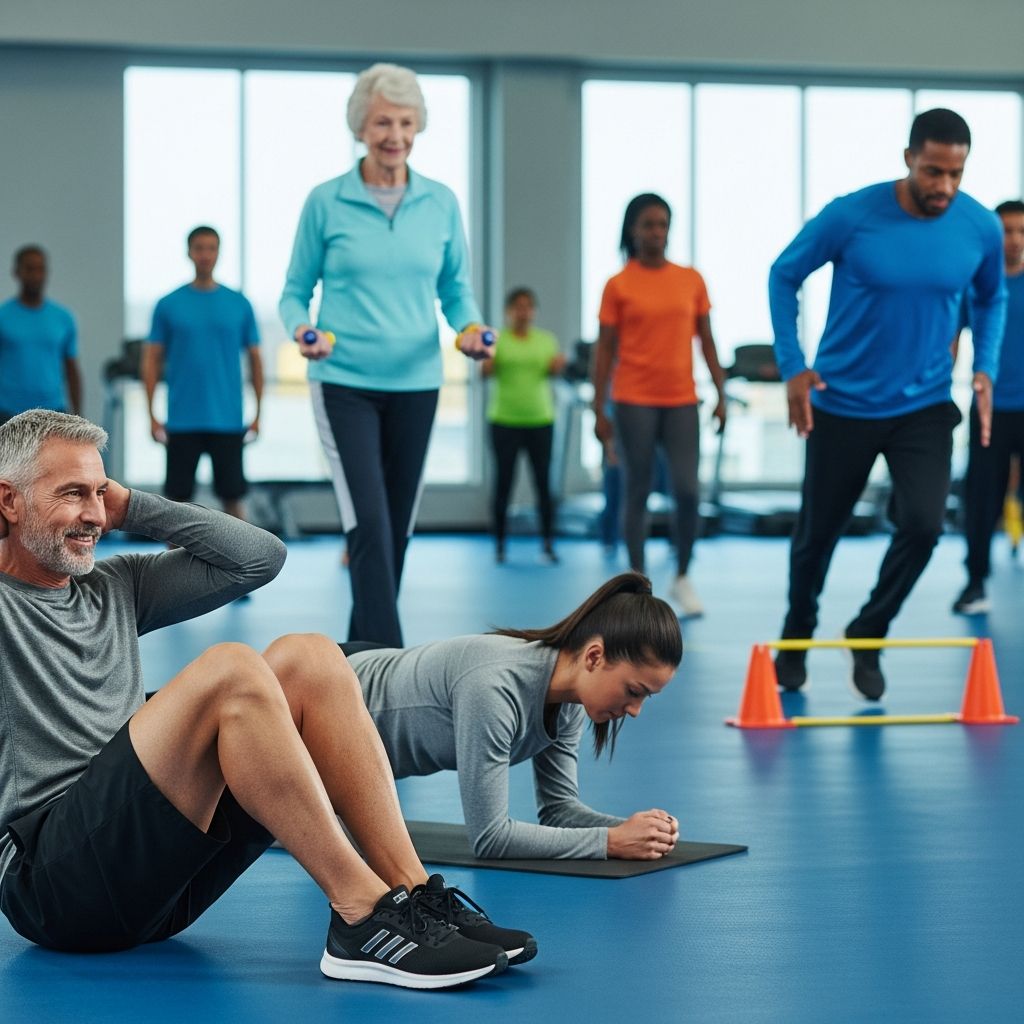
In our quest for longer, healthier lives, we often overlook the simplest indicators of our overall health and longevity. Recent research emerging from prestigious medical institutions has revealed that brief fitness tests—far simpler than comprehensive medical examinations—may provide powerful predictions about how long you’re likely to live. These quick assessments don’t require expensive equipment, gymnasium memberships, or hours of training. Instead, they measure fundamental aspects of physical fitness that correlate strongly with survival rates and overall health outcomes.
The connection between physical fitness and longevity is not new, but the precision with which specific, brief tests can predict lifespan is increasingly well-established through rigorous scientific research. Understanding these tests and what they reveal about your health can motivate positive lifestyle changes and help you take control of your wellness journey.
The Science Behind Fitness Testing and Longevity
Physical fitness serves as a comprehensive health marker because it reflects multiple body systems functioning in harmony. When researchers examine fitness levels, they’re essentially measuring cardiovascular health, neurological function, muscle strength, balance and coordination, bone density, and metabolic efficiency. All of these factors directly influence how well your body ages and how resistant it is to disease.
The relationship between fitness and longevity has been documented extensively in medical literature. Studies consistently show that individuals with higher fitness levels have significantly lower risks of premature death from all causes, including cardiovascular disease, cancer, and other chronic conditions. What makes recent research particularly valuable is the discovery that simple, brief tests can capture this information remarkably accurately.
One landmark study examined 1,700 adults between the ages of 50 and 75 over a 10-year period. The findings were striking: individuals who could perform specific fitness assessments successfully had survival rates exceeding 90 percent over the following seven years. This wasn’t dependent on other health factors—the fitness test results independently predicted outcomes across diverse populations with varying medical histories.
The One-Leg Stand Test: A Window Into Your Health
Among the most revealing brief fitness tests is the one-leg stand, also known as static balance or unipedal stance testing. This simple assessment requires nothing more than you, a clear space, and a few seconds of time. Despite its simplicity, the test provides remarkably accurate information about your overall health and longevity.
The one-leg stand test measures static balance—your ability to maintain equilibrium while standing on a single leg. Balance is a complex neurological function that integrates visual input, inner ear information, proprioception (body awareness), muscle strength, and cognitive processing. When any of these systems falter, balance deteriorates. This makes the balance test an excellent screening tool for identifying potential health issues.
How to Perform the One-Leg Stand Test
Performing the one-leg stand test is straightforward and requires minimal preparation:
- Stand upright in a clear, safe area with no obstacles nearby
- Choose either your left or right leg to stand on
- Lift the opposite leg off the ground
- You may keep your eyes open or closed (test both versions)
- Time how long you can maintain this position without losing balance or putting your other foot down
- Repeat with the opposite leg
Related Stories



Safety is important when performing this test. Have a wall or sturdy object nearby that you can steady yourself with if needed. If you have any balance problems or medical conditions, consider performing this test with supervision or guidance from a healthcare provider.
Age-Based Benchmarks for Balance Performance
Balance capacity naturally decreases with age, so it’s important to compare your results against age-appropriate benchmarks rather than expecting the same performance across all age groups. Here are the general standards for adequate balance performance:
| Age Group | Expected One-Leg Stand Duration |
|---|---|
| 50s | Approximately 40 seconds |
| 60s | Approximately 20 seconds |
| 70s and older | Approximately 10 seconds |
If you cannot meet these benchmarks for your age group, it doesn’t necessarily indicate serious health problems, but it does suggest that improving your balance and physical fitness should become priorities. The encouraging news is that balance can be significantly improved through targeted exercise and lifestyle modifications.
What The 10-Second Threshold Reveals
Particular attention has been paid to the 10-second one-leg stand as a critical threshold. Research shows that individuals who can successfully stand on one leg with eyes open for at least 10 seconds without assistance have a greater than 90 percent probability of surviving the next seven years without disability or suffering cardiovascular death. This single metric, taking merely seconds to assess, correlates remarkably well with long-term survival outcomes.
The 10-second threshold is significant because it represents a minimum level of neuromuscular control and physical function. Achieving this benchmark indicates that your nervous system, muscles, and sensory systems are functioning adequately for basic daily activities. The ability to maintain balance for 10 seconds reflects sufficient strength, proprioception, and neurological coordination to reduce risk of falls, injuries, and disease.
Understanding the Multidimensional Nature of Balance
Balance is not a single, isolated physical capability. It’s multidimensional, meaning multiple body systems and health factors influence your balance performance. Understanding these dimensions helps explain why balance is such a powerful predictor of overall health and longevity.
Key Factors Affecting Balance Performance
Several interconnected factors influence your ability to balance on one leg:
- Neurological function: Your brain and nervous system must process sensory information and coordinate muscle responses
- Vision: Visual input provides crucial information about your spatial position and environment
- Inner ear function: Your vestibular system detects motion and maintains equilibrium
- Proprioception: Sensory receptors in muscles and joints communicate body position to your brain
- Muscle strength: Adequate leg, core, and stabilizer muscle strength is essential for maintaining balance
- Reaction time: Your nervous system must quickly respond to prevent falls
- Cognitive function: Attention and concentration are required to maintain balance, especially on one leg
- Cardiovascular health: Good circulation supports all physiological functions
- Joint health: Ankle, knee, and hip stability affect balance capacity
- Physical activity level: Sedentary lifestyles deteriorate balance more rapidly
When any of these systems decline or malfunction, balance performance deteriorates. This is why balance serves as such a comprehensive health indicator. A balance problem can signal issues ranging from neurological disease to orthopedic problems, vision concerns, sedentary lifestyle, or other underlying health conditions.
Other Brief Fitness Tests That Predict Longevity
While the one-leg stand test receives particular attention, research has identified several other brief fitness assessments that correlate with longevity and overall health outcomes.
Walking Speed and Step Count
Walking is one of the most accessible and beneficial forms of physical activity. Recent Harvard research demonstrates that you don’t need to achieve the often-cited 10,000 daily steps to gain significant health benefits. Walking just 4,000 steps a few times weekly can dramatically lower the risk of early death. This finding is particularly valuable because it shows that meaningful health improvements are achievable for people of varying fitness levels and abilities.
Your walking speed also provides important health information. Research shows that individuals who walk at moderate to brisk paces tend to have better cardiovascular outcomes and longer lifespans compared to those who walk slowly. This reflects overall cardiovascular fitness and functional capacity.
Exercise Frequency and Duration
Beyond individual tests, meeting broader exercise recommendations predicts longevity. Current guidelines recommend adults engage in at least 150 to 300 minutes weekly of moderate exercise, 75 to 150 minutes of vigorous activity, or equivalent combinations. Research indicates that exceeding these minimums provides additional benefits. Individuals who engage in two to four times the recommended amount of moderate physical activity show 26 to 31 percent lower all-cause mortality and 28 to 38 percent lower cardiovascular disease mortality.
Those performing two to four times the recommended vigorous physical activity show 21 to 23 percent lower all-cause mortality and 27 to 33 percent lower cardiovascular disease mortality. The encouraging news is that combining moderate and vigorous activities provides approximately 35 to 42 percent mortality reduction—nearly maximum benefit.
Interpreting Your Results and Taking Action
If you perform poorly on brief fitness tests, resist the urge to feel discouraged. These assessments are diagnostic tools, not judgments. Poor performance indicates areas where improvement is possible and beneficial. The fact that fitness tests predict longevity means that improving your fitness can literally extend your life.
If You Struggle with Balance
If you cannot comfortably stand on one leg for your age-appropriate benchmark duration, several evidence-based approaches can help:
- Tai Chi: This ancient practice emphasizes balance, body awareness, and controlled movement, making it excellent for balance improvement
- Yoga: Yoga poses build strength, flexibility, and proprioception while improving balance
- Strength training: Targeted exercises for legs, core, and stabilizer muscles improve balance capacity
- Proprioceptive training: Specific exercises designed to enhance body awareness and spatial orientation
- Vision and vestibular assessments: If balance problems persist, professional evaluation can identify underlying sensory issues
Importantly, balanced fitness—not just cardiovascular training—should be your goal. Many people focus exclusively on cardio while neglecting the balance, strength, and neurological fitness that these brief tests measure. A comprehensive fitness approach addressing multiple dimensions yields the best longevity outcomes.
Making Sustainable Changes
Recognizing that brief fitness tests predict your lifespan can provide powerful motivation for lifestyle changes. Start small and build gradually. If you currently struggle with balance, begin with beginner-level yoga or tai chi classes. If your step count is low, gradually increase daily walking. If you rarely exercise, start with 150 minutes weekly of moderate activity.
The relationship between fitness and longevity is dose-dependent but forgiving. Even modest improvements in fitness correlate with meaningful increases in survival probability. You don’t need to become an elite athlete—consistent, moderate improvements in fitness yield substantial longevity benefits.
The Broader Significance of Fitness Testing
Brief fitness tests represent a paradigm shift in health assessment. Rather than relying exclusively on blood work, imaging, or clinical measurements that require expensive equipment and professional administration, these simple tests can be performed independently and repeatedly, providing ongoing feedback about your health trajectory.
For healthcare systems, fitness testing offers a cost-effective screening tool. Identifying individuals at elevated health risk through simple assessments allows for targeted interventions before problems become severe. For individuals, these tests provide concrete, measurable goals that can motivate sustained fitness efforts.
Frequently Asked Questions
Q: How often should I perform the one-leg stand test?
A: You can perform this test weekly or monthly to track your progress. Regular testing helps you monitor improvements in balance and physical fitness over time. However, if you have balance problems or medical conditions, consult your healthcare provider about appropriate testing frequency.
Q: Can balance improve at any age?
A: Yes, balance can improve at any age through consistent practice. Tai Chi, yoga, and targeted strength training all enhance balance capacity in older adults. Even individuals in their 70s, 80s, and beyond can meaningfully improve their balance and reduce fall risk through appropriate exercise.
Q: Is the one-leg stand test accurate for predicting longevity?
A: Research demonstrates strong correlation between one-leg stand performance and survival outcomes, with over 90 percent of individuals meeting the 10-second threshold surviving seven years. However, it’s one indicator among many. Your overall health picture includes genetics, medical history, lifestyle factors, and other elements.
Q: What if I cannot perform the test safely?
A: If you have significant balance problems or medical conditions affecting balance, perform the test near a wall or with someone present for safety. Some individuals may need professional assessment rather than self-testing. Always prioritize safety over test completion.
Q: Can I improve my balance quickly?
A: While some improvements occur quickly, significant balance enhancement typically requires consistent practice over weeks and months. Starting with easier balance exercises and progressively increasing difficulty yields sustainable improvements.
Q: Are there other simple tests that predict longevity?
A: Yes, walking speed, daily step count, and adherence to exercise guidelines all predict longevity. Walking 4,000 steps several times weekly significantly reduces early death risk, and meeting or exceeding exercise recommendations provides substantial mortality reduction.
Q: Does age affect how much these tests predict about longevity?
A: While age-adjusted benchmarks differ, fitness assessments predict longevity across age groups. Older adults with better fitness performance have better outcomes than their less-fit peers, regardless of age.
References
- Static balance performance predicts survival in middle-aged and older individuals — British Journal of Sports Medicine. June 2022. https://bjsm.bmj.com
- Massive study uncovers how much exercise is needed to live longer — American Medical Association. Published in Circulation. https://www.ama-assn.org/public-health/prevention-wellness/massive-study-uncovers-how-much-exercise-needed-live-longer
- You don’t need 10,000 steps a day — Harvard researchers reveal how few can still add years to your life — Harvard Health Publishing. https://www.health.harvard.edu
Similar Articles








Read full bio of medha deb