Nordic Walking: A Fitness Trend for Total-Body Health
Transform your walk into a full-body workout with poles designed for better health.
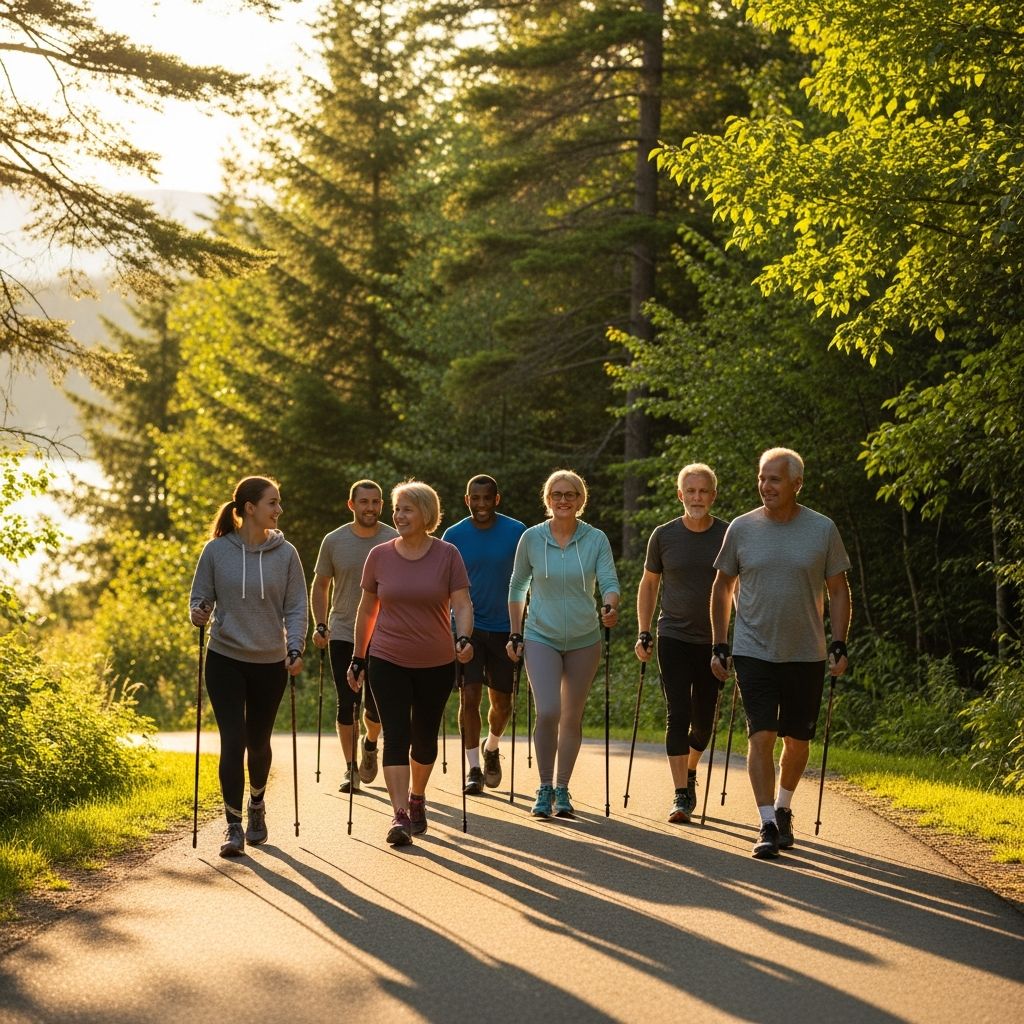
Nordic walking has emerged as one of the most effective and accessible fitness trends in recent years, offering a unique approach to exercise that combines the simplicity of walking with the comprehensive benefits of a full-body workout. This low-impact exercise method uses specially designed poles to engage both the upper and lower body simultaneously, making it an ideal choice for people of all ages and fitness levels. Whether you’re looking to improve your cardiovascular health, build strength, or simply stay active, Nordic walking provides a well-rounded solution that fits seamlessly into any lifestyle.
What Is Nordic Walking?
Nordic walking, also known as walking with poles, is a form of exercise that involves using specially designed poles while walking to propel yourself forward and activate your upper body. Unlike traditional walking, where the arms swing naturally at your sides, Nordic walking requires you to plant the poles against the ground with each stride, engaging your shoulders, arms, core, and legs in a coordinated motion. This simple yet effective technique transforms an ordinary walk into a dynamic, full-body workout.
The poles used in Nordic walking are lighter and more durable than traditional hiking poles, specifically engineered to optimize the walking motion. They typically come with wrist straps that allow you to push off the ground without losing grip, making the technique easier to learn and more efficient to perform. The design ensures that walkers can maintain proper posture and achieve maximum muscle engagement throughout their workout.
The Science Behind Nordic Walking
Research has consistently demonstrated the effectiveness of Nordic walking as a comprehensive exercise method. A systematic review published in peer-reviewed literature found that Nordic walking exerts beneficial effects on resting heart rate, blood pressure, exercise capacity, maximal oxygen consumption, and quality of life. The analysis of multiple randomized controlled trials revealed that Nordic walking is superior to brisk walking without poles and performs comparably to jogging in several fitness measures.
One significant advantage of Nordic walking is its efficiency in calorie burning. Studies estimate that Nordic walking burns anywhere from 18% to 67% more calories than traditional walking, depending on the intensity and individual factors. This increased energy expenditure occurs because approximately 80 to 90 percent of your body’s muscles are engaged during Nordic walking, compared to the limited muscle activation of regular walking.
The cardiovascular benefits are particularly impressive. Research comparing Nordic walking to conventional walking has shown that Nordic walking participants achieve higher heart rates and oxygen consumption even when walking at slower speeds. Additionally, studies have documented improvements in exercise capacity and oxygen uptake in cardiac rehabilitation patients using Nordic walking programs, with some research indicating that heart failure patients showed enhanced lung capacity measured by VO2 max.
Comprehensive Health Benefits
Cardiovascular Improvements
One of the primary advantages of Nordic walking is its profound impact on cardiovascular health. The exercise increases heart rate and promotes better circulation throughout the body, strengthening the heart muscle over time. Studies have shown that Nordic walking can boost heart function and quality of life in people with coronary artery disease. The increased demand placed on your cardiovascular system during Nordic walking leads to improved endurance and overall heart health, making it an excellent choice for those looking to prevent or manage cardiovascular conditions.
Full-Body Strength Development
Unlike traditional walking, which primarily engages the lower body, Nordic walking activates multiple muscle groups simultaneously. The upper-body strength improvement from Nordic walking has been documented in research studies, with participants showing significant gains in shoulder, arm, and core strength. The continuous pushing motion against the poles engages the chest, shoulders, triceps, and back muscles, while the walking motion continues to work the quadriceps, hamstrings, glutes, and calf muscles. This comprehensive muscle engagement makes Nordic walking exceptionally efficient for building strength without requiring additional equipment or gym sessions.
Related Stories



Low-Impact Joint Protection
A significant advantage of Nordic walking for individuals concerned about joint health is its low-impact nature. The poles absorb considerable pressure during each stride, reducing the stress placed on your knees, ankles, and hips compared to regular walking or running. This cushioning effect means you can exercise longer and more frequently without risking joint damage or exacerbating existing joint problems. This makes Nordic walking particularly beneficial for older adults, individuals recovering from injury, or those with arthritis.
Enhanced Flexibility and Balance
Research has shown that regular Nordic walking participation improves both upper and lower-body flexibility. The dynamic nature of the exercise, which requires coordinated movement patterns, also enhances overall coordination and efficiency of movement. Studies have documented increased coordination following Nordic walking programs, and the poles provide additional stability that can be beneficial for individuals with balance issues. This improvement in balance and coordination translates to better body awareness and reduced fall risk, especially important for aging populations.
Weight Management Support
The significant calorie burn associated with Nordic walking makes it an effective tool for weight management. Combined with improved metabolism and increased muscle mass, regular Nordic walking can lead to decreased fat mass and reduction in waist circumference. The exercise also improves metabolic markers such as reducing LDL “bad” cholesterol and triglycerides while improving HDL “good” cholesterol levels, contributing to overall health improvement.
Mental Health and Quality of Life Benefits
Beyond the physical health improvements, Nordic walking significantly enhances mental well-being and quality of life. The systematic review of Nordic walking research found consistent improvements in quality of life measures across various populations. The combination of outdoor activity, rhythmic movement, and physical exertion promotes the release of endorphins, reducing stress and anxiety. Many practitioners report improved mood, better sleep quality, and increased overall sense of well-being after incorporating Nordic walking into their routine.
The social aspect of Nordic walking also contributes to mental health benefits. Many communities have Nordic walking groups where participants can exercise together, creating a sense of community and social connection that enhances the mental health benefits of the activity.
Nordic Walking for Specific Health Conditions
Nordic walking has proven beneficial for individuals managing various health conditions. Research has documented its effectiveness for cardiac rehabilitation, with heart disease patients showing improved exercise capacity and oxygen uptake compared to standard rehabilitation programs. Additionally, Nordic walking has been successfully used for rehabilitation in individuals with intermittent claudication, Parkinson’s disease, depression, athletic injuries, and chronic low back pain.
For older adults in particular, Nordic walking provides an excellent form of concurrent exercise that improves multiple aspects of functional fitness simultaneously. The combination of cardiovascular training and strength training, delivered with minimal joint impact, makes it ideal for maintaining health and independence in aging populations.
Getting Started with Nordic Walking
Essential Equipment
To begin Nordic walking, you’ll need the following:
- Specially designed Nordic walking poles with wrist straps
- Comfortable walking shoes with good support
- Weather-appropriate clothing
- Water bottle for hydration
Proper Technique
Learning proper Nordic walking technique is essential for maximizing benefits and preventing injury. Begin by holding the poles with a comfortable grip, using the wrist straps for support. Start with a natural walking pace and practice the pole-planting motion, pushing backward against the ground with each stride. The poles should make contact with the ground at roughly the same time as your opposite foot. As you become more comfortable, you can increase your pace and intensity. Many communities offer formal Nordic walking instruction, and research demonstrates that supervised training leads to better compliance and results.
Intensity and Duration
Beginners should start with 20-30 minute sessions at a comfortable pace, gradually increasing duration and intensity over time. Research protocols typically involve moderate- to high-intensity walking for 30-40 minutes, with progression occurring over multiple weeks. The beauty of Nordic walking is that you can adjust intensity simply by walking faster or using more powerful pole movements, and interestingly, the perceived effort remains relatively low compared to the actual work being performed.
Comparison Table: Nordic Walking vs. Traditional Walking
| Aspect | Nordic Walking | Traditional Walking |
|---|---|---|
| Muscles Engaged | 80-90% of body muscles | Primarily lower body |
| Calorie Burn | 18-67% more than traditional walking | Baseline for comparison |
| Joint Impact | Low – poles absorb pressure | Moderate – direct impact on joints |
| Upper Body Strength | Significant improvement | Minimal improvement |
| Cardiovascular Intensity | Higher heart rate at same speed | Standard cardiovascular load |
| Pace Potential | 25% faster movement possible | Standard walking speed |
| Perceived Effort | Lower than actual work performed | Correlates more directly to work |
Who Should Try Nordic Walking?
Nordic walking is suitable for virtually everyone, from sedentary individuals beginning their fitness journey to athletes seeking an effective cross-training method. It’s particularly recommended for older adults seeking to maintain functional fitness and independence, individuals with cardiovascular concerns, people recovering from injury, those managing chronic conditions, and anyone looking for an efficient, low-impact workout. The exercise accommodates various fitness levels, allowing beginners to start gently and progress at their own pace while providing sufficient intensity for more advanced exercisers.
Frequently Asked Questions
Q: Is Nordic walking difficult to learn?
A: Nordic walking has a short learning curve. Most people can grasp the basic technique within a few sessions. Many communities offer classes or group instruction that can accelerate your learning and ensure proper technique from the beginning.
Q: Can I do Nordic walking on any terrain?
A: Yes, Nordic walking can be performed on various surfaces including paved paths, trails, and even beaches. The key is having appropriate poles and wearing suitable footwear for the terrain.
Q: How often should I do Nordic walking?
A: For optimal health benefits, aim for at least 150 minutes of moderate-intensity Nordic walking per week, which can be spread across multiple sessions. However, even three sessions weekly can provide significant health improvements.
Q: Is Nordic walking suitable for people with arthritis?
A: Yes, Nordic walking is excellent for people with arthritis because the poles reduce impact on joints while providing a full-body workout. The low-impact nature makes it gentler than running or high-impact aerobics while still delivering cardiovascular and strength benefits.
Q: Can Nordic walking help with weight loss?
A: Nordic walking can significantly support weight loss efforts by burning 18-67% more calories than regular walking and improving metabolic markers. Combined with proper nutrition, it’s an effective tool for weight management and body composition improvement.
Q: Do I need to be fit to start Nordic walking?
A: Not at all. Nordic walking is accessible to people of all fitness levels. You can begin at a comfortable pace and gradually increase intensity and duration as your fitness improves.
Conclusion
Nordic walking represents an innovative yet simple approach to comprehensive fitness that addresses multiple health dimensions simultaneously. With its scientifically-proven benefits for cardiovascular health, strength development, weight management, and mental well-being, combined with its low-impact nature and accessibility to all fitness levels, Nordic walking offers a practical solution for anyone seeking to improve their overall health and vitality. Whether you’re an older adult maintaining functional fitness, a cardiac patient in rehabilitation, or simply someone looking for an effective and enjoyable form of exercise, Nordic walking provides the perfect balance of challenge and accessibility. As research continues to validate its benefits and more people discover its transformative potential, Nordic walking is likely to remain a prominent and valued fitness trend for years to come.
References
- Health benefits of Nordic walking: a systematic review — PubMed Central/NIH. 2012-12-14. https://pubmed.ncbi.nlm.nih.gov/23253654/
- Effects of Nordic Walking Compared to Conventional Walking and Resistance Training on Fitness in Older Adults — PubMed Central/NIH. 2013. https://pmc.ncbi.nlm.nih.gov/articles/PMC3772584/
- Step It Up — Try Nordic Walking for Total-Body Health — WakeMed Health & Hospitals. 2023-05. https://www.wakemed.org/about-us/news-and-media/wakemed-blogs/2023/05/step-it-up-try-nordic-walking-for-total-body-health
- 5 Reasons To Try Nordic Walking — Cleveland Clinic Health Hub. 2024. https://health.clevelandclinic.org/nordic-walking
- Social and Demographic Determinants of Nordic Walking Practice: A Study of Participation and Health Outcomes — Nature. 2025. https://www.nature.com/articles/s41598-025-05043-8
Similar Articles








Read full bio of medha deb