Fixed Drug Eruption: Causes, Diagnosis, Treatment Guide
A recurrent skin reaction triggered by medications, appearing as round red patches at fixed sites with each exposure.
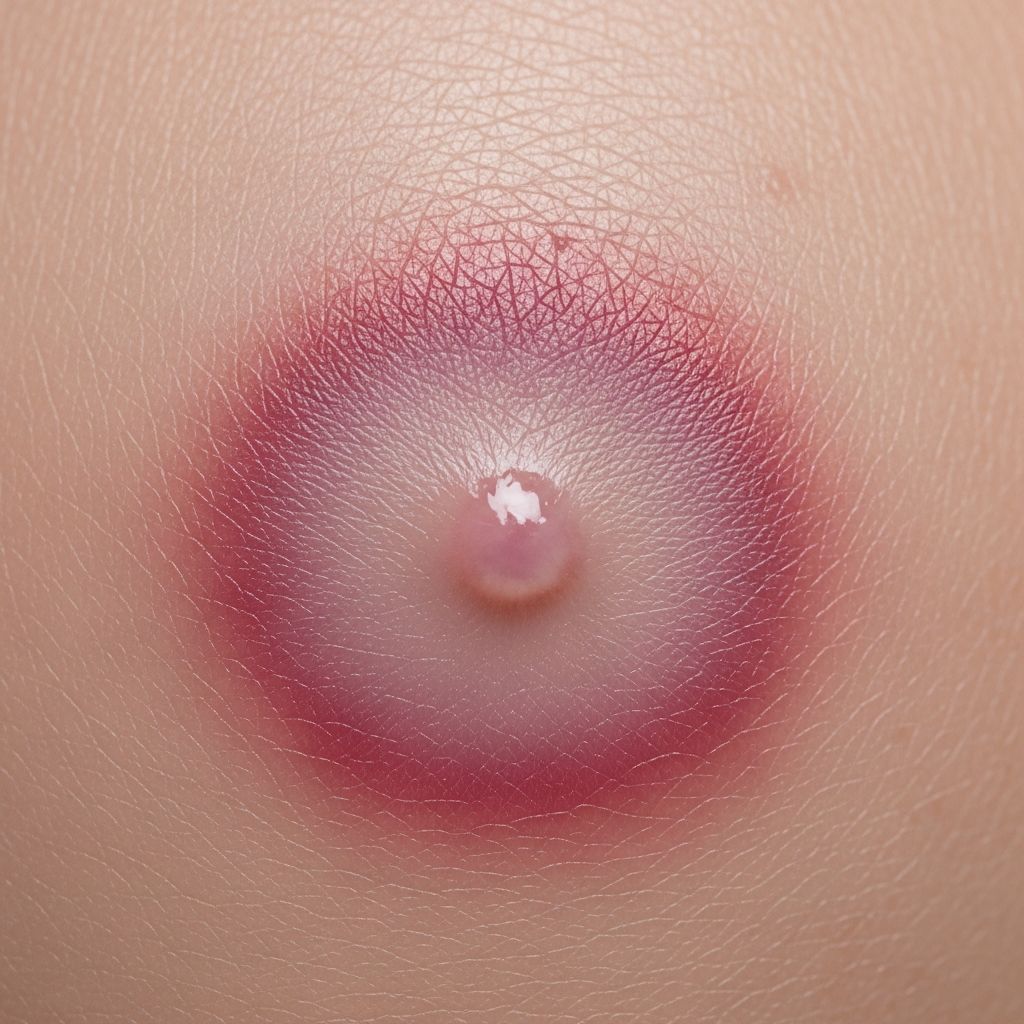
Fixed drug eruption is a distinctive cutaneous allergic reaction that characteristically recurs at the same site(s) on re-exposure to the medication or other chemical agent.
Introduction
Fixed drug eruption (FDE) represents a delayed type IV hypersensitivity reaction mediated by CD8+ T-cells residing at the dermo-epidermal junction. Upon activation by the drug antigen, these memory T-cells release interferon-gamma, leading to damage of epidermal basal keratinocytes and melanocytes. Recruited neutrophils and additional T-cells exacerbate the injury, resulting in characteristic skin lesions. This reaction differs from other drug eruptions by its site-specific recurrence, often developing within minutes to hours of re-exposure after an initial sensitization period that may span weeks to years. Patients typically remain systemically well, distinguishing FDE from more severe drug reactions like Stevens-Johnson syndrome.
The condition is underrecognized, frequently misdiagnosed as insect bites, urticaria, or erythema multiforme, due to its variable presentations and the commonality of implicated medications taken intermittently. Awareness is crucial, as prompt identification allows discontinuation of the offending agent, leading to resolution.
Demographics
Epidemiological data on FDE is limited, with unknown precise incidence rates. It affects individuals across ages but is more commonly reported in adults exposed to culprit medications. No strong gender predilection is noted, though certain drugs like oral contraceptives may influence patterns in females. In skin of colour, post-inflammatory hyperpigmentation is more prominent, potentially leading to underreporting or delayed diagnosis due to cosmetic concerns. FDE occurs worldwide, with higher documentation in regions with prevalent use of common triggers like antibiotics and NSAIDs.
Causes
FDE is predominantly triggered by oral medications, though topical, intravaginal, or even food-related exposures occur less commonly. Antimicrobials and non-steroidal anti-inflammatory drugs (NSAIDs) are the most frequent culprits.
Common medications associated with FDE include:
- Tetracyclines (e.g., doxycycline)
- NSAIDs (e.g., ibuprofen, naproxen, etoricoxib)
- Sulfonamides (e.g., cotrimoxazole, trimethoprim-sulfamethoxazole)
- Metronidazole
- Acetaminophen (paracetamol)
- Phenytoin
- Barbiturates
- Fluconazole
- Ciprofloxacin
- Pseudoephedrine
- Allopurinol
- Furosemide
- Penicillins
- Oral contraceptives
Less common causes involve herbal supplements, caffeine, food additives (flavorings, colorings, preservatives), or chemicals like phenolphthalein. Over 100 drugs have been implicated, with intermittent use (e.g., analgesics, antibiotics) heightening risk due to repeated exposures.
Clinical features
FDE typically manifests as one or more well-defined, round or oval, erythematous to violaceous patches or plaques, ranging from 1-10 cm in diameter. Lesions may blister, erode, or ulcerate, accompanied by swelling. They are often asymptomatic but can cause burning, itching, or pain.
Characteristic evolution:
- Onset: Abrupt, 30 minutes to 8 hours post-exposure; first episode may delay weeks-years.
- Acute phase: Dusky red/violaceous, possible central blister or erosion.
- Resolution: Scaling, crusting over days-weeks, fading to brown hyperpigmentation.
- Recurrence: Same site(s), enlarging or multiplying; refractory period exists post-flare.
Preferred sites include hands, feet, eyelids, anogenital regions, lips, tongue, and hard palate. Mucosal involvement is common, and lesions may coincide with prior trauma (e.g., burns, bites).
Variation in skin types
In lighter skin types, acute lesions appear bright red with subtle hyperpigmentation post-resolution. In darker skin types, violaceous hues dominate acutely, with prominent, persistent post-inflammatory hyperpigmentation that darkens per recurrence. This can cause significant cosmetic distress, prompting medical consultation. Healing may take months, with hypopigmentation rarely following.
Complications
While benign, repeated episodes lead to enlarging lesions and more sites. Severe mucosal involvement risks secondary infection or scarring. Widespread “generalized bullous FDE” mimics Stevens-Johnson syndrome, potentially progressing if drug persists. Post-inflammatory hyperpigmentation is the primary long-term issue, especially in skin of colour. Rarely, nonpigmenting or linear variants occur.
Related Stories



Diagnosis
Diagnosis relies on history and clinical exam: recurrent lesions at fixed sites post-drug exposure. Key questions include recent/intermittent medications, prior similar rashes. Patch testing at lesion sites may reproduce flares but risks severe reaction; reserved for ambiguous cases. Biopsy reveals interface dermatitis with vacuolar degeneration, necrotic keratinocytes, and CD8+ T-cell infiltrate. Drug provocation testing is risky, used only under supervision when benefits outweigh harms.
Differential diagnoses
| Condition | Key Distinguishing Features |
|---|---|
| Erythema multiforme | Target lesions, acral distribution, often herpes-associated; less fixed recurrence |
| Urticaria | Transient wheals, migratory, no hyperpigmentation |
| Insect bite reaction | Central punctum, irregular shape, non-recurring at exact site |
| Stevens-Johnson syndrome | Mucosal erosions, systemic symptoms, widespread |
| Lichen planus | Polygonal papules, Wickham striae, pruritic |
| Psoriasis | Scaly plaques, Auspitz sign, chronic |
Treatment
Primary treatment is immediate discontinuation of the suspected drug, leading to resolution within days to weeks. Symptomatic relief includes:
- Topical potent corticosteroids (e.g., clobetasol) for inflammation.
- Topical calcineurin inhibitors (e.g., tacrolimus) for sensitive areas.
- Oral antihistamines for pruritus.
- Severe cases: oral corticosteroids (short taper).
Hyperpigmentation management: topical retinoids, hydroquinone, or chemical peels post-resolution. Avoid re-exposure; alternatives or desensitization rarely considered.
Outcome
Lesions heal completely with drug avoidance, though hyperpigmentation may persist months. Recurrence risk is high with re-challenge. Patient education on triggers prevents future episodes. Prognosis is excellent with compliance.
Appendix: list of causes
Comprehensive list (not exhaustive):
- Antibiotics: Tetracyclines, sulfonamides, penicillins, metronidazole, ciprofloxacin, clarithromycin, trimethoprim
- Analgesics/NSAIDs: Ibuprofen, naproxen, acetaminophen
- Anticonvulsants: Phenytoin, barbiturates
- Others: Allopurinol, furosemide, oral contraceptives, fluconazole, cetirizine, pseudoephedrine, etoricoxib
- Rare: Foods, herbs, caffeine
Frequently Asked Questions
What is fixed drug eruption?
A recurrent skin reaction where round, red patches reappear at the same sites each time a specific drug is taken.
What causes it?
Commonly antibiotics like tetracyclines, NSAIDs like ibuprofen, and others; over 100 drugs implicated.
How does it look and feel?
Round/oval red-violet patches, possibly blistered; burning, itchy, or painful, resolving to brown spots.
How is it diagnosed?
By history of recurrence at fixed sites post-drug; biopsy if needed.
What is the treatment?
Stop the drug; use topical steroids for symptoms; hyperpigmentation fades over time.
Can it be prevented?
Avoid identified triggers; note medications before starting new ones.
References
- Fixed Drug Eruption – NHG Health — NHG Health. 2023. https://www.nhghealth.com.sg/FindDS/diseases-conditions/fixed-drug-eruption
- Fixed Drug Eruption – Vulvovaginal Disorders — Vulvovaginal Disorders. 2022. https://vulvovaginaldisorders.org/atlas_topic/fixed-drug-eruption/
- Fixed drug eruption – DermNet — DermNet NZ. 2024-01-15. https://dermnetnz.org/topics/fixed-drug-eruption
- Fixed drug reaction – Wikipedia — Wikipedia. 2025. https://en.wikipedia.org/wiki/Fixed_drug_reaction
- Fixed Drug Eruption: An Underrecognized Cutaneous Manifestation — PMC (NCBI). 2022-08-17. https://pmc.ncbi.nlm.nih.gov/articles/PMC9397151/
Similar Articles








Read full bio of Sneha Tete