Flash Glucose Monitoring: Complete Guide To How It Works
Discover how flash glucose monitoring helps diabetes patients track blood sugar without finger pricks.
What Is Flash Glucose Monitoring?
Flash glucose monitoring is a modern diabetes management technology that allows people with diabetes to track their blood glucose levels automatically throughout the day and night without the need for frequent finger-prick testing. This wearable system represents a significant advancement in how people with type 1 and type 2 diabetes can monitor their blood sugar, providing more comprehensive data and improved quality of life. Flash glucose monitoring, often referred to as intermittently-scanned continuous glucose monitoring (isCGM), offers a practical alternative to traditional blood glucose testing methods while providing much more detailed information about glucose patterns and trends.
How Flash Glucose Monitoring Works
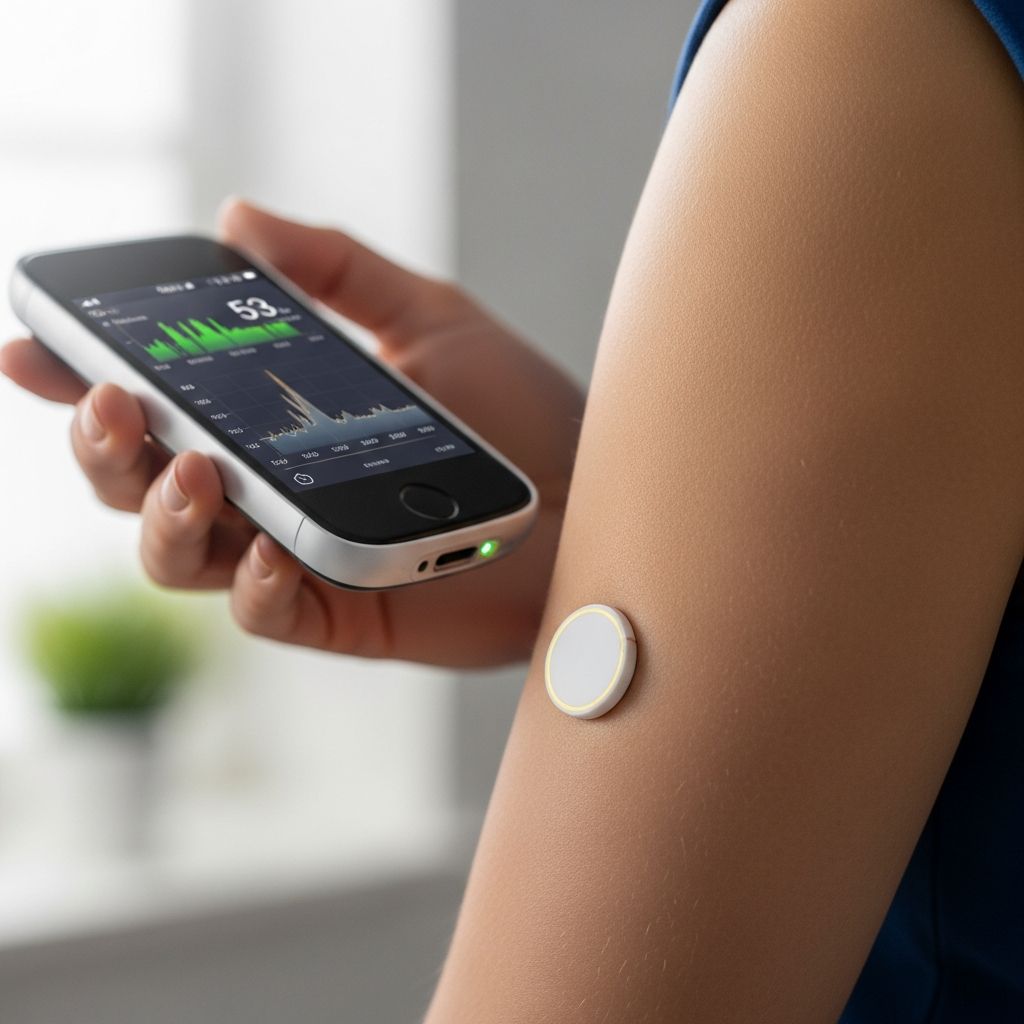
Flash glucose monitoring systems operate through a simple but effective scanning mechanism that makes glucose monitoring convenient and discreet. The system consists of two main components: a small sensor worn on the body and a handheld reader or compatible smartphone application. The sensor, approximately the size of a two-pound coin, is worn on the back of the upper arm and contains a small filament that is inserted just beneath the skin to measure glucose levels in the interstitial fluid—the fluid surrounding cells in body tissues.
When you need to check your glucose level, you simply scan or “flash” the sensor using your handheld reader or smartphone. This wireless scanning action transmits your current blood sugar reading and displays trend information from the previous eight hours of data. Each scan provides you with immediate glucose information and directional arrows that indicate whether your blood sugar is rising, falling, or remaining stable. To maintain continuous 24-hour glucose profiles, you should scan the sensor at least once every eight hours, typically three times per day. Many users find this schedule—such as scanning upon waking, before meals, and before bed—fits naturally into their daily routines.
One significant advantage of flash glucose monitoring is that the sensor can be worn continuously for up to fourteen days before requiring replacement, making it a durable and practical solution for long-term glucose tracking. Additionally, flash glucose monitoring does not require finger-prick calibration twice daily like some continuous glucose monitoring systems, eliminating this additional pain point and making the technology more user-friendly for daily management.
Key Components of a Flash System
- Sensor: A small wearable patch containing a glucose-measuring filament inserted under the skin
- Reader or smartphone: The scanning device used to access glucose readings from the sensor
- Data storage: Eight hours of continuous glucose data available with each scan
- Trend information: Directional arrows showing glucose movement patterns
Benefits of Flash Glucose Monitoring
Flash glucose monitoring provides numerous benefits for people managing diabetes, fundamentally changing how they approach daily glucose management and decision-making. One of the most immediate advantages is the elimination of painful finger-prick testing for routine glucose checks. This reduction in finger pricking not only improves comfort but also encourages more frequent glucose monitoring, as users are more likely to check their levels consistently without the associated discomfort.
By providing comprehensive glucose data and continuous glucose profiles, flash glucose monitoring helps people with diabetes stay within their target glucose ranges more effectively. The technology helps users understand how their daily activities, food choices, medication timing, and exercise affect their blood sugar levels, enabling them to make more informed decisions about their diabetes management. This comprehensive view of glucose patterns leads to better blood sugar control and can help prevent both short-term complications like hypoglycemia and long-term diabetes-related health issues.
Related Stories



Research demonstrates that when used consistently, flash glucose monitoring can reduce the time spent in low glucose ranges and increase the time spent within target glucose ranges for both type 1 and type 2 diabetes patients. This improved glucose control has direct physical, social, and emotional benefits. Users often report improved quality of life, reduced anxiety about glucose fluctuations, and greater confidence in managing their condition. The ability to download and review historical data allows users and their healthcare providers to identify patterns and make data-driven adjustments to treatment plans.
Flash Glucose Monitoring vs. Traditional Blood Testing
Traditional fingerstick blood glucose meters provide only “point-in-time” readings—a single glucose measurement at the moment of testing. This limited information means users gain little insight into how their glucose levels change throughout the day, what causes fluctuations, or whether they are spending adequate time within their target range. In contrast, flash glucose monitoring provides a comprehensive picture of glucose behavior, including patterns related to specific meals, times of day, stress levels, and physical activity.
The traditional approach also requires multiple daily finger pricks, which many people find painful, inconvenient, and burdensome. This discomfort often leads to users testing less frequently than recommended, resulting in incomplete glucose information. Flash glucose monitoring eliminates this barrier by removing the pain associated with frequent testing, thereby encouraging more consistent monitoring and better overall glucose management.
Flash Glucose Monitoring vs. Continuous Glucose Monitoring
While flash glucose monitoring and continuous glucose monitoring (CGM) share similarities, important differences distinguish these technologies. The primary difference lies in how data is transmitted. Flash glucose monitoring requires you to actively scan the sensor to access glucose information, whereas real-time continuous glucose monitors automatically transmit glucose readings wirelessly to your receiver or smartphone every few minutes without any scanning required.
| Feature | Flash Glucose Monitoring | Continuous Glucose Monitoring |
|---|---|---|
| Data transmission | Manual scanning required | Automatic wireless transmission |
| Scanning frequency | Required every 8 hours minimum | Not required; automatic updates |
| Calibration | No finger-prick calibration needed | Typically requires twice-daily calibration |
| Alarms | Available on some models (e.g., Freestyle Libre 2) | Standard feature on most devices |
| Insulin pump integration | Not currently available | Can integrate with compatible pumps |
| Historical data access | Last 8 hours per scan | Continuous real-time data |
Another key difference is that some continuous glucose monitors offer alarms that alert you when glucose levels become too high or too low, whereas flash glucose monitoring traditionally did not include this feature—though newer models like the Freestyle Libre 2 now offer optional alarms. Additionally, continuous glucose monitoring systems can integrate with insulin pump technology, allowing for automated insulin delivery adjustments, whereas flash glucose monitoring currently operates as a standalone system without pump integration.
Continuous glucose monitors also typically require twice-daily finger-prick calibrations to ensure accuracy, while flash glucose monitoring eliminates this additional step, making it simpler for daily use. The choice between these technologies depends on individual needs, lifestyle preferences, and whether insulin pump integration is desired or planned for the future.
Who Can Benefit from Flash Glucose Monitoring?
Flash glucose monitoring can be used by adults with both type 1 and type 2 diabetes to support informed diabetes treatment decisions, including determining appropriate insulin dosing, without requiring finger-prick blood samples. The technology is particularly beneficial for people who:
- Wish to reduce or eliminate finger-prick testing discomfort
- Want comprehensive glucose data to identify patterns and trends
- Prefer a less intrusive monitoring system that works through clothing
- Need to understand how specific foods, activities, and stress affect their glucose levels
- Seek to optimize their blood sugar control and improve their quality of life
- Want a system that does not require frequent calibration procedures
Understanding Glucose Data from Flash Monitoring
Flash glucose monitoring provides several types of valuable information with each scan. Your current glucose reading tells you whether your blood sugar is high, low, or within your target range at the moment of scanning. Directional arrows indicate glucose movement—whether levels are rising, falling, or remaining stable. Access to the last eight hours of data allows you to see patterns and trends, such as how your glucose responds to specific meals or activities.
By scanning at least three times daily at eight-hour intervals, you can view complete 24-hour glucose profiles, revealing your typical glucose patterns throughout day and night. This comprehensive data enables you and your healthcare team to identify when your glucose tends to run high or low, when the effects of your medication peak, and how your lifestyle choices influence your blood sugar. Many users download their glucose data to computers or other devices to analyze patterns and make informed adjustments to their diabetes management strategy.
Accuracy and Reliability
Flash glucose monitoring systems measure glucose in interstitial fluid rather than blood, which provides accurate glucose information for most situations. Newer models like the Freestyle Libre 2 feature improved accuracy that allows users to respond to readings with greater confidence. However, in certain situations—particularly when glucose is changing rapidly or when readings don’t match how you feel—it is still recommended to verify readings with a finger-prick test to ensure safety and accuracy. This verification approach provides an extra layer of safety, especially during critical diabetes management decisions.
Practical Advantages for Daily Life
Flash glucose monitoring integrates seamlessly into daily routines because the sensor can be scanned discretely over clothing, including thick coats or sweaters. The quick scanning process takes only seconds and can be done virtually anywhere—at work, school, social events, or during exercise. This convenience encourages more frequent glucose monitoring compared to traditional testing, which requires finding a private place, preparing materials, and enduring finger pricks.
The data visualization provided by flash glucose monitoring helps users make better immediate decisions about meals, exercise, and medication timing. Understanding how their individual body responds to different foods and activities empowers people with diabetes to take greater control of their health management. Additionally, the ability to share glucose data with healthcare providers, family members, or partners through compatible devices fosters better communication and support for diabetes management.
Integration with Diabetes Care Plans
Flash glucose monitoring systems work best when integrated into comprehensive diabetes care plans developed with healthcare providers. Regular review of glucose data with your diabetes care team helps identify patterns, optimize medication dosing, and refine dietary and exercise recommendations. Healthcare providers can use the detailed glucose information from flash monitoring to make evidence-based decisions about treatment adjustments that improve overall glucose control and reduce A1C levels.
Frequently Asked Questions
Q: How often do I need to scan my flash glucose sensor?
A: To maintain continuous 24-hour glucose coverage, you should scan your sensor at least once every eight hours. Most users scan three times daily—upon waking, before lunch, and before bed—though you can scan more frequently whenever you want glucose information.
Q: Does flash glucose monitoring hurt?
A: The initial sensor insertion may cause minimal discomfort similar to a small pinprick, but once inserted, the sensor is typically painless. The main advantage is eliminating the repeated pain of finger pricks required with traditional testing.
Q: Can I use flash glucose monitoring while swimming or showering?
A: Yes, flash glucose sensors are water-resistant and can be worn while swimming, showering, and exercising. The sensor remains adhered to your skin and continues measuring glucose throughout water exposure.
Q: How long does a flash glucose sensor last?
A: Flash glucose sensors can be worn continuously for up to fourteen days before requiring replacement. Most users follow a schedule of changing sensors every two weeks to maintain continuous monitoring.
Q: Will flash glucose monitoring replace all my finger-prick testing?
A: Flash glucose monitoring dramatically reduces the need for finger pricks. However, it is still recommended to verify readings with finger pricks when glucose is changing rapidly or when readings don’t match your symptoms.
Q: Does my flash system work with an insulin pump?
A: Current flash glucose monitoring systems do not integrate with insulin pumps. If pump integration is important for your diabetes management, continuous glucose monitoring systems may be more suitable.
Q: Can I share my glucose data with family or healthcare providers?
A: Yes, flash glucose monitoring systems allow you to download and share your glucose data with healthcare providers and family members, facilitating better communication and collaborative diabetes management.
Conclusion
Flash glucose monitoring represents a transformative advancement in diabetes care technology, enabling people with type 1 and type 2 diabetes to monitor their blood glucose levels comprehensively without the burden of frequent finger pricks. By providing detailed glucose patterns, trend information, and historical data, flash monitoring empowers users to make informed decisions about their diabetes management and achieve better blood sugar control. Whether used alone or as part of a comprehensive diabetes care plan, flash glucose monitoring has the potential to improve both glucose control and quality of life for people managing diabetes.
References
- Flash vs Continuous Glucose Monitoring — London Diabetes. 2025. https://londondiabetes.com/flash-vs-cgm/
- Flash Glucose Monitoring — Diabetes Canada. 2024. https://www.diabetes.ca/
- Understanding Flash Glucose Monitoring and Continuous Glucose Monitoring — Omnipod UK. 2025. https://www.omnipod.com/en-gb/diabetes-hub/learning-center/diabetes-technology/cgms-explained
- What is flash glucose monitoring? – Type 1 diabetes tech explained — YouTube. 2023. https://www.youtube.com/watch?v=lkqyRLybqFE
- Continuous Glucose Monitoring and Hybrid Closed Loop for Diabetes — NHS. 2025. https://www.nhs.uk/tests-and-treatments/cgm-and-hcl-for-diabetes/
- Flash Continuous Glucose Monitoring (FreeStyle Libre 14-Day) — American Academy of Family Physicians. 2021. https://www.aafp.org/pubs/afp/issues/2021/0601/p688.html
Similar Articles








Read full bio of Sneha Tete