Flea Bites: Causes, Symptoms & Treatment
Learn about flea bites, their symptoms, treatment options, and how to prevent them effectively.
What Are Flea Bites?
Flea bites are small, discolored bumps that appear on the skin after fleas feed on blood. Fleas are tiny, wingless insects that use their strong claws to latch onto hosts and pierce the skin with their needle-like mouthparts. When a flea bites, it injects saliva into the bloodstream, which triggers an immune response and causes itching and swelling.
How Do Fleas Bite?
Fleas have specialized mouthparts called a proboscis, which they use to pierce the skin and suck blood. Their saliva contains proteins that can cause allergic reactions in humans and animals. Both male and female fleas bite, but only female fleas lay eggs after feeding. Flea bites are most common on the legs, especially the feet, calves, and ankles, as fleas tend to jump from the ground or infested surfaces.
What Do Flea Bites Look Like?
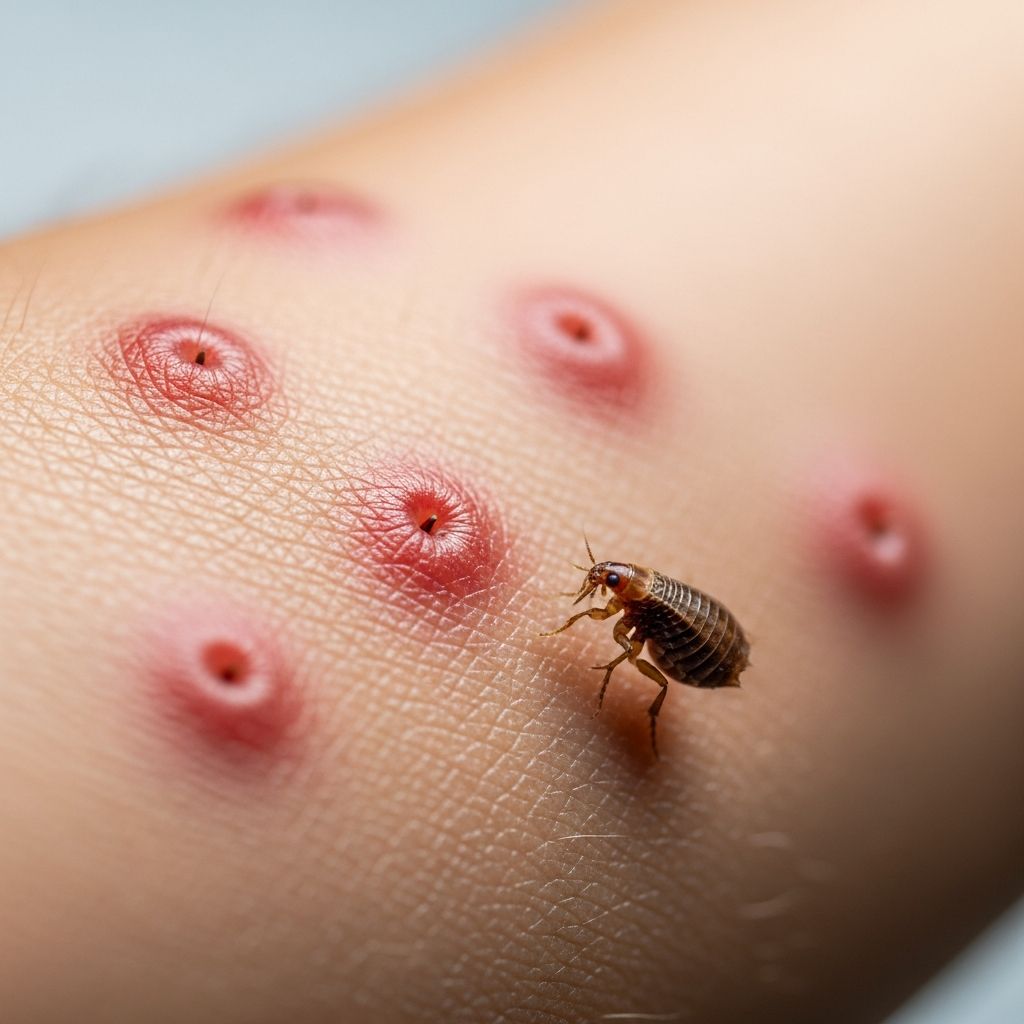
Flea bites typically appear as small, red, round bumps, often with a lighter center and a red halo around them. They may be raised and swollen. Flea bites are notorious for being itchy and are prone to infection if scratched. They usually occur in clusters or lines, often in groups of three or more, and are most commonly found on the lower legs and ankles.
Common Symptoms of Flea Bites
- Small, red, itchy bumps on the skin
- Bumps may be surrounded by a red halo
- Swelling and tenderness at the bite site
- Clusters or lines of bites, often on the legs
- Intense itching
- Mild pain or discomfort
Severe Symptoms of Flea Bites
While most flea bites are harmless, some people may experience more severe symptoms, especially if they have an allergic reaction or if the bites become infected. Severe symptoms include:
- Large areas of swelling or redness
- Development of hives or rash
- Fever
- Headache
- Body aches
- Signs of infection, such as pus or increasing pain
Flea Bite Allergy
Many people are allergic to flea saliva, which causes the immune system to release histamine. Histamine is responsible for the itching, swelling, and redness associated with flea bites. Most individuals have some degree of flea bite allergy, but the severity can vary. In rare cases, a severe allergic reaction (anaphylaxis) can occur, requiring immediate medical attention.
Where Do Flea Bites Occur?
Flea bites most commonly occur on the legs, especially the feet, calves, and ankles. Fleas are more likely to bite these areas because they are close to the ground and often exposed. Flea bites rarely appear above the knee unless a person spends a lot of time sitting or lying down. Fleas can also bite other parts of the body if they are present in bedding, furniture, or clothing.
Flea Bites in Pets
Pets, especially dogs and cats, are also susceptible to flea bites. Signs that your pet may have fleas include excessive scratching, restlessness, and visible fleas or flea dirt (small black specks) on their skin or fur. Flea bites on pets can lead to skin infections, hair loss, and other health issues. It’s important to check your pets regularly and treat them for fleas if necessary.
Related Stories



Treatment for Flea Bites
Most flea bites do not require medical treatment and will resolve on their own within a few days. However, there are several ways to relieve itching and discomfort:
- Apply over-the-counter anti-itch creams or ointments
- Take antihistamines to reduce itching and swelling
- Use cold compresses to soothe the skin
- Keep the bite area clean to prevent infection
- Avoid scratching to minimize the risk of secondary infection
If the bites become infected or if you experience severe symptoms, seek medical attention. Your healthcare provider may prescribe antibiotics or other treatments.
When to See a Healthcare Provider
You should see a healthcare provider if you experience any of the following:
- Signs of infection, such as increasing redness, swelling, or pus
- Severe allergic reaction, such as difficulty breathing or swelling of the face
- Fever, headache, or body aches
- Symptoms that last longer than a few days
Preventing Flea Bites
Preventing flea bites involves both personal protection and environmental control. Here are some tips:
- Wear socks and shoes, especially in areas where fleas are common
- Use insect repellent containing DEET or other effective ingredients
- Keep your home clean and vacuum regularly to remove fleas and their eggs
- Treat pets with flea prevention products
- Wash bedding and clothing in hot water
- Seal cracks and crevices in your home to prevent fleas from entering
Flea-Borne Diseases
While flea bites themselves are rarely dangerous, fleas can carry and transmit diseases. Some of the diseases that fleas can spread include:
- Bubonic plague
- Murine typhus
- Cat scratch disease
- Tapeworms
If you or your pet develop symptoms of these diseases after being bitten by fleas, seek medical attention immediately.
Flea Bite Complications
Complications from flea bites can include:
- Secondary bacterial infections from scratching
- Severe allergic reactions
- Transmission of diseases
- Chronic itching and skin irritation
Flea Bite vs. Other Insect Bites
Flea bites can be distinguished from other insect bites by their appearance and location. Flea bites are typically small, red, and itchy, and they often occur in clusters or lines on the lower legs. Mosquito bites, on the other hand, are usually larger and more swollen, and they can occur anywhere on the body. Bed bug bites are similar to flea bites but are often found on the upper body and in a linear pattern.
Flea Bite FAQs
Are flea bites dangerous?
Flea bites are generally not dangerous, but they can cause discomfort and itching. In rare cases, they can lead to severe allergic reactions or transmit diseases.
How long do flea bites last?
Flea bites usually last a few days, but they can persist longer if scratched or if an infection develops.
Can fleas live on humans?
Fleas do not live on humans, but they can bite and feed on human blood. Fleas prefer animal hosts but will bite humans if necessary.
How can I tell if my pet has fleas?
Signs that your pet has fleas include excessive scratching, restlessness, visible fleas or flea dirt on their skin or fur, and skin irritation.
What should I do if I get bitten by fleas?
Wash the bite area with soap and water, apply anti-itch cream, and avoid scratching. Seek medical attention if you experience severe symptoms or signs of infection.
Conclusion
Flea bites are a common problem that can cause itching, discomfort, and, in rare cases, more serious complications. Most flea bites are harmless and can be treated at home, but it’s important to seek medical attention if you experience severe symptoms or signs of infection. Preventing flea bites involves personal protection and environmental control, including treating pets and keeping your home clean.
References
- Flea Bites: What They Look Like, Symptoms & Treatment — Cleveland Clinic. 2021-08-31. https://my.clevelandclinic.org/health/diseases/21718-flea-bites
- What Do Flea Bites Look Like? — Moxie Pest Control. https://moxieservices.com/blog/what-do-flea-bites-look-like/
- Why Do Bug Bites Itch and How to Relieve Them — BENADRYL®. https://www.benadryl.com/itchy-skin/why-bug-bites-itch-relief
Similar Articles








Read full bio of Sneha Tete