Flecainide For Irregular Heartbeats: Uses, Risks, Dosing
Comprehensive guide to flecainide: uses, dosage, side effects, and key considerations for managing heart rhythm disorders effectively.
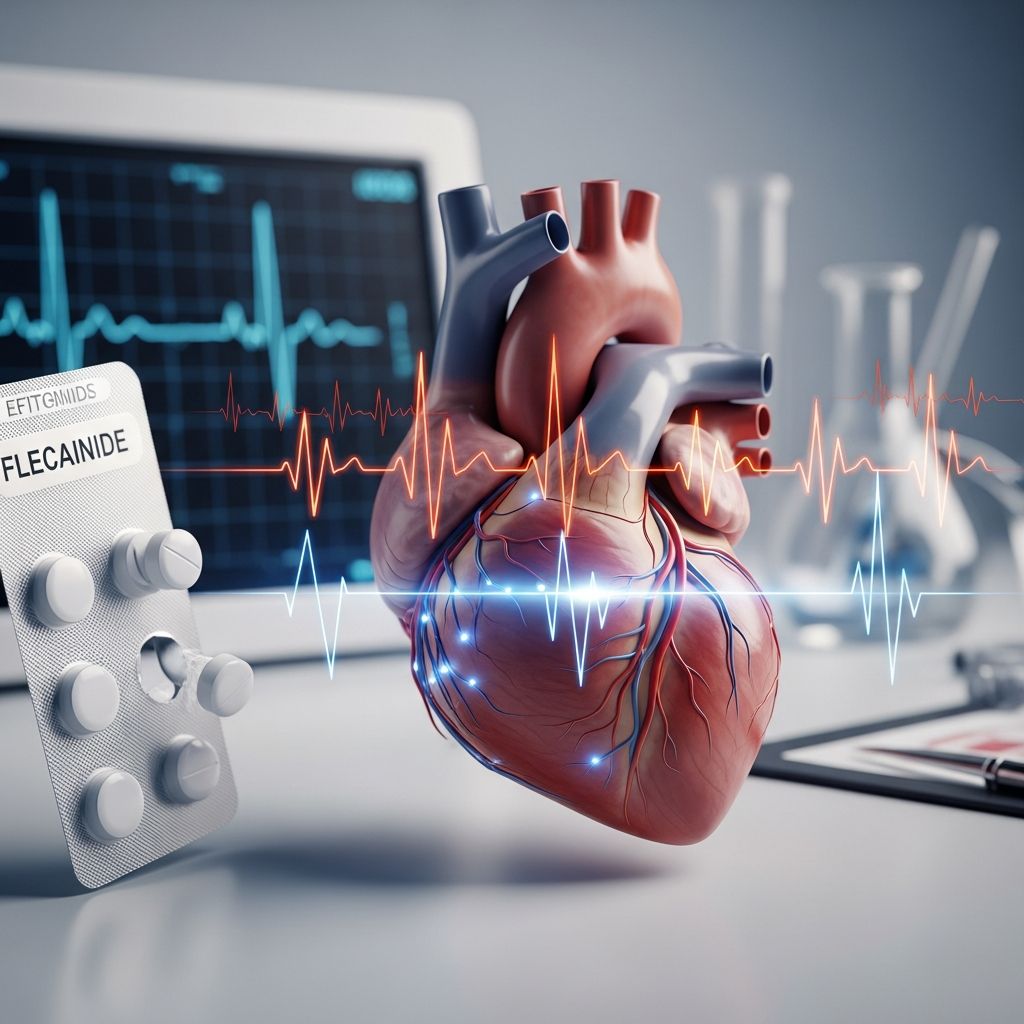
Flecainide is a prescription antiarrhythmic medication classified as a Class Ic agent, primarily used to treat and prevent certain life-threatening irregular heart rhythms, such as paroxysmal supraventricular tachycardia (PSVT), paroxysmal atrial fibrillation (PAF), and select ventricular arrhythmias.
About flecainide
Flecainide acetate works by blocking fast sodium channels in the heart muscle, which slows conduction of electrical impulses and prolongs the action potential duration, thereby stabilizing myocardial electrical activity and restoring normal heart rhythm. It is particularly effective for rhythm control in patients without structural heart disease, helping to prevent episodes of rapid, irregular heartbeats that originate above the ventricles, like PSVT or atrial fibrillation/flutter.
The drug does not cure arrhythmias but helps manage symptoms and reduce risks like stroke or sudden cardiac death by maintaining sinus rhythm. Approved by the FDA in 1984, flecainide is reserved for serious cases due to its proarrhythmic potential, meaning it can sometimes worsen arrhythmias if misused. Clinical guidelines from AHA/ACC/HRS recommend it for patients with normal left ventricular function and no coronary artery disease or valvular issues.
Key facts
- Flecainide is a
Class Ic antiarrhythmic
drug. - It is used to treat
paroxysmal supraventricular tachycardia (PSVT)
andparoxysmal atrial fibrillation/flutter (PAF)
in structurally normal hearts. - Dosage typically starts at
50 mg twice daily
, increasing gradually to100-150 mg twice daily
based on response and tolerance. - Common side effects include
dizziness, headache, nausea
, and visual disturbances. - Not suitable for patients with
heart failure, recent myocardial infarction
, or structural heart disease due to increased mortality risk. - Requires close monitoring of
heart rhythm, liver, and kidney function
.
When to take flecainide
Flecainide tablets are usually taken
twice daily, every 12 hours
, with or without food, at consistent times to maintain steady blood levels. For acute cardioversion of atrial fibrillation, intravenous flecainide may be used in hospital settings, showing superior efficacy over alternatives like amiodarone or propafenone in meta-analyses of randomized trials. ‘Pill-in-the-pocket’ dosing—taking a higher dose only during arrhythmia episodes—is an option for some patients with infrequent paroxysmal AF, but only under specialist supervision.Always follow your doctor’s instructions precisely. Do not stop or adjust doses without consulting a healthcare provider, as abrupt discontinuation can trigger arrhythmias.
How to take flecainide
Swallow tablets whole with water. If you miss a dose, take it as soon as remembered unless it’s near the next dose—do not double up. Dosage forms include 50 mg, 100 mg, and 150 mg oral tablets. In patients with kidney or liver impairment, doses must be reduced to avoid toxicity.
For optimal results:
- Take at the same times daily.
- Combine with a beta-blocker or calcium channel blocker if used for atrial fibrillation to prevent 1:1 atrial flutter conduction.
- Initiate inpatient for ventricular tachycardia cases.
Common questions
How long does flecainide take to work?
Flecainide often restores normal rhythm within hours for acute episodes, but full steady-state effects for prevention may take 3-5 days.
Related Stories



Can you drink alcohol while taking flecainide?
Moderate alcohol is generally okay but may worsen dizziness. Excessive intake can affect heart rhythm—discuss with your doctor.
How to cope with side effects of flecainide
Most side effects are mild and improve over time. Contact your doctor if severe.
| Side Effect | Coping Strategies |
|---|---|
| Dizziness or lightheadedness | Rise slowly from sitting/lying; avoid driving until adjusted. |
| Headache | Stay hydrated; use over-the-counter pain relief if approved. |
| Blurry vision | Report promptly; may need dose adjustment. |
| Nausea | Take with food; eat small meals. |
| Tremors or fatigue | Rest; monitor and inform doctor if persistent. |
Serious effects like new irregular heartbeat, fainting, or swelling require immediate medical attention.
Cautions of flecainide
Flecainide carries risks, especially proarrhythmia. Contraindicated in:
- Heart failure (negative inotropic effect).
- Post-myocardial infarction (increased mortality per CAST trial).
- Structural heart disease or coronary artery disease.
- Severe kidney/liver disease without dose adjustment.
Pregnancy category C; use only if benefits outweigh risks. Inform your doctor of all medications to avoid interactions (e.g., with digoxin, increases levels).
Interactions of flecainide
Flecainide interacts with many drugs:
- **Increases digoxin levels**—monitor closely.
- **Beta-blockers or calcium channel blockers**—often co-prescribed safely for AF.
- **CYP2D6 inhibitors** (e.g., some antidepressants)—may raise flecainide levels.
- Avoid with other antiarrhythmics unless supervised.
Always provide a full medication list to your healthcare provider.
Other medicines, food and drink, and flecainide
No major food interactions, but grapefruit juice may affect metabolism—limit intake. Maintain a heart-healthy diet low in salt if you have related conditions. Avoid excessive caffeine or alcohol, which can trigger arrhythmias.
Medicines for irregular heartbeats
Alternatives include:
| Drug Class | Examples | Uses |
|---|---|---|
| Class Ia | Procainamide, Quinidine | AF, VT |
| Class Ib | Lidocaine, Mexiletine | Ventricular arrhythmias |
| Class III | Amiodarone, Sotalol | AF, VT (broader use) |
| Others | Beta-blockers, Calcium channel blockers | Rate control in AF |
Choice depends on arrhythmia type, heart structure, and comorbidities.
Pregnancy and breastfeeding with flecainide
Limited data; crosses placenta and into breast milk. Use only if essential, with monitoring. Discuss risks with a specialist.
Common side effects of flecainide
Occur in up to 30% of users; mostly benign.
- Dizziness (19%)
- Visual disturbances (16%)
- Headache (10%)
- Nausea (9%)
- Fatigue, dyspnea, tremors.
Serious side effects of flecainide
Seek emergency help for:
- New or worsening arrhythmia (proarrhythmia risk ~5%).
- Chest pain, fainting, shortness of breath.
- Swelling (heart failure sign).
- Liver/kidney issues (jaundice, reduced urine).
ECG monitoring essential; QT prolongation rare but possible.
Stopping flecainide abruptly
Never stop suddenly—inpatient tapering may be needed to prevent rebound arrhythmias.
About ECG monitoring
Regular ECGs check PR interval, QRS duration (widens >20% signals toxicity). Start in hospital for high-risk patients; outpatient Holter monitoring for efficacy.
Analysing your ‘Heart Report’
Review ECG reports with your doctor: look for QRS widening, QT changes, or new arrhythmias. Blood tests monitor electrolytes, kidney/liver function.
Patient stories
Many report fewer palpitations and improved quality of life, but some experience dizziness initially. ‘Flecainide gave me my life back from PSVT episodes,’ notes one patient (anecdotal).
Further reading and support
Consult cardiology societies like AHA or patient groups for arrhythmia support. Always rely on healthcare professionals for advice.
Frequently Asked Questions (FAQs)
Who cannot take flecainide?
Patients with heart failure, recent MI, structural heart disease, or severe renal/hepatic impairment.
Is flecainide safe long-term?
Yes, for selected patients with monitoring; avoids amiodarone’s toxicity.
Does flecainide cause weight gain?
Not commonly; report unexplained swelling.
Can flecainide be used for AFib?
Yes, paroxysmal AF in normal hearts, often with rate-control agents.
References
- Flecainide: Uses, Drug Information and Side Effects — Cleveland Clinic. 2023. https://my.clevelandclinic.org/health/drugs/17006-antiarrhythmic-medications-flecainide
- Flecainide – StatPearls — NCBI Bookshelf. 2023-10-30. https://www.ncbi.nlm.nih.gov/books/NBK542291/
- Flecainide (Tambocor): Uses, Side Effects, Interactions — WebMD. 2023. https://www.webmd.com/drugs/2/drug-6109/flecainide-oral/details
- Flecainide (Tambocor) for Afib Rhythm Control — StopAfib.org. 2023. https://www.stopafib.org/managing-afib/medication-for-afib/control-afib/rhythm-control-medication/flecainide-tambocor/
- Flecainide: MedlinePlus Drug Information — MedlinePlus. 2023-06-15. https://medlineplus.gov/druginfo/meds/a608040.html
Similar Articles








Read full bio of medha deb